

KGS Group promotes six employees to senior leadership positions
Six employees were recently promoted to prominent leadership positions within KGS.
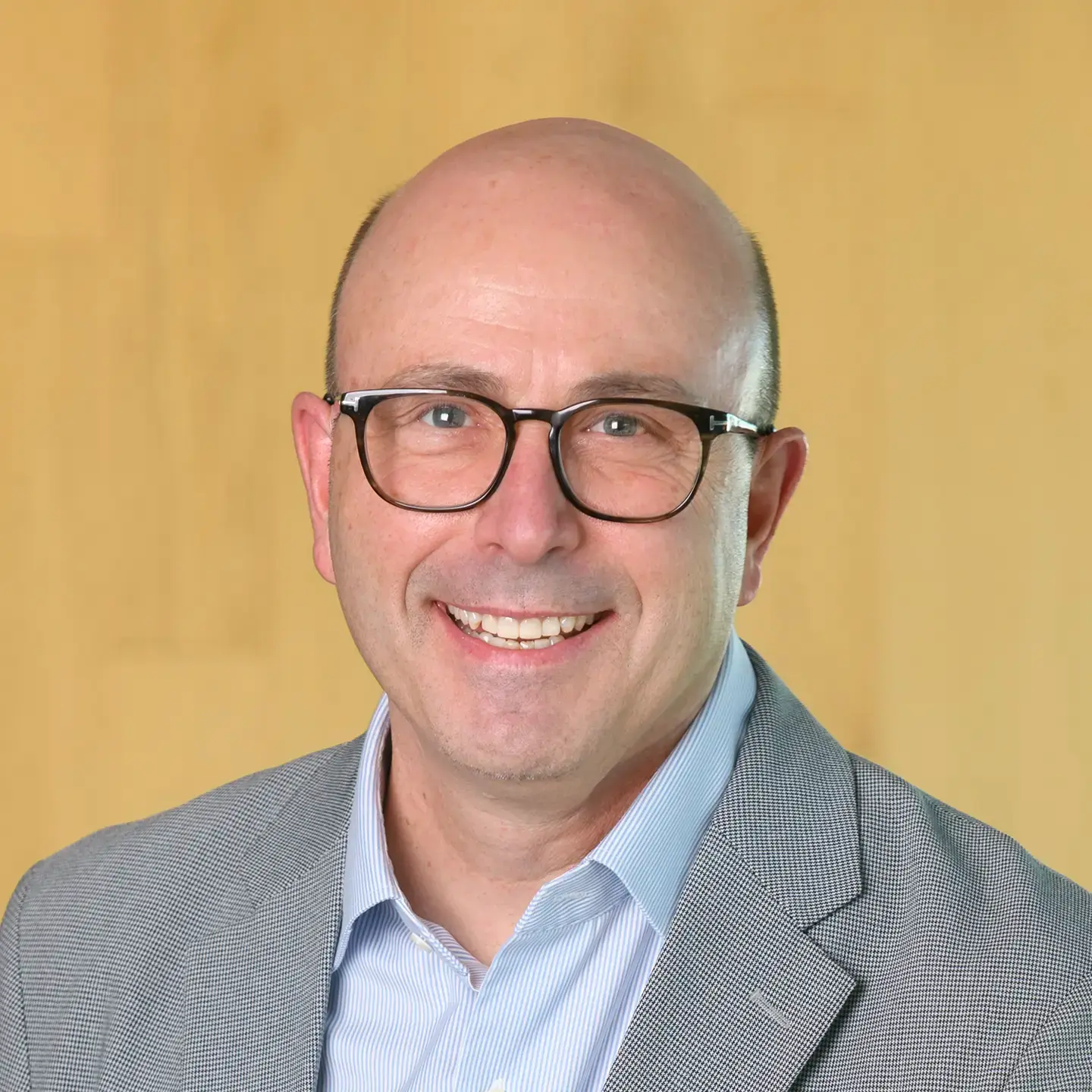
Bruce Belmore, P.Eng., was appointed to the position of principal, the most senior role at KGS. A well-known expert in the transportation field, Bruce leads the talented staff in our transportation group who undertake a broad range of projects affecting travel, mobility and safety. He is passionate about transportation and continually strives to make our communities a better place to live, work and play.
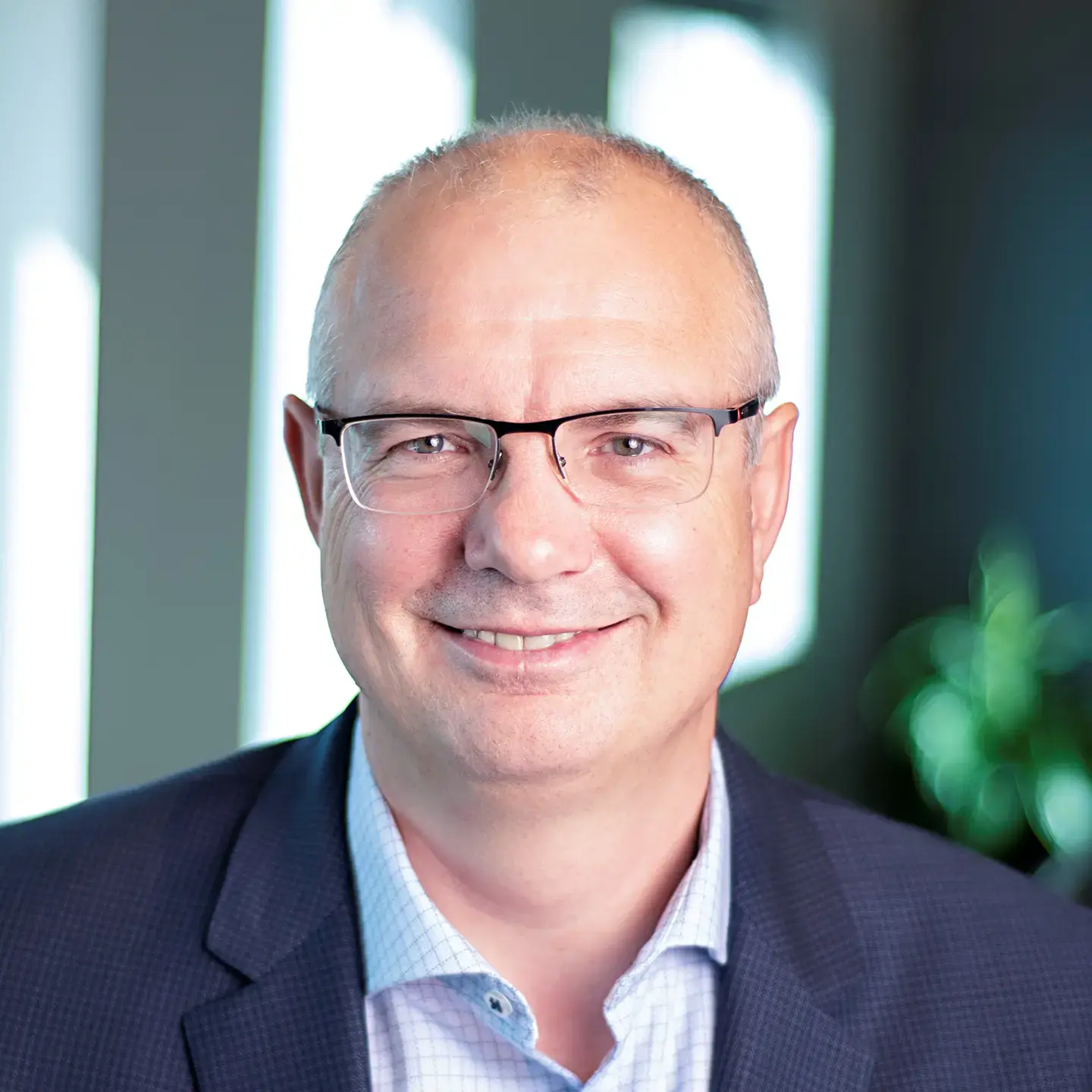
Stefan Kohnen, P.Eng., was appointed as a principal. With extensive experience in the development and delivery of complete hydropower projects, Stefan supports the waterpower sector of the firm. He is also responsible for managing the delivery of KGS Group’s services from our Mississauga location.
Sean Bayer, P.Eng., was appointed to the position of associate principal. Sean has over 25 years of experience in regulatory, civil engineering, sales and consulting for a wide variety of clients. He oversees our Saskatchewan municipal group and specializes in small to large water treatment, wastewater and civil engineering development projects.
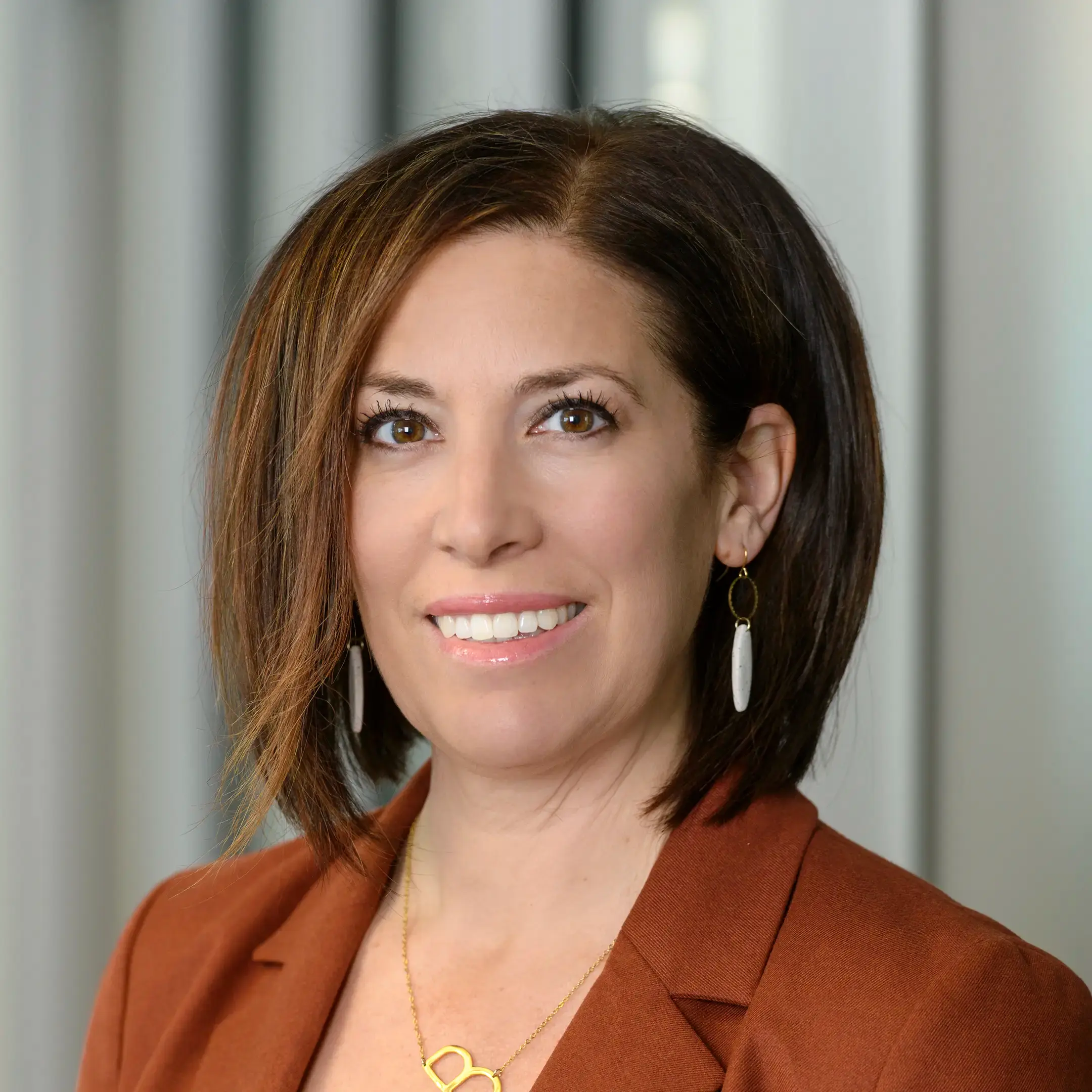
Bonnie Hoffensetz, M.Sc., was appointed as an associate principal. She is a senior environmental scientist and an assistant department head for our environmental department in our Winnipeg office. She has 24 years of experience in the environmental consulting industry across Western Canada and Ontario. Her expertise includes contaminated site assessment, remediation and long-term remedial monitoring programs, as well as hazardous materials assessment and emergency spill response.
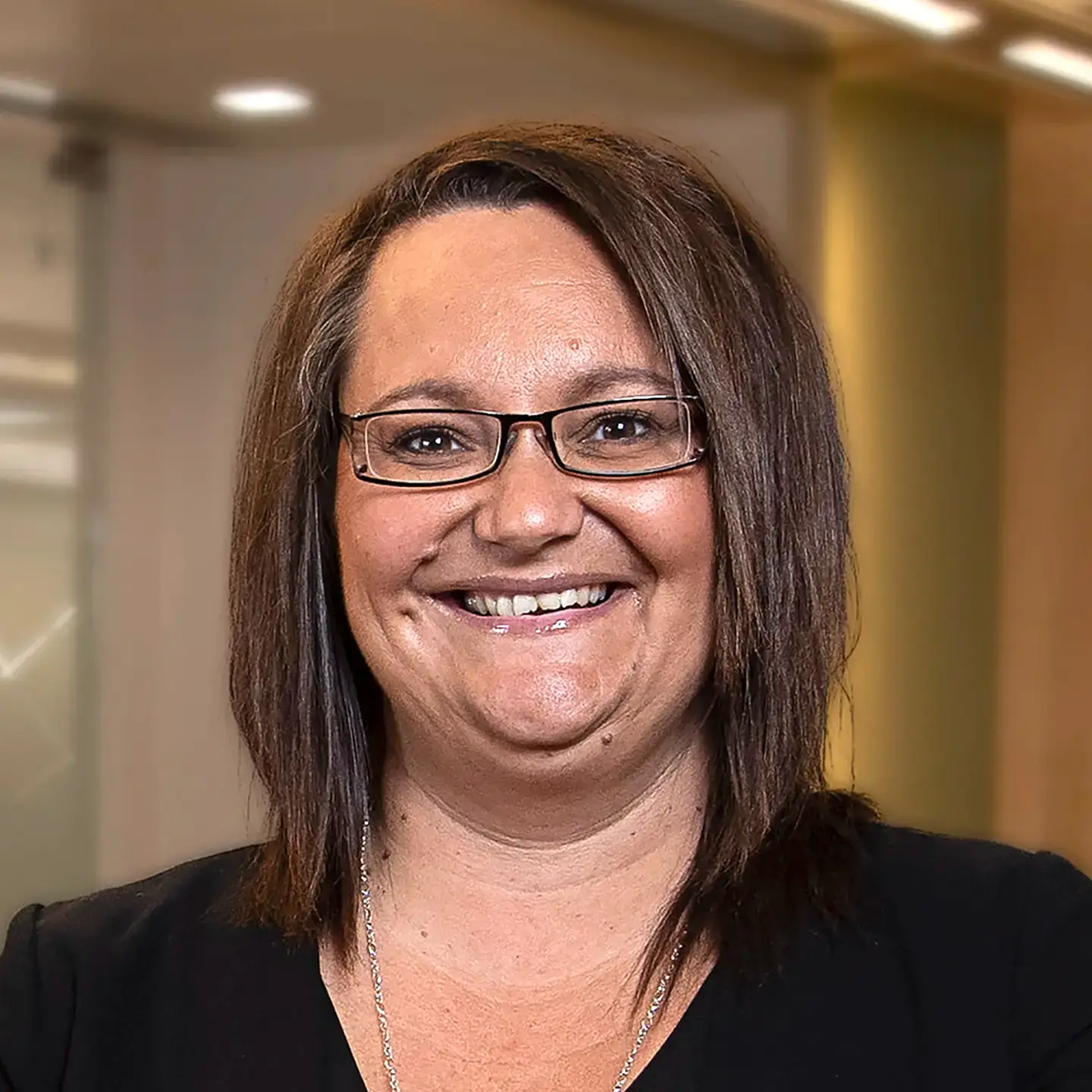
Lee Peters, P.Eng., was appointed to the position of associate principal. She is a senior environmental engineer and project manager who heads our Regina geoenvironmental department and also serves as a member of our Board of Directors. Lee has more than 25 years of experience with field work, data analysis and report preparation for a variety of environmental, hydrogeological and geotechnical projects.

Dino Philopoulos, P.Eng., was appointed as an associate principal. Dino’s expertise includes structural design, construction services, project management, contract administration, as well as structural asset rehabilitation and long-term management for a wide range of projects. As regional manager of our Saskatchewan offices, he also works to foster long-term relationships with our people and clients.
“I am excited to bolster our leadership team with these appointments,” said Rick Martin, president. “These individuals bring diverse perspectives and a breadth of expertise that will help us keep pace with the ever-evolving needs of our clients.”
The newly appointed principals and associate principals will take on more leadership responsibilities at KGS over time and will remain a key part of client projects. Please join us in congratulating Bruce, Stefan, Sean, Bonnie, Lee and Dino on their promotions!
Join Ryan Dobson for a virtual roundtable
On February 22 at 11 a.m. CST, join Ryan Dobson and other industry thought leaders for a virtual roundtable – Sustainability & Climate Change Trends in Infrastructure Construction. This event is for civil, geotechnical and water resources engineers.
As climate change and severe weather events increasingly impact the performance of infrastructure across North America, engineers must work together to develop strategies for better design standards. During this free event, the panel will discuss:
- Why it’s important for engineers to consider net-zero initiatives.
- How engineers are designing for new sustainability frameworks and how to measure the full impact of a build.
- How engineers are anticipating climate change and adapting designs to be more resilient for changing conditions.
- New sustainable technology and processes that should be on your radar.
David S. Brown presents on 2022 flood response at CWRA Workshop
On February 21, we’ll be at the Canadian Water Resources Association Manitoba Branch Workshop – Manitoba Flood of 2022: Stories, Lessons Learned, and Pathways to a More Resilient Future. We’re a proud sponsor of this event.
In addition, one of KGS’ leading experts on flood response and protection, David S. Brown, along with Brian Earl from Manitoba Transportation and Infrastructure will be presenting on our 2022 flood response on the Little Saskatchewan River. This case study is a great example of how we help our clients overcome some of the biggest flooding challenges facing us today.
For more info on the CWRA workshop visit: https://cwra.org/en/mb-flood2022-workshop/
Our Saskatoon office is on the move
It’s been a great year for KGS in Saskatoon and our growing team needed more space. As a result, we’ve moved to a new location to accommodate the expansion of our Saskatoon team and better serve our clients. Our new address is:
Suite 300 – 203 Stonebridge Blvd
Saskatoon, SK S7T 0G3, Canada
Our phone numbers and email addresses remain the same.
Dr. Rob Kenyon wins prestigious G. Geoffrey Meyerhof Award
Dr. Rob Kenyon, Senior Specialist Advisor, was recently honoured with the prestigious G. Geoffrey Meyerhof Award from the Canadian Geotechnical Society (CGS). This award recognizes outstanding contributions in soil mechanics and foundation engineering.
Rob’s nomination for this award, along with co-editor Ken Skaftfeld, was precipitated in part due to their tireless work on the revised Canadian Foundation Engineering Manual. Rob and Ken spent countless hours motivating members of the geotechnical community to contribute to, and complete, the 25 chapters of the 5th edition. Engineers across Canada will soon see the benefits of their efforts.
However, Rob’s contributions to geotechnical knowledge, practice and the profession extend far beyond the manual. He has given his time to numerous positions within CGS. Notably, he will become President of CGS for the 2023-24 term after serving as President-Elect this past year. He also dedicates his time to influencing the next generation of engineers through a teaching position at the University of Manitoba.
As a highly regarded expert in the field, Rob’s expertise is sought-after across Canada and beyond. He is perhaps best known for his technical leadership during numerous major flood events, including the Red River Flood of the Century. In addition, he has been actively involved in some of the largest and most complex projects in Manitoba over the last 50 years. These include the expansion of the Red River Floodway around Winnipeg and the construction of the Hwy 59/101 traffic interchange, one of the largest interchanges constructed to date in the province.
Join us at the Tunneling Association of Canada’s conference this week
Join KGS Principal and Conference Chair Jason Mann at the Tunneling Association of Canada’s Tunnelling for the Future – Sustainable and Smart Conference happening November 2 – 4 in Vancouver, BC.
At the conference, be sure to check out Ray Offman’s presentation Alleviating Basement Flooding and Sewage Overflows in Winnipeg Using Advanced Tunnelling Technologies – Cockburn Sewer Relief Project: A Case History, based on a paper he cowrote with Nicole Vidal.
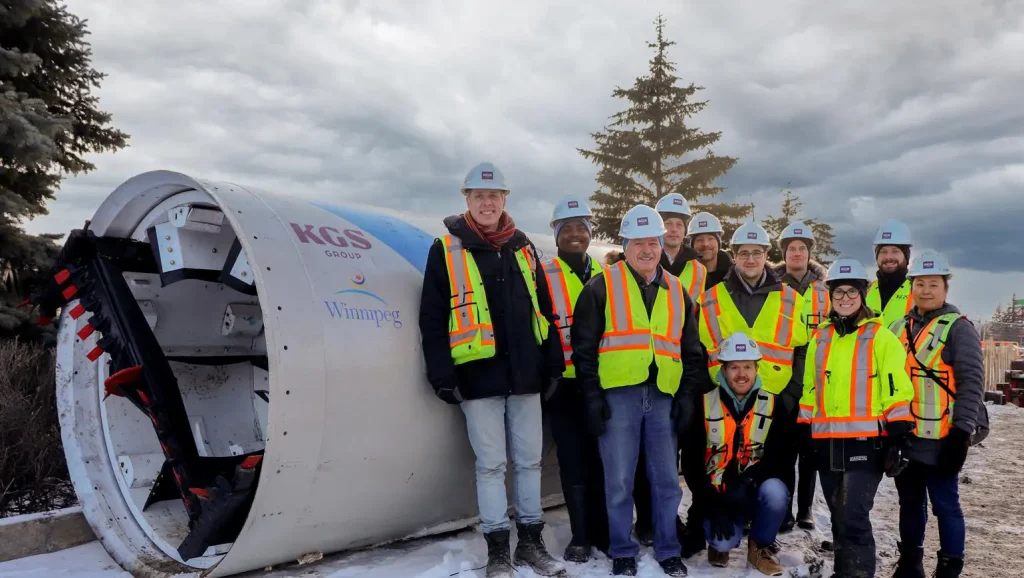
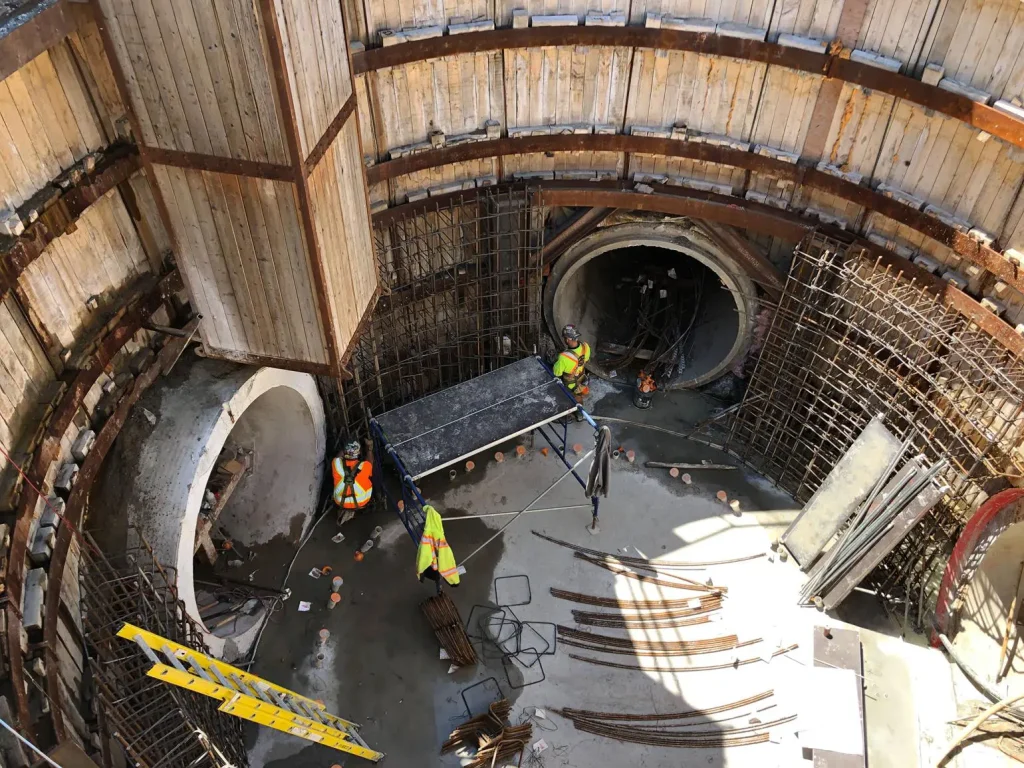
The City of Winnipeg commissioned the design and construction of a 2,100 mm and 2,400 mm diameter trunk land drainage sewer to protect two combined sewer districts from basement flooding and the city’s rivers from combined sewer overflows.
Some highlights from this award-winning project include being Winnipeg’s first large diameter tunnel drive using the modern two-pass tunneling method and the first reverse S-curve completed in the city.
This major project was successfully completed on schedule with no loss of service or impacts to the existing infrastructure, including successful crossing of the tunnel boring machine through the modified pass-through chamber structure.
Katie Moist P.Eng. wins the 2022 EngGeoMB Intern Award
KGS’ own Katie Moist P.Eng. was honoured with the 2022 Intern Award at Engineers Geoscientists Manitoba EngGeoMB Awards Ceremony last Friday. The EngGeoMB Awards celebrate the exceptional achievements of local professionals, teams and companies.
Katie is actively involved in the engineering community – whether it’s supporting young professionals in the industry, offering mentorship to students, or volunteering her time.
As one of the committee members for the Engineering Changes Lives Provincial Steering Committee, Katie works to propose changes that will increase diversity within the field of engineering and helps guide the Committee’s initiatives to increase the participation of women entering the field. Katie is also a committee member for the Engineers Geoscientists Manitoba’s 2030 Coalition Committee aimed at retaining women engineers in the field.
Katie’s volunteer work doesn’t stop there. As the Founding Chair of the Young Friends of Engineering, Katie developed a networking group for young engineering professionals to give back to the Price Faculty of Engineering at the University of Manitoba. As the chair, Katie holds a seat on the Friends of Engineering Board, representing the Young Friends and their interests.
In addition to her community work, Katie is an exemplary engineer with several major projects under her belt – including the Wellington Crescent Roadway, Path and Riverbank Stabilization project, the Eagle Creek Drainage System project, and many City of Winnipeg public works projects. In the words of one of her nominators, “Katie has become a valuable member of our team as both an efficient resident inspector and designer. She has had the opportunity to significantly contribute to several notable projects. Without her involvement, KGS Group would not have enjoyed the same level of success.”
High praise for the deserving recipient of this award. Congratulations Katie!
Clean Currents 2022
Visit our Regional Director for Seattle, Andi Bogdanovic, and Regional Manager for Mississauga, Stefan Kohnen, at the Clean Currents 2022 conference in Sacramento, CA this week. Albert Mikhail, HPPE founder and new KGS Group team member, will also be at our booth to answer questions about our full range of hydroelectical testing service we now offer.
Throughout the conference, make sure to check out Stefan’s two presentations:
Sawer Dam Case Study: Development Process for Low Head Sites
Wednesday, October 19, 2022, 11:00 a.m. – 11:30 a.m.
The Bawitik Power Corporation sought to develop a generating station at Sawer Creek Dam on the Otonabee River near the town of Lakefield, Ontario, Canada. With 3.2 meters of head, the team concluded the challenge would be economic rather than technical and a phased development process was used that optimizes both. The technical solution was developed using a Set Based Design approach and extensive turbine market soundings.
Finding an economic solution required diligence, expertise, and a robust method for optimizing and this presentation describes how the solution evolved at each stage, the choices selected, and the result achieved when applying this process to the development of an unpowered dam.
Modernization Solutions for Aging Infrastructure: Fleet Overhaul Planning Program at Orillia Power
Thursday, October 20, 2022, 3:00 p.m. – 4:00 p.m.
Orillia Power has traditionally refurbished units approximately every 10 to 15 years but had no mechanism for assessing or identifying if this frequency is either adequate or excessive, nor if this frequency should be dependent upon other indicators.
Orillia Power requested KGS Group to develop a program (or “guideline”) which establishes requirements/deficiencies for the need of a unit refurbishment. The objective was to use this guideline and confirm that the existing units at Orillia Power require refurbishment and provide a link to demonstrable industry practices to substantiate the investment decisions.
KGS is a proud sponsor of the 25th CDA Conference
KGS is a proud sponsor of the 25th CDA Conference happening in St. John’s NL from October 17-19, 2022. Come visit us in the newly minted Sweet Tooth Lounge for some delicious treats. Several employees are presenting on a variety of topics.
Remediation of a Deteriorated Low Level Outlet Conduit to Address Internal Erosion Risks to an Embankment Dam in Southwestern Saskatchewan
Monday, October 17, 2022, 3:30 p.m. – 5:00 p.m.
Presented by Jon Friesen
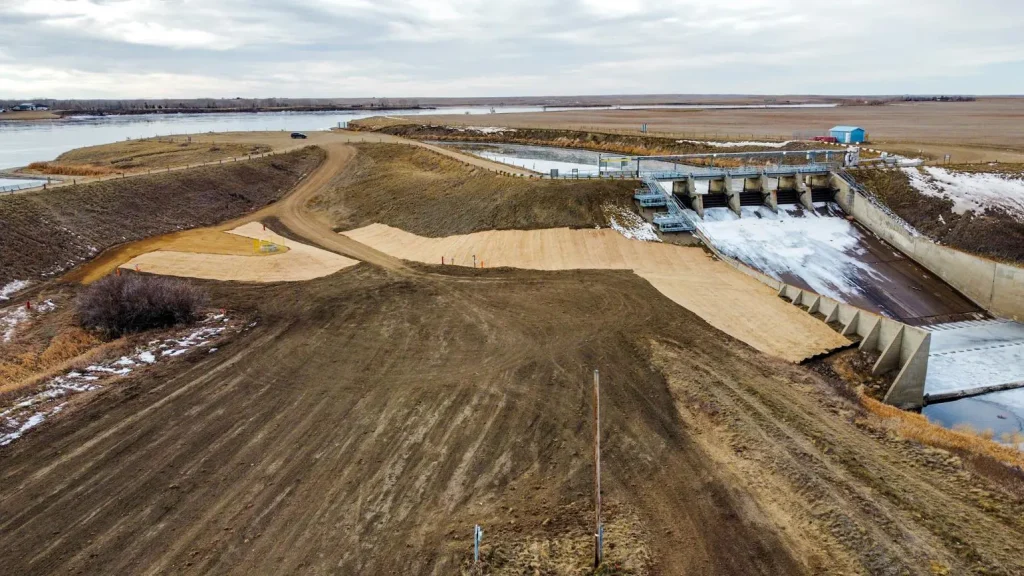
This presentation explores the design and construction addressing an internal erosion hazard related to a deficient low level outlet conduit, and a construction dam safety monitoring and surveillance plan. The dam was originally constructed in 1958 and the water retaining and control structures consist of an earth embankment dam, gated concrete spillway, and a low level outlet (LLO) conduit.
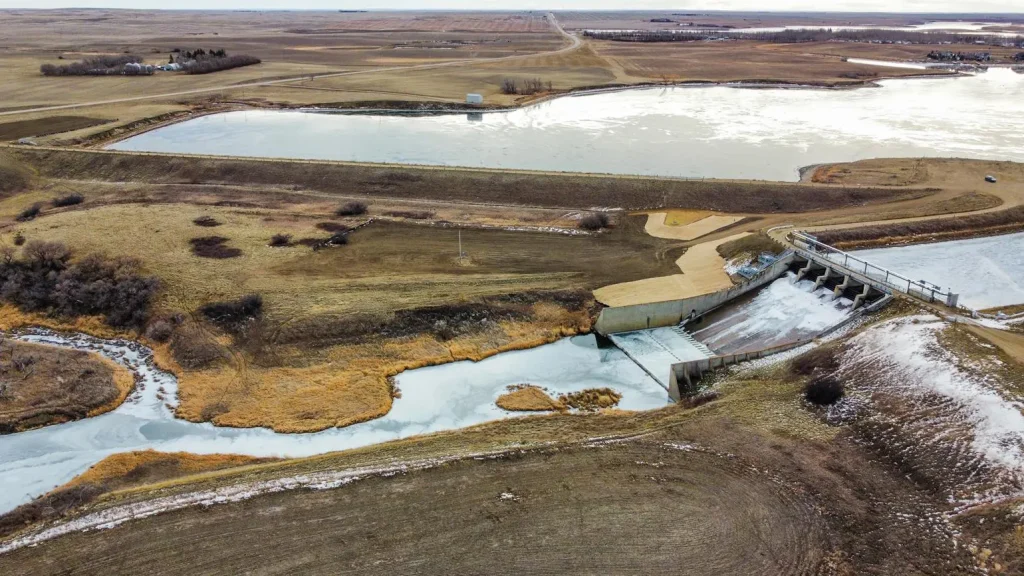
An inspection of the LLO downstream of the gate well was completed in recent years, and revealed severe deterioration of the pipe and the presence of voids behind the conduit. The condition of the conduit presented a dam safety risk in terms of the potential loss of embankment and foundation soils due to internal erosion through or along the conduit. This risk necessitated the detailed design and construction of the LLO replacement downstream of the gate well.
The remediation included a combination of trenchless and open-cut methods for the installation of a new HDPE pipe. A groundwater depressurization sand drain was installed to ensure an adequate factor of safety was maintained for the embankment slope during the construction. An instrumented dam safety monitoring plan was developed and implemented during construction to observe the performance of the embankment dam structures during construction.
Dam Safety Challenges for Small Municipal Dam Owners
Tuesday, October 18, 2022, 2:00 p.m. – 3:30 p.m.
Presented by Ambroise Percheron, KGS Group, and Kallan Fitzgerald, Meridian Engineering Inc.
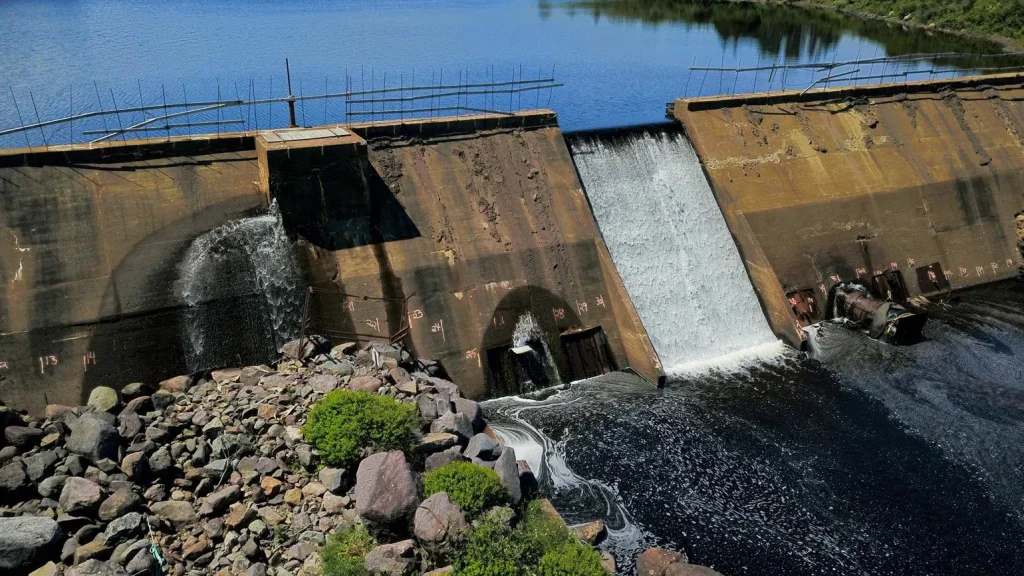
The Grand Bank Municipal Dam is a concrete gravity dam owned by the Town of Grand Bank in Newfoundland and Labrador. The dam impounds a small reservoir used by the town for water supply. It includes an overflow spillway, a structural fishway, a water supply intake chamber, and no mechanical flow control structures.
The aging structure required immediate actions to enhance the water supply system for the Town, to address existing dam safety concerns and to develop long-term solutions to satisfy the applicable dam safety standards, including the Canadian Dam Association Dam Safety Guidelines.
KGS Group and Meridian Engineering worked collaboratively with the Town of Grand Bank to develop immediate and long-term solutions to improve the functionality of the aged dam and to restore it to standard performing conditions.
CWRA 2022-2023 Webinar Series Presentation
As part of the Saskatchewan Branch 2022-2023 Canadian Water Resources Association Webinar Series, Ambroise Percheron P.Eng. from KGS Group and Jeff Sereda, Ph.D., from the Water Security Agency (WSA), will be presenting on the Davis Creek Diversion – a review of a fish exclusion system at the Davis Diversion intake.
The Davis Diversion was built in 1939 by the Prairie Farm Rehabilitation Administration near the Town of Maple Creek in Southwestern Saskatchewan. The main purpose of this canal is to divert unregulated flow, particularly spring run-off, as a way to help farmers conserve soil, prevent erosion, develop water resources and manage pasture land.
Fish stranding in the Davis Diversion canal were previously observed, including the Plain Sucker which is listed as a threatened species under the Species at Risk Act. KGS Group was retained by the WSA to complete the conceptual and detailed designs of a fish exclusion system. The project consisted of the development of innovative measures to exclude endangered or threatened species from the diversion system while replacing the existing aging water control structures. In addition, provision for upstream fish passage was also required at the control structure to minimize potential negative impacts on the target fish species and enhance the aquatic habitat in the creek.
Join Ambroise on October 13, 2022 noon to 1 p.m. CST to find out more about the Davis Creek Diversion project.
To sign up for the webinar, visit https://cwra.org/fr/sk-branch-2022-23-webinar-series/
KGS Group expands hydropower services
KGS Group has acquired HydroPower Performance Engineering (HPPE), a hydro turbine testing company. HPPE provides a full range of hydroelectric testing services. Their experienced employees have in-depth knowledge of testing practices and standards gained through performing hundreds of tests across North America.
“HPPE offers comprehensive hydro testing services and is regarded as one of the most preeminent hydro testing companies in Canada and the U.S.,” said KGS President Rick Martin. “Their extensive testing expertise combined with our vast resources and seasoned hydro team is a well-matched pairing resulting in expanded, coordinated hydro services for our clients.”
Along with this acquisition, HPPE’s founder Albert Mikhail, P.Eng. joins the KGS team. Albert has over 40 years of experience in the hydroelectric power sector and has performed over 600 efficiency tests using various methodologies, many of which he developed himself. He was extensively involved in developing the testing methods for the International Water Sharing Agreement between Canada and the United States at Niagara Falls and is regarded as a leader in the field of hydroelectric turbine testing.
“Albert brings a wealth of knowledge and expertise in this unique service area,” said Martin. “His solid track record, dedication to quality and long-term relationships with clients meshes well with KGS Group’s core values, and we are pleased to have him on the KGS team.”
Learn more about KGS hydro performance testing services.
KGS presenting at GeoCalgary
KGS is a proud sponsor of GeoCalgary, the 75th annual conference of The Canadian Geotechnical Society taking place October 2 – 5, 2022. Throughout the conference, make sure to check out KGS employees presenting on a variety of topics.
Construction and performance monitoring of a new remedial dam in northwestern Ontario
Wednesday, October 5, 2022, 10:30 a.m. – 12:00 p.m.
Presented by David Kurz
The remedial dam, located in northwestern Ontario, is one of a series of block dams constructed for retention of the headwater. It was originally constructed in the 1950’s as an earthen retention dam in a rock saddle partly filled with 0 m to 9 m overburden of firm fissured Lake Agassiz clay overlying alluvial and fluvial silty sand, gravel, cobbles, and boulders over a granitic bedrock. In 2014 the dam experienced a slump movement on the upstream slope of the eastern section of the dam. A previous paper presented at GeoNiagara 2021 discussed the original construction, site investigations, and detailed design of the remedial dam. This present GeoCalgary 2022 companion paper discusses the instrumentation, construction using the Observational Approach, select construction challenges and the solutions that were developed and implemented. Construction was completed and the new dam was commissioned in Fall 2019. Construction and post-construction instrumentation monitoring during operation is presented for nearly three years of data.
Climate Warming and Relocation and Redesign of Northern Winter Roads
Tuesday, October 4, 2022, 3:30 p.m. – 5:00 p.m.
Presented by Ryan Dobson
This paper presents a case study of the relocation and redesign of winter roads necessitated by climate change and warming. The case study focuses on the relocation and redesign of a winter road that is approximately 305 km long and runs east-west from Fort Severn, ON to Shamattawa, MB. Built historically using the conventional method of constructing on flat terrain through organics/muskeg (bog and fen) and lakes, the organic terrain is no longer freezing in the warmer winters caused by climate change. Climate sensitive construction strategies were developed during this study to mitigate the impact of constructing on muskeg and permafrost affected terrain.
Three alternative winter road alignments were evaluated using surficial geology and terrain analysis. Two alternative route options were developed along the coastline of the Hudson Bay to utilize the existing beach ridges which provide a high ground option versus the organic terrain on the existing route. A third alternative option was developed along the Severn River through Northern Ontario using low-lying fluvial deposits that provide the best opportunity for a competent subgrade and borrow materials within the Hudson Bay Lowlands. A weighted percentage method was used to evaluate all route options and found that the alternative routes along the Hudson Bay coastline were the most feasible in terms of design and construction, operation and maintenance, cost, and community preference. The existing route was deemed to be infeasible technically, compared to the alternative alignments.
Quantitative and qualitative characterization of permafrost sites using surface waves
Poster session: Tuesday, October 4, 2022, 3:30 p.m. – 5:00 p.m.
Presented by Hongwei Liu
The adverse effects of climate warming on the built environment in (sub)arctic regions are unprecedented and accelerating. According to Canada’s Changing Climate Report (2019), in the Arctic regions, temperatures have been warming at approximately twice the rate of the rest of the world. This drastic trend in climate warming will no doubt affect permafrost temperatures and conditions, continued rise in greenhouse gas emissions, and further adding to the high cost of development in northern regions. Planning and design of climate-resilient northern infrastructure as well as predicting deterioration of permafrost from climate model simulations require characterizing permafrost sites accurately and efficiently. In this paper, we propose a novel algorithm for analysis of surface waves to quantitatively estimate the physical and mechanical properties of a permafrost site. In-situ surface wave measurements can reveal the experimental dispersion relations of different Rayleigh waves from which relevant properties of a permafrost site can be derived by means of our proposed hybrid inverse and multi-phase poromechanical approach. Our proposed technique can be potentially used in early detection and warning systems to monitor infrastructure impacted by permafrost-related geohazards, and to detect the presence of layers vulnerable to permafrost carbon feedback and emission of greenhouse gases into the atmosphere.
More info about GeoCalgary: https://geocalgary2022.ca/