

Davis Diversion Coanda Fish Exclusion Screen

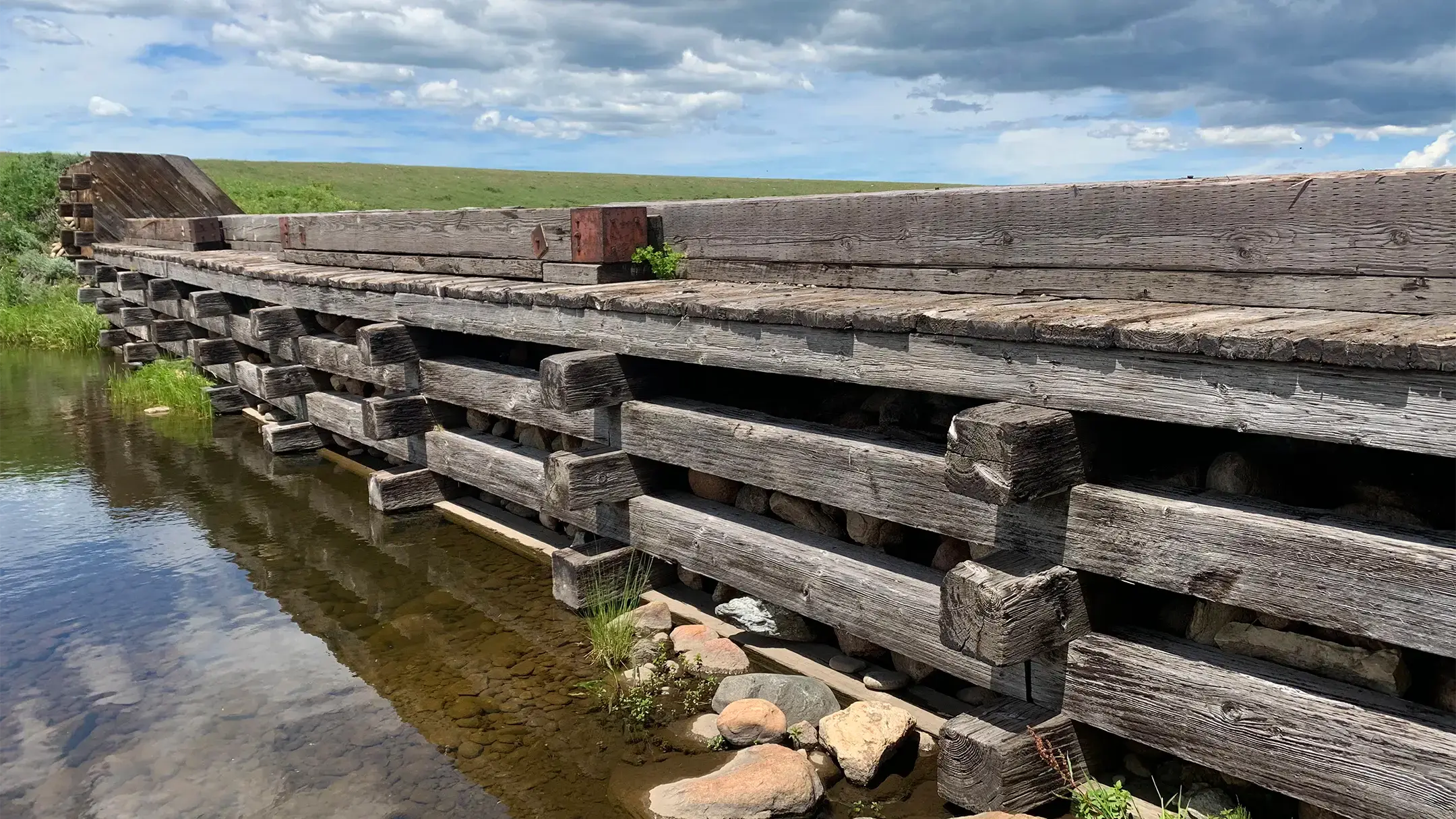
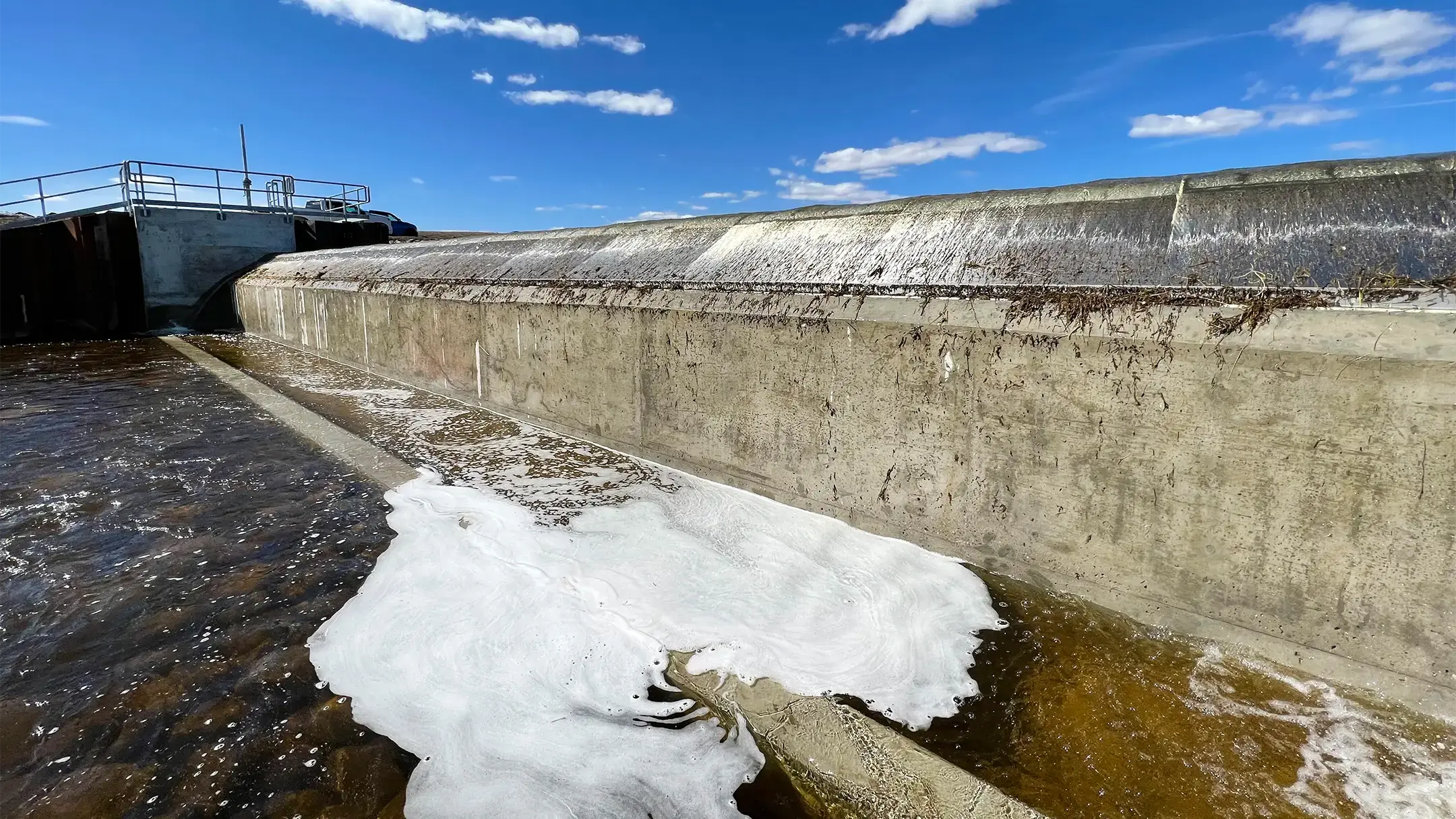
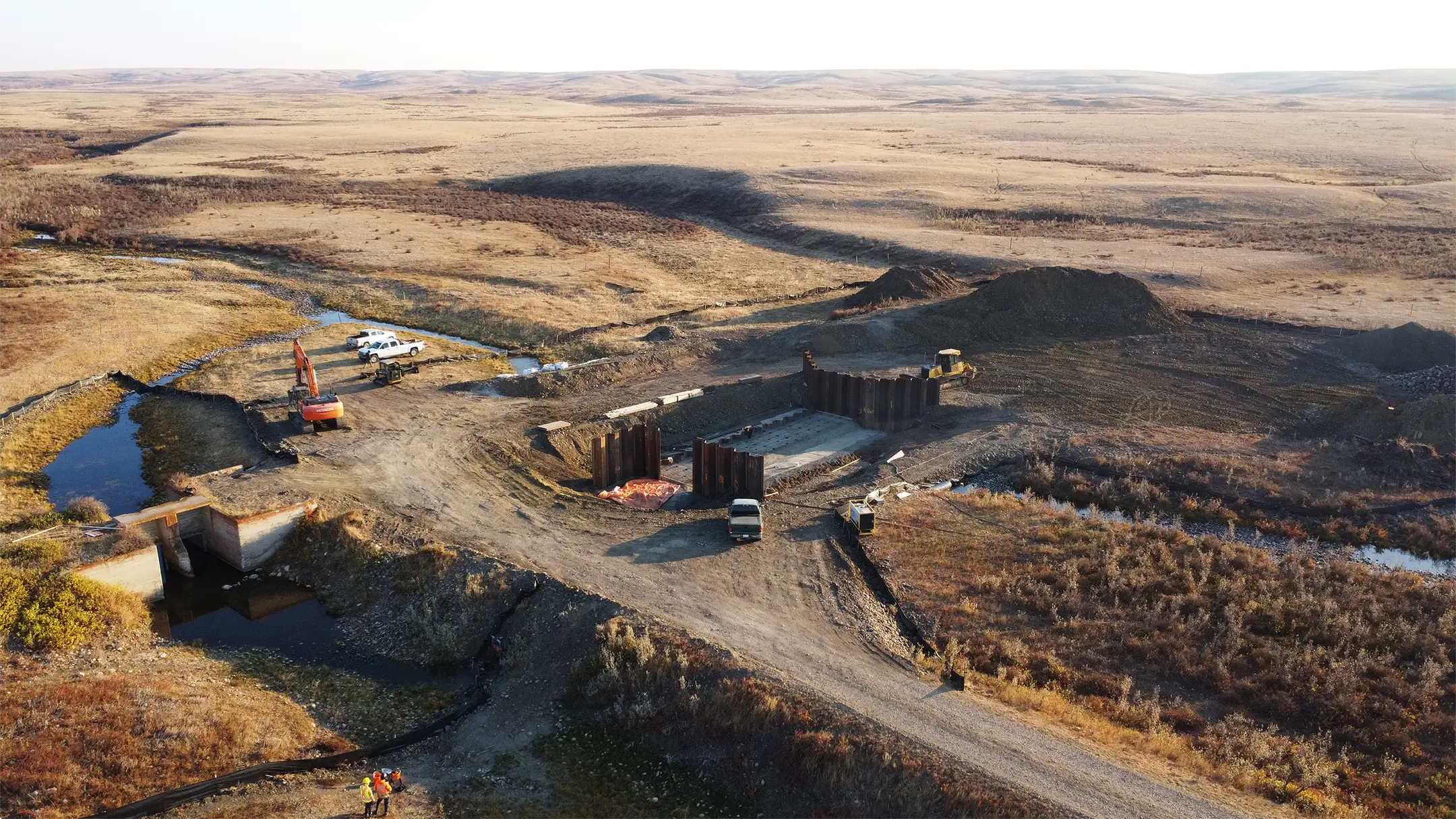
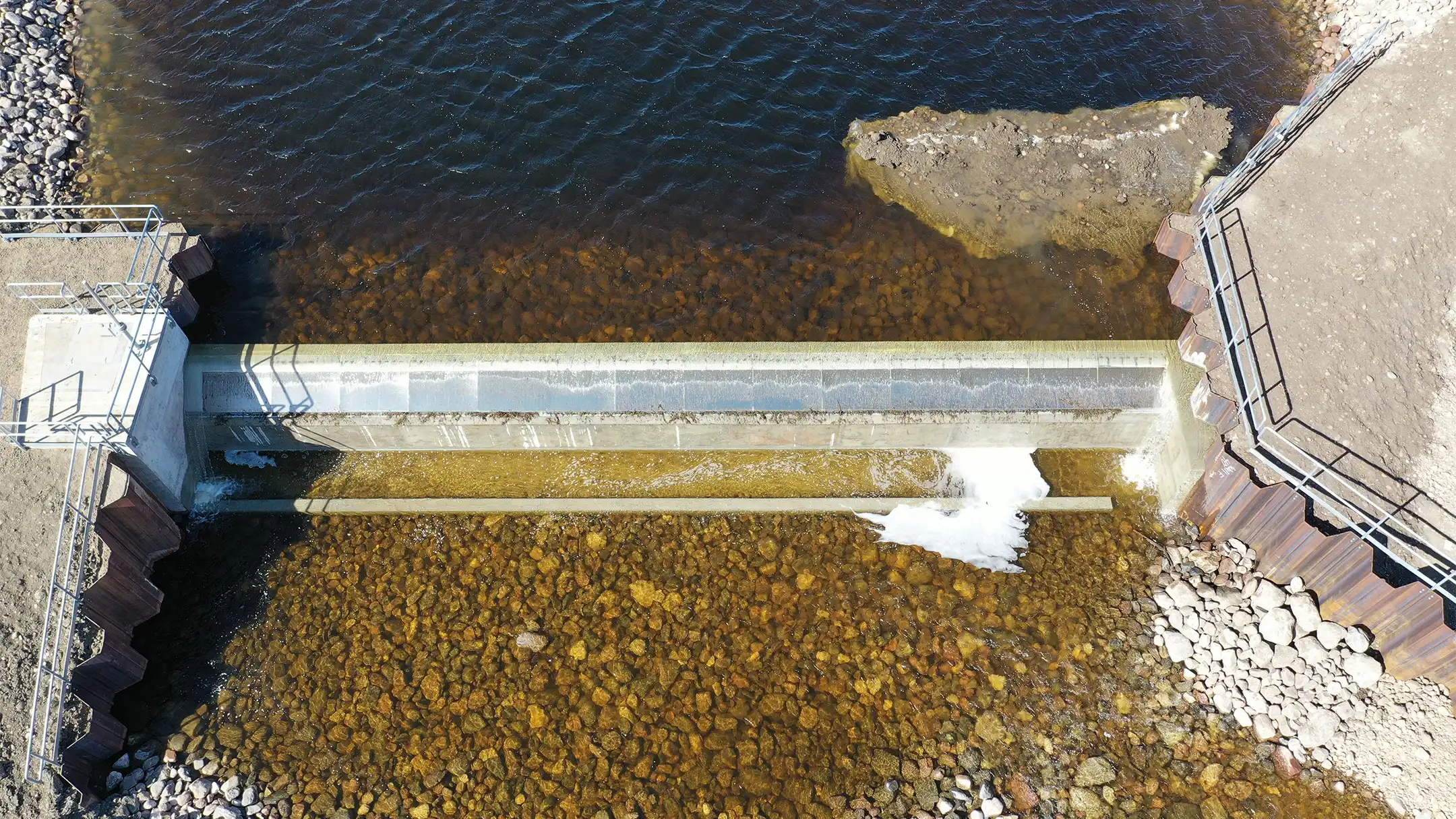
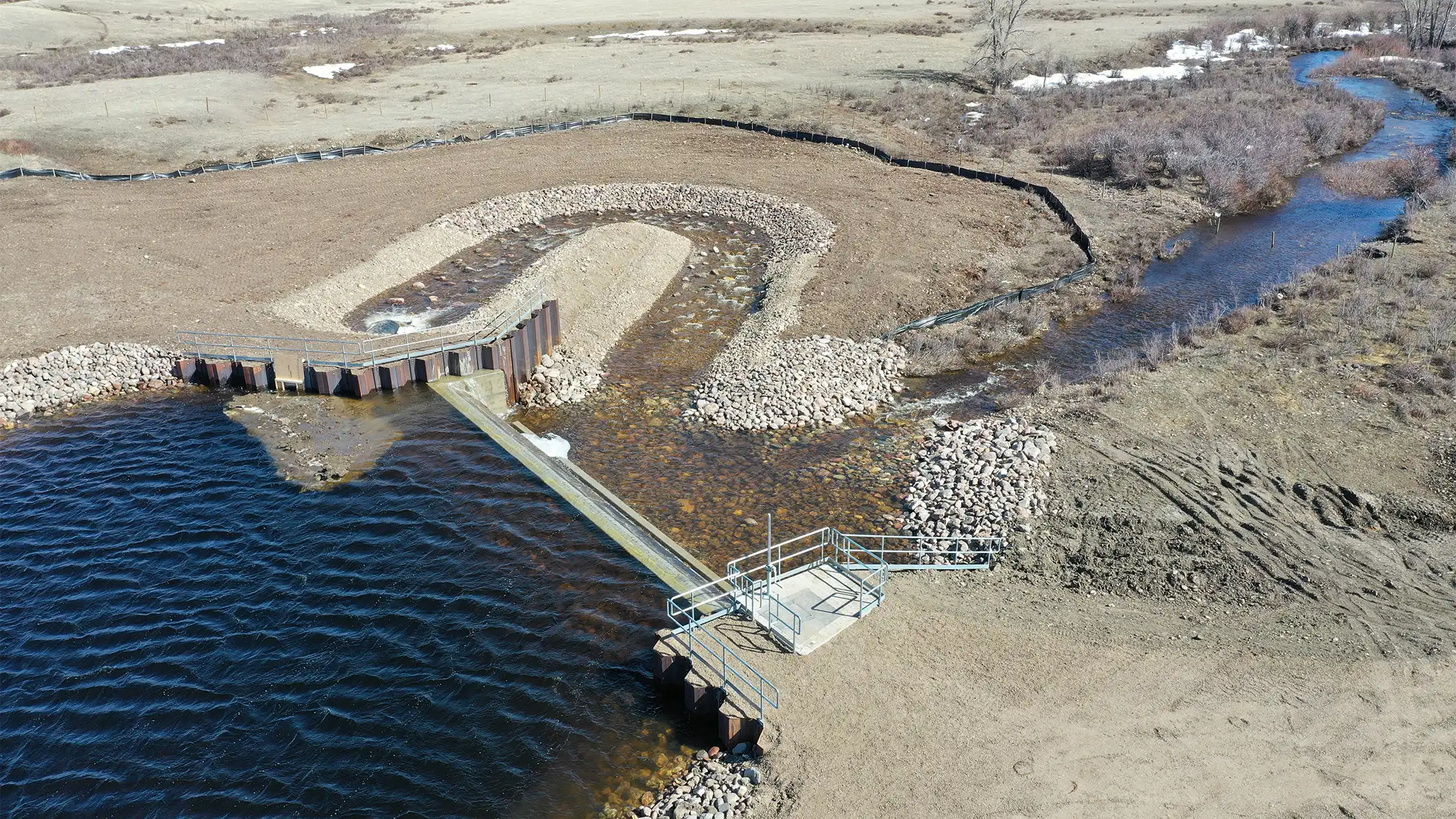
The Davis Diversion was built in 1939 near the town of Maple Creek. The main purpose of this canal is to divert unregulated flow to Cypress Lake, the main source of drinking water and irrigation projects in Southwestern Saskatchewan. Operation of the original diversion has, in the past, resulted in stranding of at risk fish species.
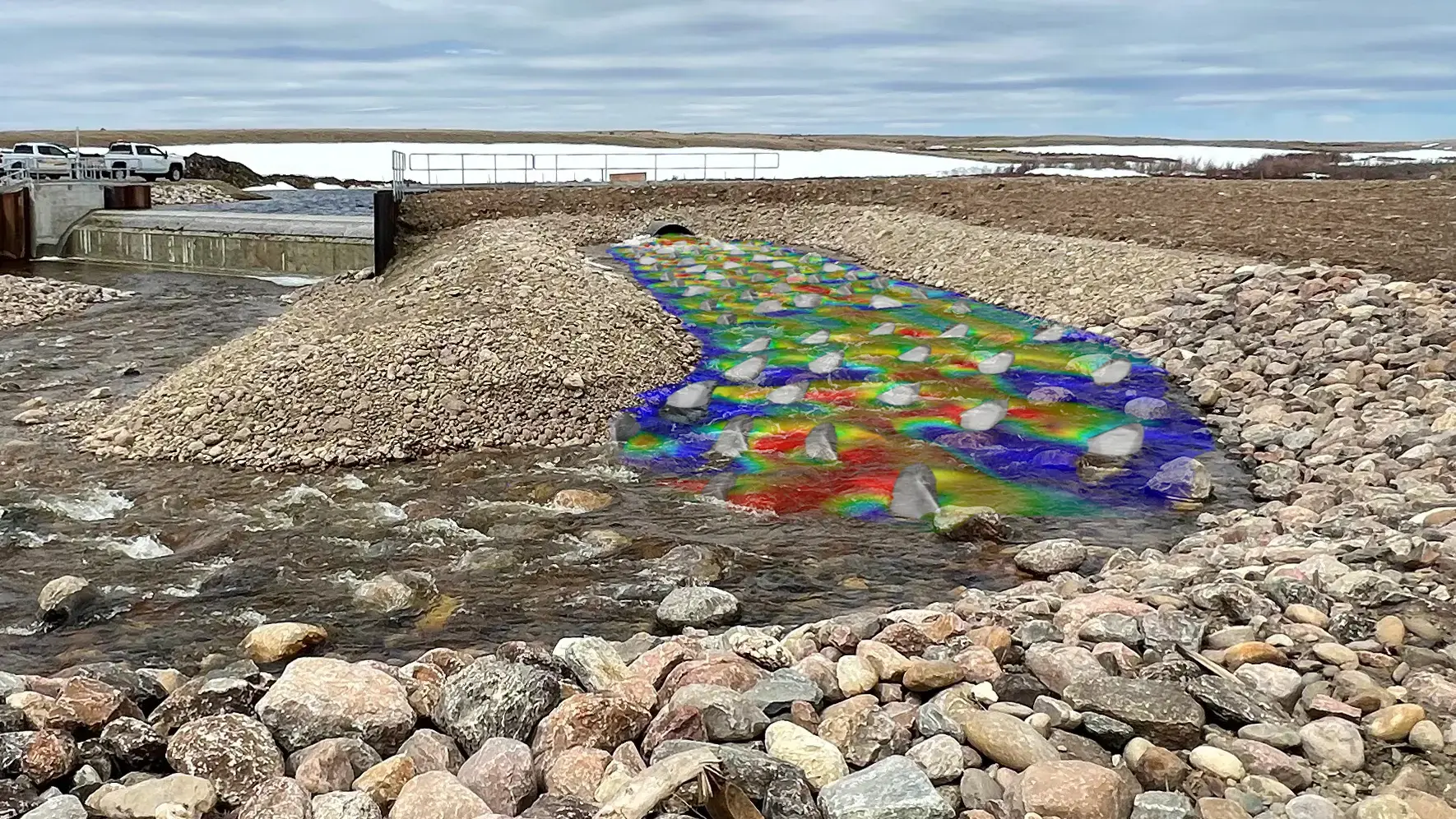
The Water Security Agency (WSA) ceased operation of the diversion system while contemplating solutions. KGS Group developed a solution consisting of the design and construction of a new concrete weir with a Coanda fish exclusion screen, combined with a new rock ramp fishway. This structure provides a novel solution for WSA to achieve its water management objectives, while protecting the area’s sensitive aquatic environment and bringing infrastructure into regulatory compliance.
Project Highlights
- Conceptual and detailed design of fish exclusion at diversion intake
- Replacement and modernization of aging water control structures
- Upstream fish passage integrated around the control structure
- Final product was in complete compliance with Fisheries Act and SARA
- Enables resumption of diversion operations to Cypress Lake
Pointe du Bois Spillway Replacement
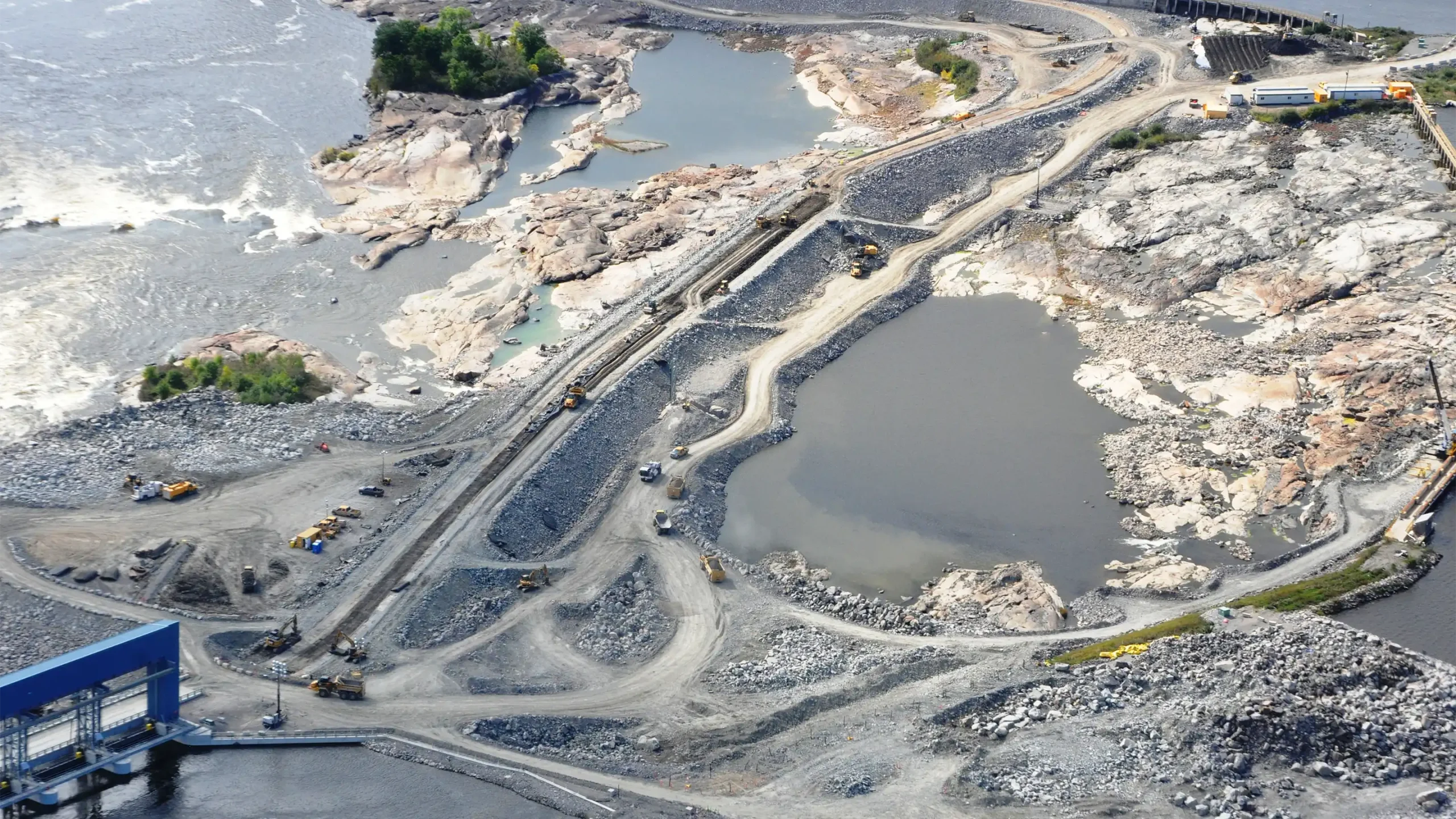
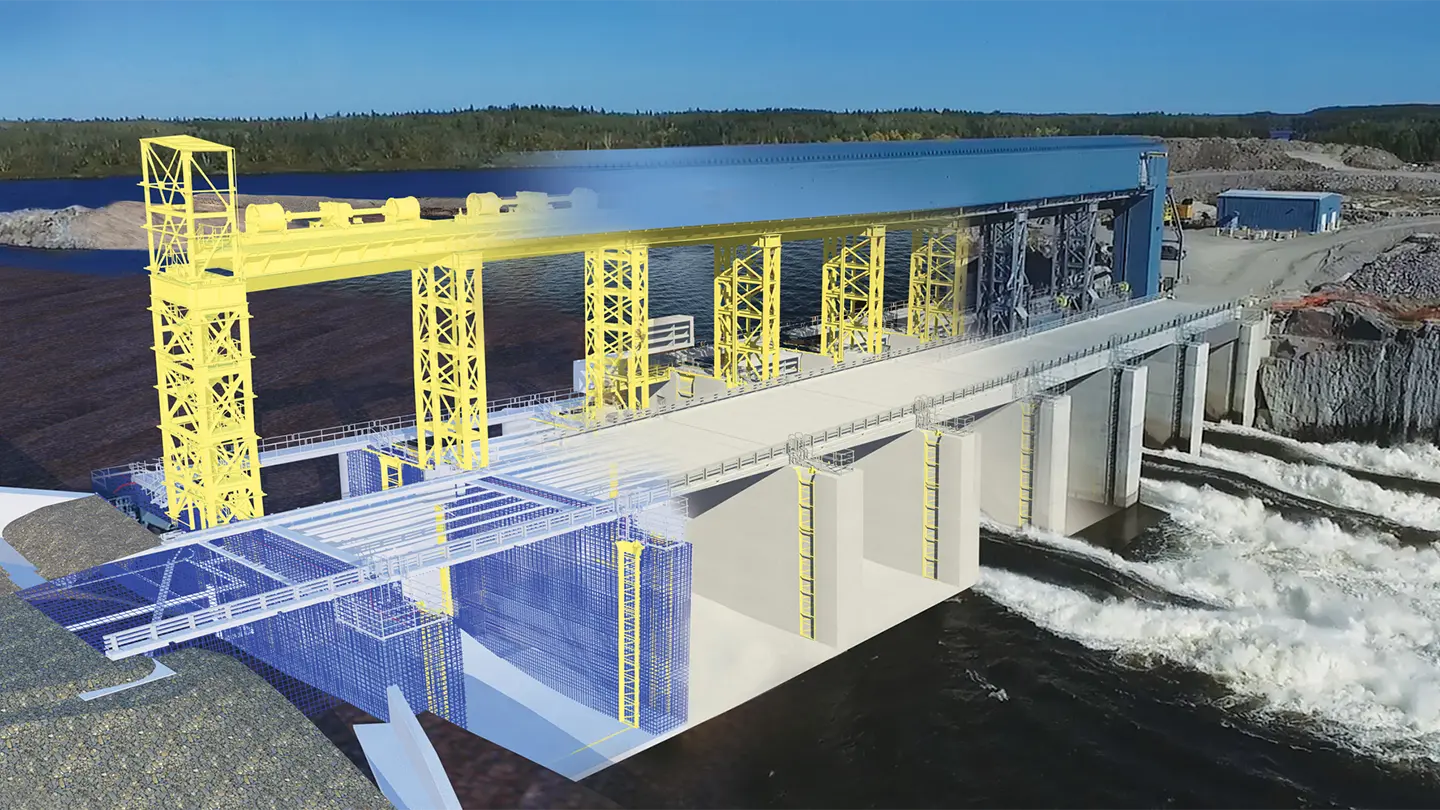
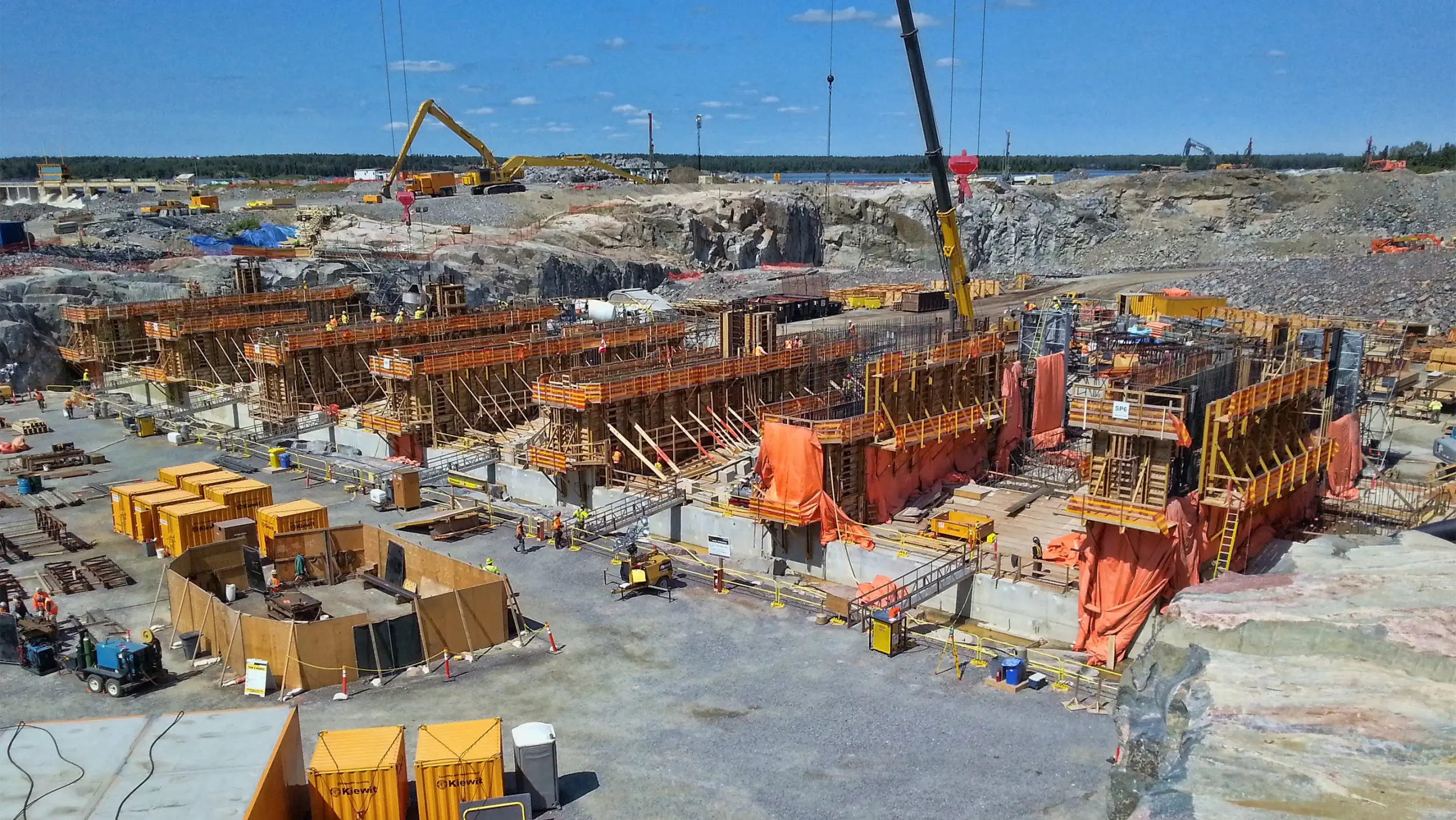
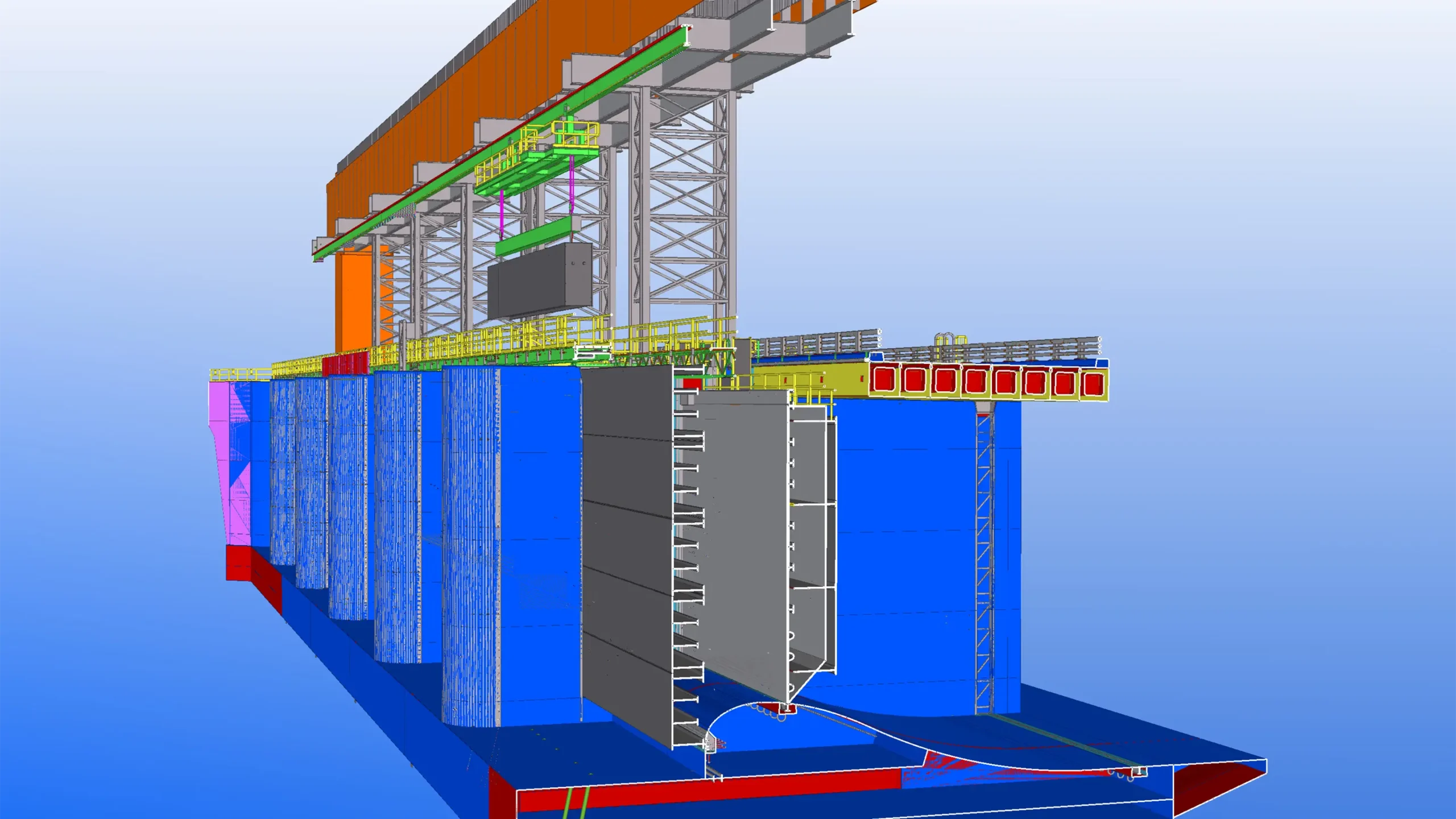
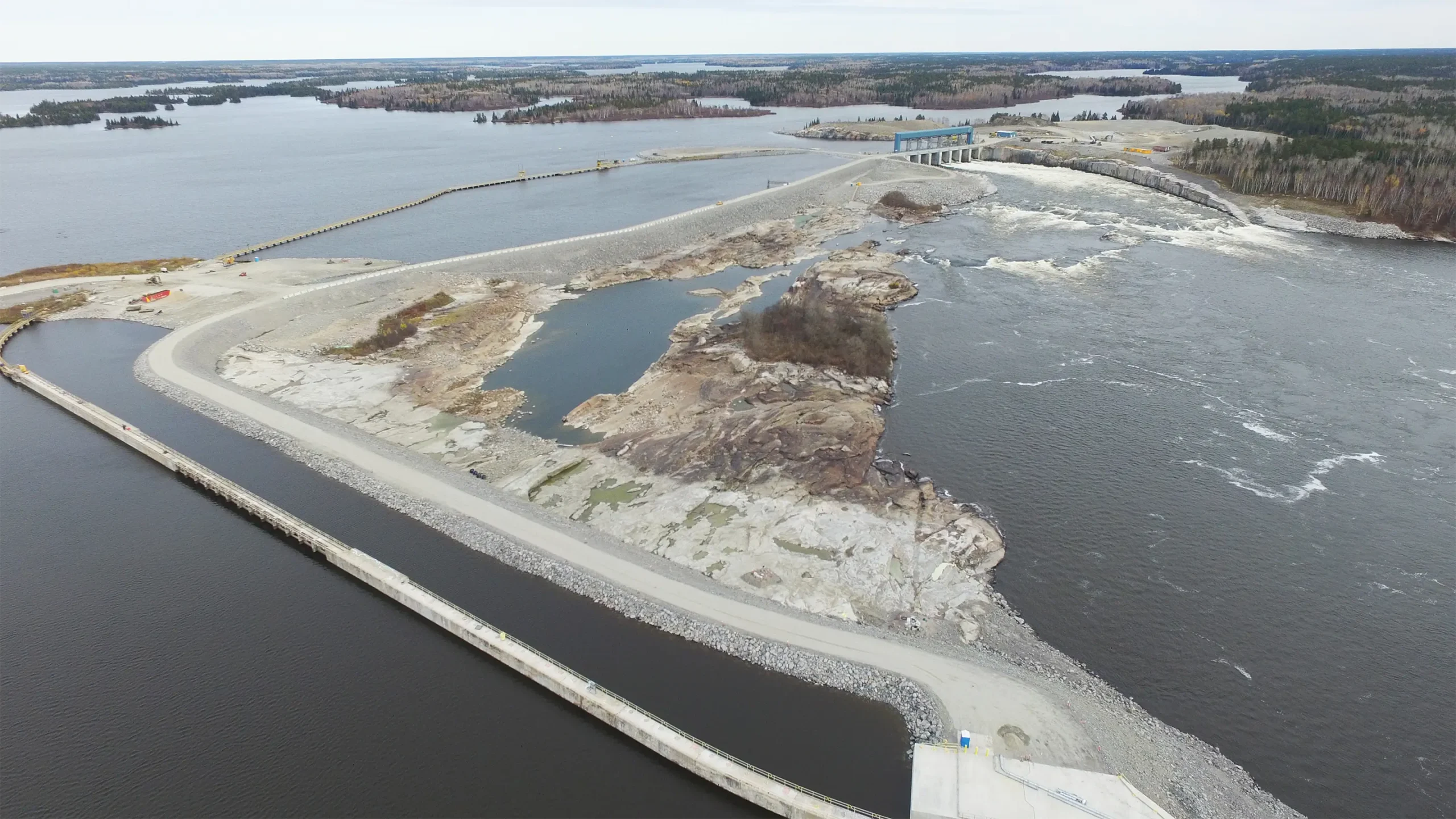
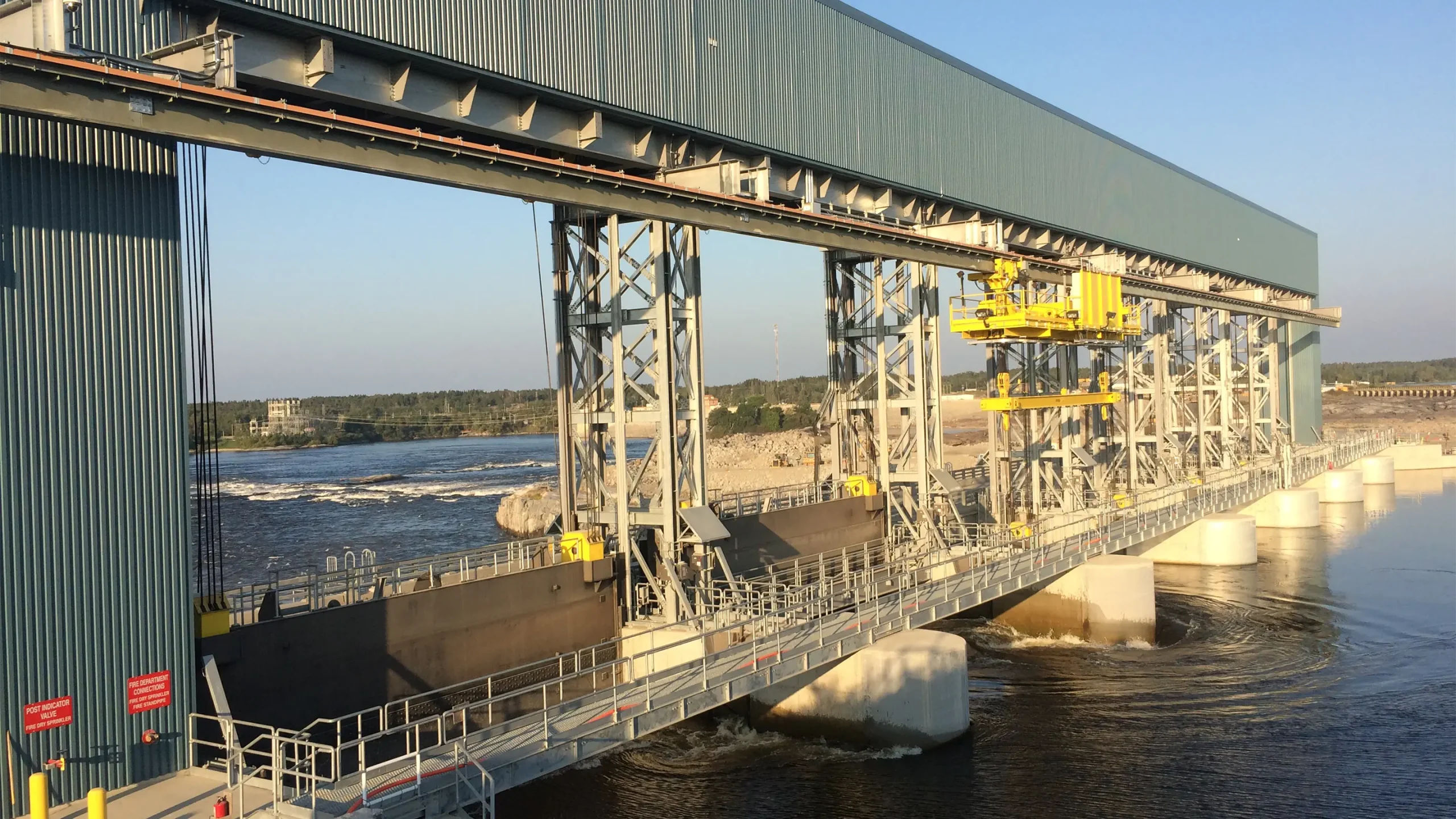
The Pointe du Bois Generating Station is the oldest operating hydroelectric plant in Manitoba. Despite extensive upgrades and ongoing maintenance over the years, the original spillway required replacement. The Pointe du Bois Spillway Replacement project included the design and construction of a new remotely operated 7-bay spillway and a new 1km long zoned earthfill dam, complete with an ancillary support building for electrical switch gear and control systems, a backup diesel generator, and other related infrastructure.
As the prime consultant, KGS Group worked collaboratively with Manitoba Hydro as the designer in an early contractor involvement project delivery process. KGS also provided full-time technical support and quality assurance assistance through construction, commissioning and close-out activities.
The final design was carried out entirely within a 3D digital environment, and was paramount for the successful execution of all stages of the project. This innovative approach gave the team the ability to visualize the end product at the design stage and enabled harmonious advancement of the project across multiple disciplines.
The several hundred-million-dollar project was successfully completed without any interruptions to the ongoing operation of the plant, while protecting and preserving established lake sturgeon habitat and restoring the natural landscape in this environmentally sensitive provincial park setting.
Project Highlights
- New remotely operated seven bay spillway, support building and backup diesel generator
- New 1km long zoned earthfill embankment dam
- 3D digital design environment
- The several hundred‑million‑dollar capital program was completed without operational interruptions
- Enhanced safety and control, extended asset life and a more reliable discharge capacity
- Lake sturgeon habitat protected and the landscape in the provincial park was restored
Newton Force Main River Crossing
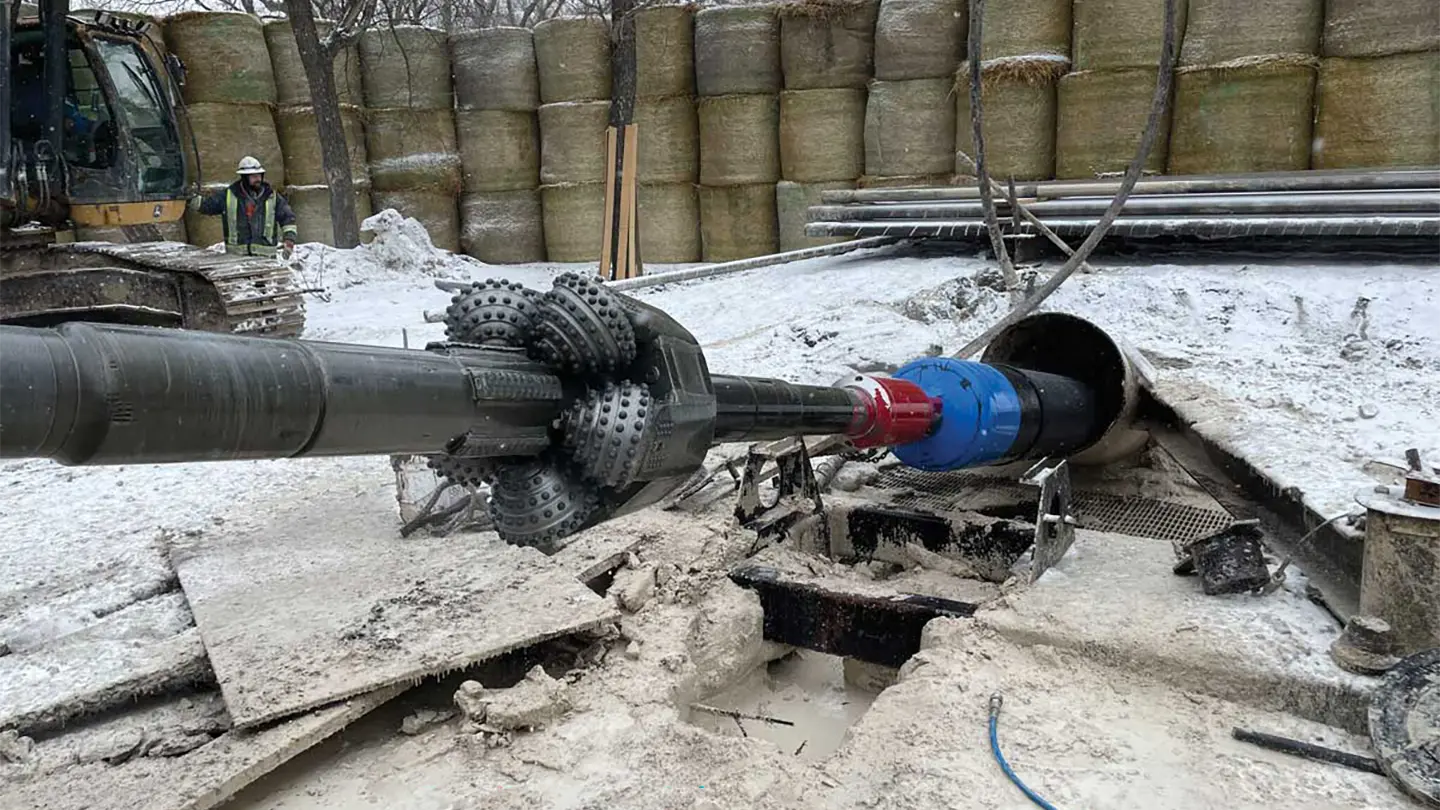
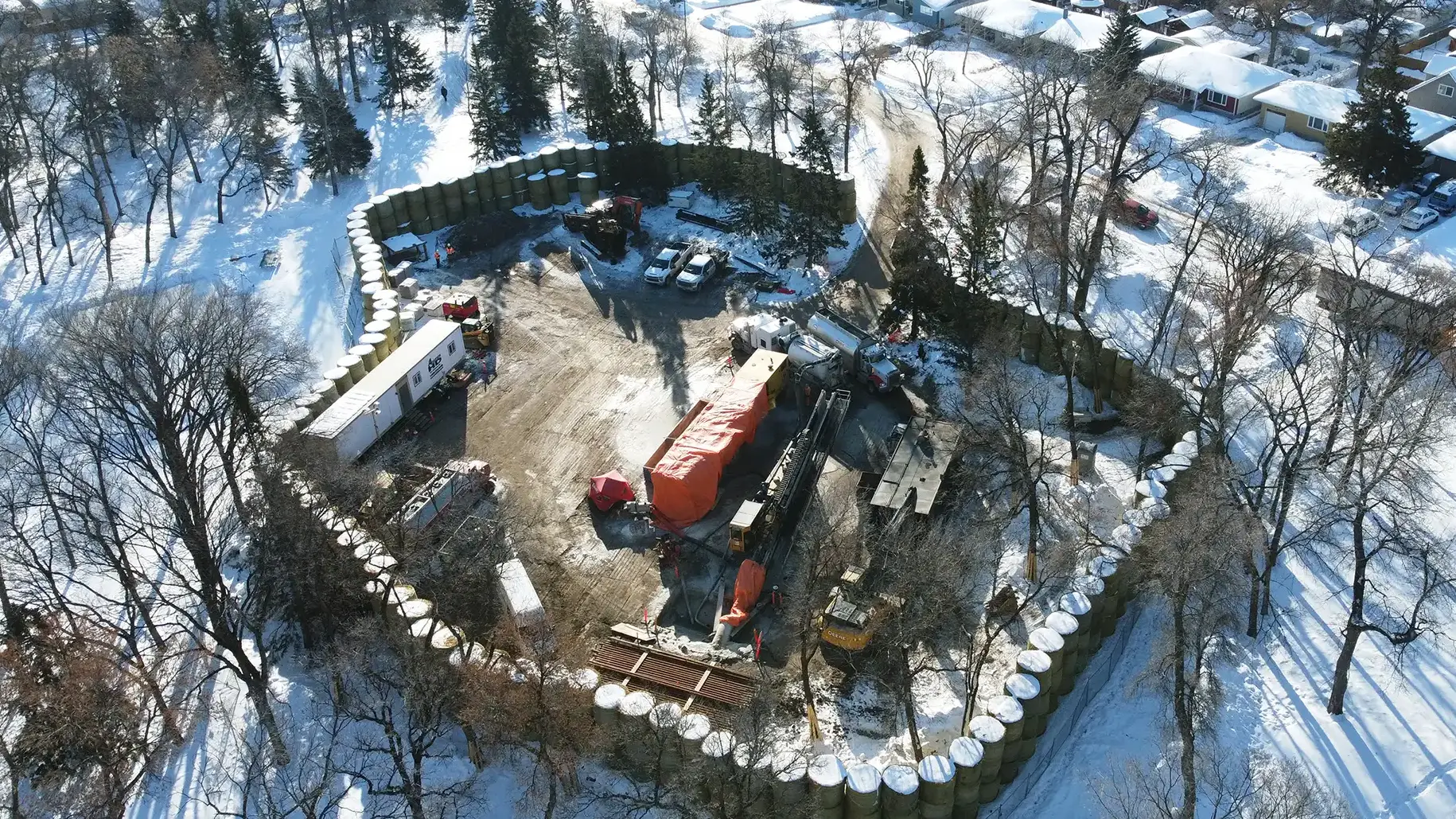
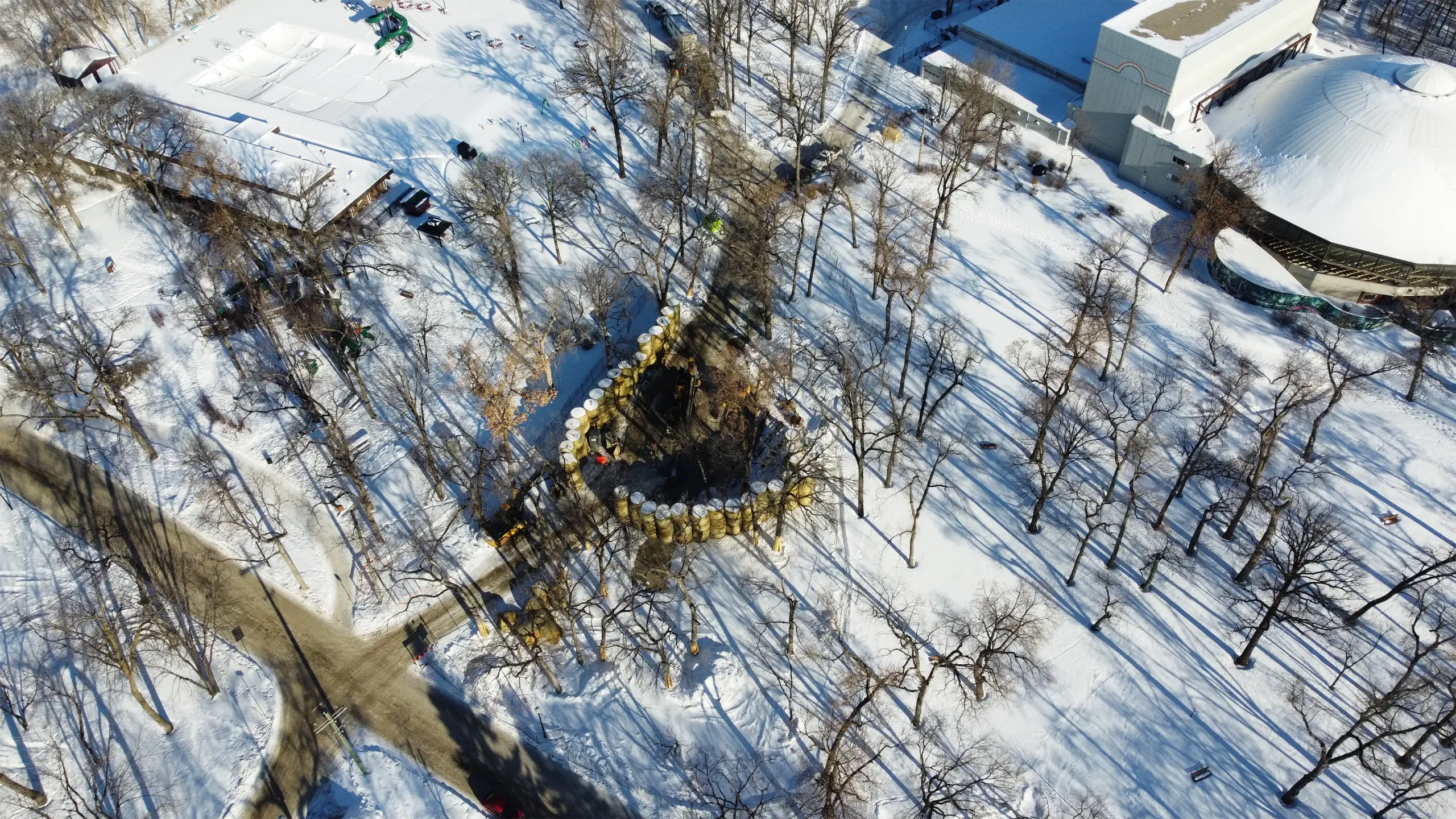
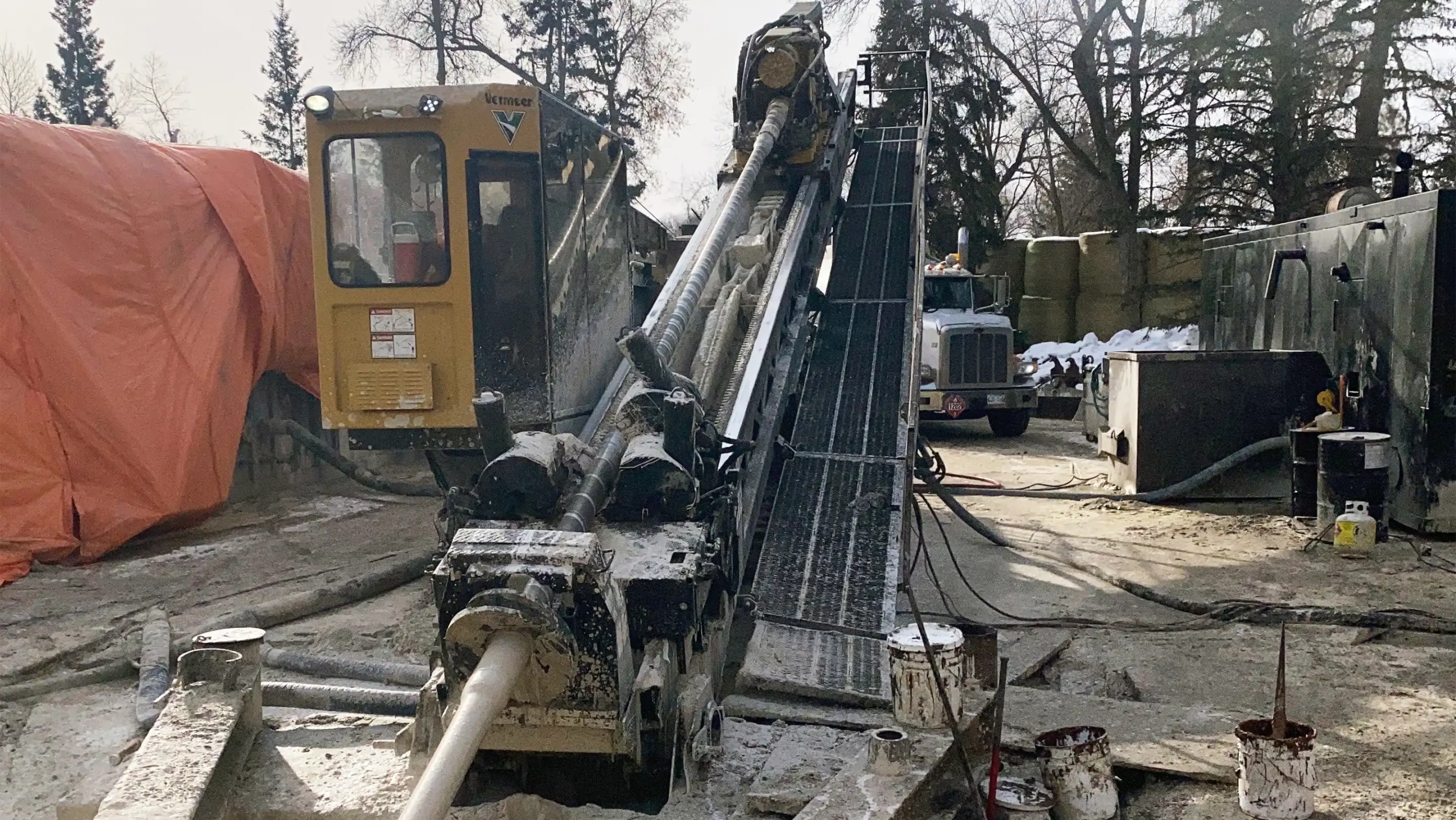
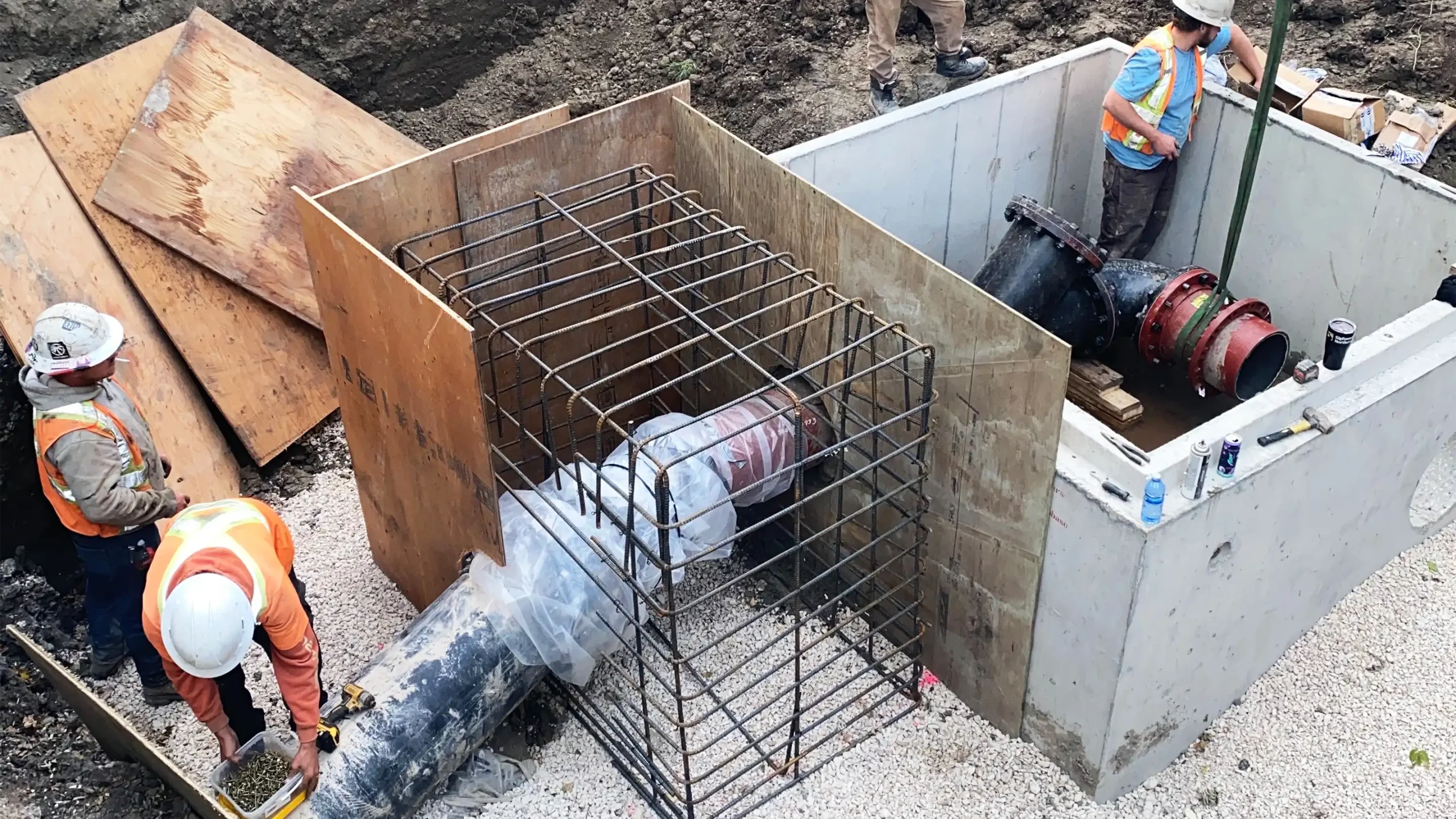
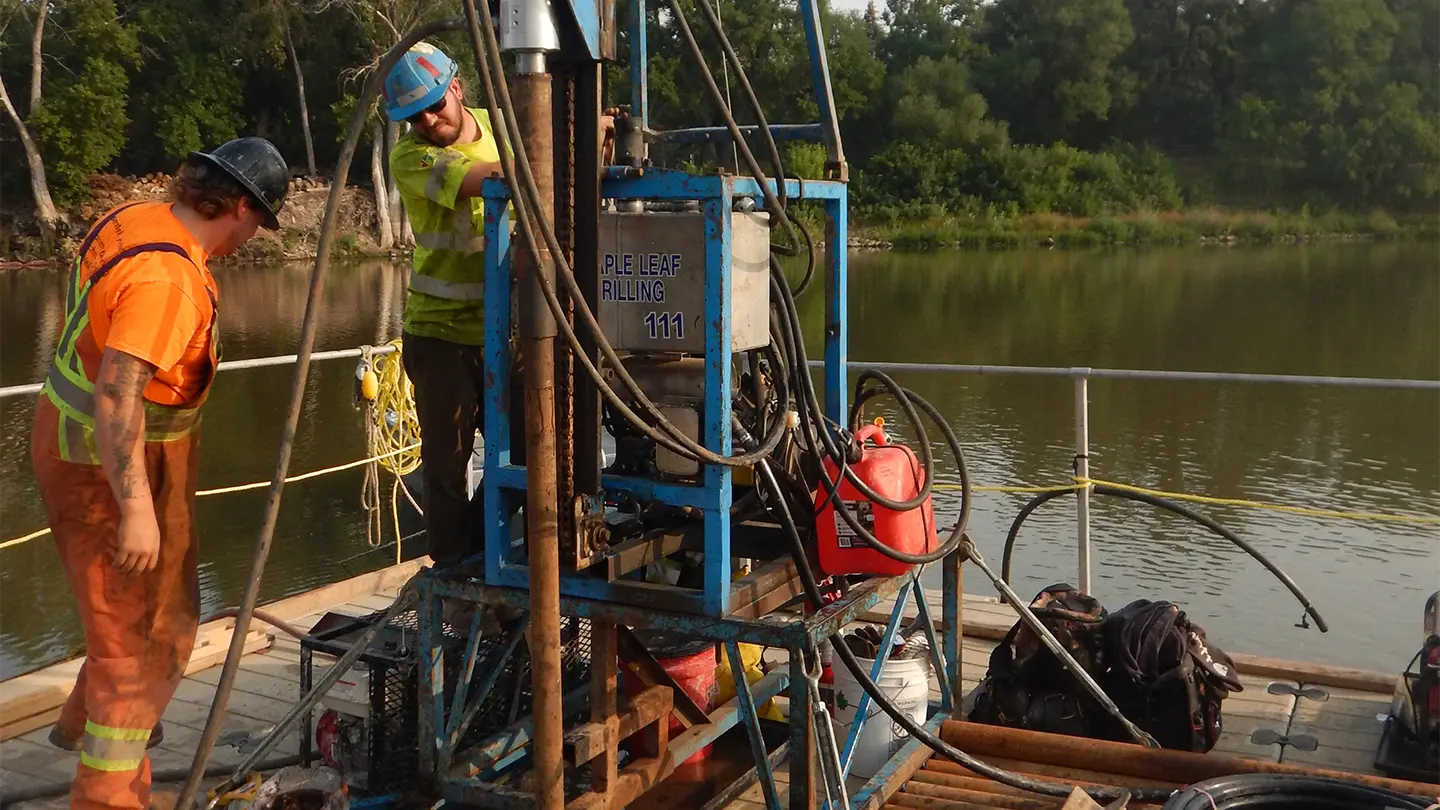
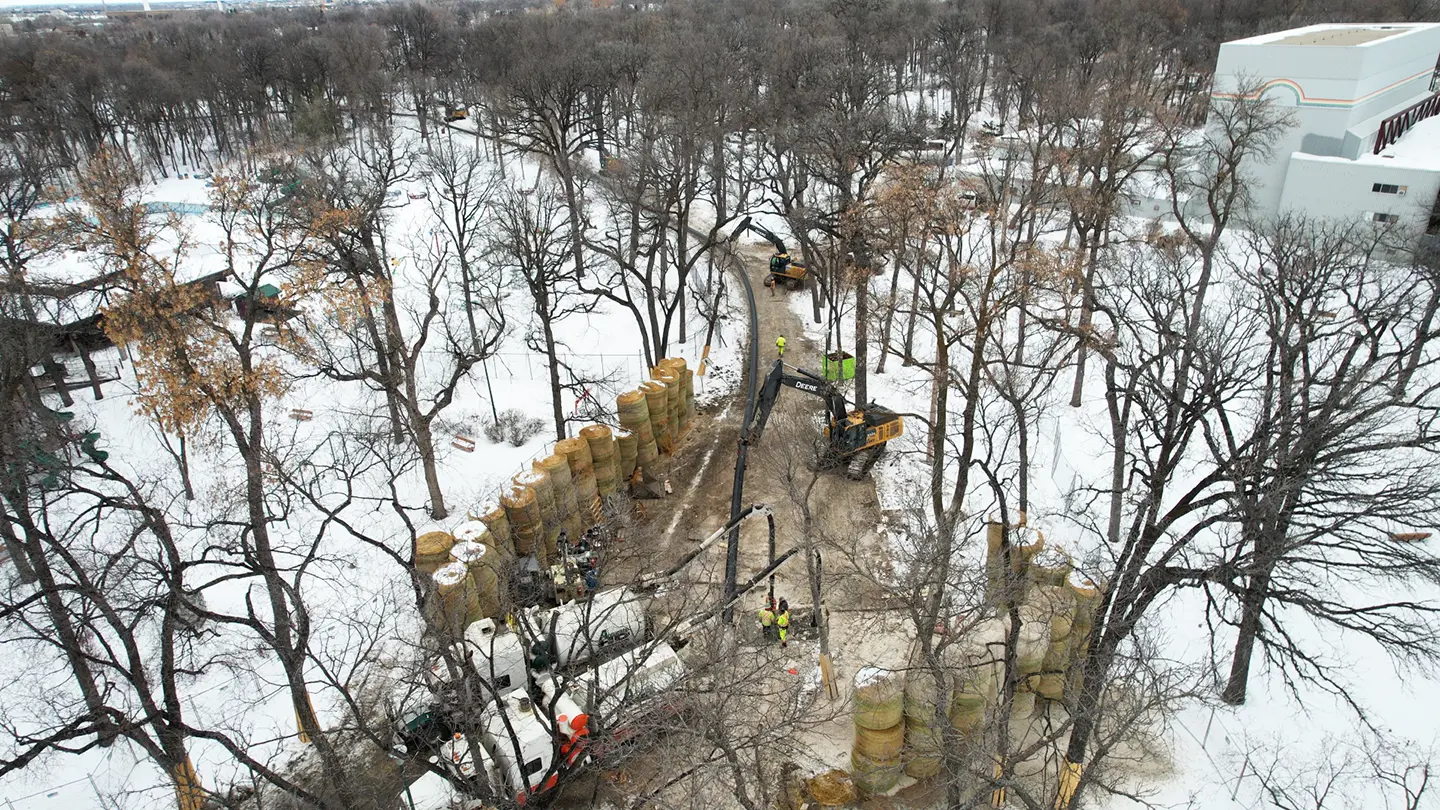
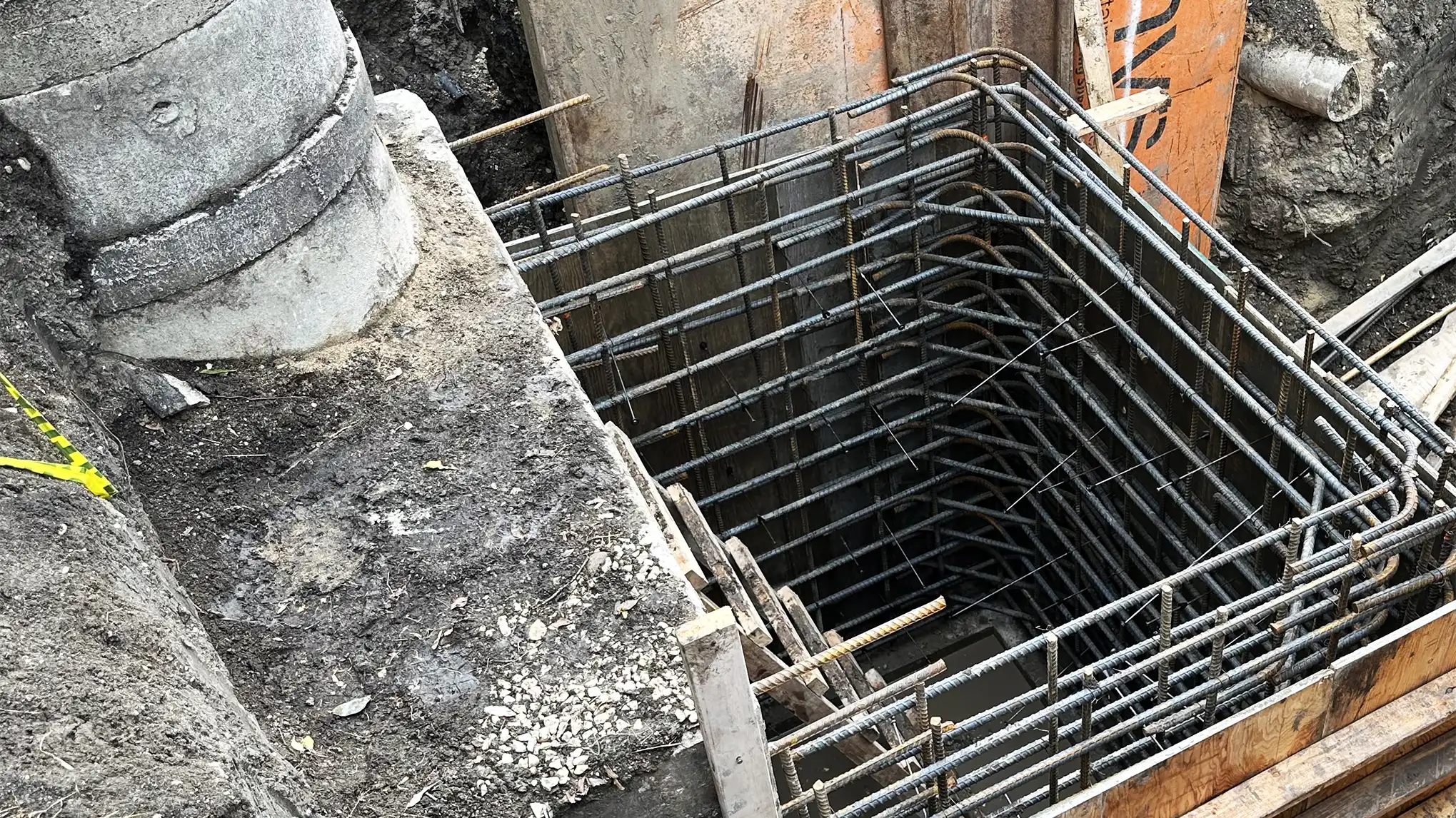
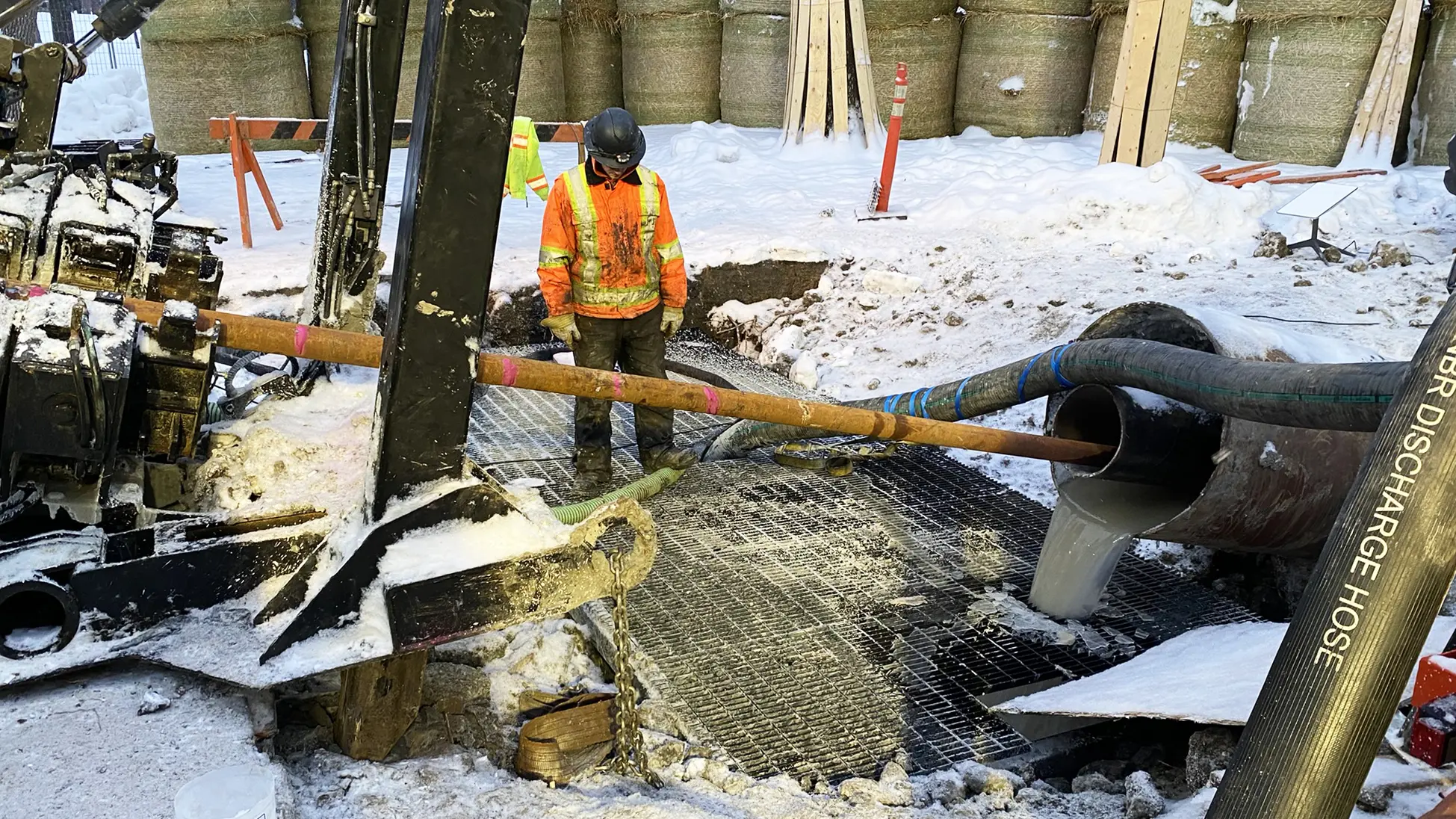
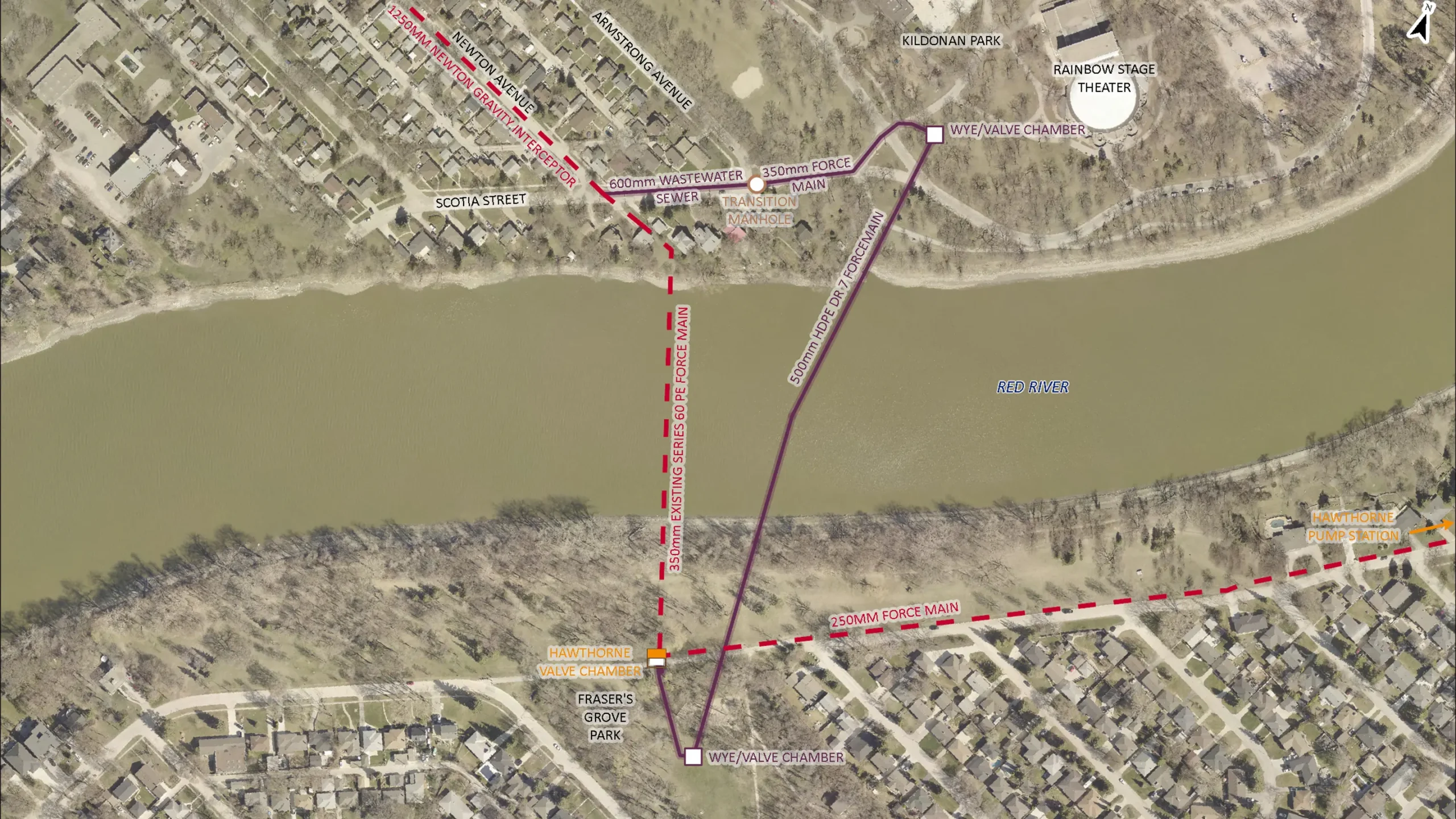
KGS Group and Associated Engineering designed and oversaw the construction of a new, 466 meter river crossing installed trenchlessly 40 meters below grade to replace the failing Newton Force Main River Crossing. This vital piece of infrastructure supports the wastewater flows from the entire Hawthorne sewer district in Winnipeg. Under dry weather conditions, the Newton Force Main River Crossing transports over 2.3 million litres of wastewater daily under the Red River.
The existing crossing was installed along the river bottom in 1978 and was connected to lands that have become densely urbanized, which limited solutions. An alternate alignment was developed to both reroute the force main and install it safely within the bedrock strata below the river.
The result is a durable, long‑term asset that improves system resilience and safeguards the environment and the community.
Project Highlights
- 466 meter river crossing installed trenchlessly, 40 meters below grade
- Horizontal directional drilling with horizontal and vertical curves – a first in Manitoba
- 780 meters of new force main on an alternate alignment in bedrock below the river
- Replaces 1978 river‑bottom crossing which lowers environmental risk and maintenance needs
Royal Canadian Mint Geothermal Process Cooling System
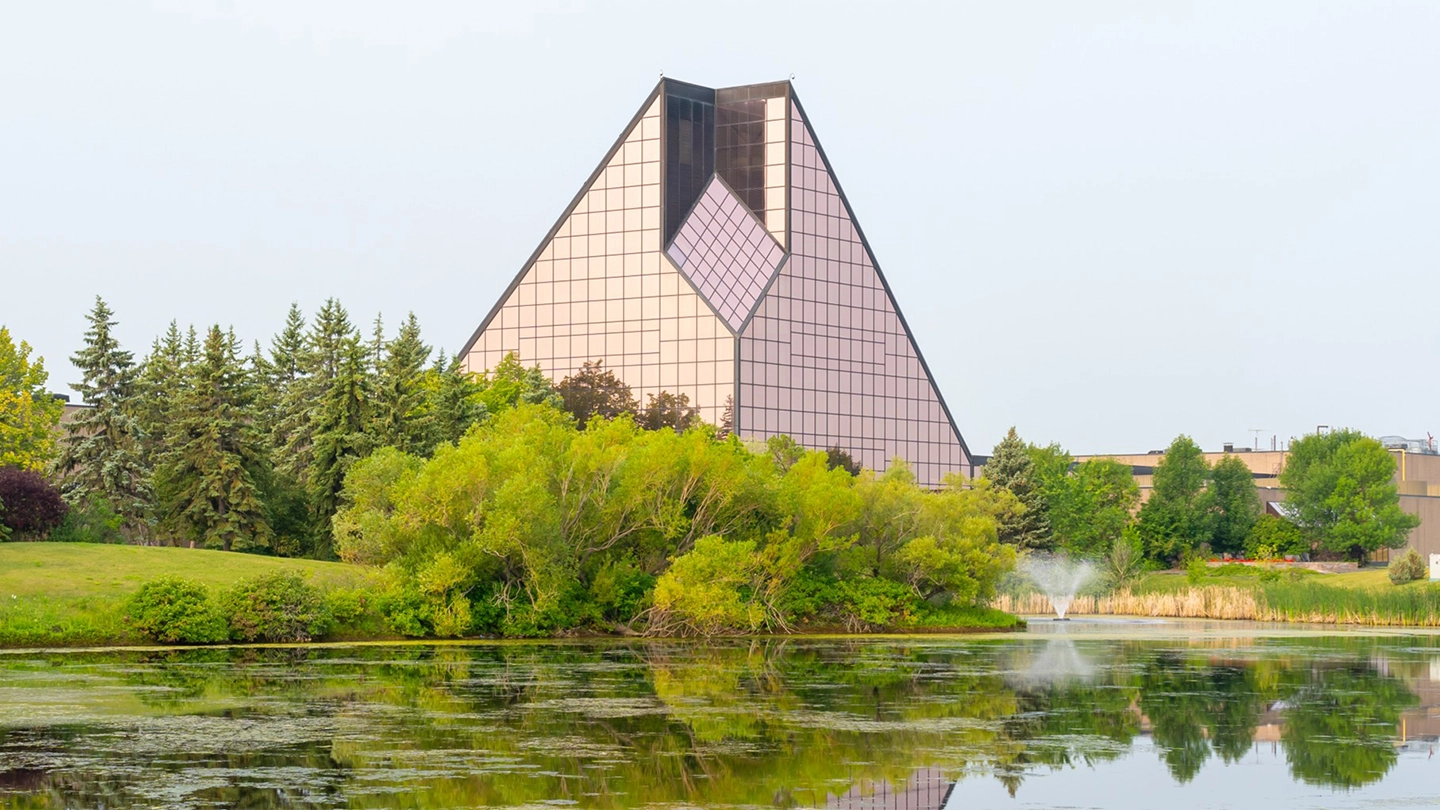


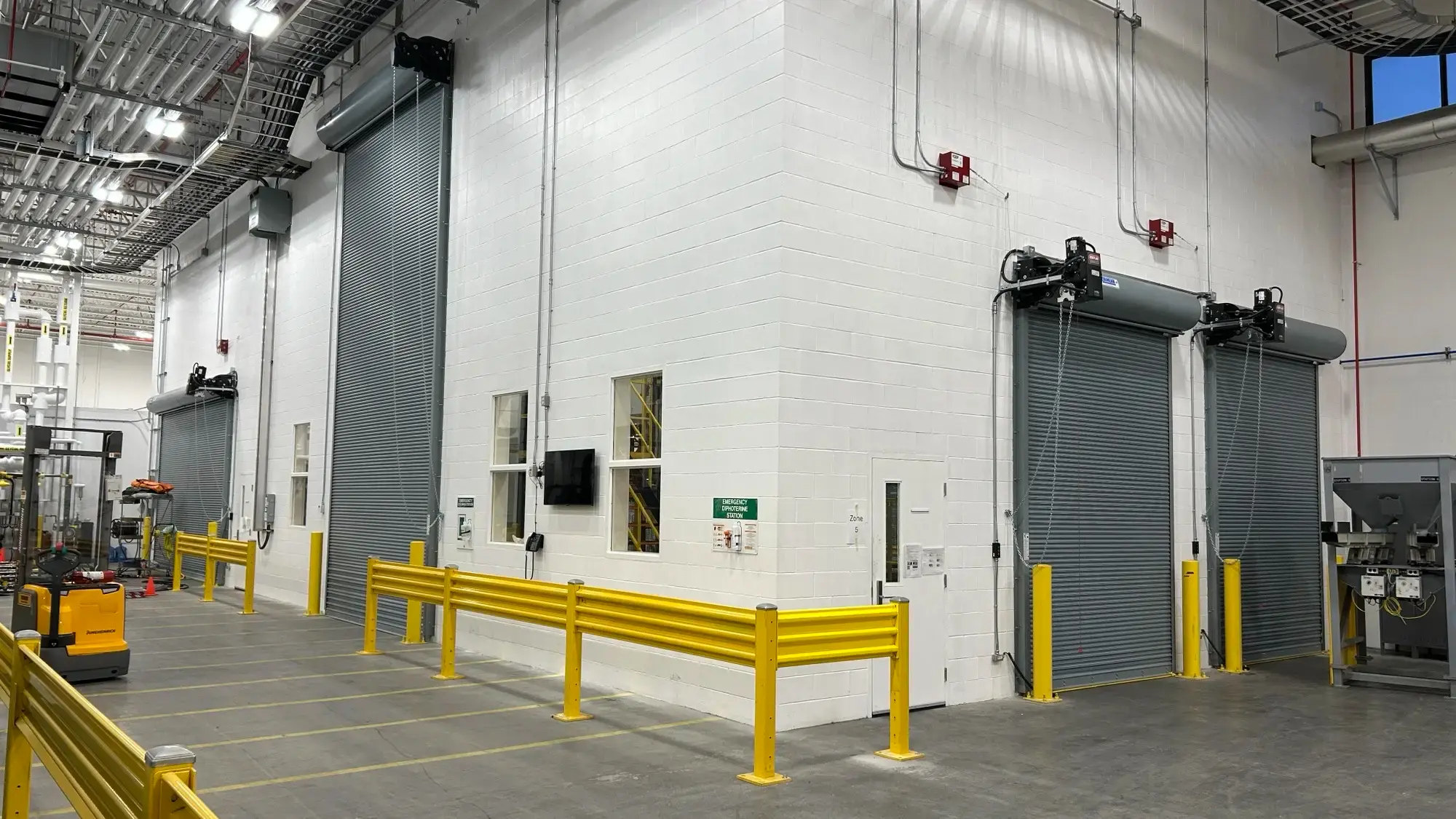
KGS Group partnered with the Royal Canadian Mint to design and oversee construction of a cutting-edge, open‑loop geothermal cooling system for a new coin‑making process – a first for the Mint. The system uses groundwater’s stable temperature to cool equipment, replacing energy‑intensive chillers and cooling towers, nearly eliminating greenhouse gas emissions associated with conventional cooling.
Cooling now relies on a single pump and as the water absorbs heat from the equipment, heat pumps capture that free energy to warm the building through space heaters and ventilation systems. The conditioned water is re‑injected to the underground source, providing thermal balance and long service life.
KGS delivered an integrated design, controls coordination and construction oversight to bring the system online safely, with minimal disruption to operations. While this project significantly reduced the Mint’s energy use, the success here is the reduced environmental impact it will have for years to come.
Project Highlights
- Open‑loop geothermal process cooling with groundwater source and reinjection
- Single‑pump cooling loop with heat pumps that recover waste heat for building heating
- Integrated space heaters, ventilation equipment and facility controls
- Reduced energy use and lower operating costs
- Cooling-related GHG emissions nearly eliminated
- Thermal balancing for longevity, reduced environmental impact and reliable year‑round operation
University of Manitoba Fort Garry Riverbank Asset Management
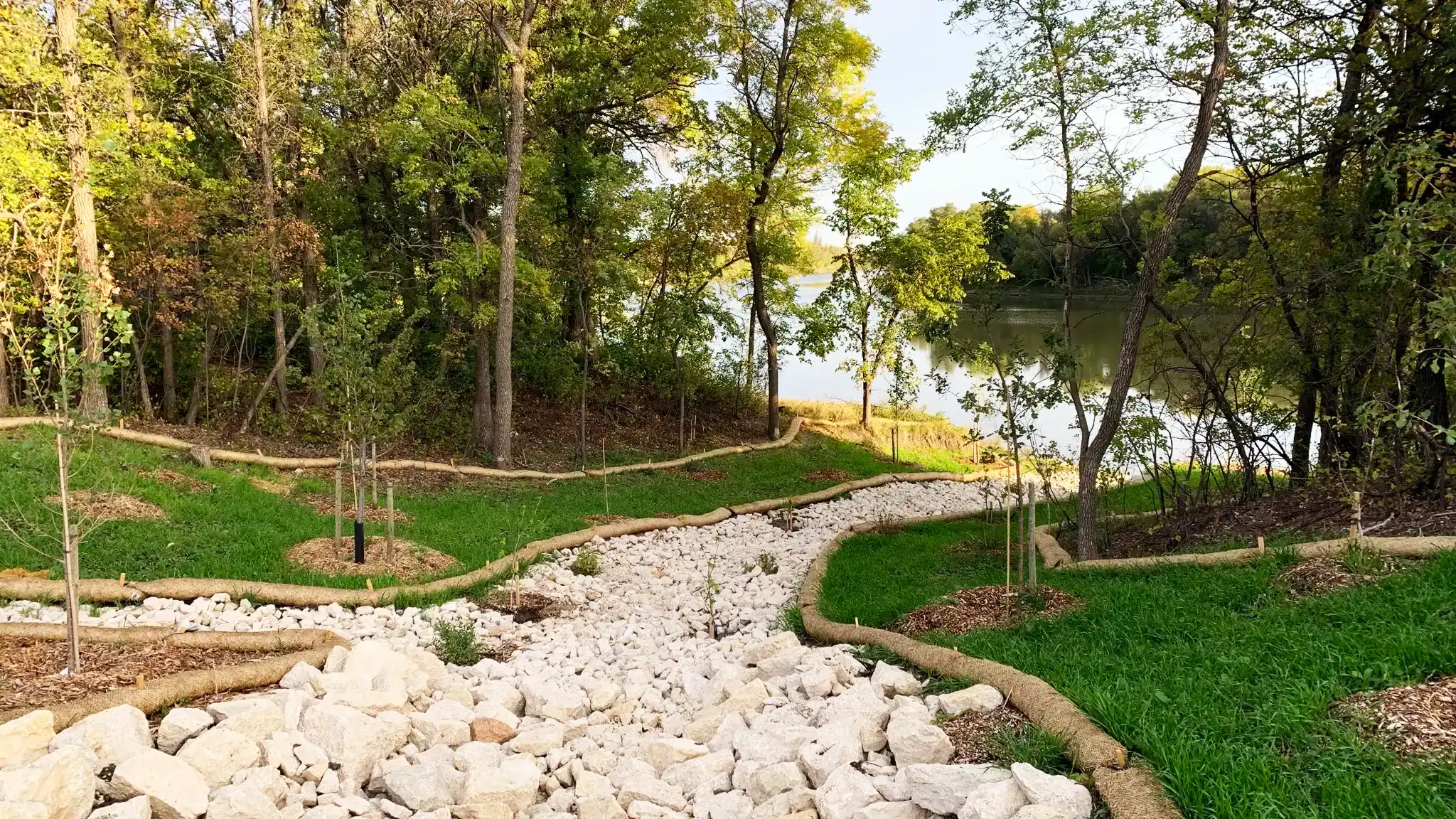
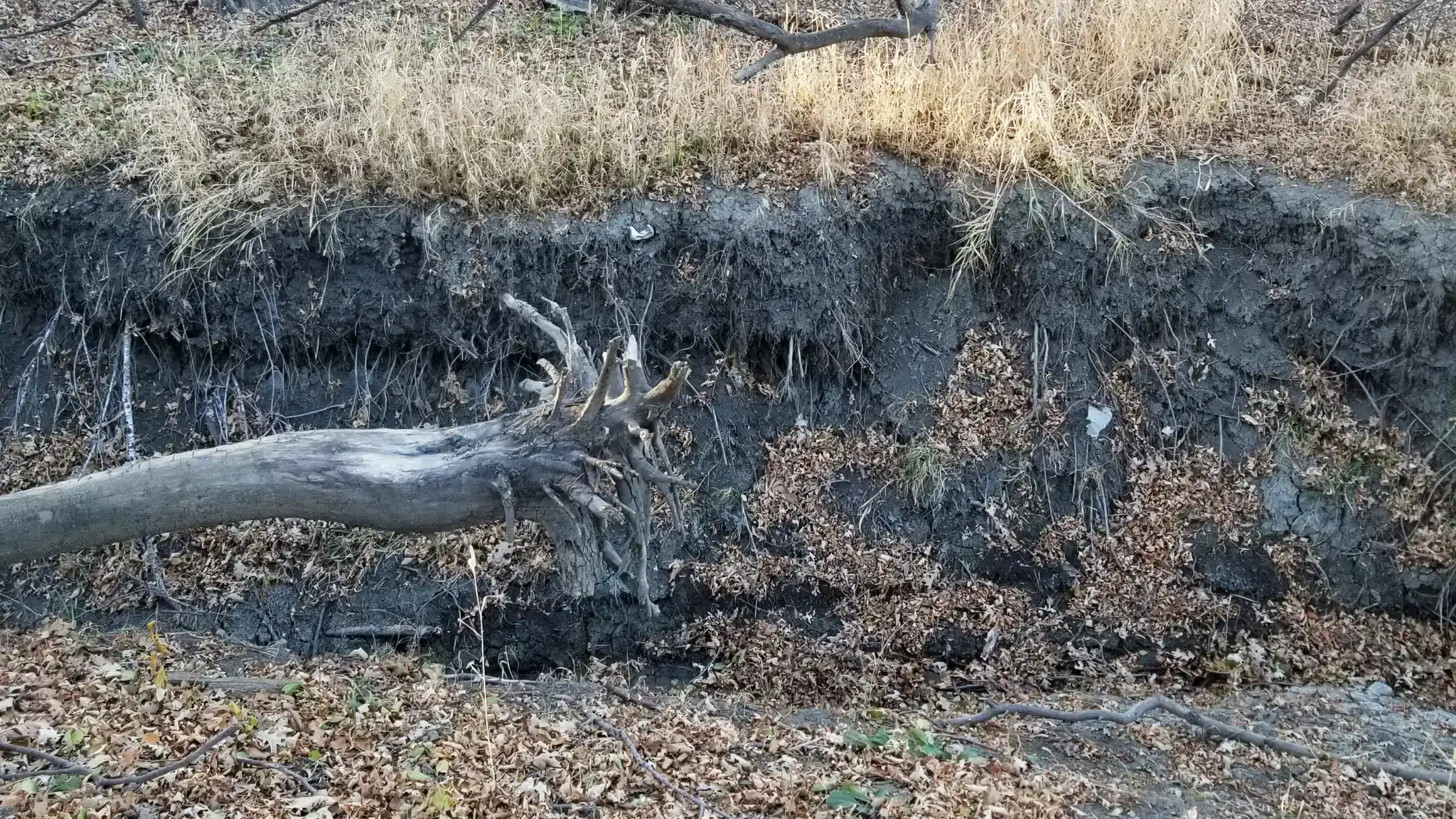
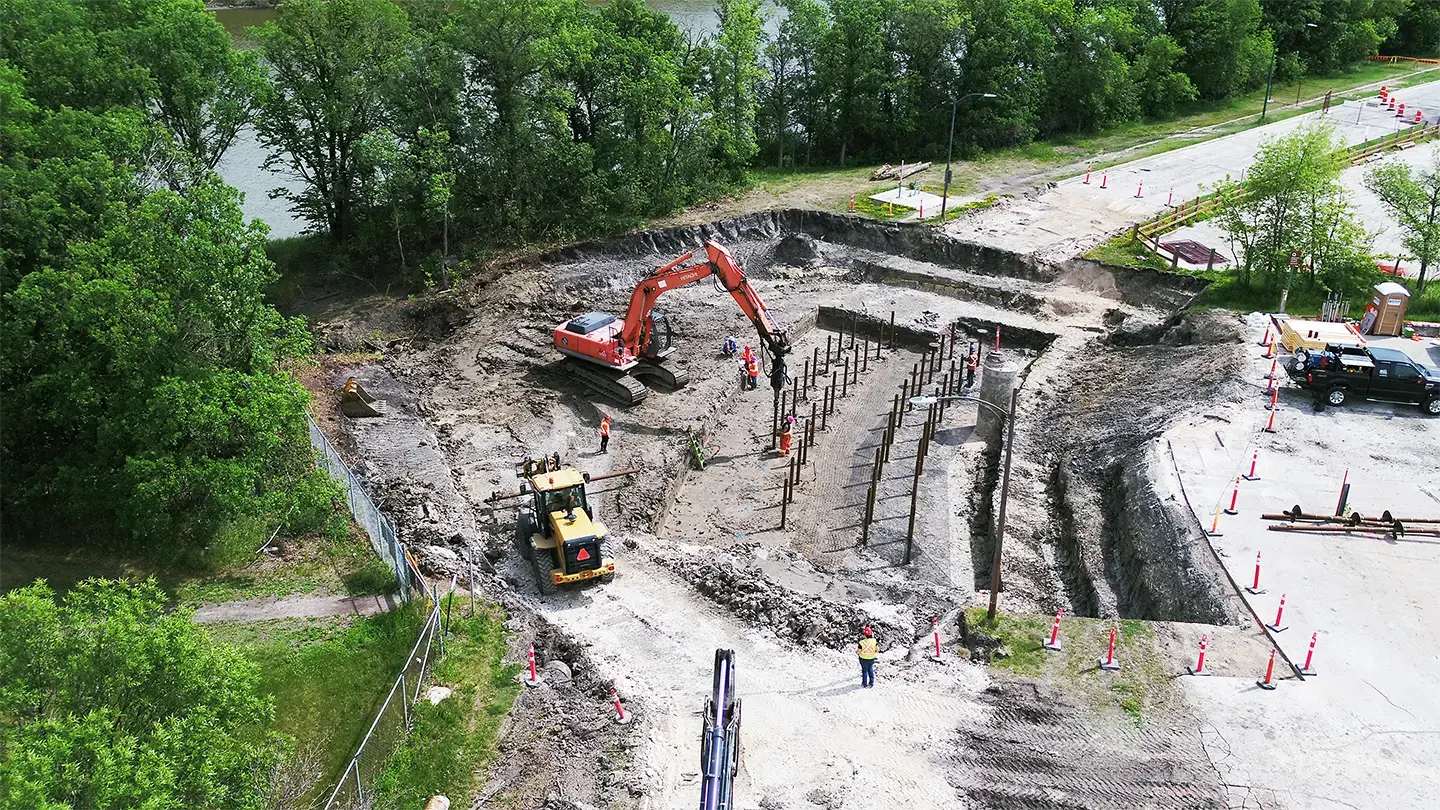
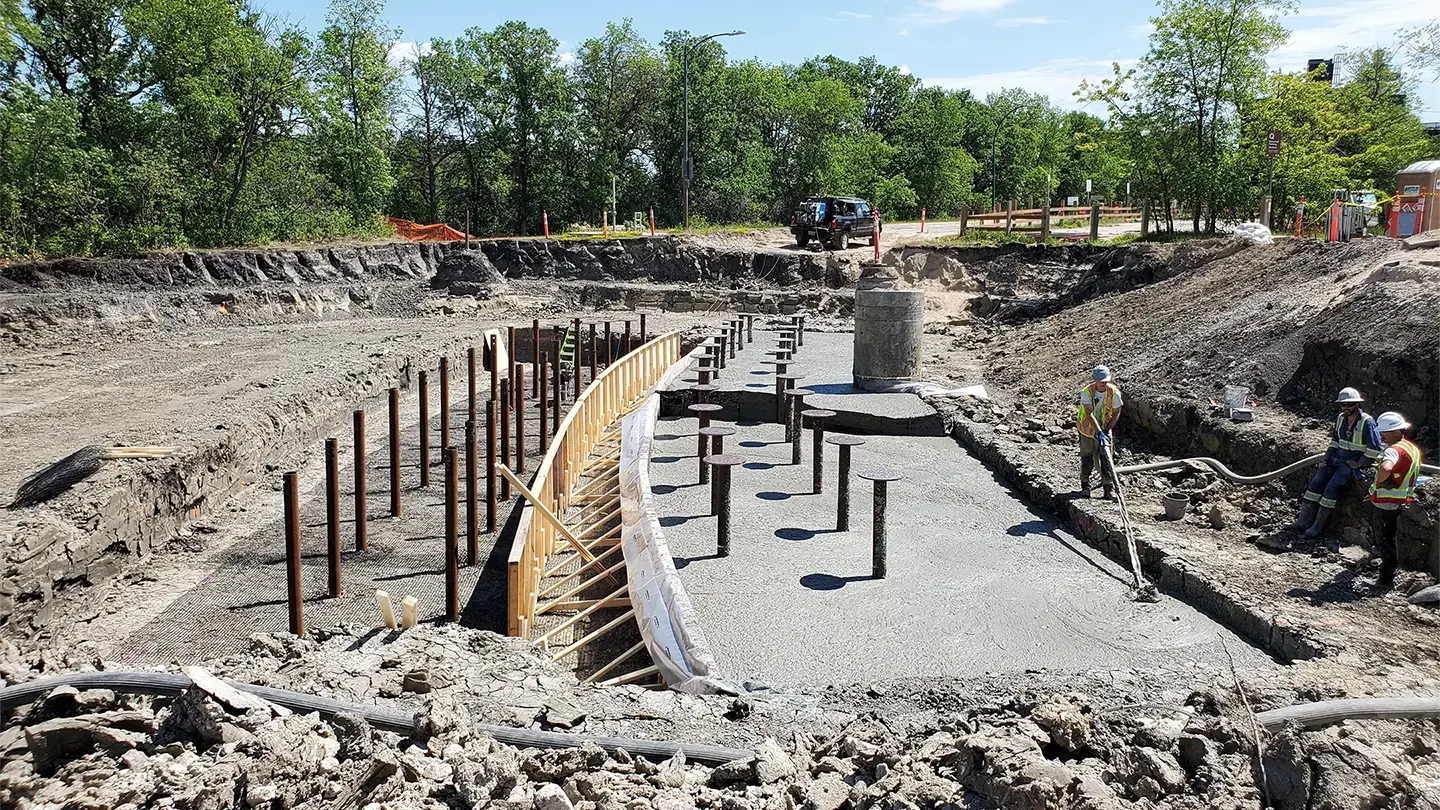
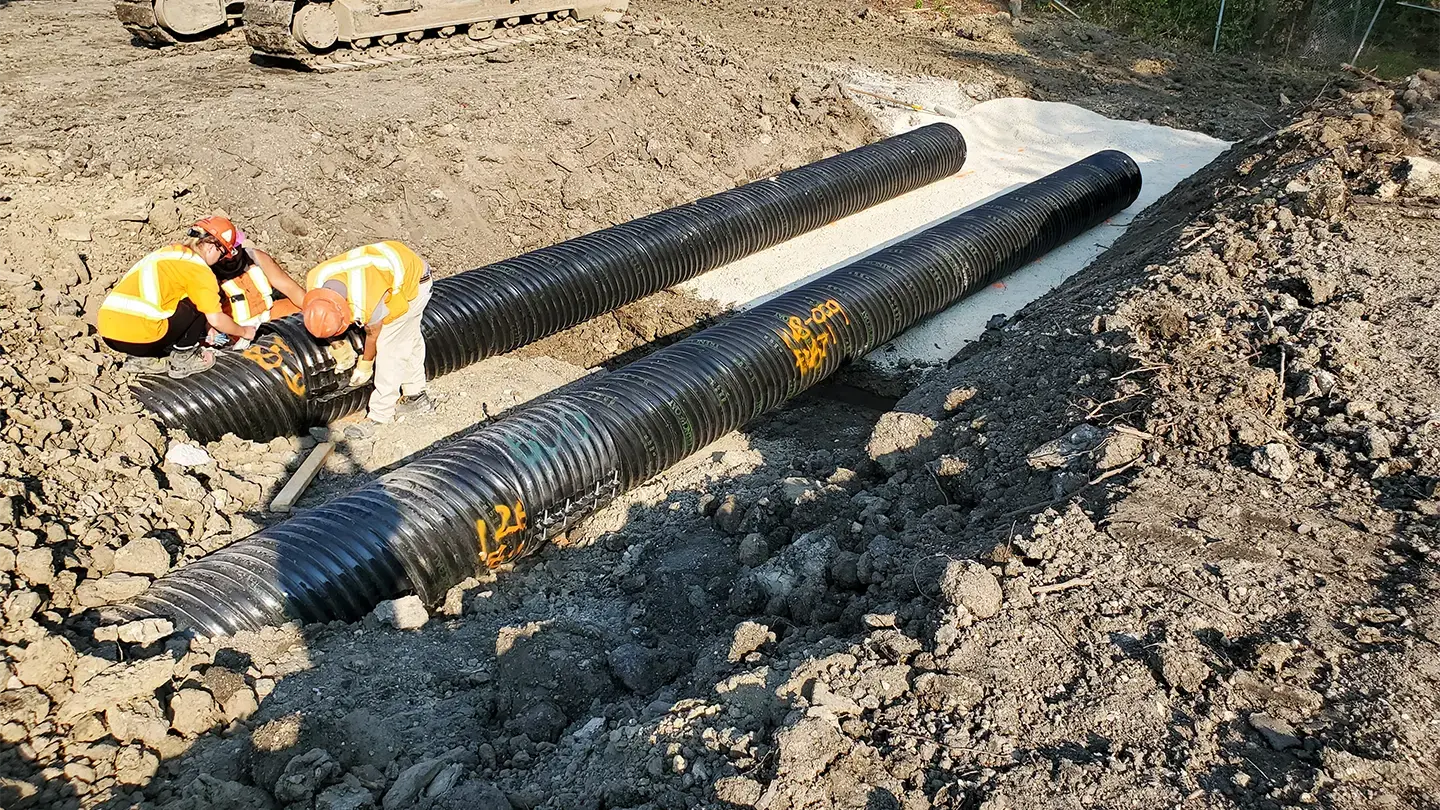
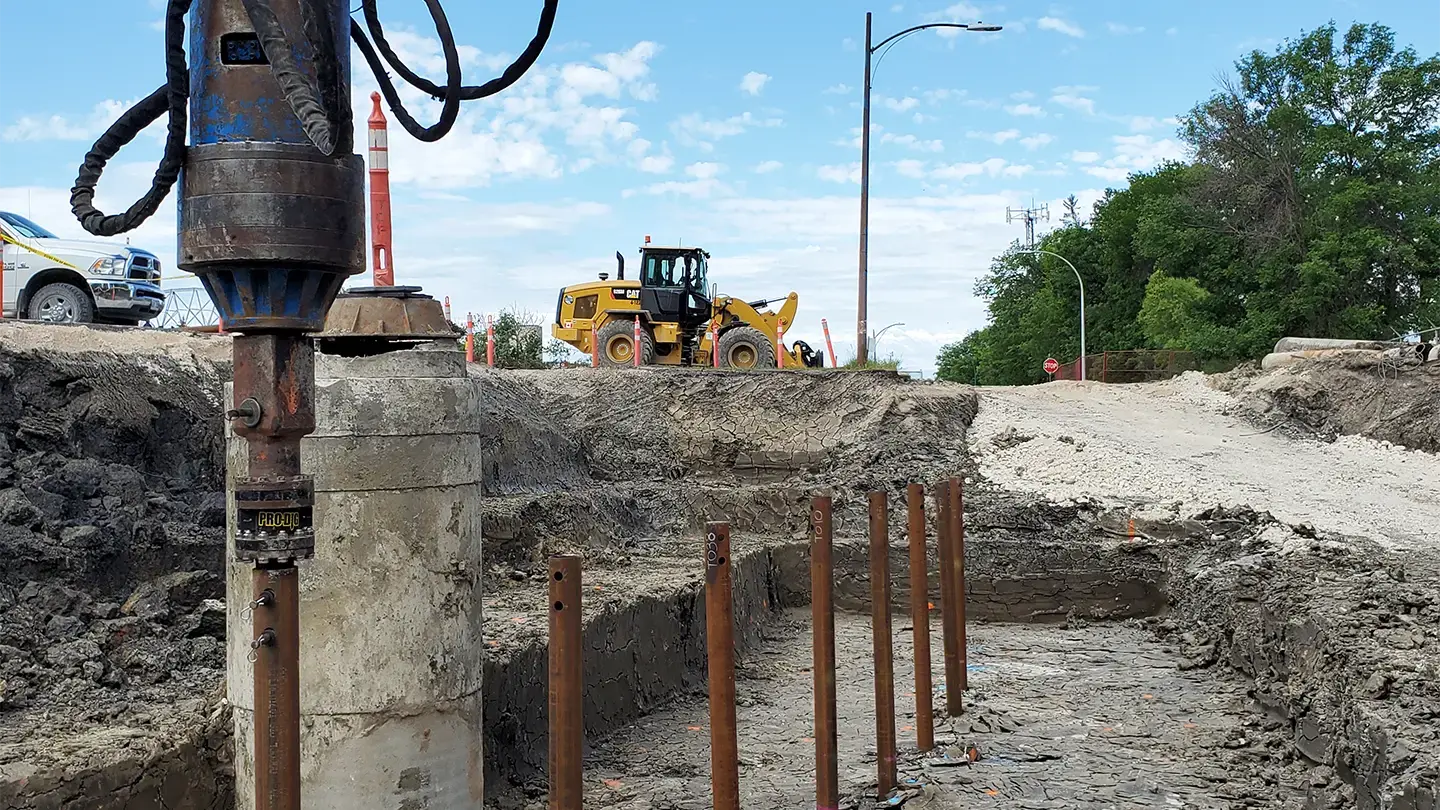

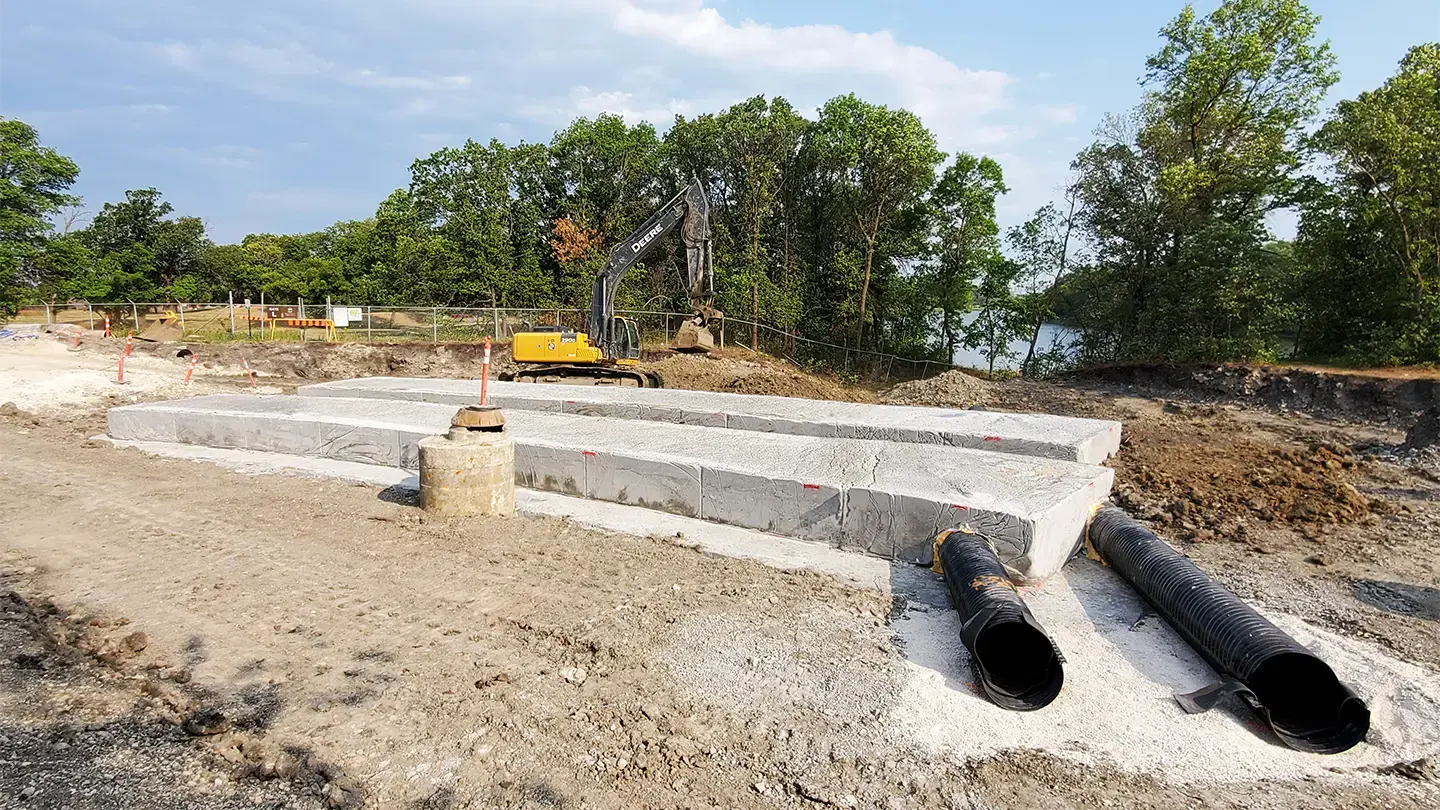
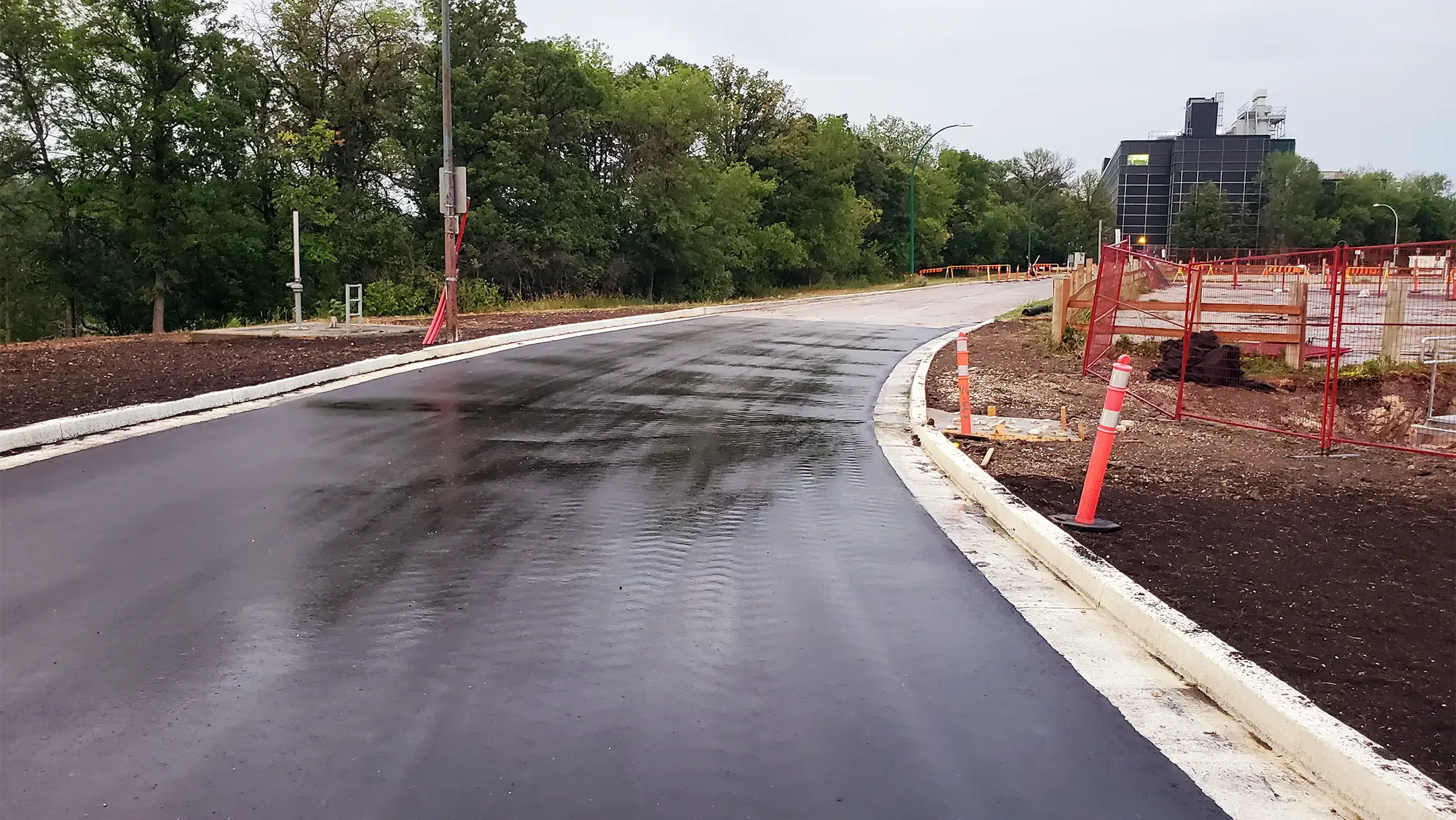
On the northwest side of the University of Manitoba Fort Garry Campus, which is located on Treaty 1 Territory, 600 meters of Sifton Road along the Red River acts as the Primary Line of Defense (PLD) dike, protecting the City of Winnipeg from flooding. Along the riverbank, ongoing and uncontrolled surface water discharge from Culvert 108 created over-steepened slopes and was threatening the integrity of this portion of Sifton Road.
KGS Group designed an innovative solution to reconstruct Culvert 108, Sifton Road and the PLD dike system. A first for this technology in Winnipeg, the solution used buoyant lightweight fill material anchored with helical piles. Additionally, the land drainage system was redesigned, Culvert 108 was upgraded to prevent future damage and supplemental vegetation was planted. The result was an area that is fully integrated with the surrounding ecosystem and is ready for future use opportunities while protecting the community.
Project Highlights
- Designed a solution to reconstruct Culvert 108, Sifton Road and PLD dike system to restore flood protection and roadway function
- The solution, a first for this technology in Winnipeg, included buoyant lightweight fill anchored with helical piles
- Redesigned the land drainage system to control and safely route surface water, reducing erosive outflows to the riverbank
Assiniboine River and Lake Manitoba Basins Flood Mitigation Study
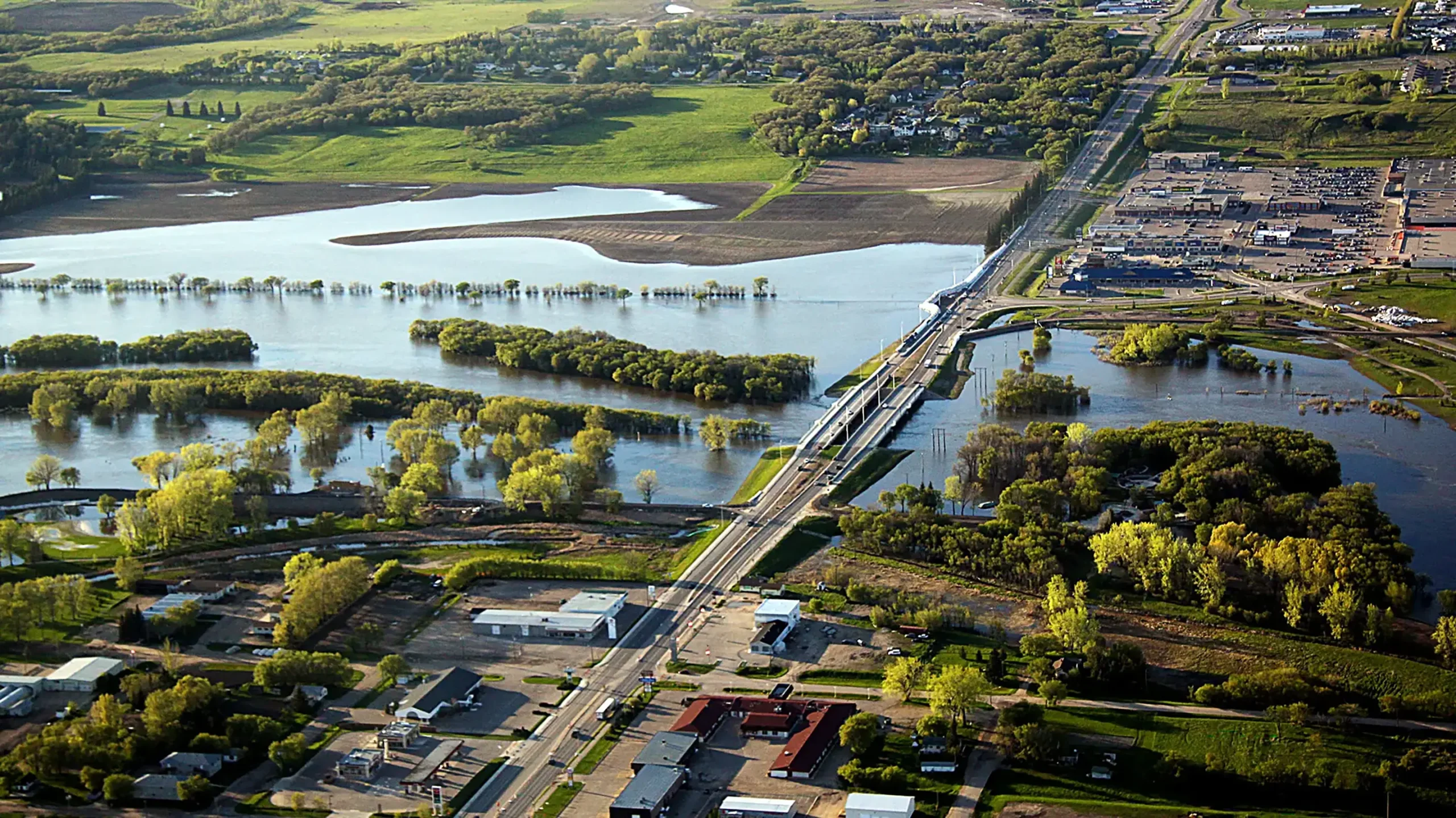
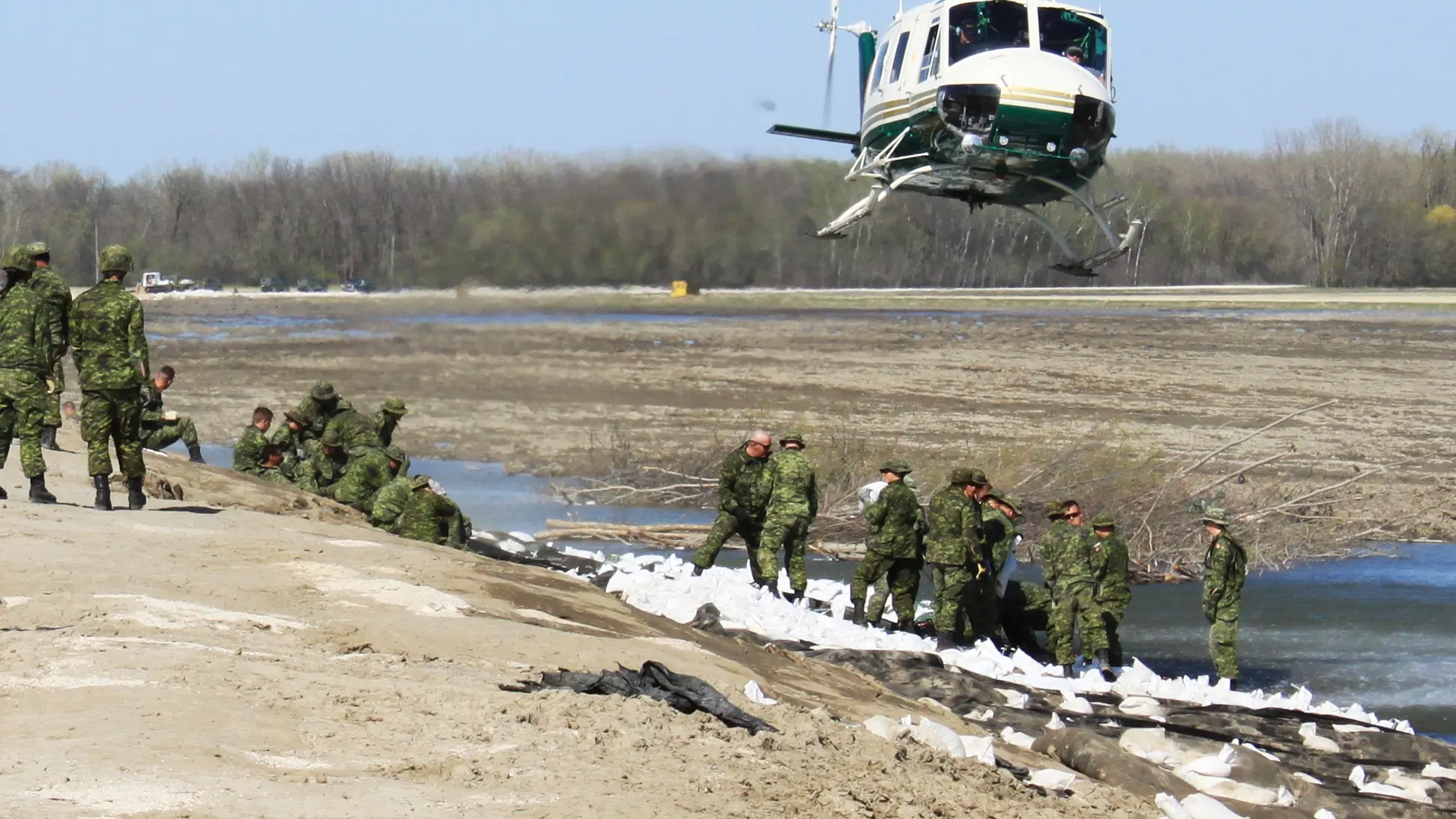
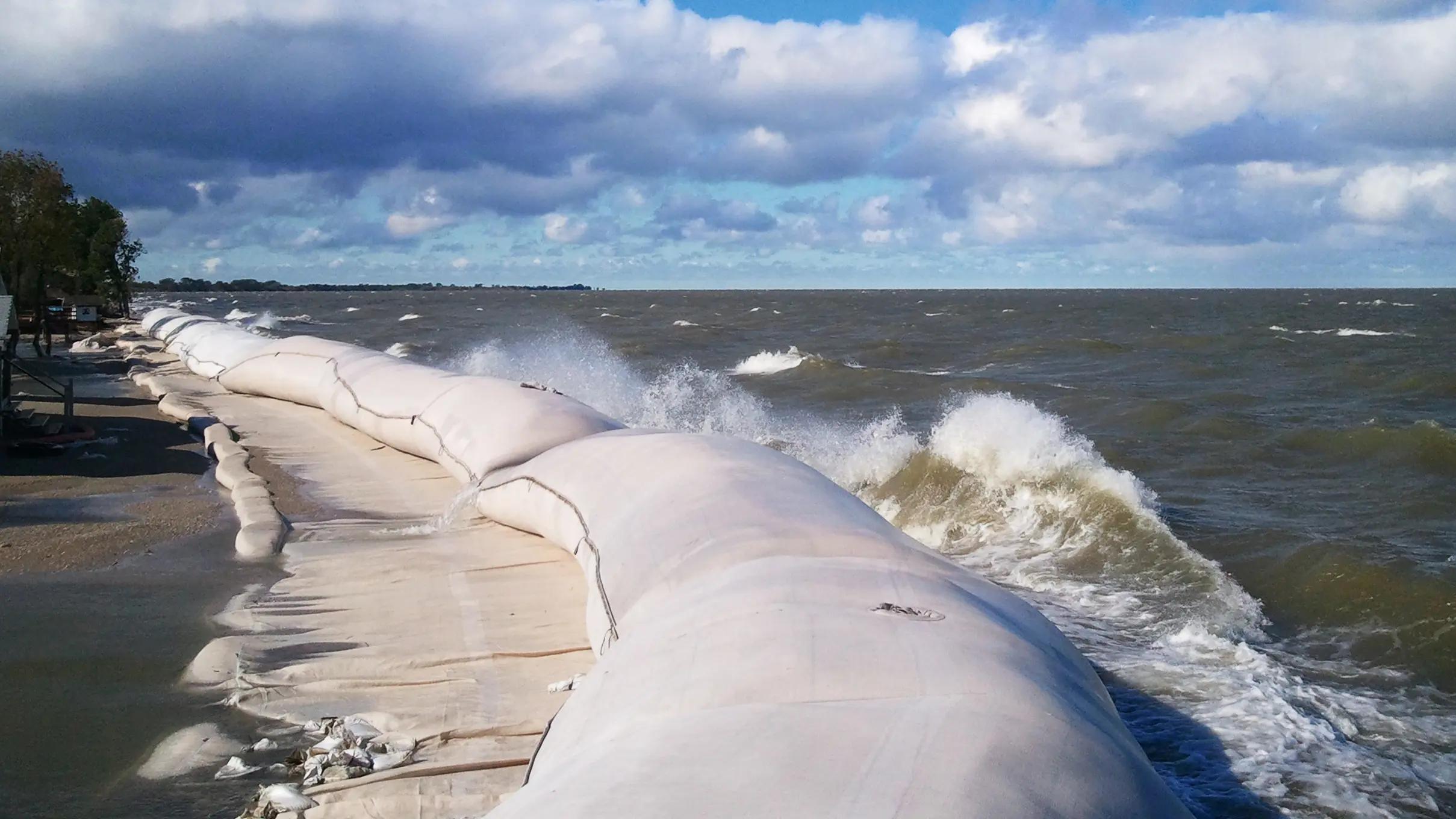
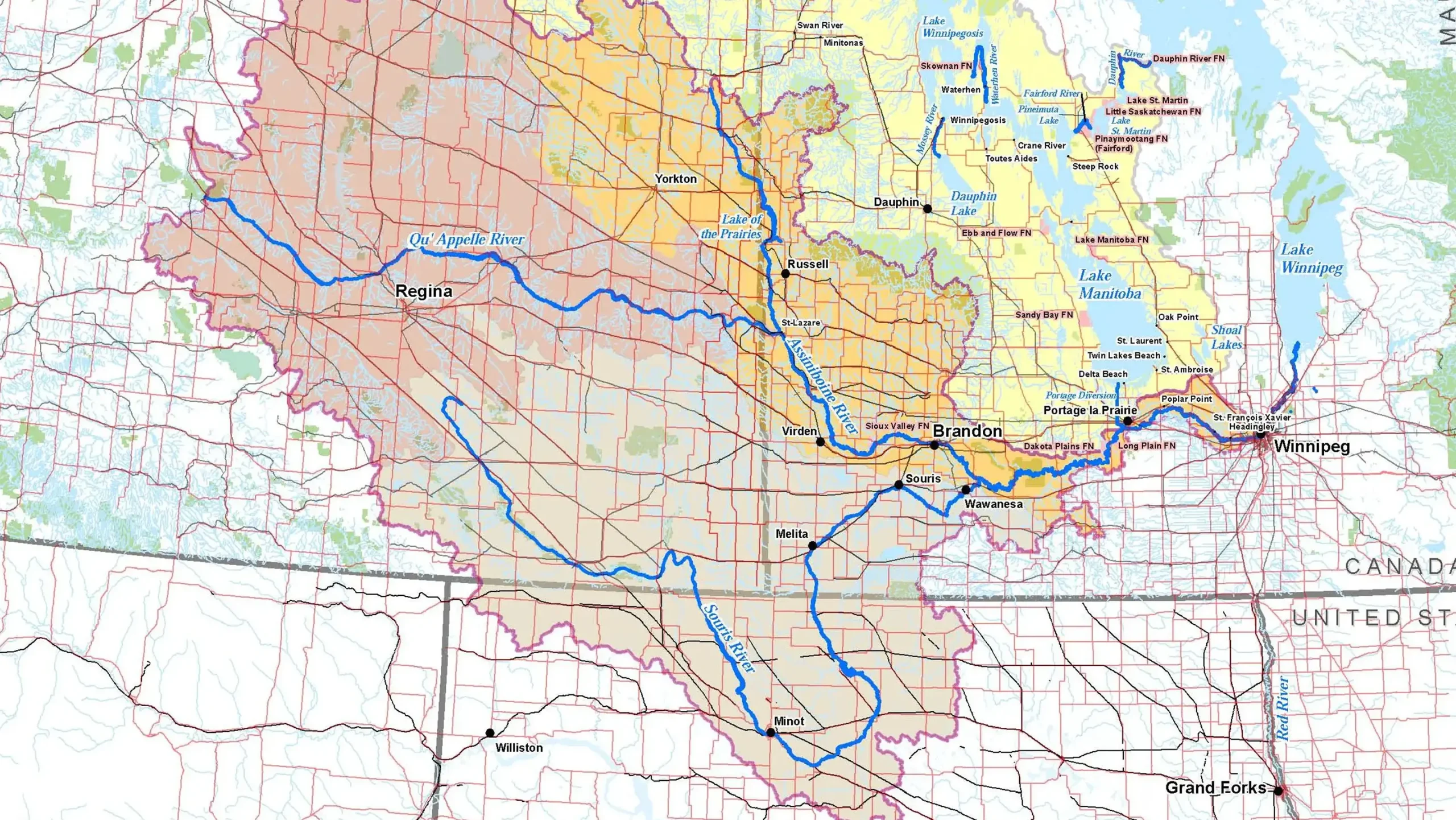
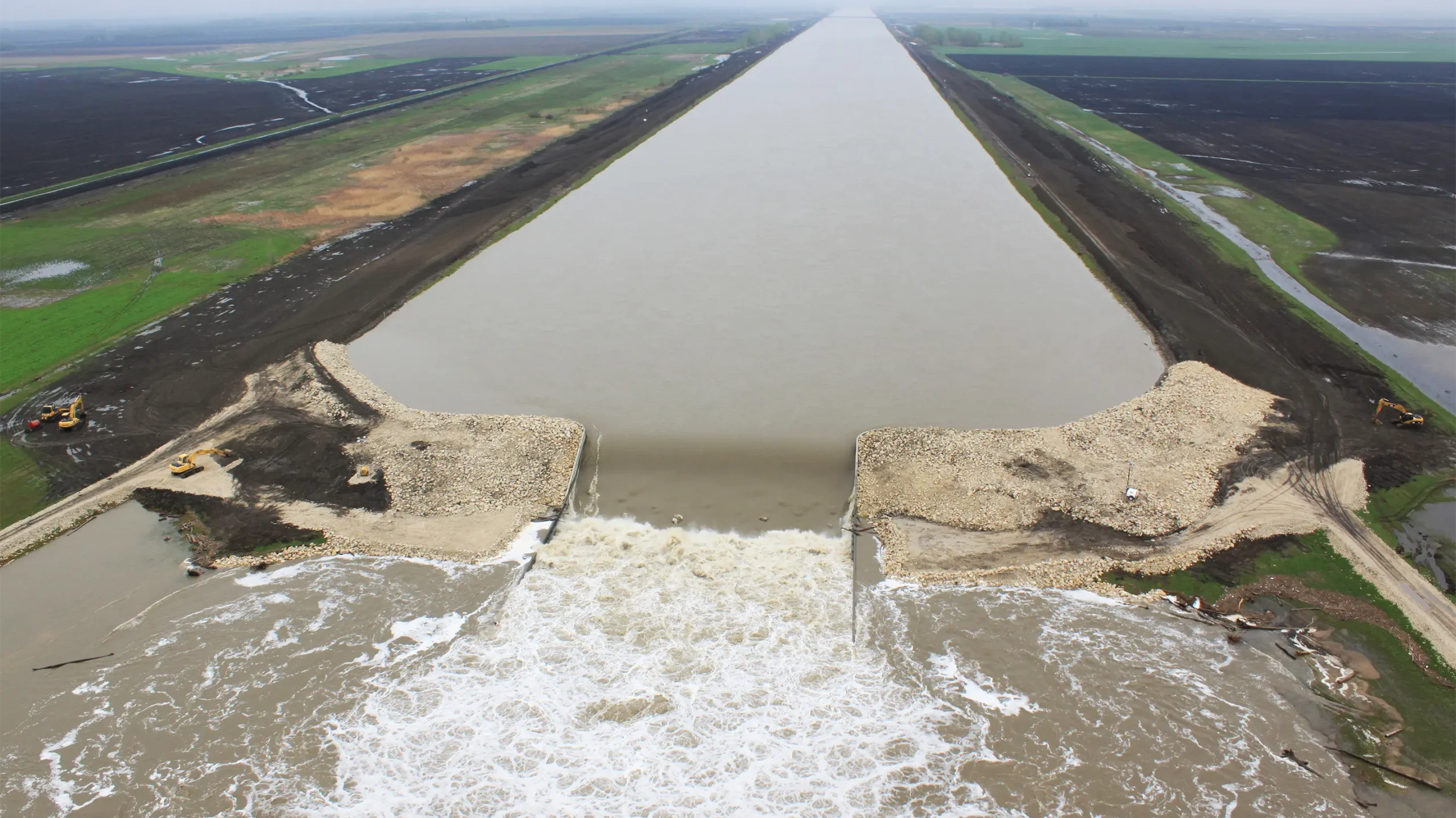
The flood of 2011 highlighted several potential “weak links” in Manitoba’s flood control system, which resulted in widespread damage across the province. To address the propensity for flooding in the Assiniboine River and Lake Manitoba basins, KGS Group carried out a flood mitigation study, which identified major flood vulnerabilities and assessed a wide range of measures to improve protection in the region.
A vast amount of data was reviewed and over 70 mitigation options were evaluated including dikes, reservoirs, diversion channels, wetland restoration and development controls. As well, a number of sophisticated models were developed to calculate cost-benefit ratios and the economic viability of the options.
Working collaboratively with Manitoba Transportation and Infrastructure, the project team developed a technical workshop and held public open house events to incorporate important feedback into the study findings.
The results of the study identified over $1 billion of flood mitigation upgrades required to increase the flood protection level to provincial standards across the basin. The results will also serve as the foundation for major flood mitigation programs for the next several decades.
Project Highlights
- Reviewed and synthesized basin‑wide datasets to establish current and future flood risk profiles
- Evaluated 70+ mitigation options, including dikes and levees, reservoirs and storage, diversion channels, wetland restoration, development controls
- Compiled actionable study deliverables for program planning
GE Aviation Engine Testing, Research and Development Centre
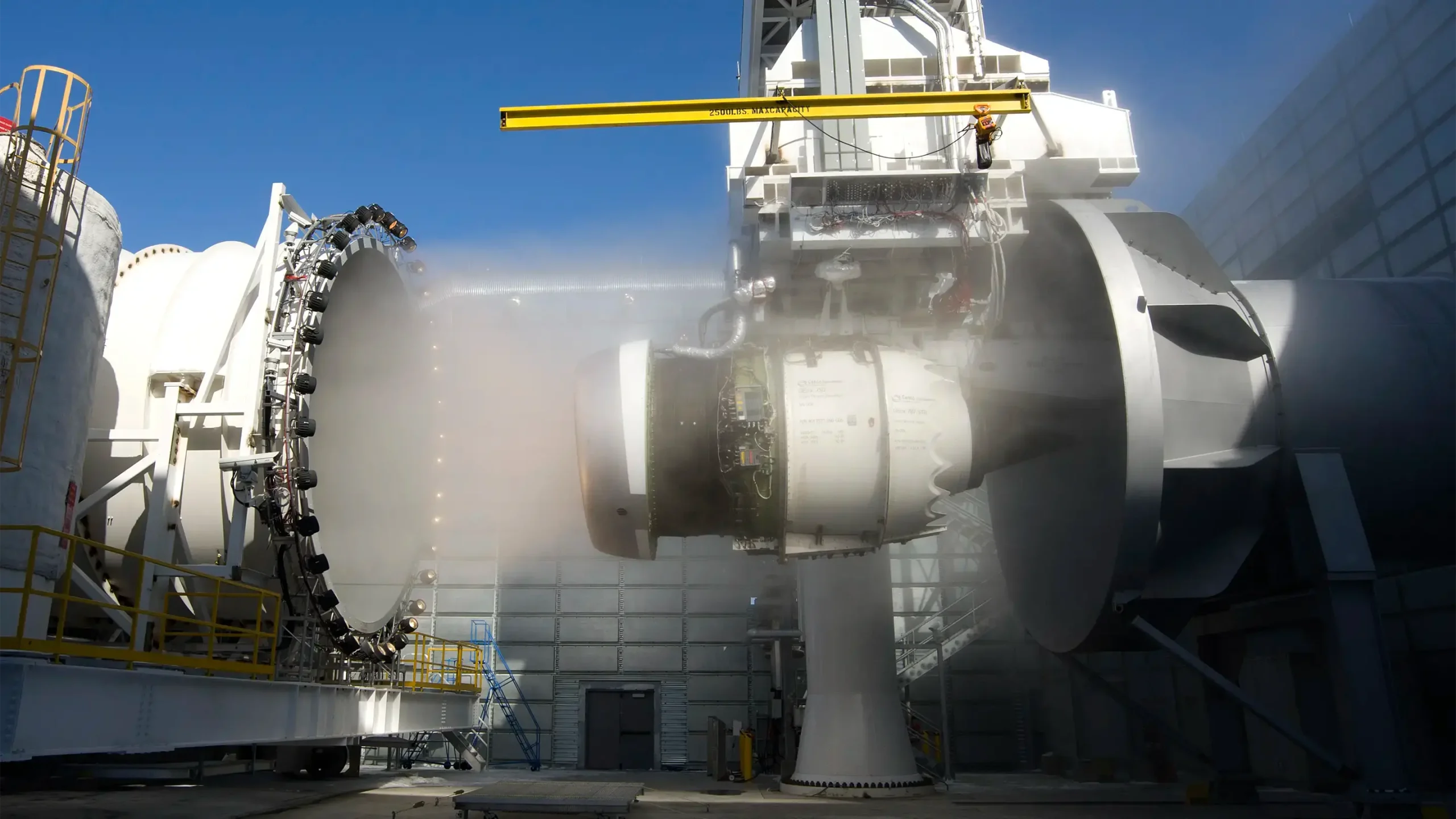
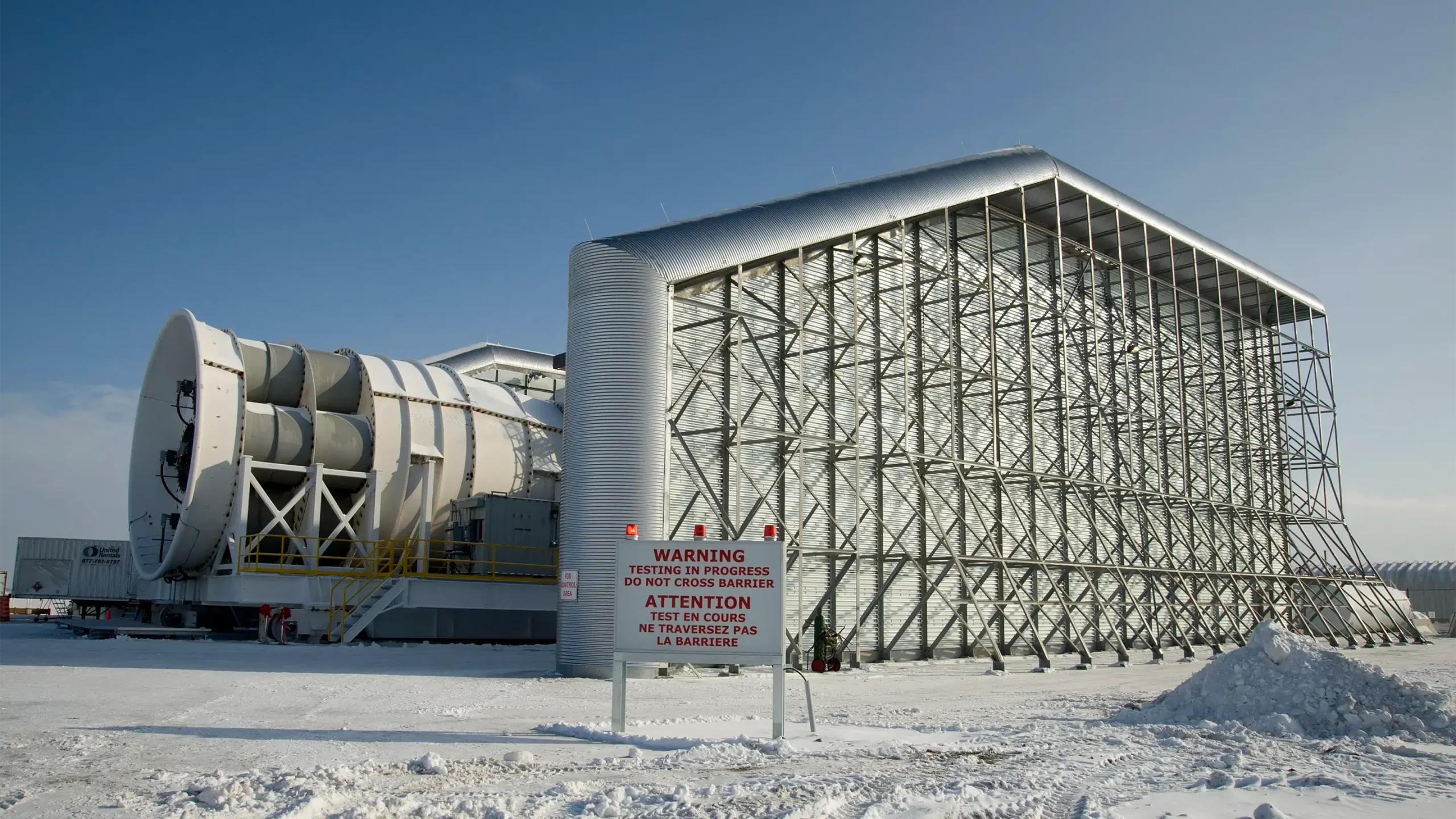
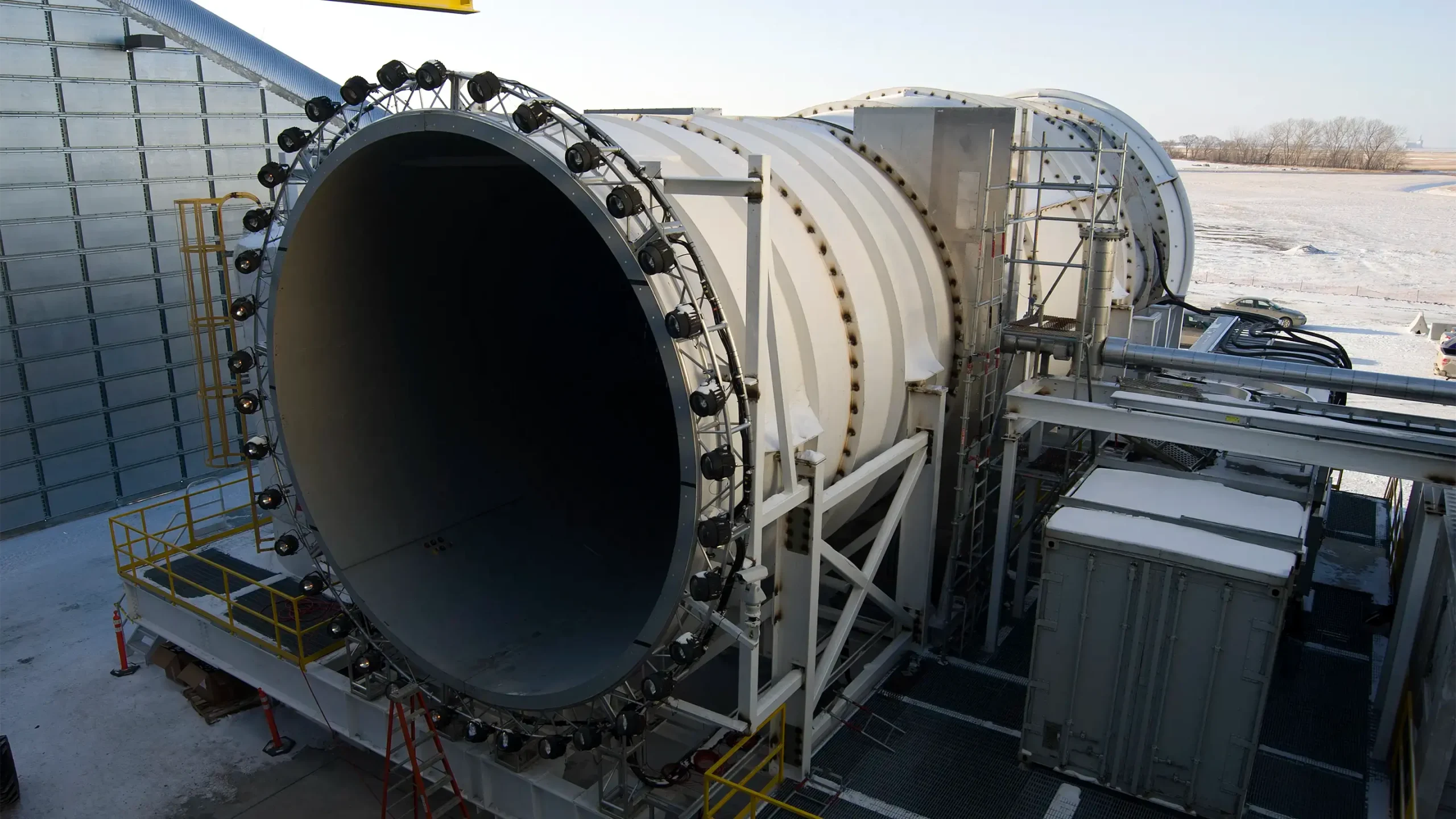

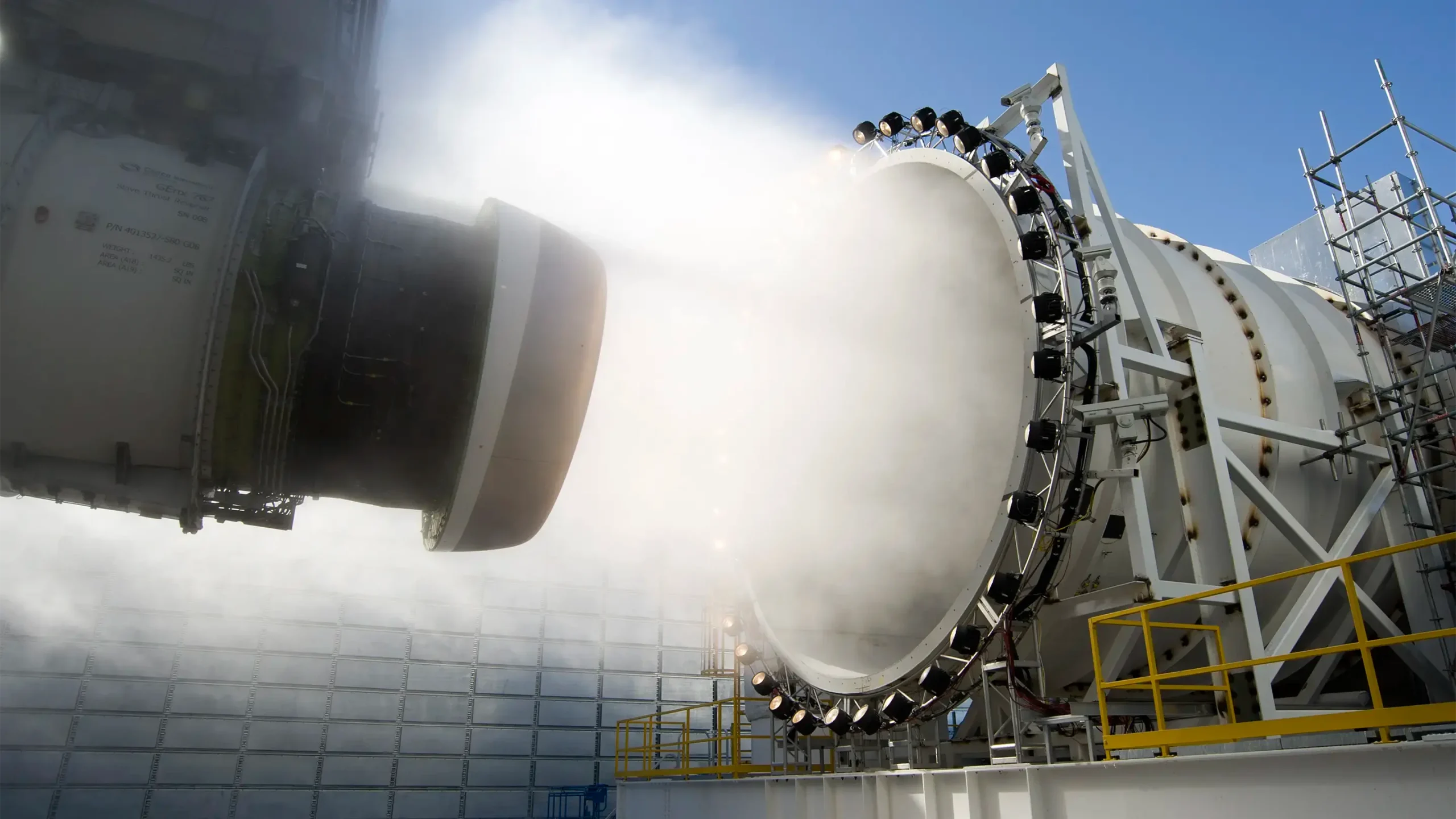
New aircraft engine designs must be tested to confirm they can survive real world hazards such as icing, bird ingestion and loss of an engine blade. To construct a state-of-the-art jet engine certification test centre in Winnipeg, General Electric Aviation formed a partnership with StandardAero, who engaged a diversified project team to provide engineering design services.
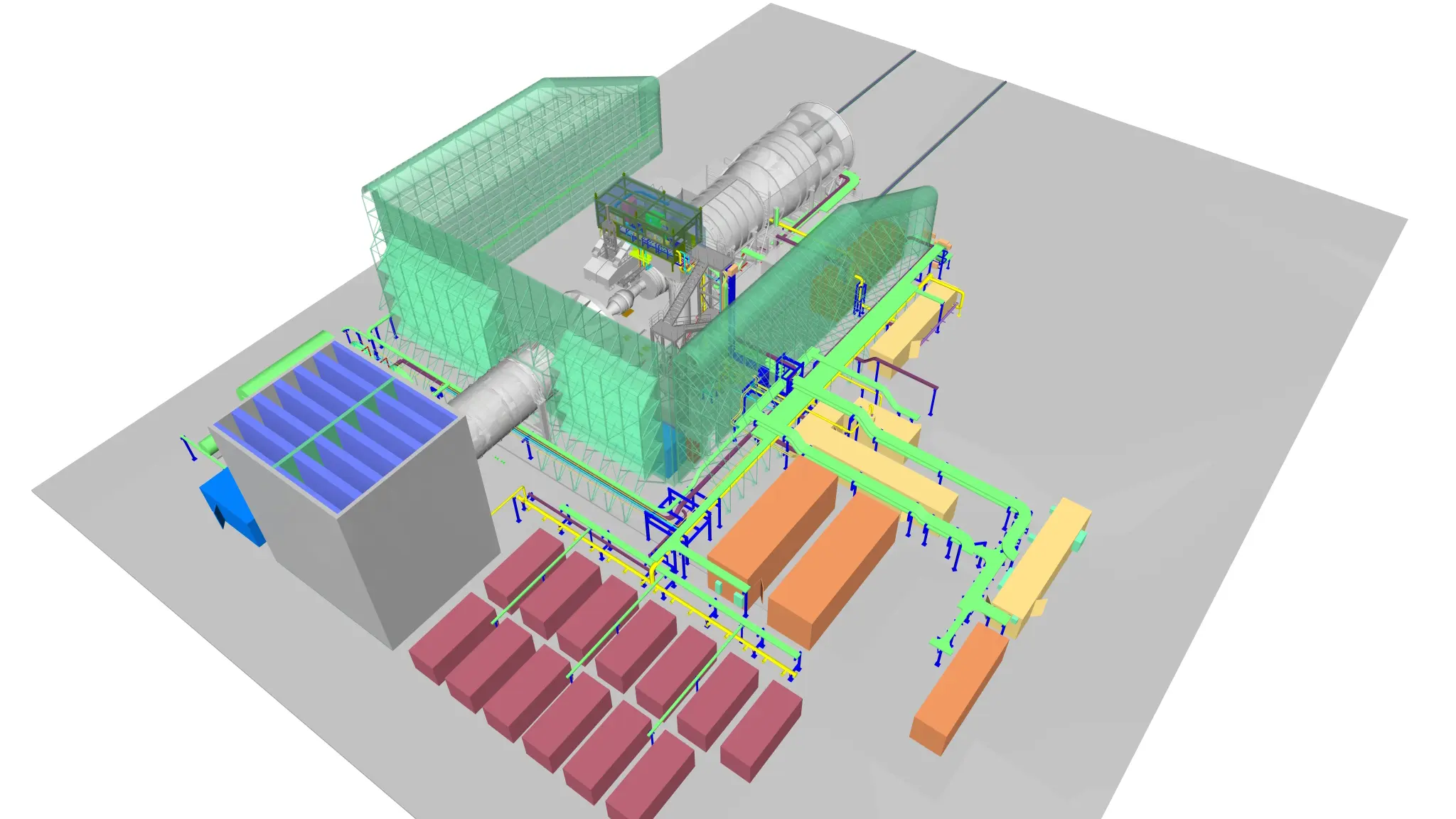
As part of the team, KGS Group coordinated and developed a 3D model of the facility in order to fast track the design and construction. The 3D model required collaborative coordination from our mechanical, electrical and structural groups, importing 3D components created by StandardAero and GE’s engine models, as well as generating 3D models based on 2D design drawings from other consultants. In addition, KGS Group provided design services for various mechanical, electrical and structural aspects of the project.
This project embodies engineering achievement through exemplary project coordination and collaboration to deliver a complex project on time and on budget. The use of innovative technology and a diverse range of engineering expertise were paramount to its success.
Project Highlights
- Developed a federated 3D facility model to fast‑track design and construction
- Imported GE engine models and StandardAero 3D components into the coordinated model
- Converted 2D consultant drawings into 3D models to create a fully integrated digital design set
Rainy River Water Treatment Study and Systems Upgrade
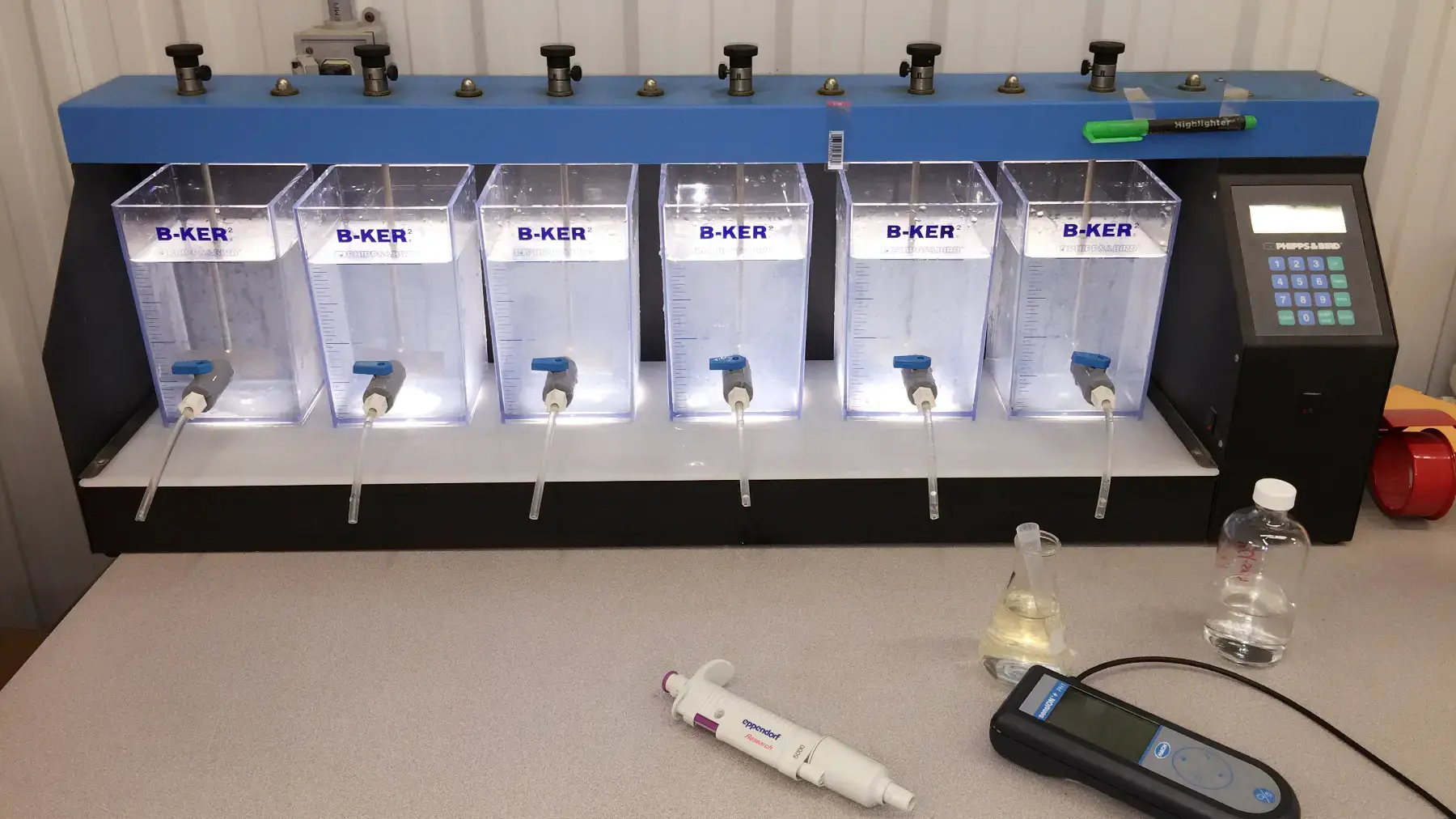
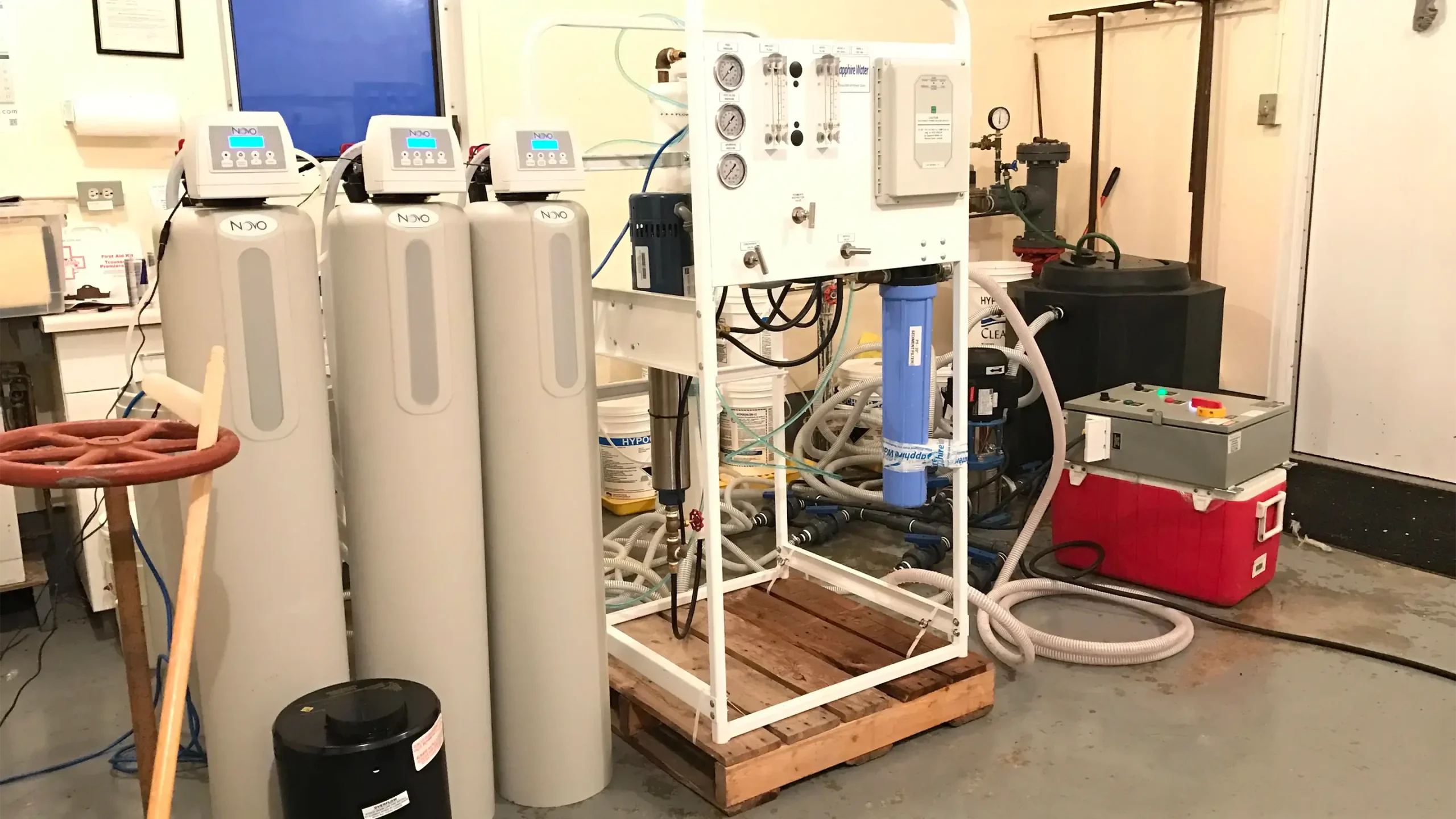
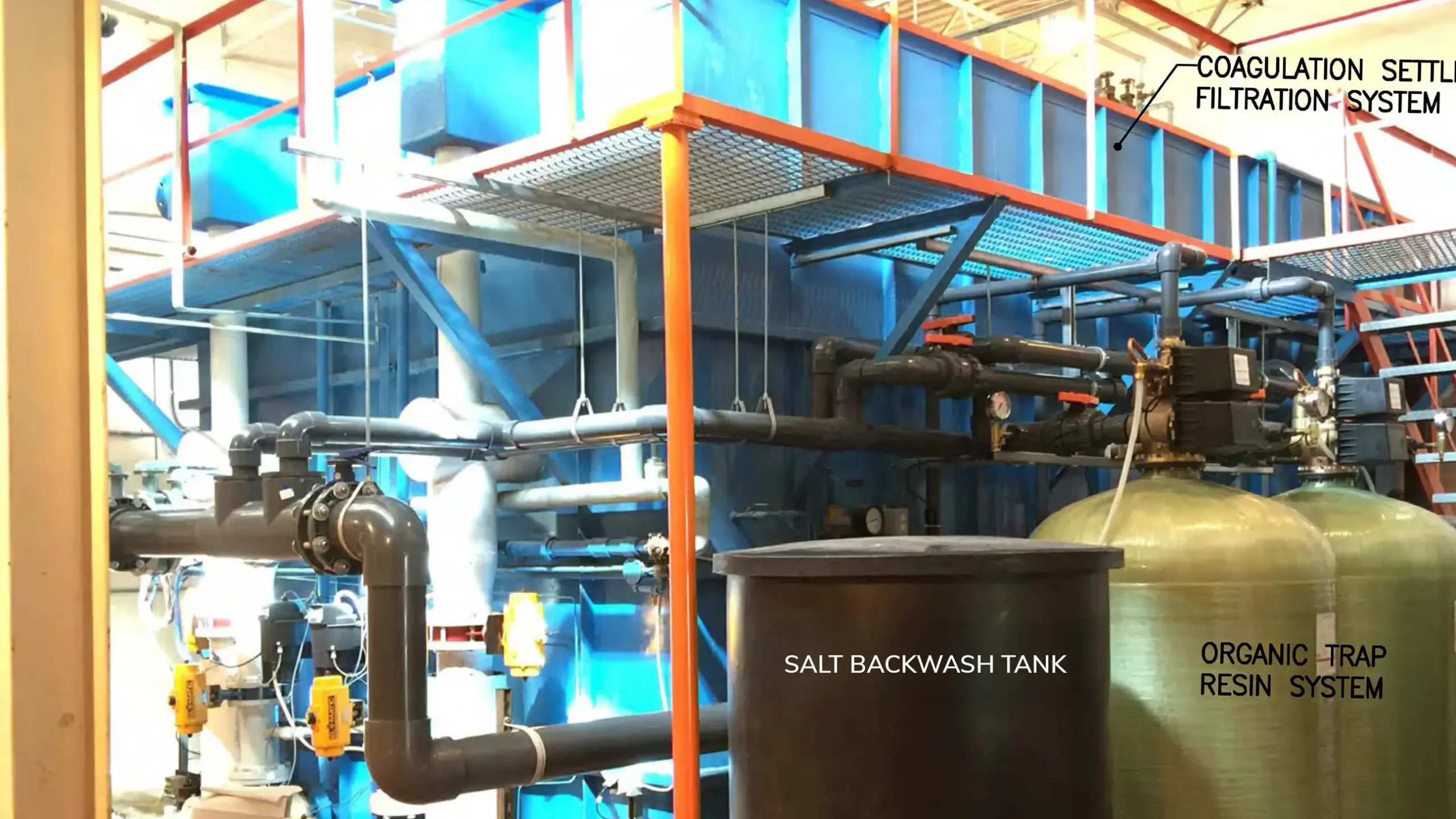
Facing a public health risk from elevated carcinogen levels in its drinking water, the Town of Rainy River needed a practical solution that fit within their existing plant footprint to remedy the situation. KGS Group, in collaboration with the University of Manitoba, conducted detailed pilot studies comparing ion exchange and nanofiltration to determine the most effective, operationally feasible way to reduce carcinogen levels in the drinking water.
Ion exchange was selected because it avoided costly building expansion and offered simpler operations and maintenance for the Town. We then provided engineering services for the design, construction and commissioning of the new ion exchange treatment system, integrating it with the plant’s existing processes and controls.
The upgraded system exceeded Health Canada’s Guideline for Canadian Drinking Water Quality for carcinogens and reduced chlorine consumption by 40%. The project addressed a serious health concern while optimizing use of Rainy River’s existing assets. The Town also received a commendation from the Ontario Ministry of the Environment and Climate Change in recognition of the project’s success.
Project Highlights
- Designed the new ion exchange system and integrated it with existing plant processes
- Reduced chlorine consumption levels by 40%
- New system exceeds Health Canada’s Guideline for Canadian Drinking Water Quality