

HyLife Pork Processing Plant
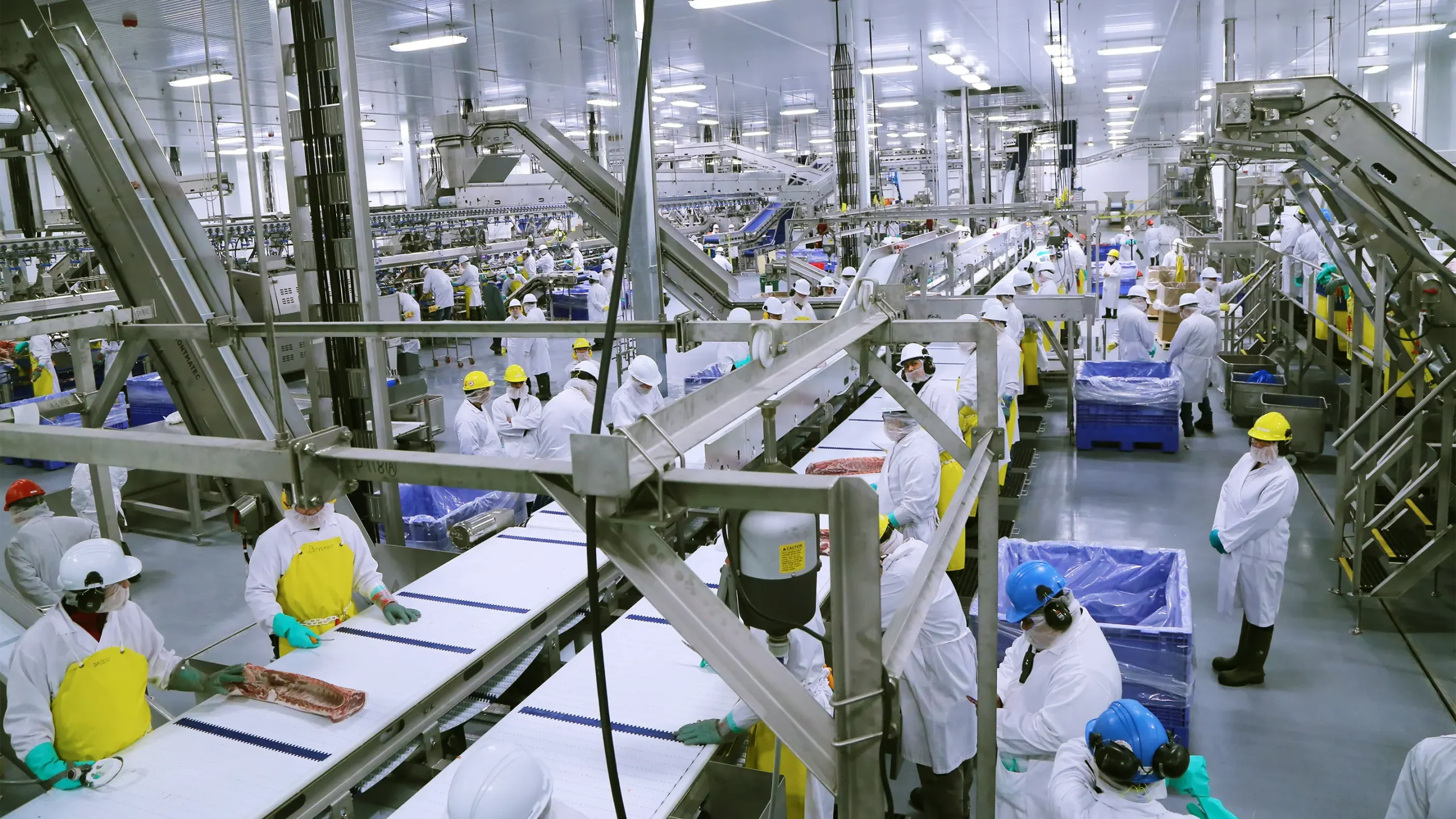
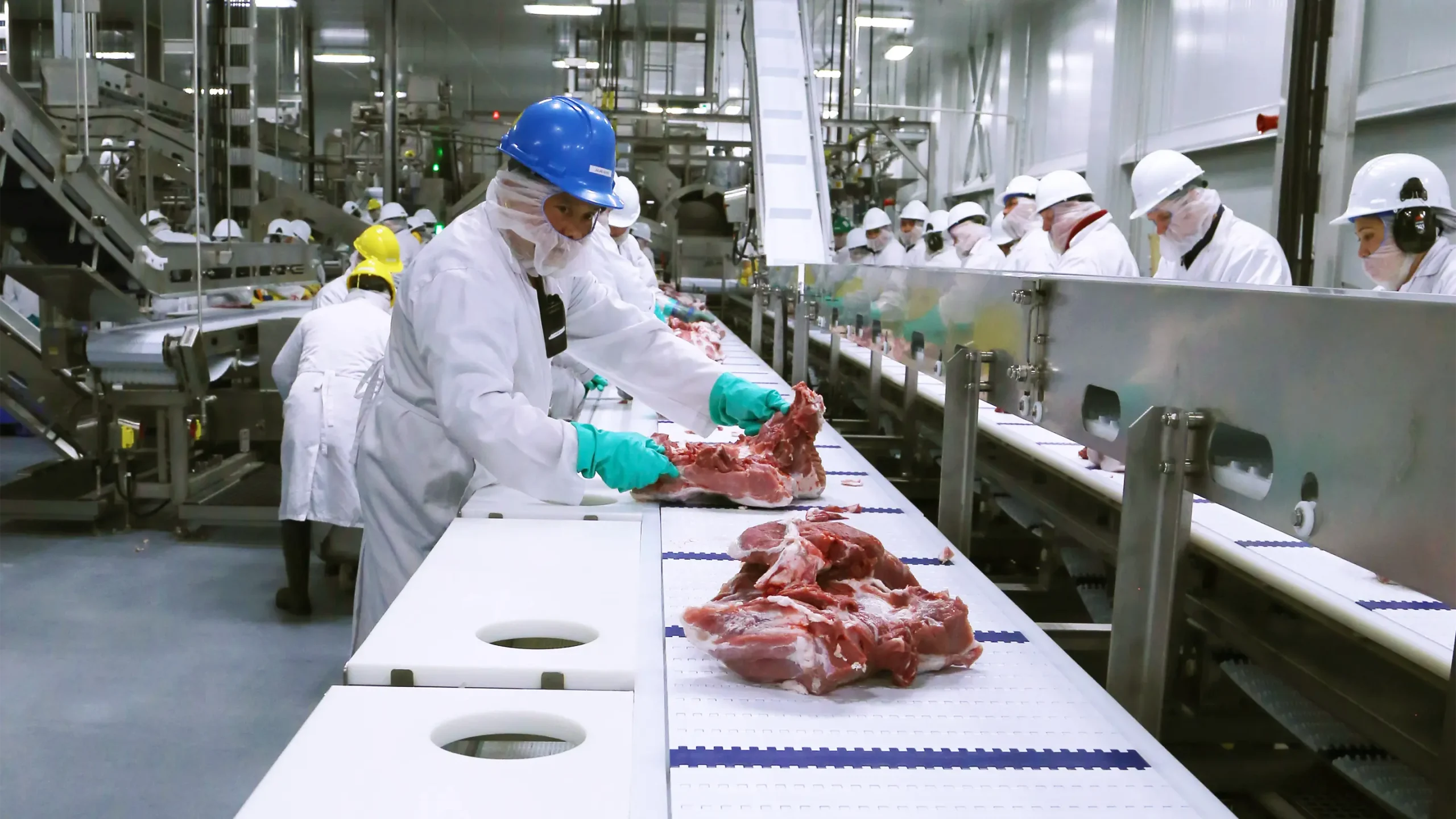
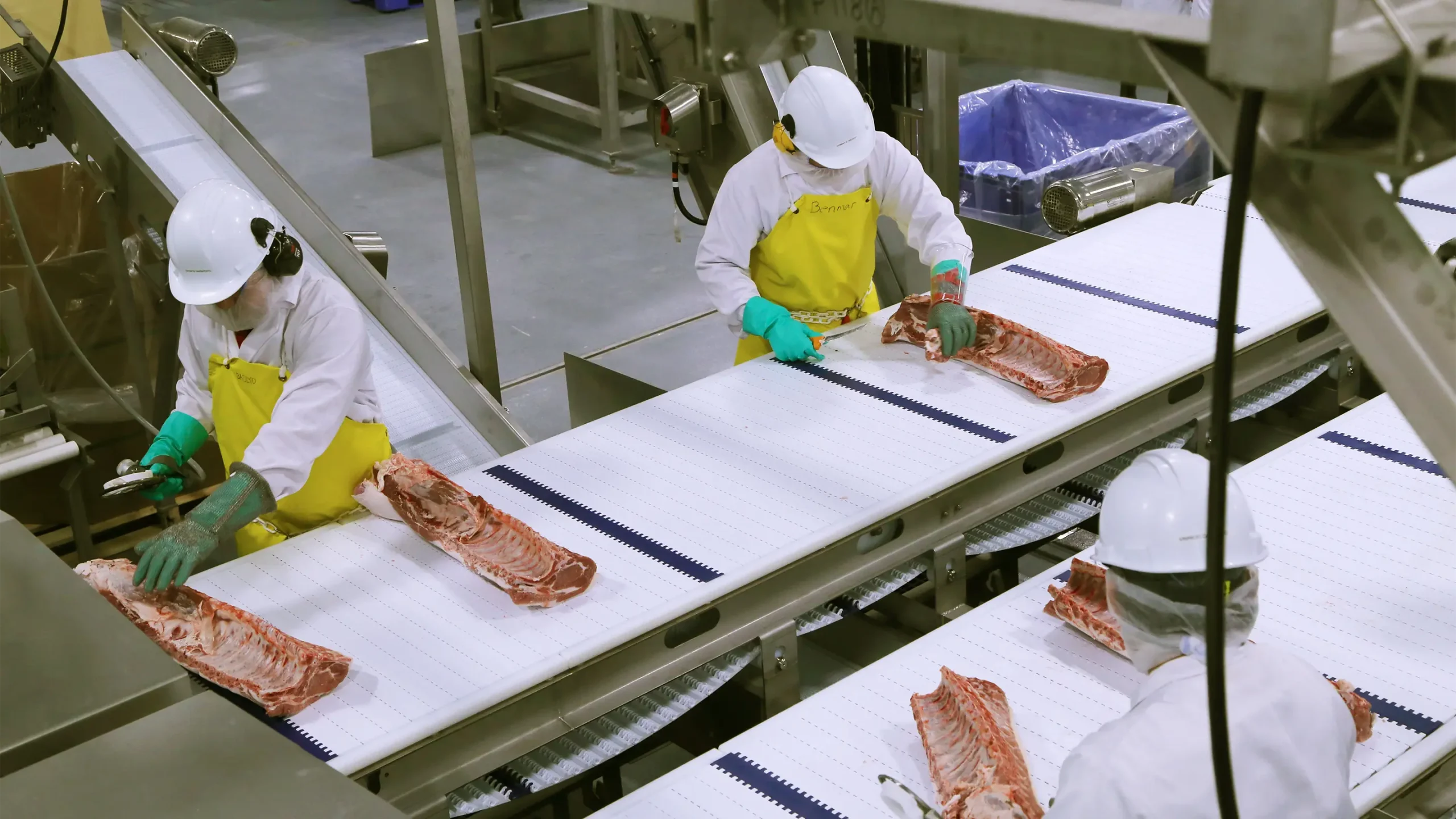
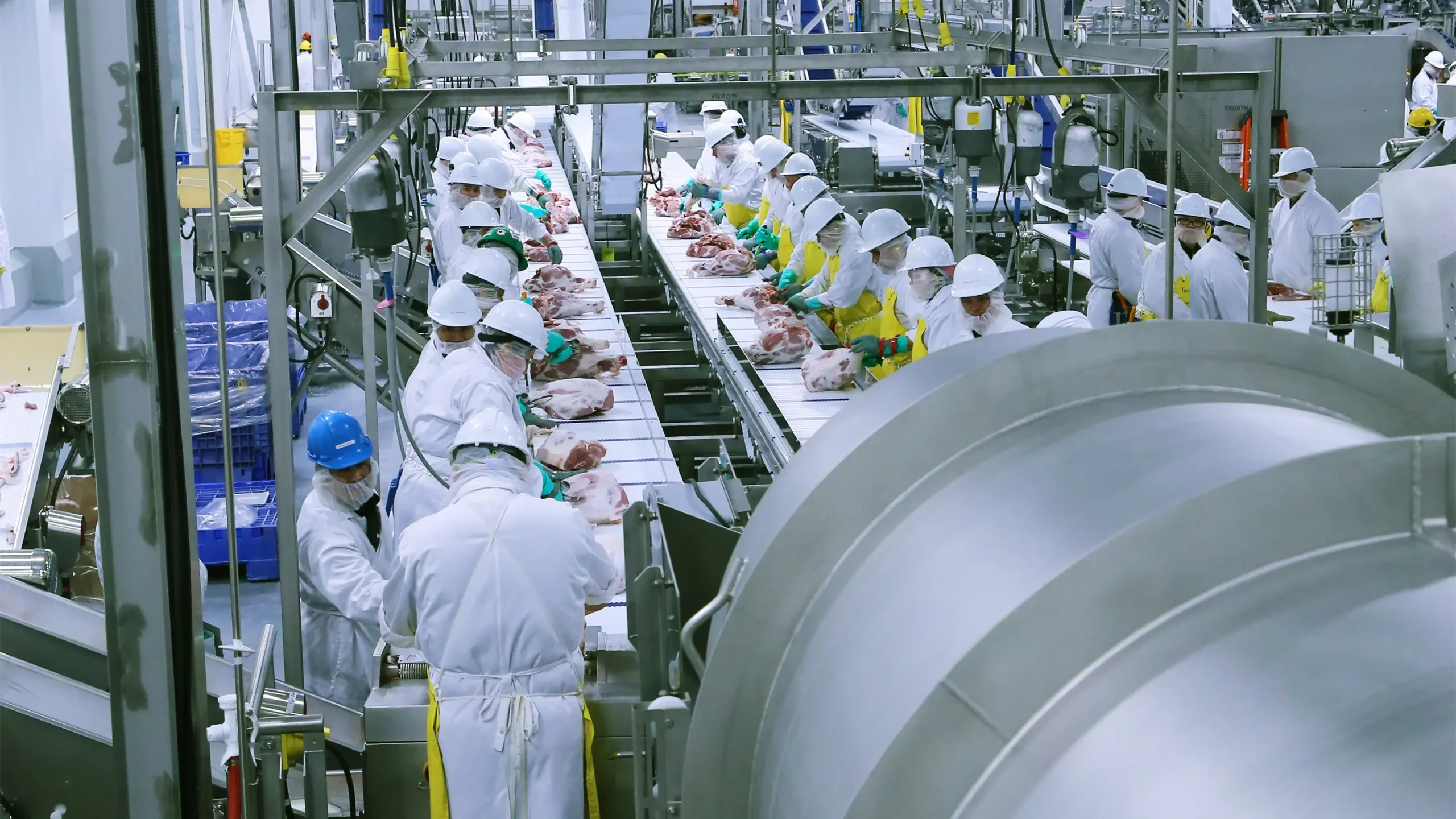

KGS Group worked with HyLife Foods to engineer a new 98,500 square foot pork processing facility that would elevate employee welfare, bring food safety practices in line with global standards, increase efficiency and maximize return on investment – while keeping existing production running.
The cornerstone of a $125 million investment, the new plant includes a modern cut floor, advanced packaging area, high‑capacity storage coolers, palletizing and shipping zones and upgraded utility spaces. KGS provided conceptual design, cost estimate and value engineering services to support project funding. Detailed design of the facility to global meat industry standards was also provided by KGS Group, as well as the design of building utility service upgrades, integration of vendor equipment, procurement management and construction engineering support for this fast-track project.
By combining state‑of‑the‑art technology with tailored engineering solutions, the project reduced waste, enhanced employee welfare and increased production capacity. It has helped HyLife transform its investment into a global competitive advantage while generating 165 permanent jobs for the local community. Delivered through a fully multidisciplinary approach, the project was completed on time and on budget.
Project Highlights
- Improved plant efficiency – increased throughput of 1250 hogs/day (to 7,500 hogs/day)
- Integration of cutting-edge processing equipment reducing repetitive strain and increasing yield per carcass
- Over 1.1 kilometres of conveyance equipment providing efficient and linear material handling
- Local job creation for construction trades – 90% Manitoba sourced with 45% from the local Westman region
Whitehorse Diesel-LNG Conversion
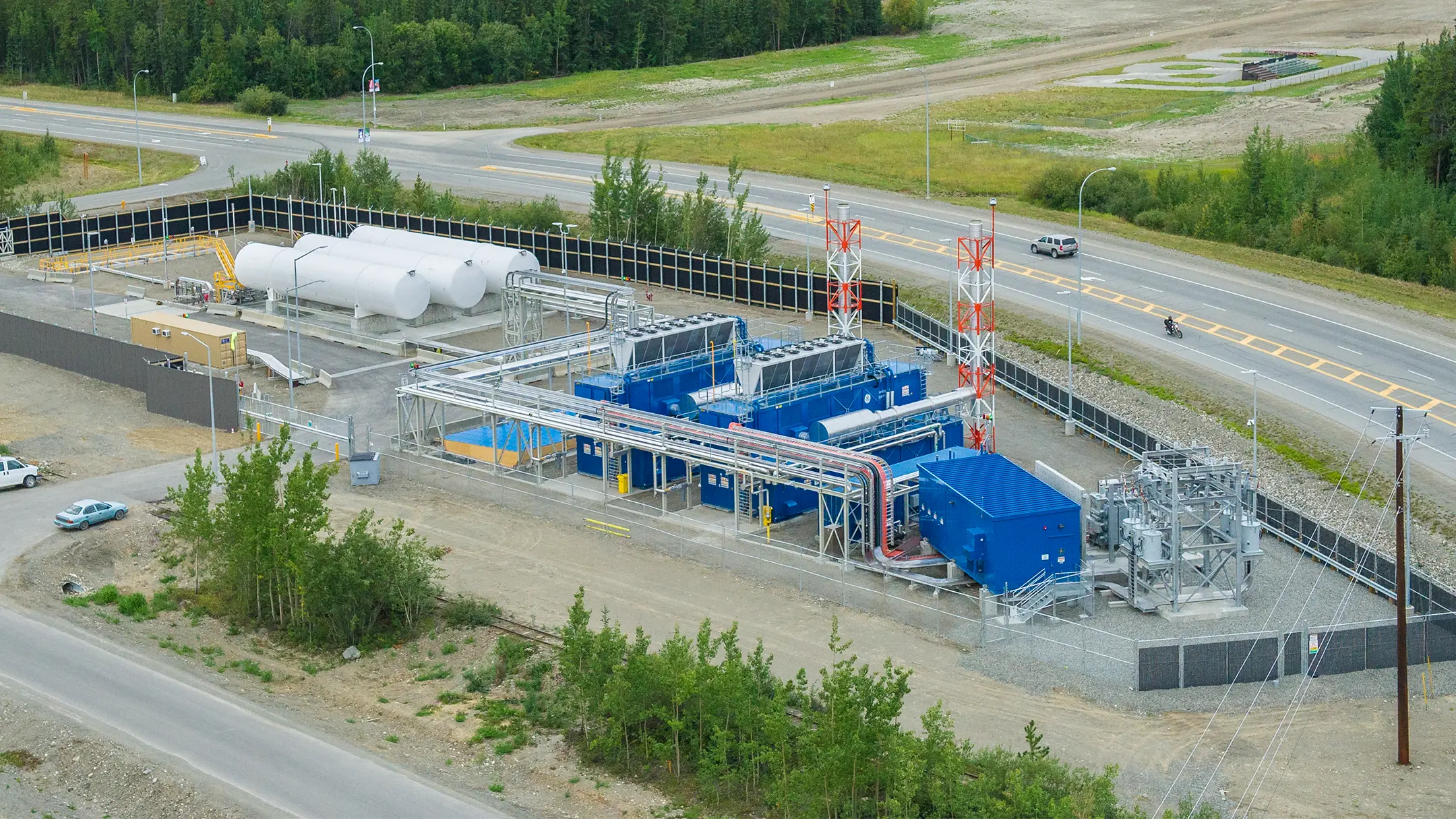
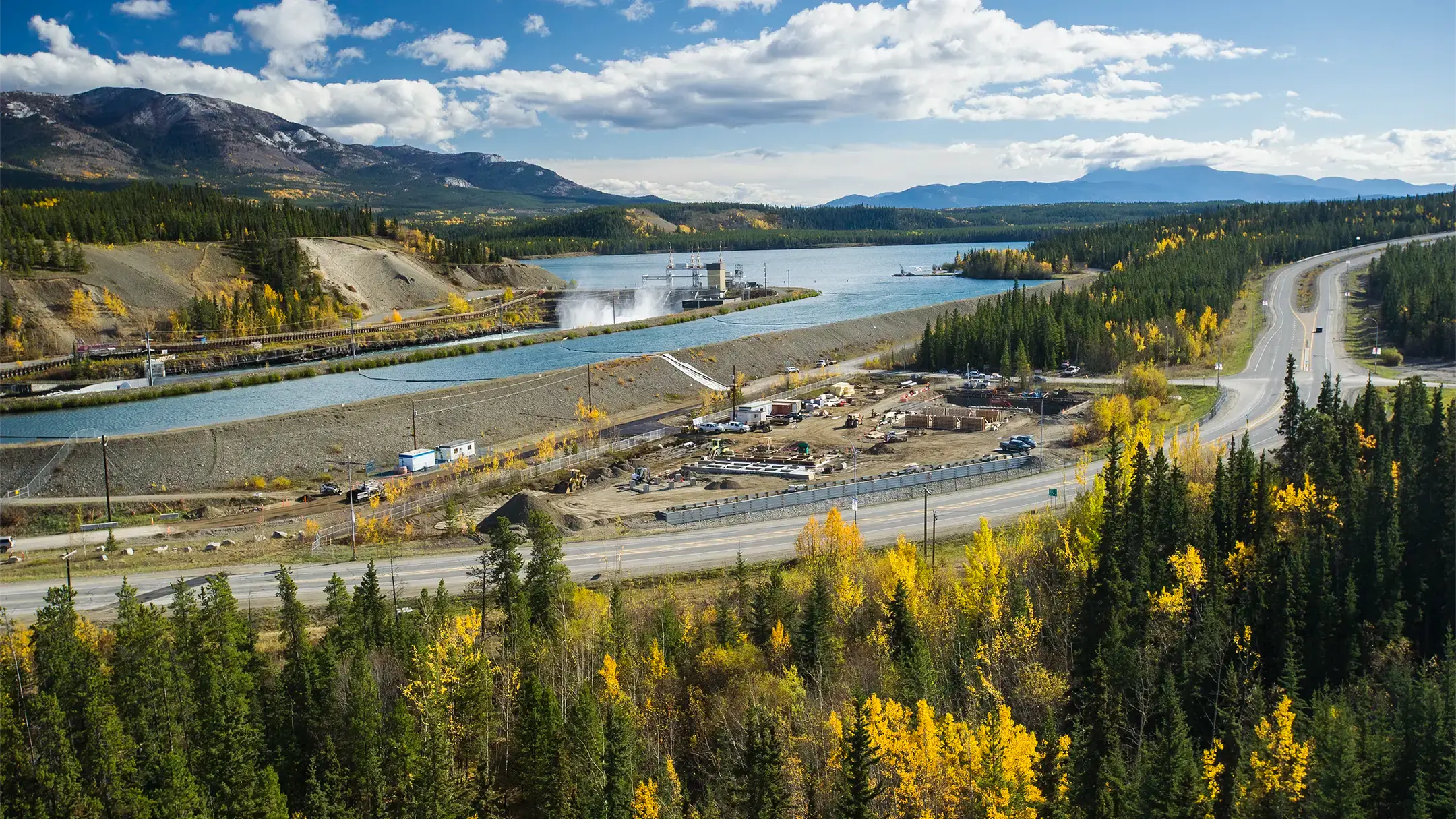

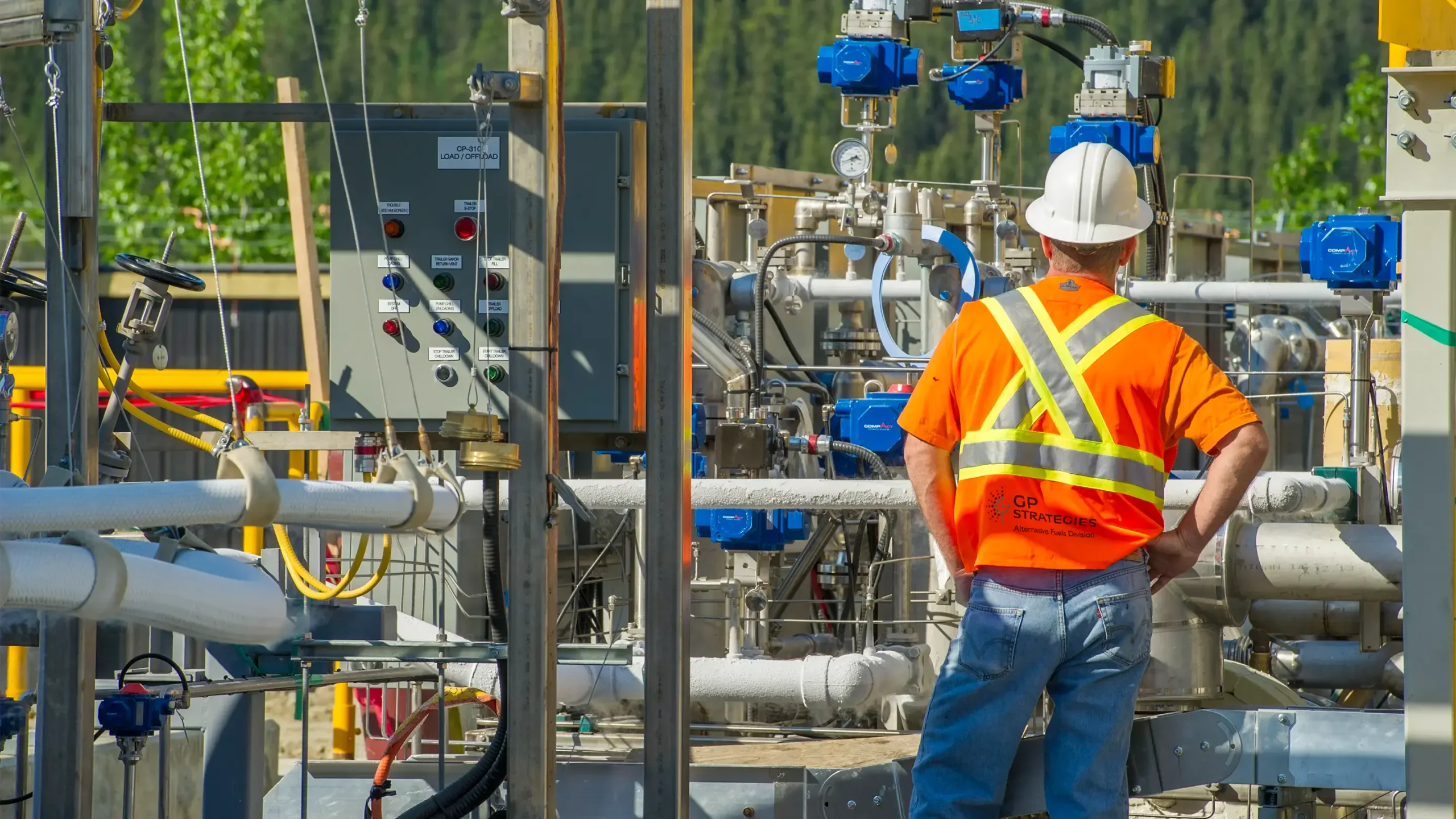
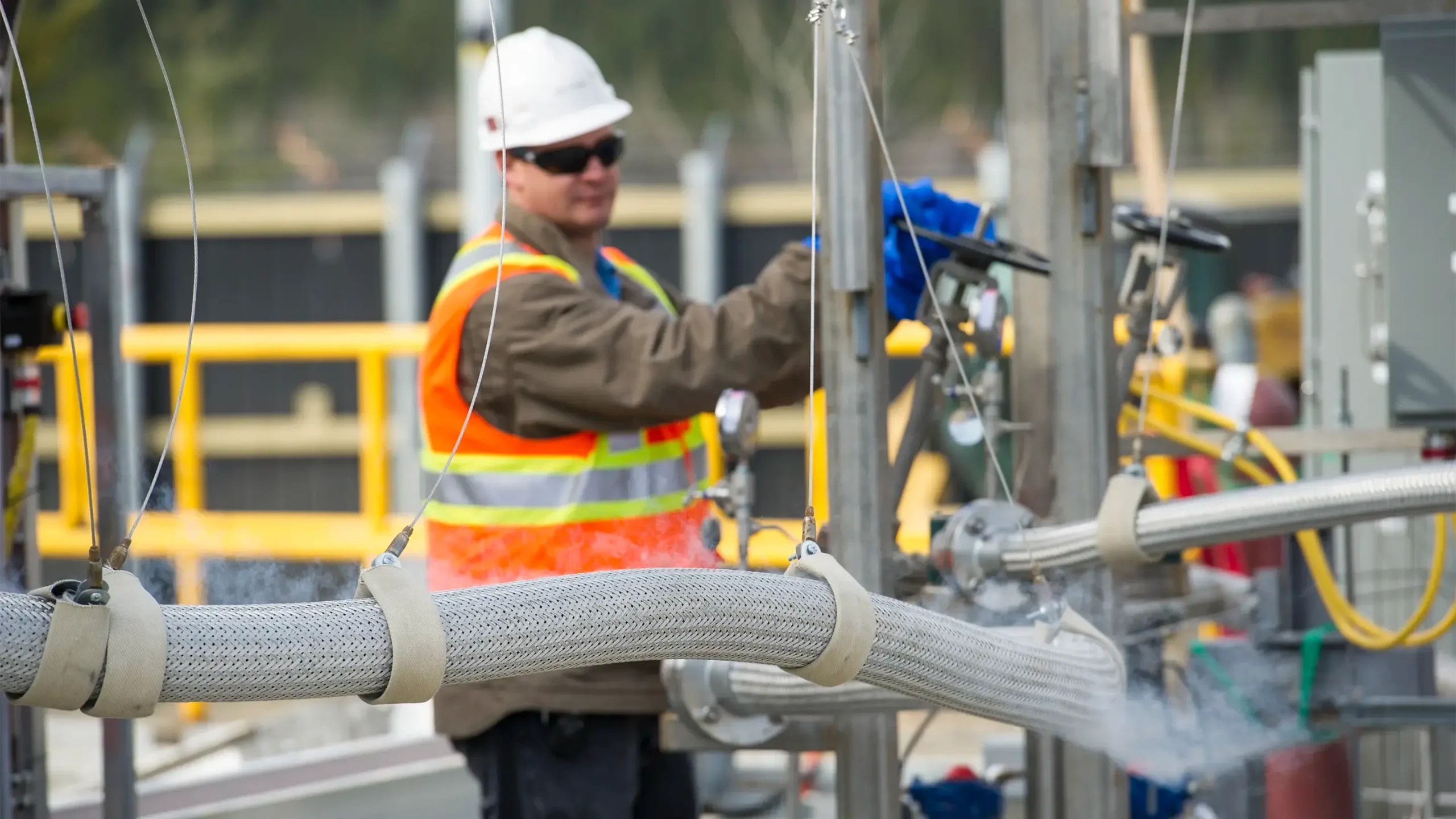

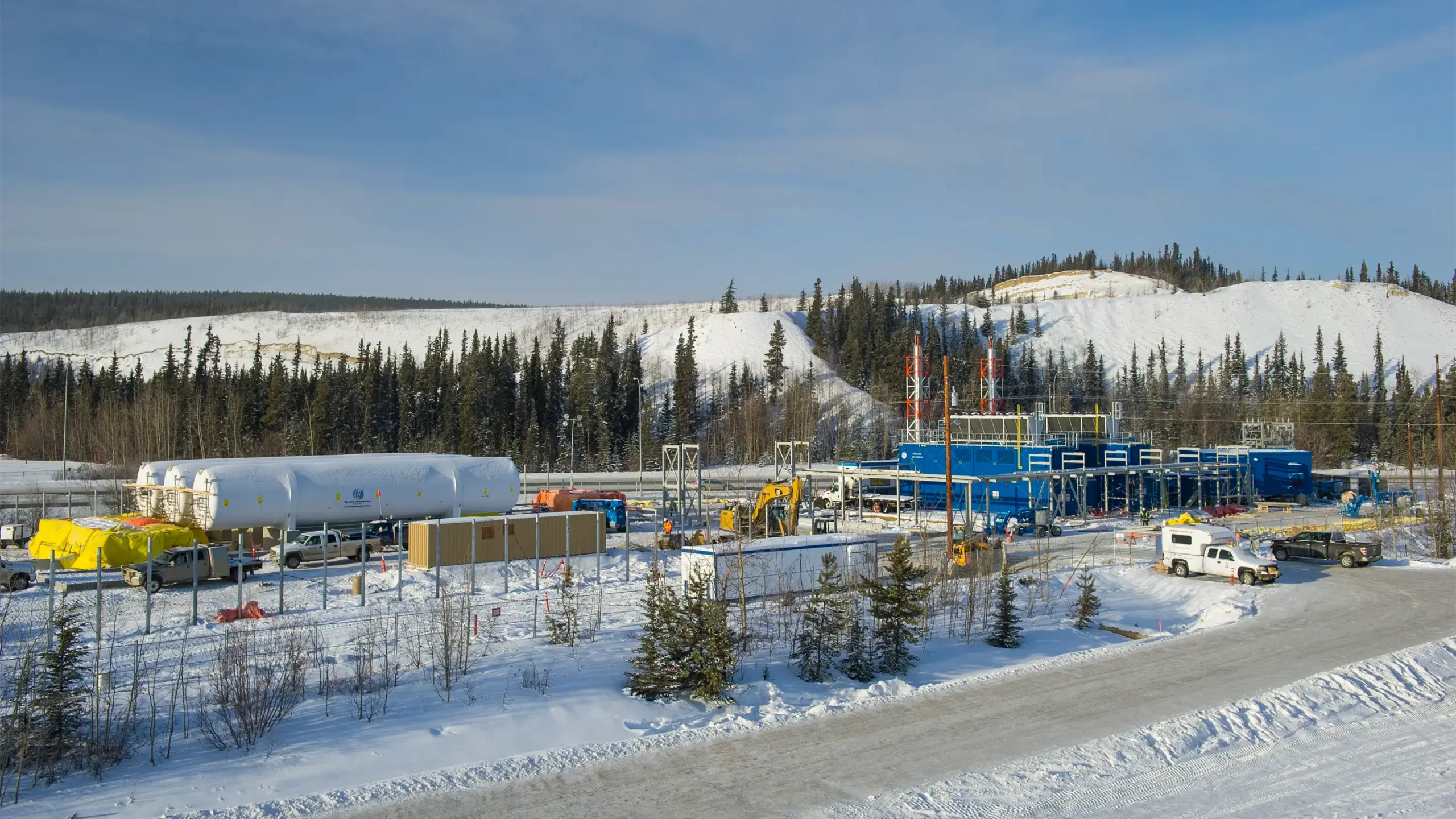
While the Yukon draws the bulk of its energy from renewable hydroelectric and wind power, the territory’s electrical grid required a backup source of power to meet consumer needs. Yukon Energy retained KGS to modernize the existing diesel system to meet peak demand and maintain territory-wide service for residents.
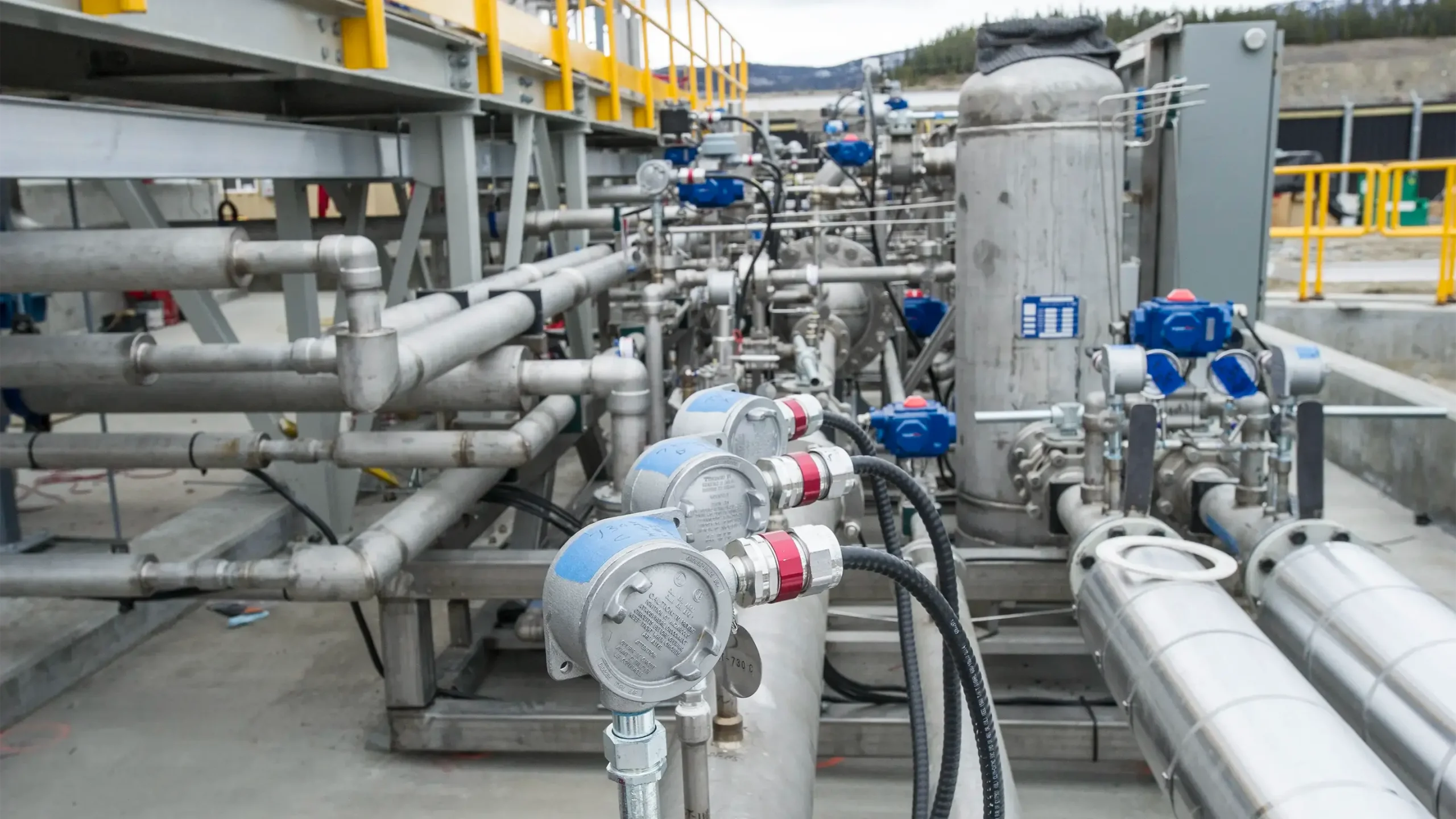
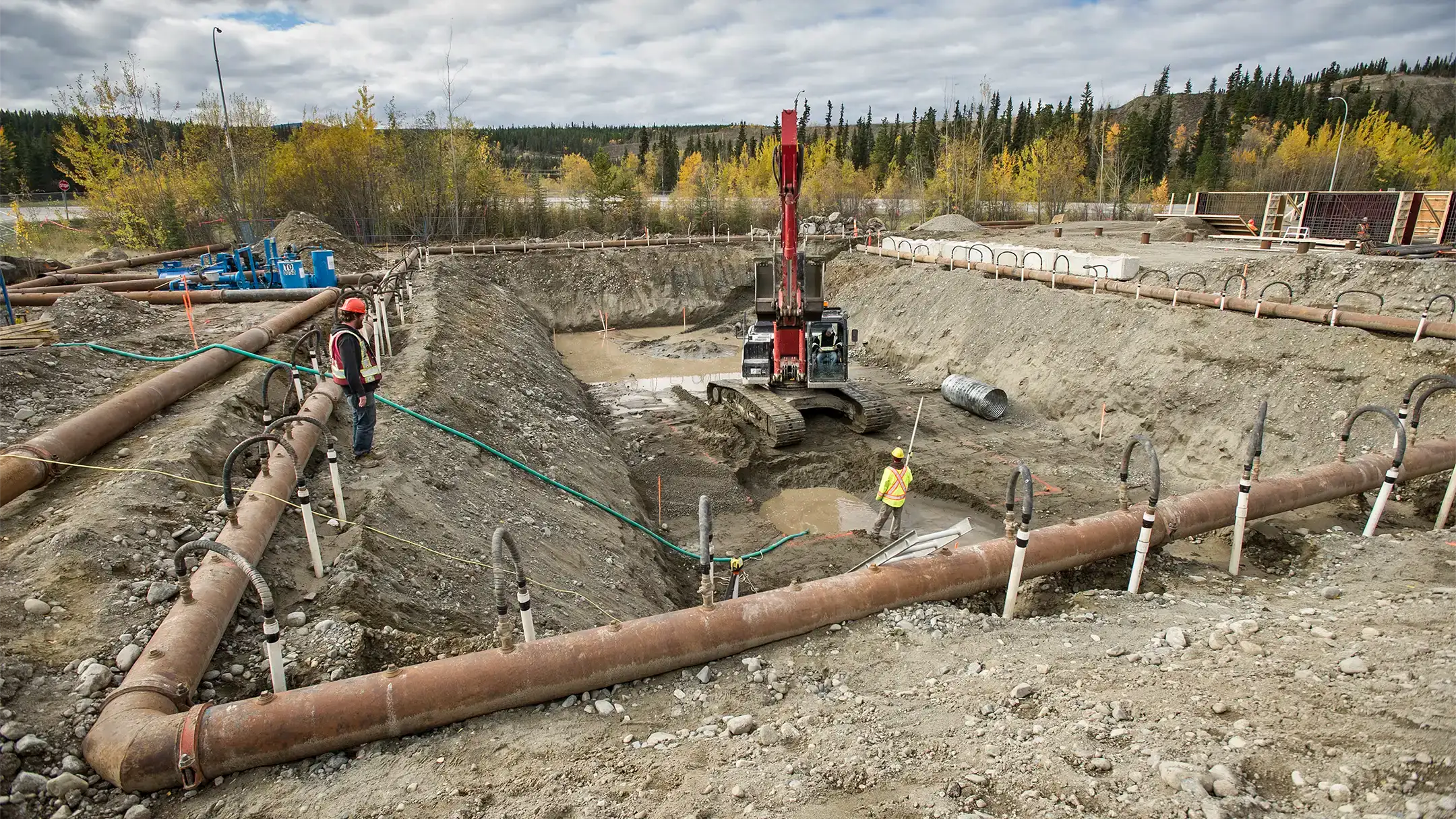
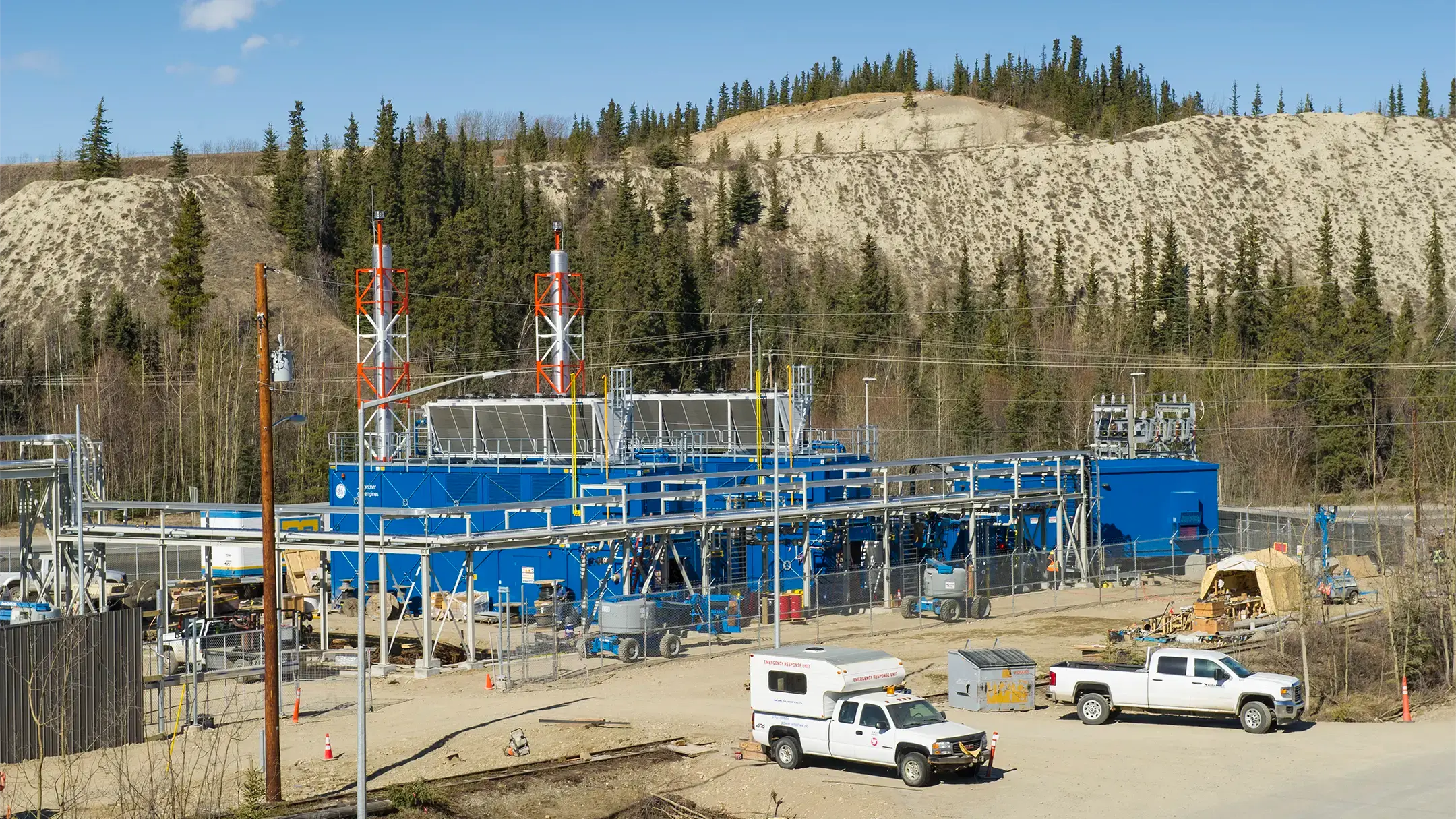
A new liquefied natural gas (LNG) fueled backup power generating station and associated infrastructure was constructed adjacent to Yukon Energy’s existing primary power generating station in Whitehorse, Yukon. Commissioned in 2015, the project site includes two modular LNG fueled reciprocating generators intended to replace Yukon Energy’s aging diesel generating equipment and to provide flexible and reliable backup power to supplement Yukon’s other power sources.
Project Highlights
- An LNG backup station was built with two modular reciprocating generators
- First use of LNG in Yukon
- Lower greenhouse gas emissions than the previous diesel system, long‑term ratepayer savings and improved reliability and peak support
RAS Piping Refurbishment at the North End Water Pollution Control Centre
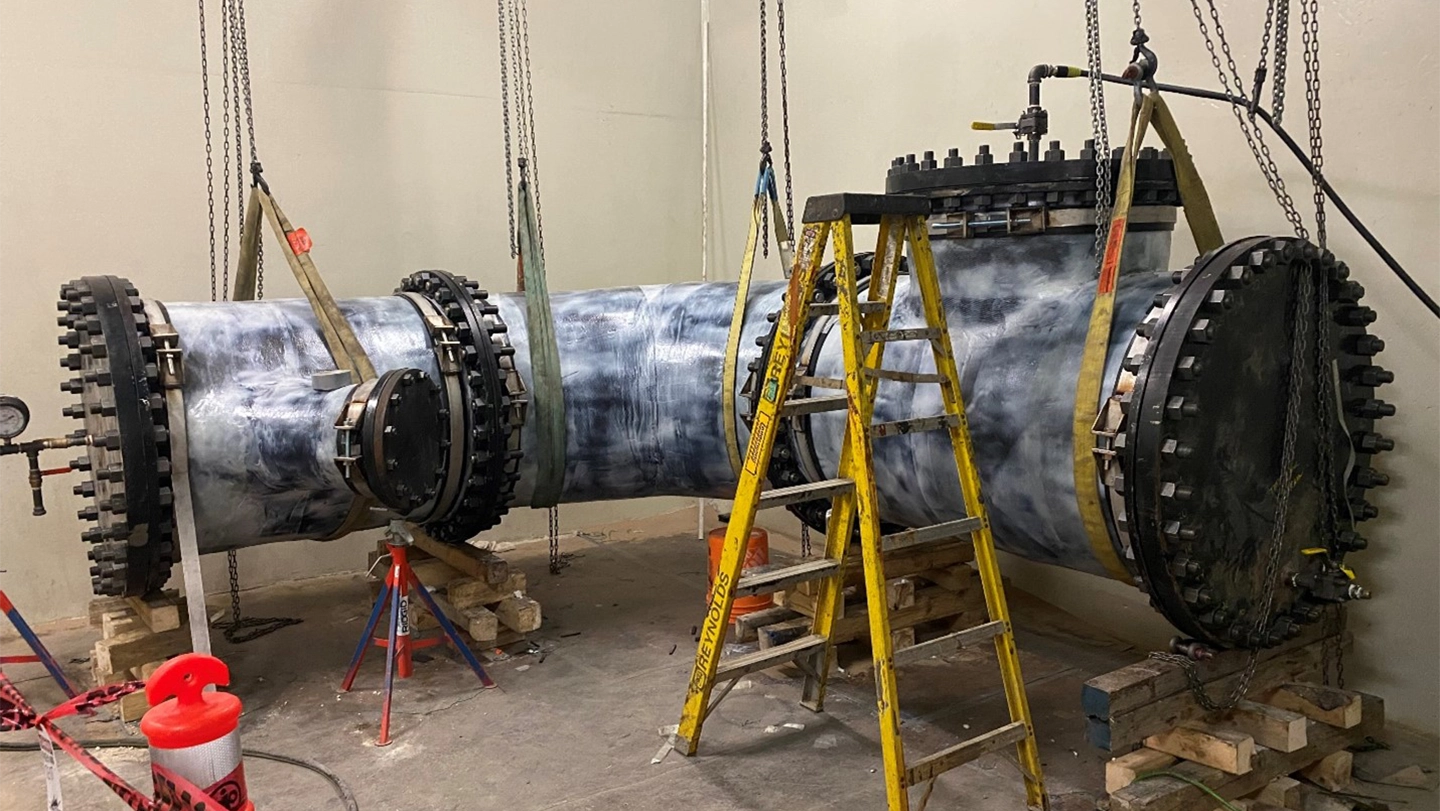
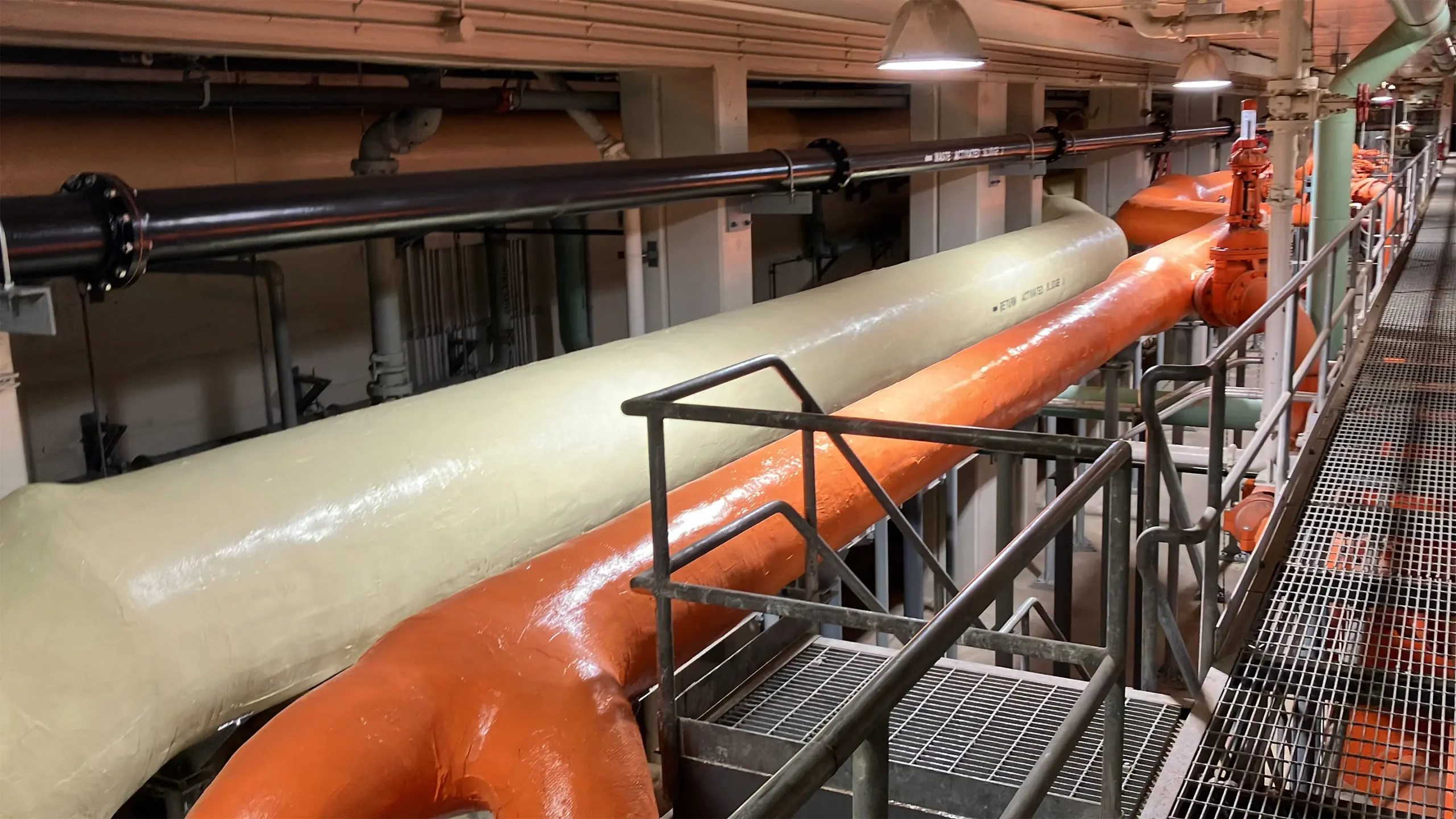

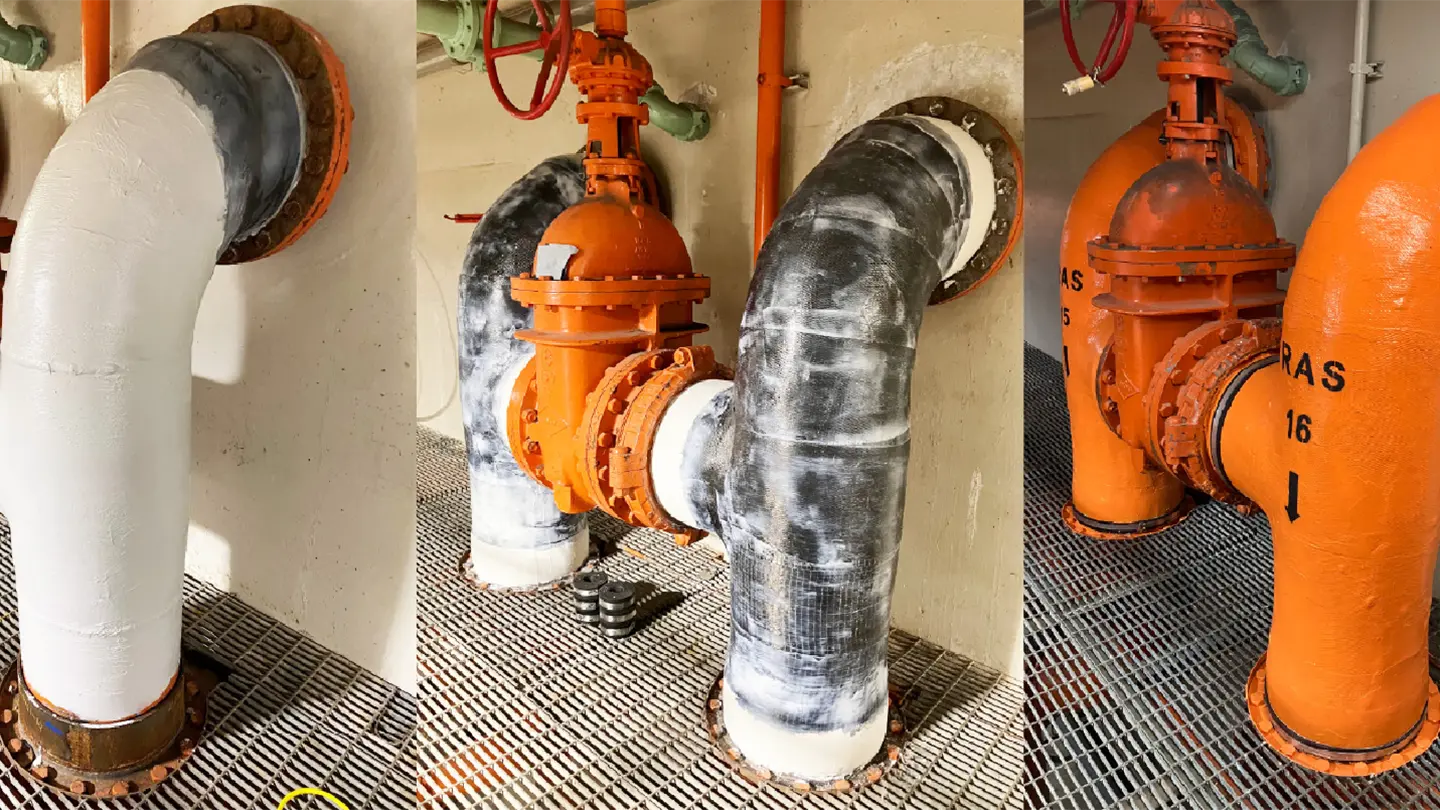
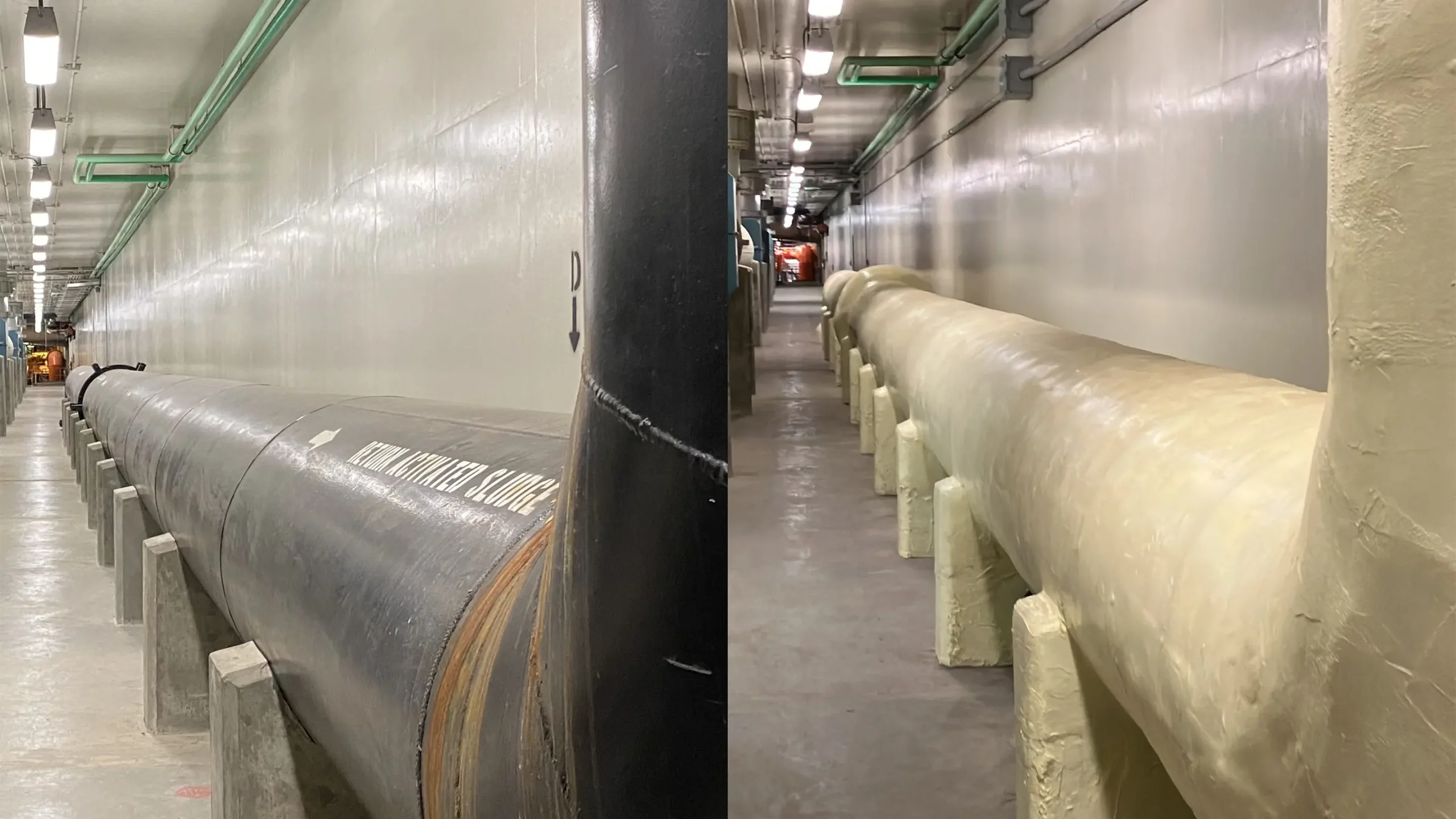
KGS Group led the renewal of almost 2,000 feet of aging Return Activated Sludge (RAS) piping at the City of Winnipeg’s North End Water Pollution Control Centre. This is the city’s oldest and largest wastewater facility, constructed in 1937. The work addressed leaks and structural risk in a critical system that supports treatment for 70% of Winnipeg’s wastewater.
The KGS team did a condition assessment and determined the best solution was a Carbon Fiber Reinforced Polymer external repair system. This solution had not been used on many large-scale, industrial/wastewater applications prior to this project.
After coordinating the design, KGS Group oversaw construction within one year, successfully refurbishing the RAS system for another 25+ years of operation. The plant remained in operation throughout construction to prevent wastewater overflow into the Red River.
Project Highlights
- Renewal of almost 2,000 feet of over 30-year-old, leaking Return Activated Sludge (RAS) piping using Carbon Fiber Reinforced Polymer external repair system
- Plant remained operational throughout construction
- More than 25 years of added service life to the North End Water Pollution Control Centre, which treats 70% of Winnipeg’s wastewater (approximately 187.5 million litres daily)
- Reduced the risk of wastewater overflow into the Red River
Royal Canadian Mint Geothermal Process Cooling System
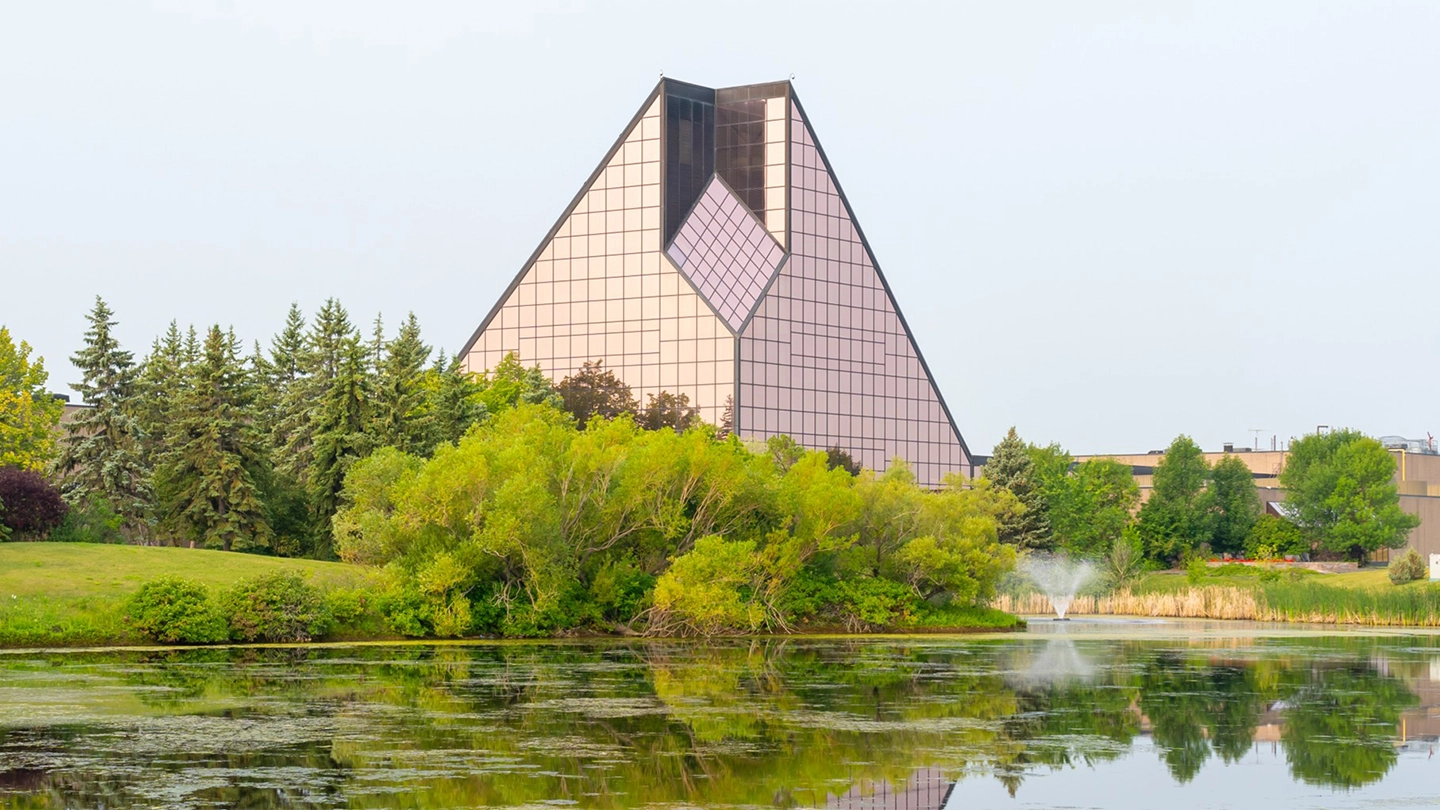


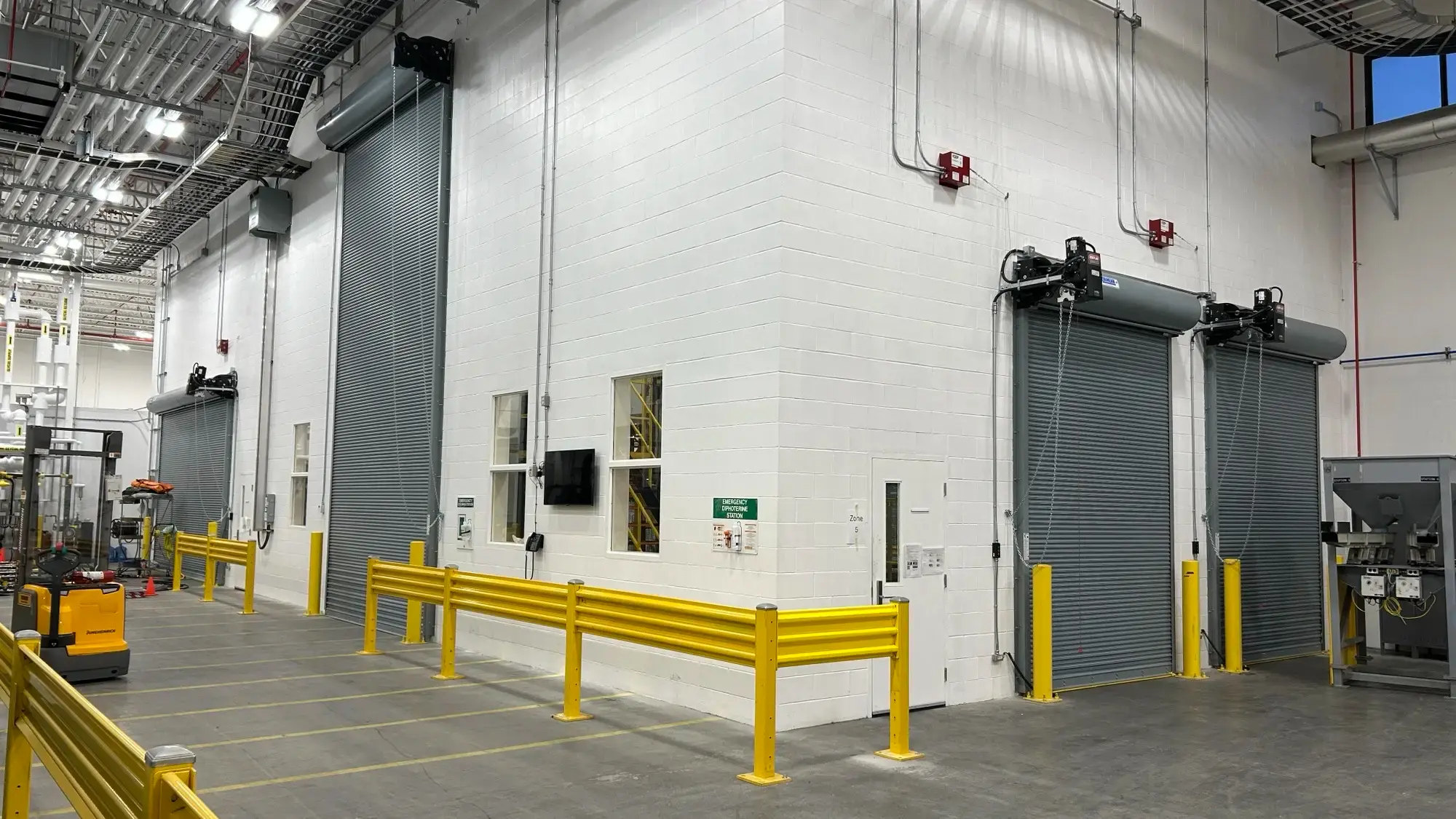
KGS Group partnered with the Royal Canadian Mint to design and oversee construction of a cutting-edge, open‑loop geothermal cooling system for a new coin‑making process – a first for the Mint. The system uses groundwater’s stable temperature to cool equipment, replacing energy‑intensive chillers and cooling towers, nearly eliminating greenhouse gas emissions associated with conventional cooling.
Cooling now relies on a single pump and as the water absorbs heat from the equipment, heat pumps capture that free energy to warm the building through space heaters and ventilation systems. The conditioned water is re‑injected to the underground source, providing thermal balance and long service life.
KGS delivered an integrated design, controls coordination and construction oversight to bring the system online safely, with minimal disruption to operations. While this project significantly reduced the Mint’s energy use, the success here is the reduced environmental impact it will have for years to come.
Project Highlights
- Open‑loop geothermal process cooling with groundwater source and reinjection
- Single‑pump cooling loop with heat pumps that recover waste heat for building heating
- Integrated space heaters, ventilation equipment and facility controls
- Reduced energy use and lower operating costs
- Cooling-related GHG emissions nearly eliminated
- Thermal balancing for longevity, reduced environmental impact and reliable year‑round operation
GE Aviation Engine Testing, Research and Development Centre
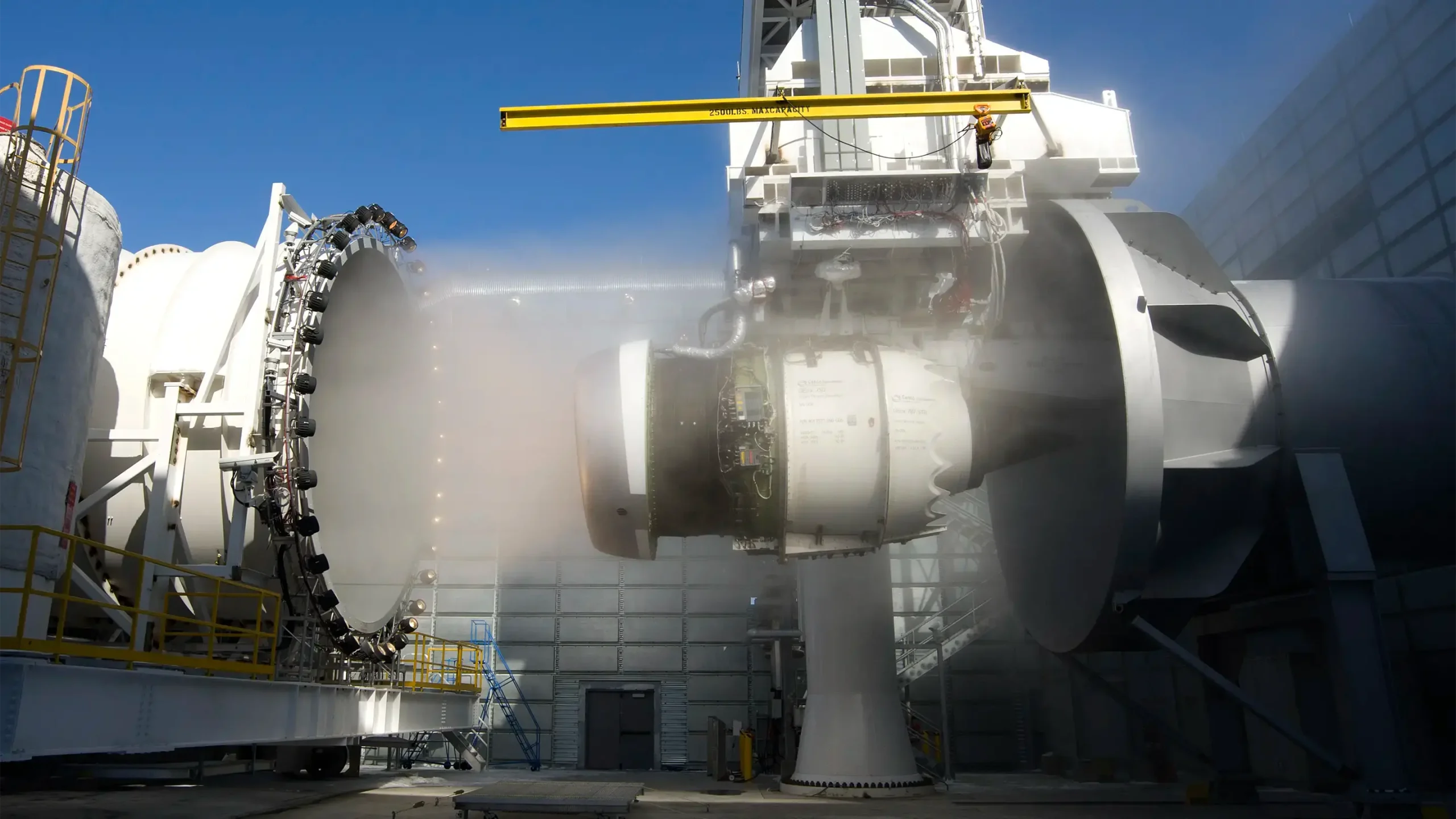
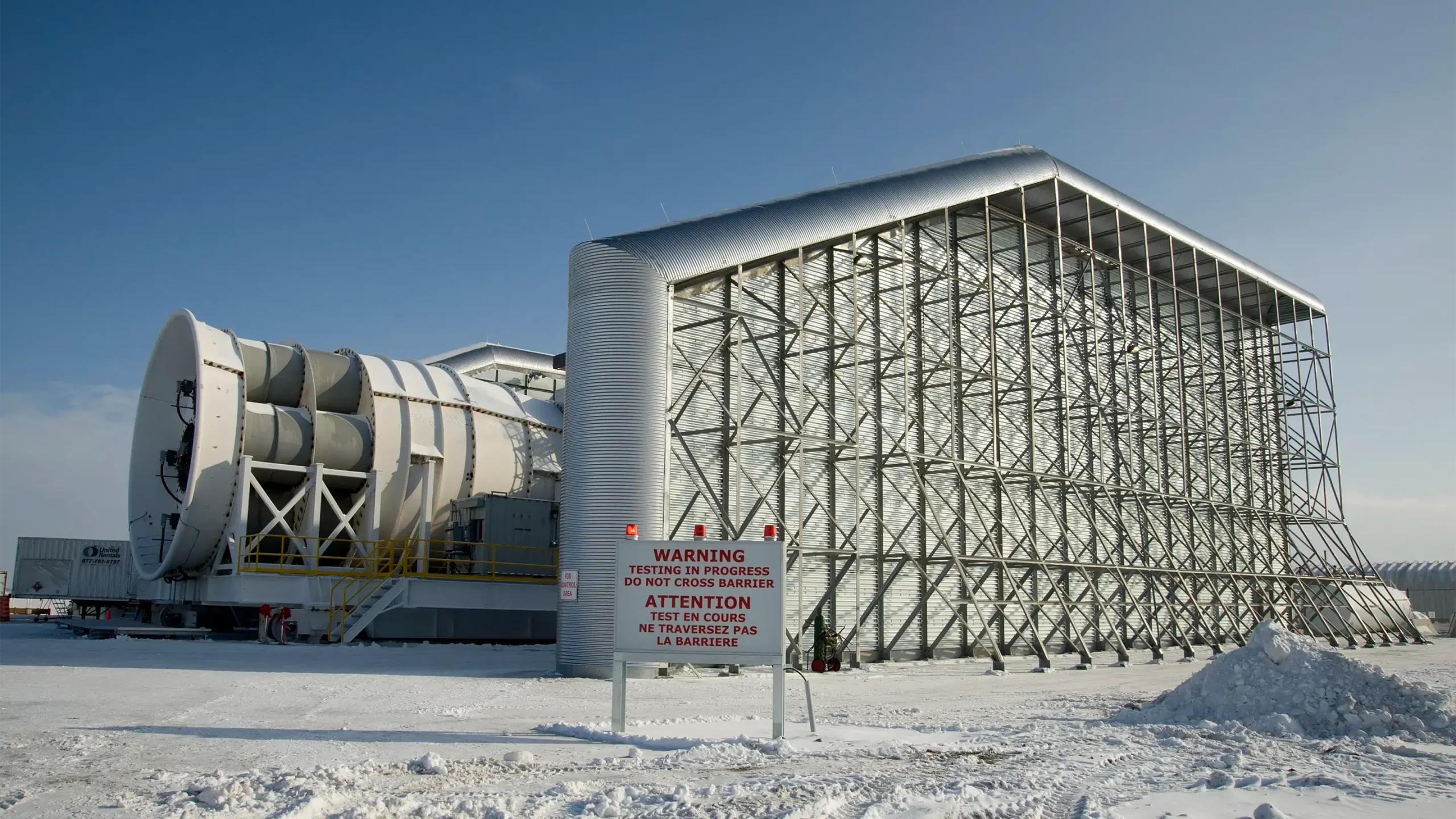
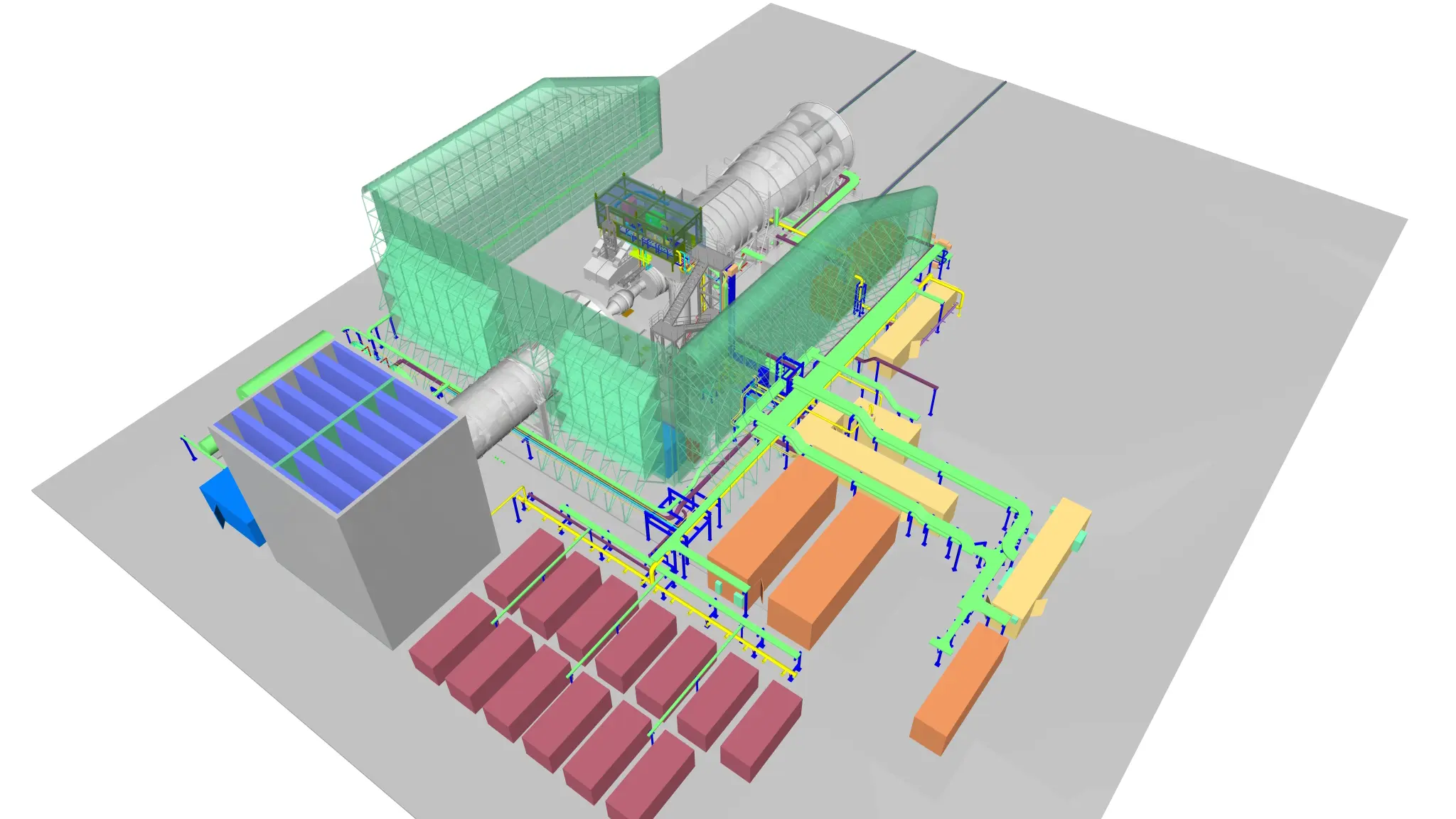
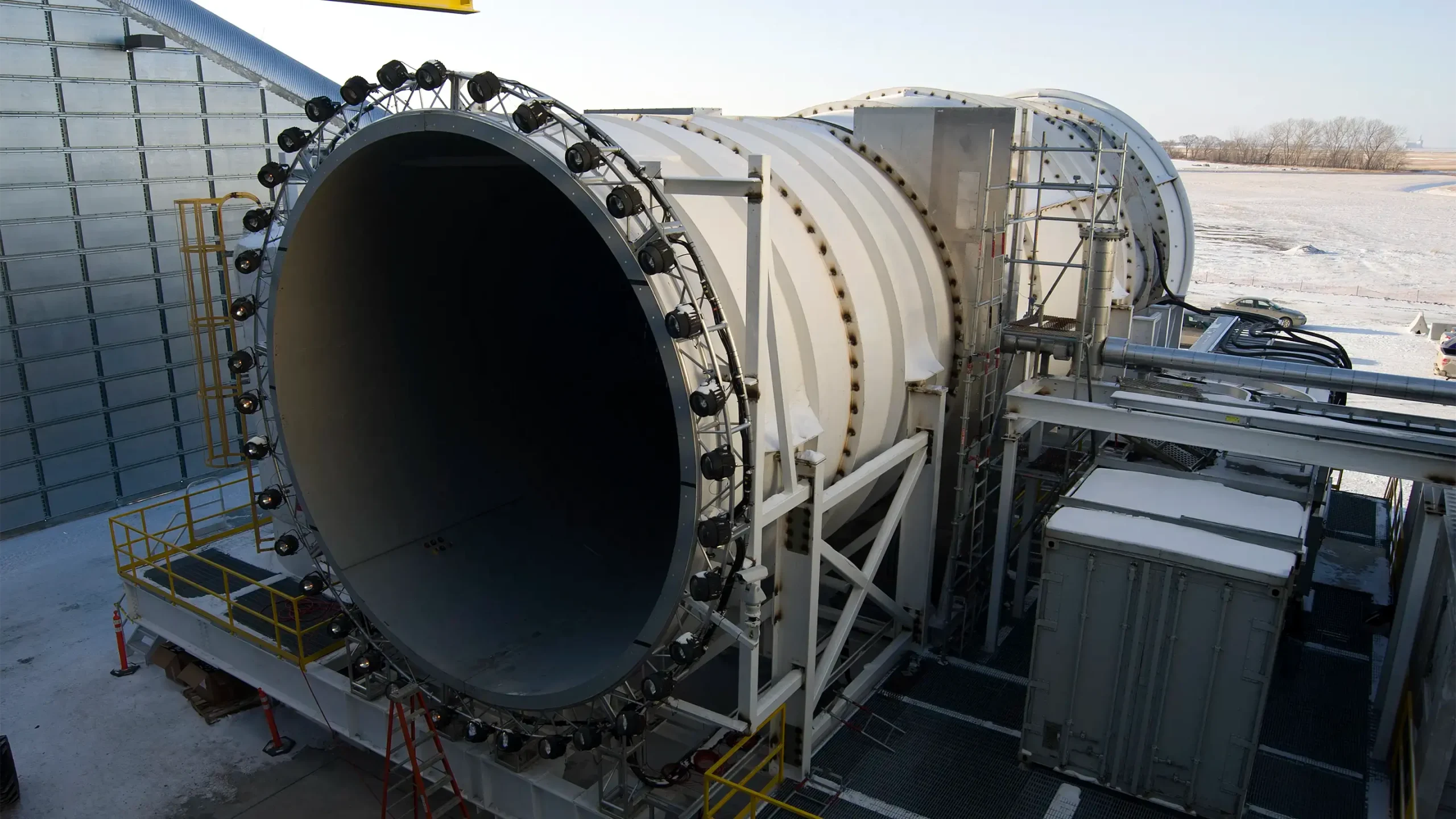
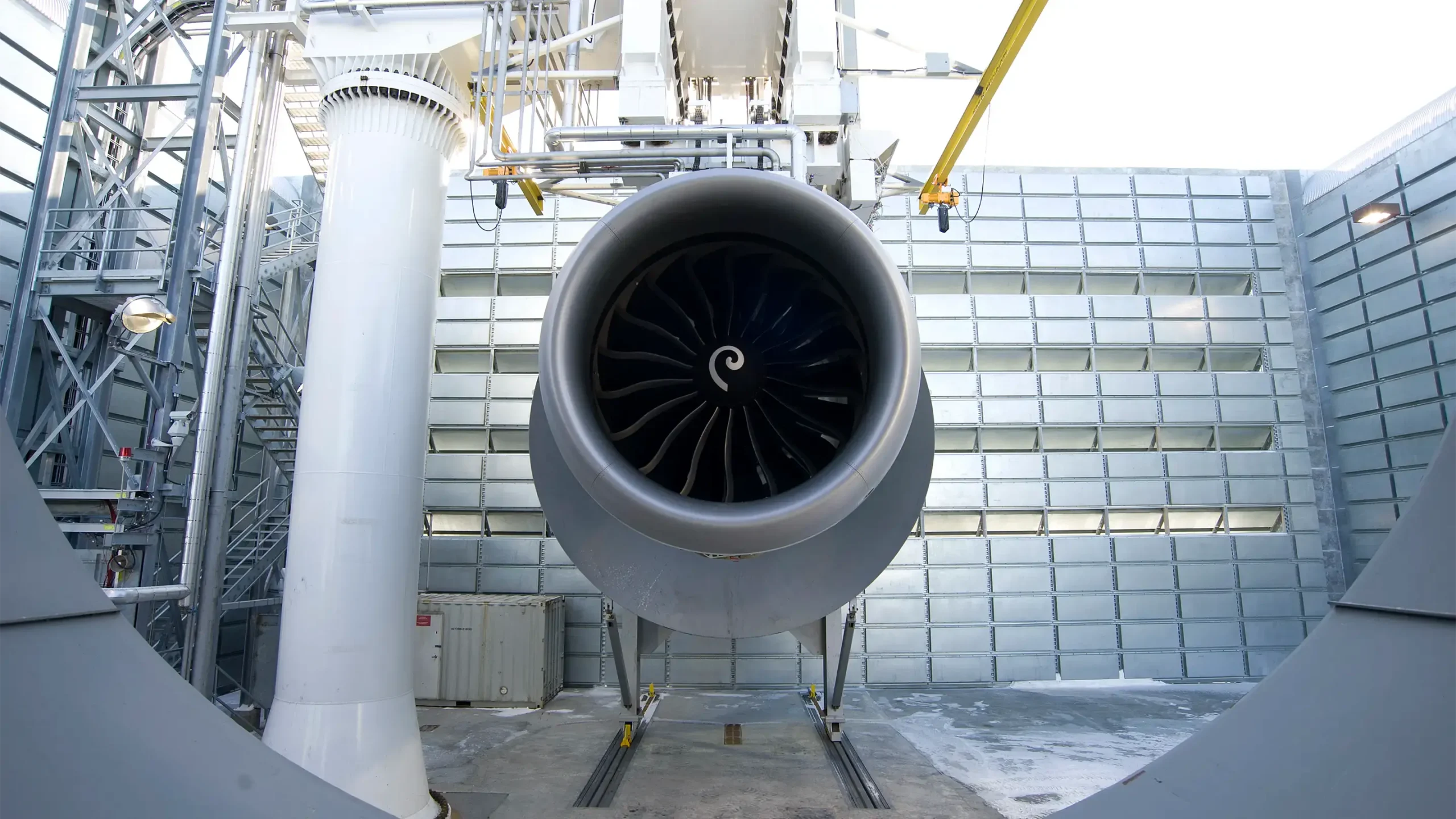
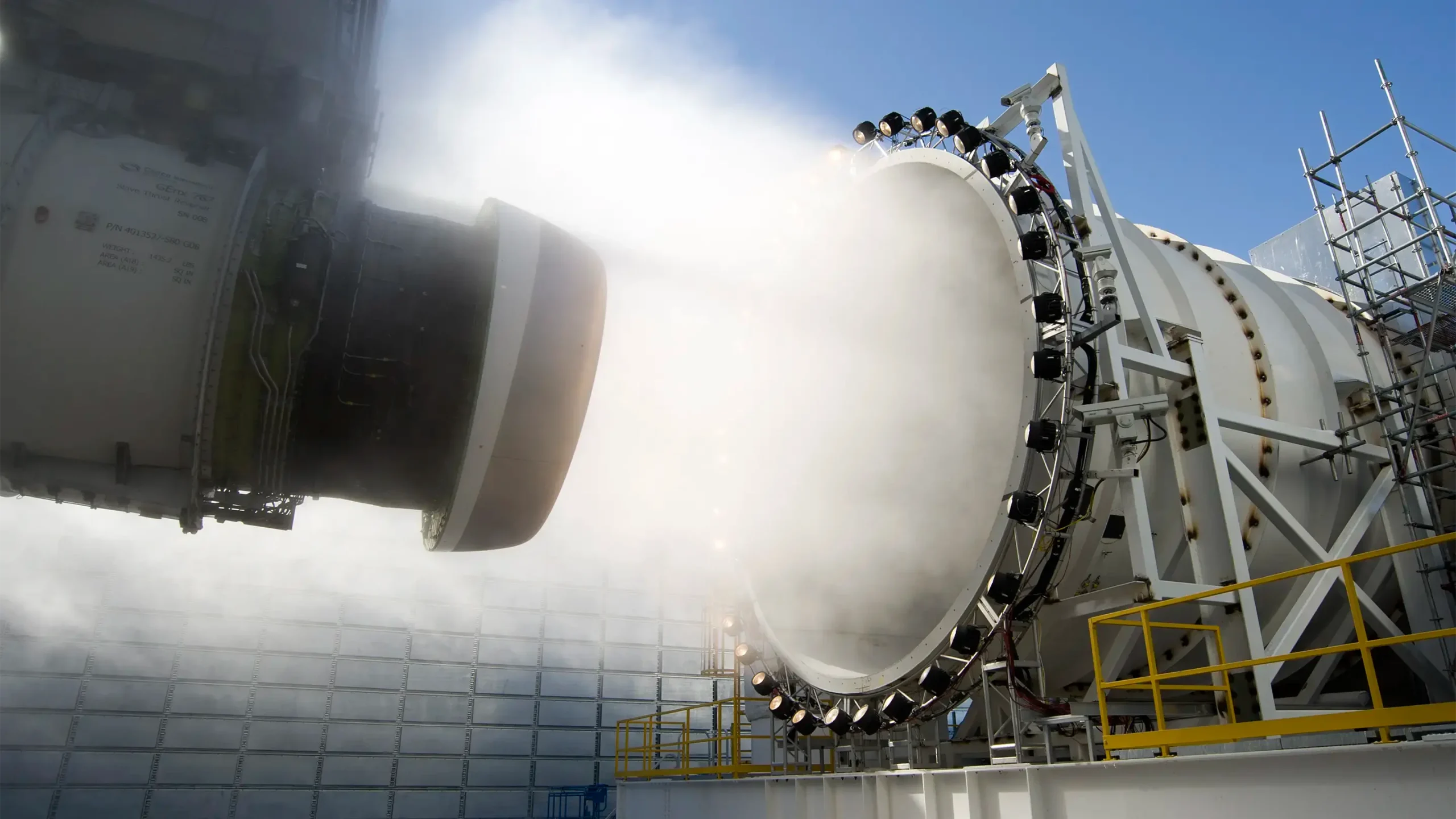
New aircraft engine designs must be tested to confirm they can survive real world hazards such as icing, bird ingestion and loss of an engine blade. To construct a state-of-the-art jet engine certification test centre in Winnipeg, General Electric Aviation formed a partnership with StandardAero, who engaged a diversified project team to provide engineering design services.
As part of the team, KGS Group coordinated and developed a 3D model of the facility in order to fast track the design and construction. The 3D model required collaborative coordination from our mechanical, electrical and structural groups, importing 3D components created by StandardAero and GE’s engine models, as well as generating 3D models based on 2D design drawings from other consultants. In addition, KGS Group provided design services for various mechanical, electrical and structural aspects of the project.
This project embodies engineering achievement through exemplary project coordination and collaboration to deliver a complex project on time and on budget. The use of innovative technology and a diverse range of engineering expertise were paramount to its success.
Project Highlights
- Developed a federated 3D facility model to fast‑track design and construction
- Imported GE engine models and StandardAero 3D components into the coordinated model
- Converted 2D consultant drawings into 3D models to create a fully integrated digital design set
Rainy River Water Treatment Study and Systems Upgrade
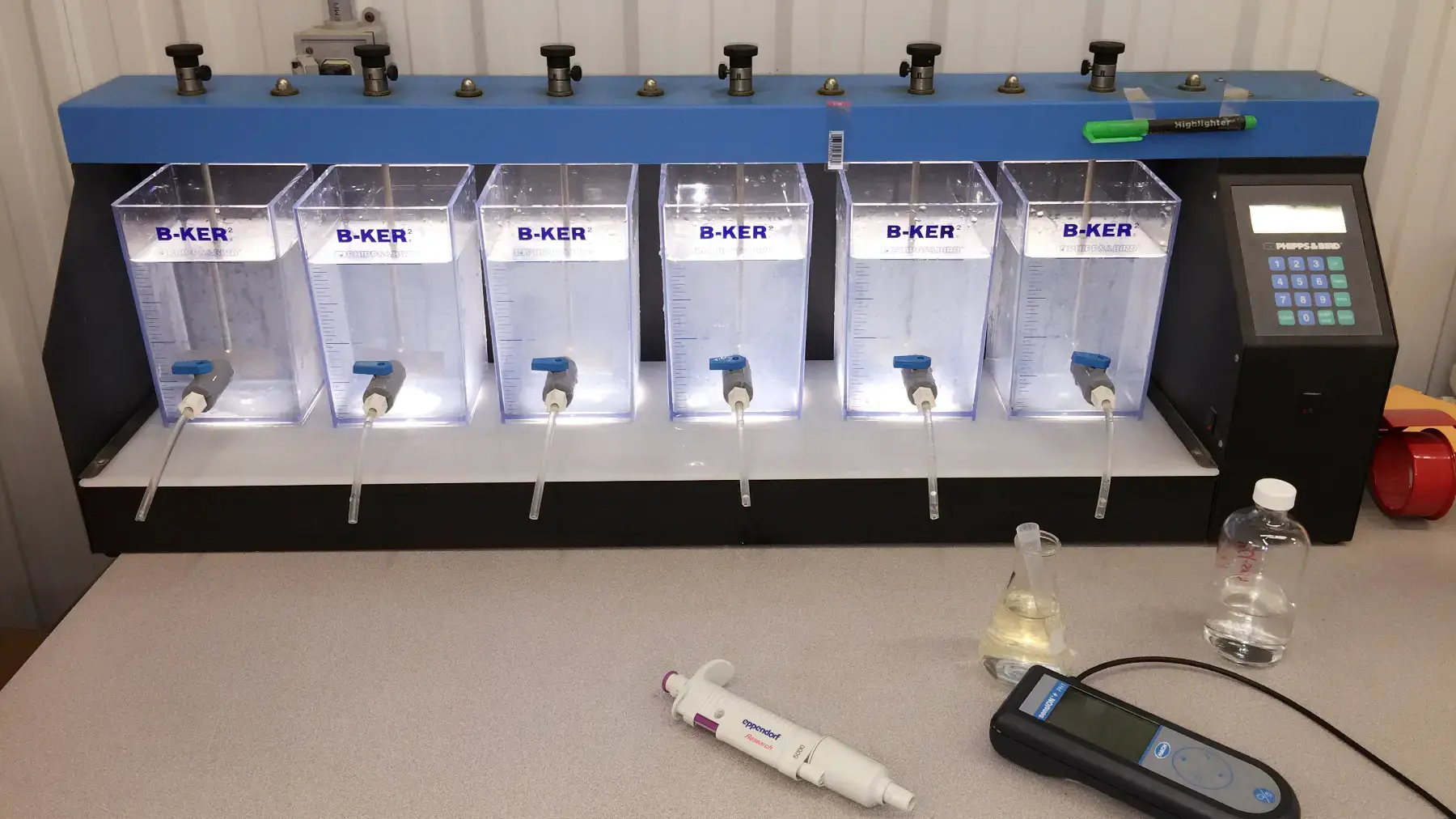
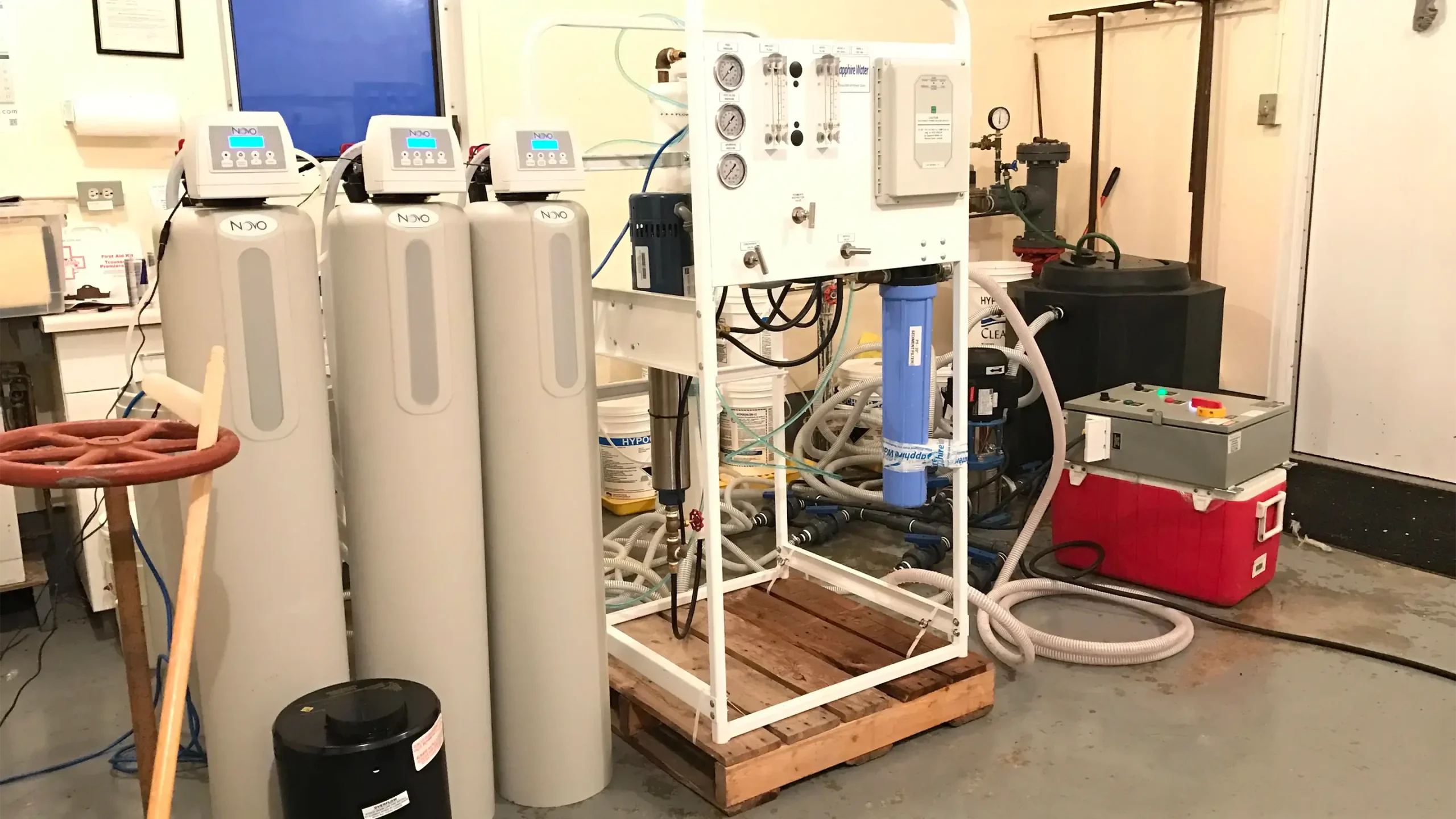
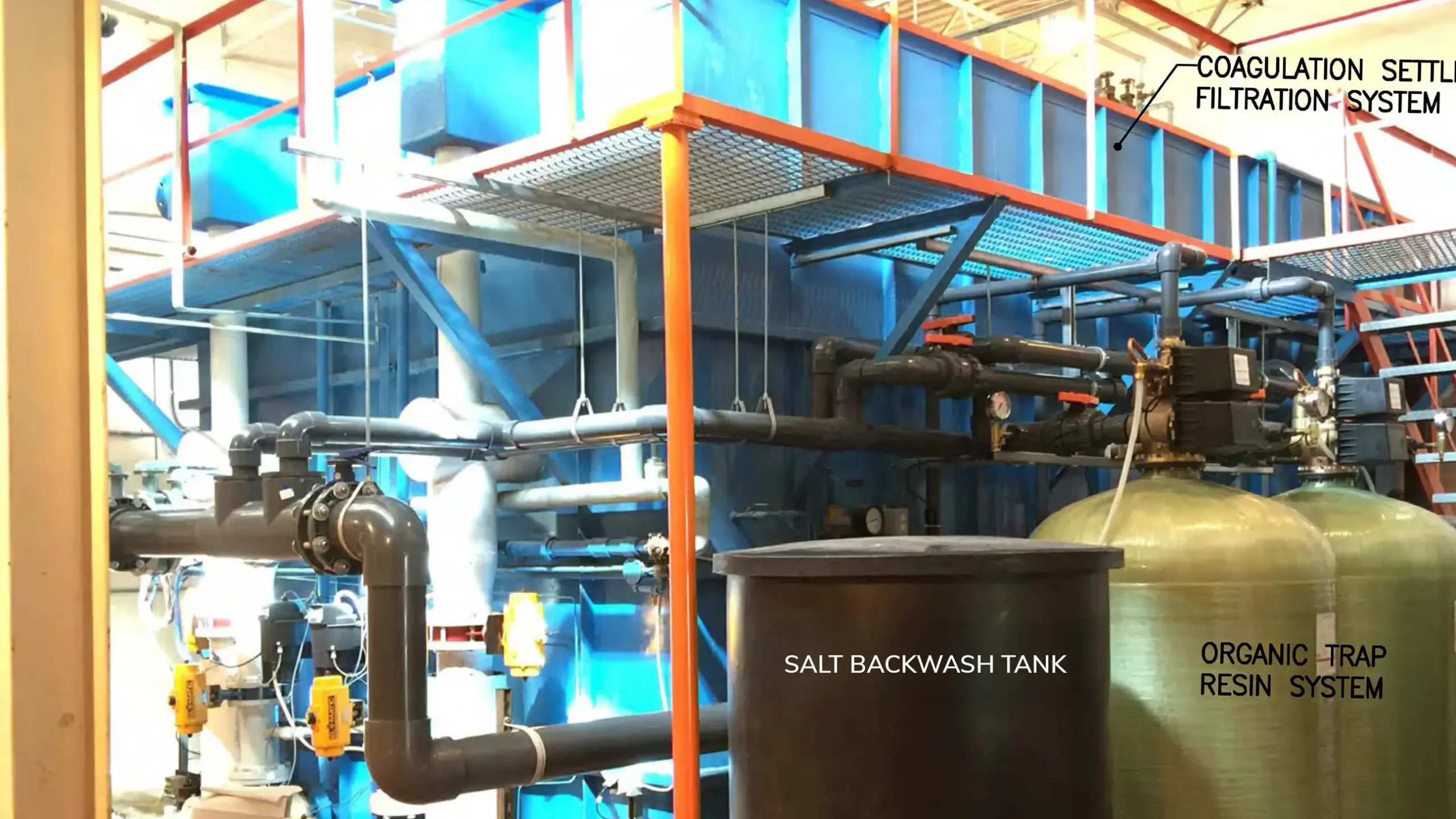
Facing a public health risk from elevated carcinogen levels in its drinking water, the Town of Rainy River needed a practical solution that fit within their existing plant footprint to remedy the situation. KGS Group, in collaboration with the University of Manitoba, conducted detailed pilot studies comparing ion exchange and nanofiltration to determine the most effective, operationally feasible way to reduce carcinogen levels in the drinking water.
Ion exchange was selected because it avoided costly building expansion and offered simpler operations and maintenance for the Town. We then provided engineering services for the design, construction and commissioning of the new ion exchange treatment system, integrating it with the plant’s existing processes and controls.
The upgraded system exceeded Health Canada’s Guideline for Canadian Drinking Water Quality for carcinogens and reduced chlorine consumption by 40%. The project addressed a serious health concern while optimizing use of Rainy River’s existing assets. The Town also received a commendation from the Ontario Ministry of the Environment and Climate Change in recognition of the project’s success.
Project Highlights
- Designed the new ion exchange system and integrated it with existing plant processes
- Reduced chlorine consumption levels by 40%
- New system exceeds Health Canada’s Guideline for Canadian Drinking Water Quality
Moose Jaw Refinery Debottleneck Project
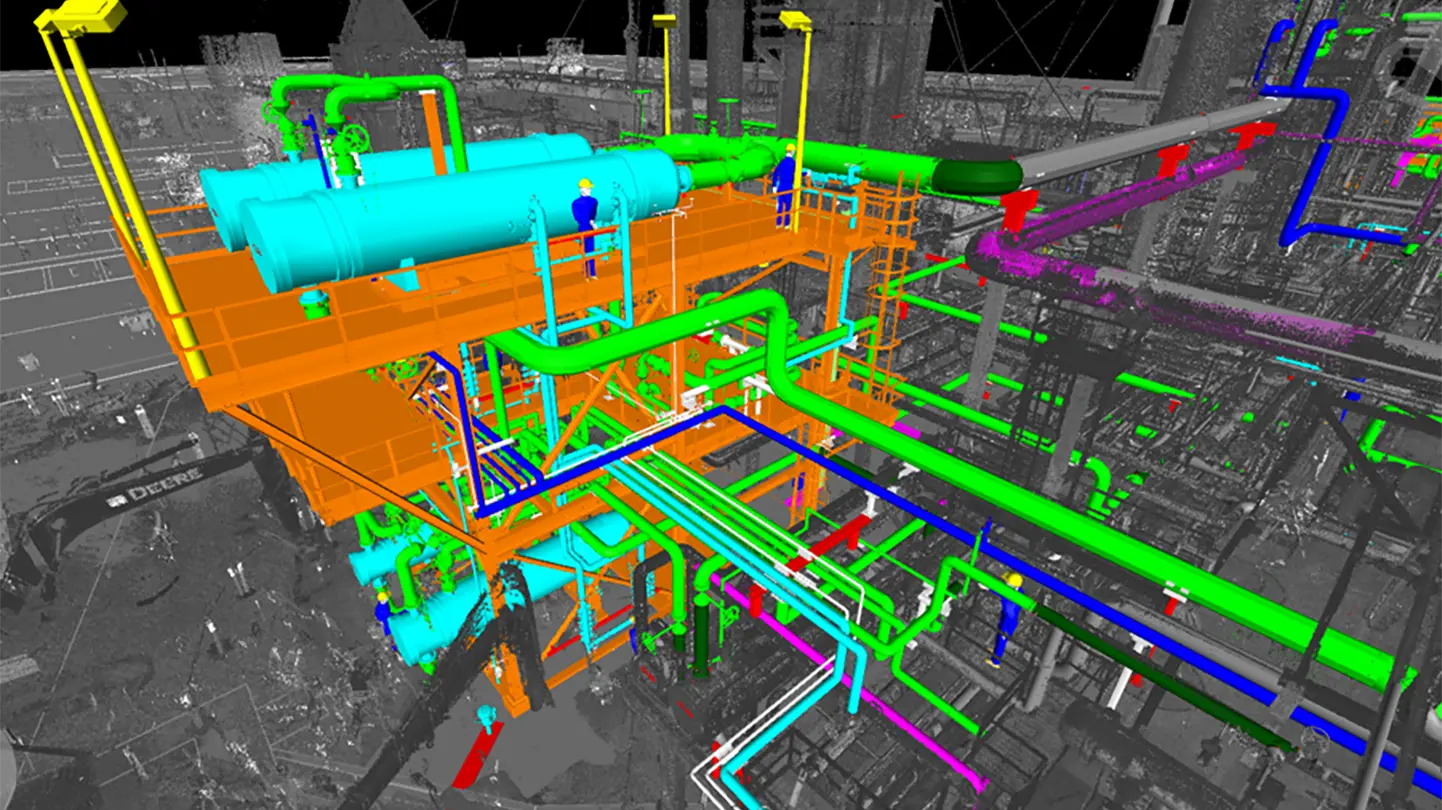
Gibson Energy’s heavy crude oil processing facility in Moose Jaw, Saskatchewan, refines products such as asphalt. KGS Group was tasked with front end engineering design (FEED), detailed design, procurement, contract administration and construction support to expand and increase the facility’s capacity. The work was executed while the plant remained in operation, requiring careful sequencing, safety planning and coordination.
KGS used simulation modelling and 3D models to visualize designs and anticipate potential conflicts, ensuring a smoother implementation. With construction taking place while the facility was in operation, the team overcame logistical challenges, complex safety considerations and an aging facility to complete the project in June 2019, on time and within budget.
Ultimately, the expansion increased throughput capacity by approximately 30% – from 17,000 barrels per day to 22,000 barrels per day – with no increase in GHG emissions. This reduces the facility’s emissions per barrel of oil processed by approximately 20-25%.
Project Highlights
- Performed the front end engineering design, detailed design, procurement, contract administration and construction support to increase the facility’s capacity
- Work was completed while the plant remained operational
- Simulation modelling was used to visual designs and anticipate conflicts to resolve them before implementation
MobilGrain Delisle Seed Cleaning Plant
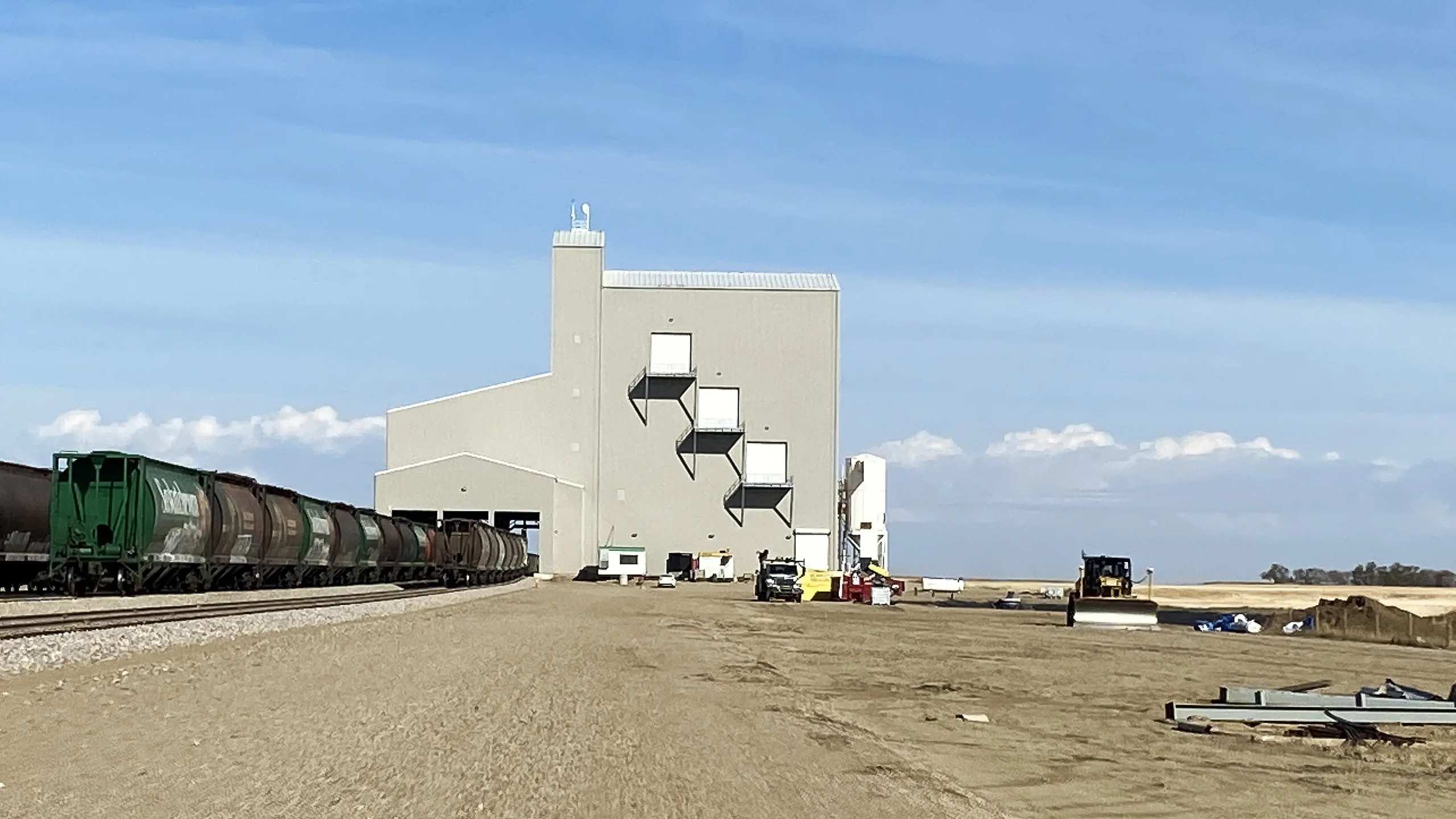

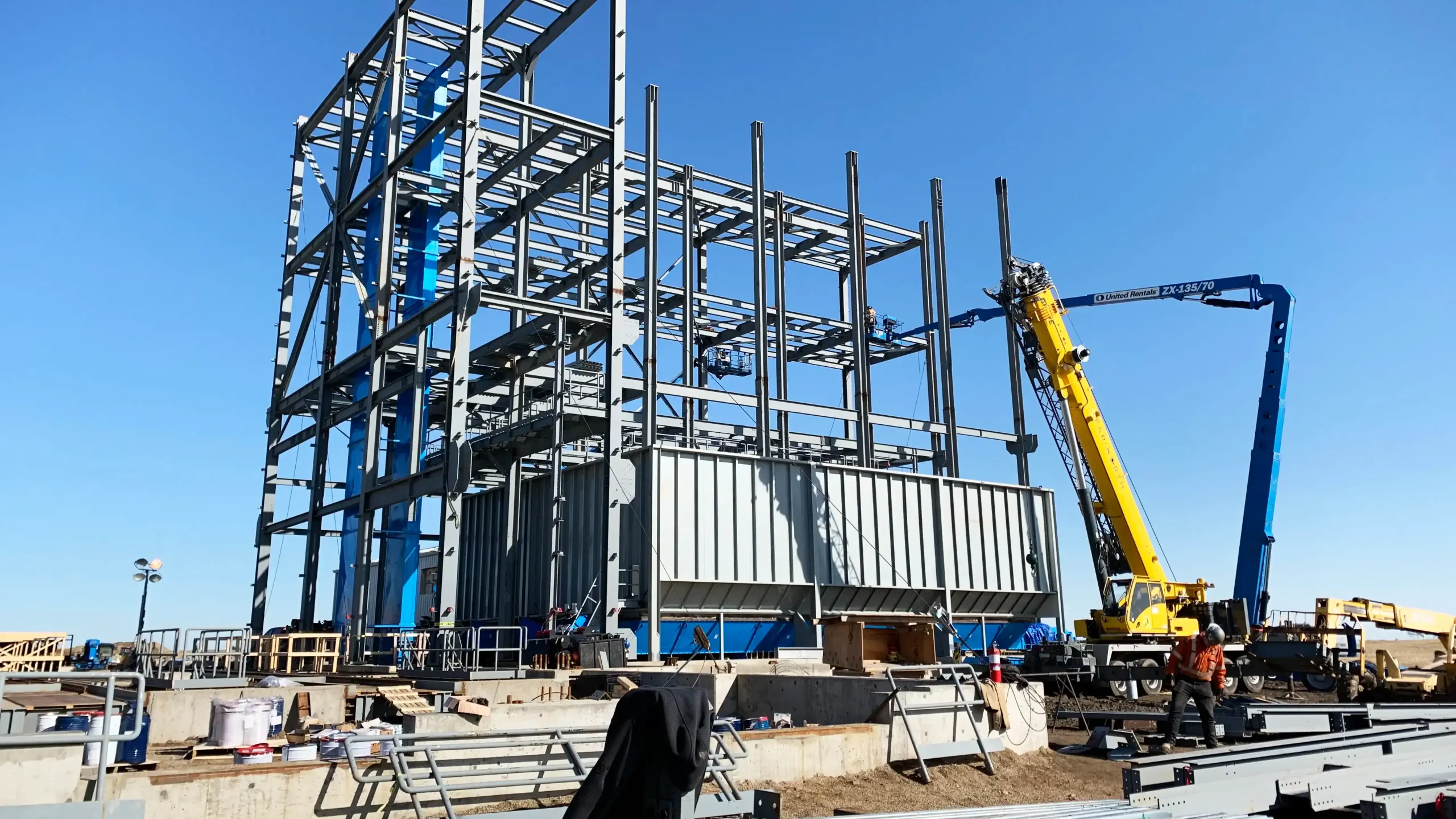
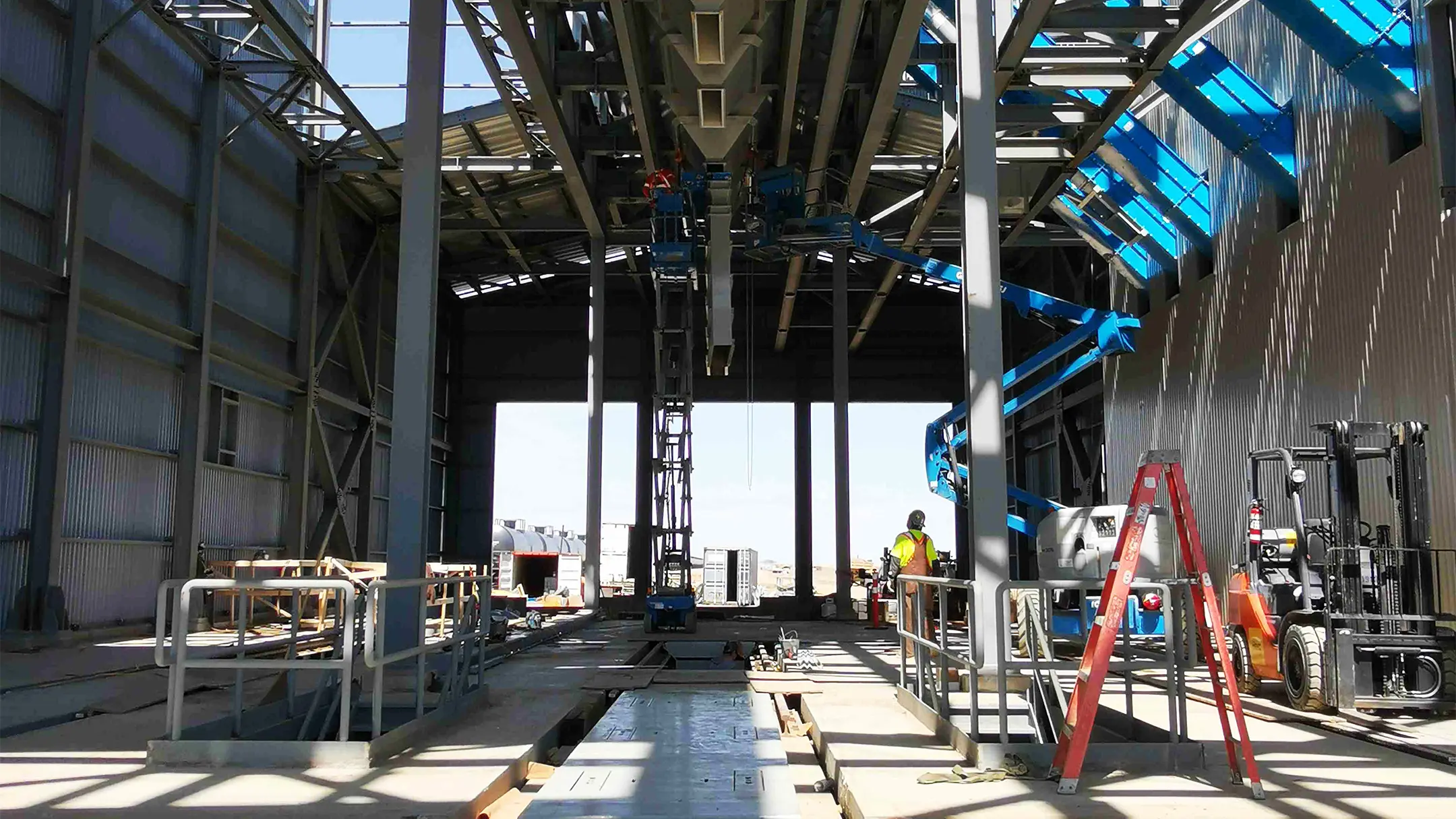
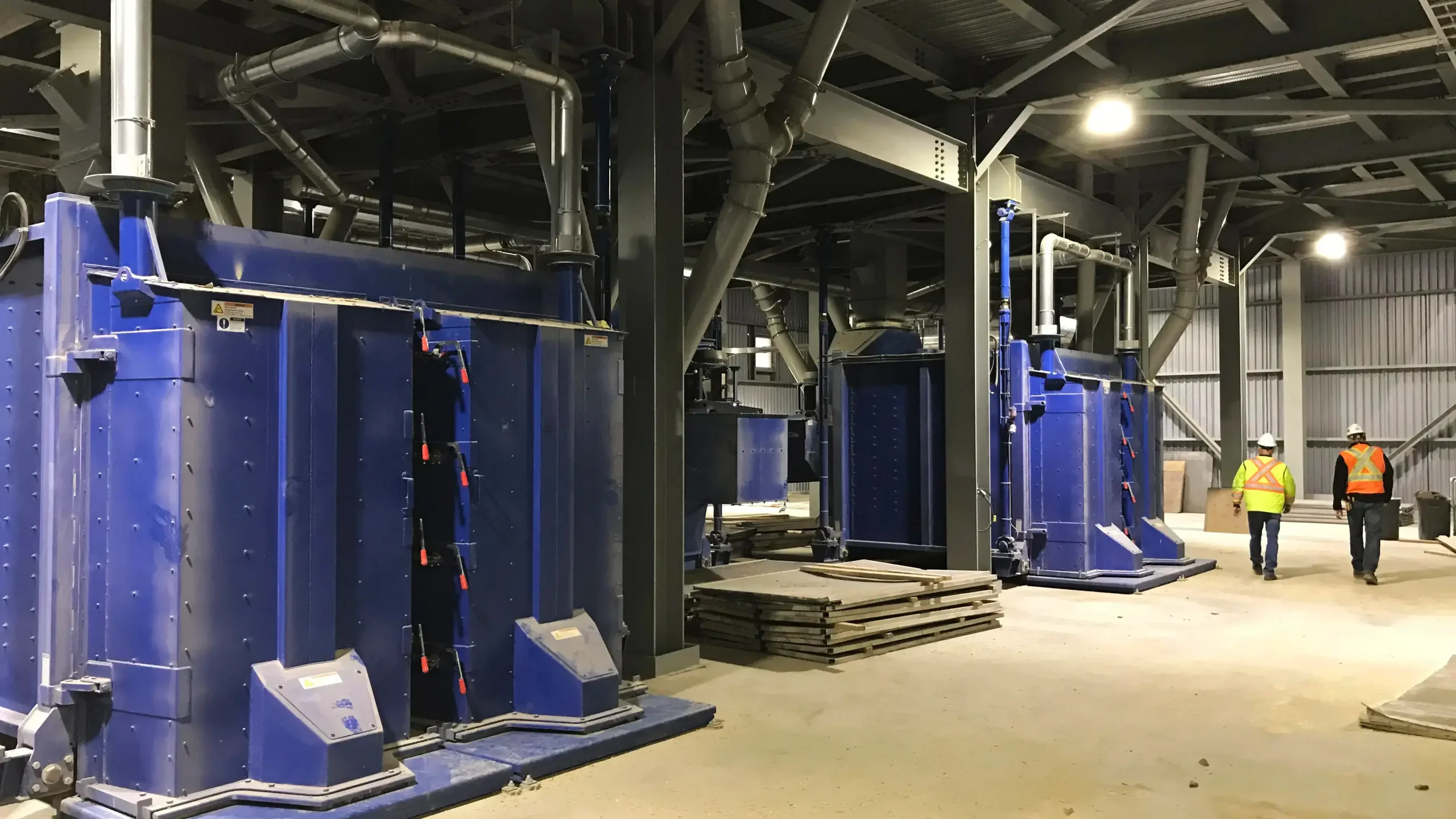
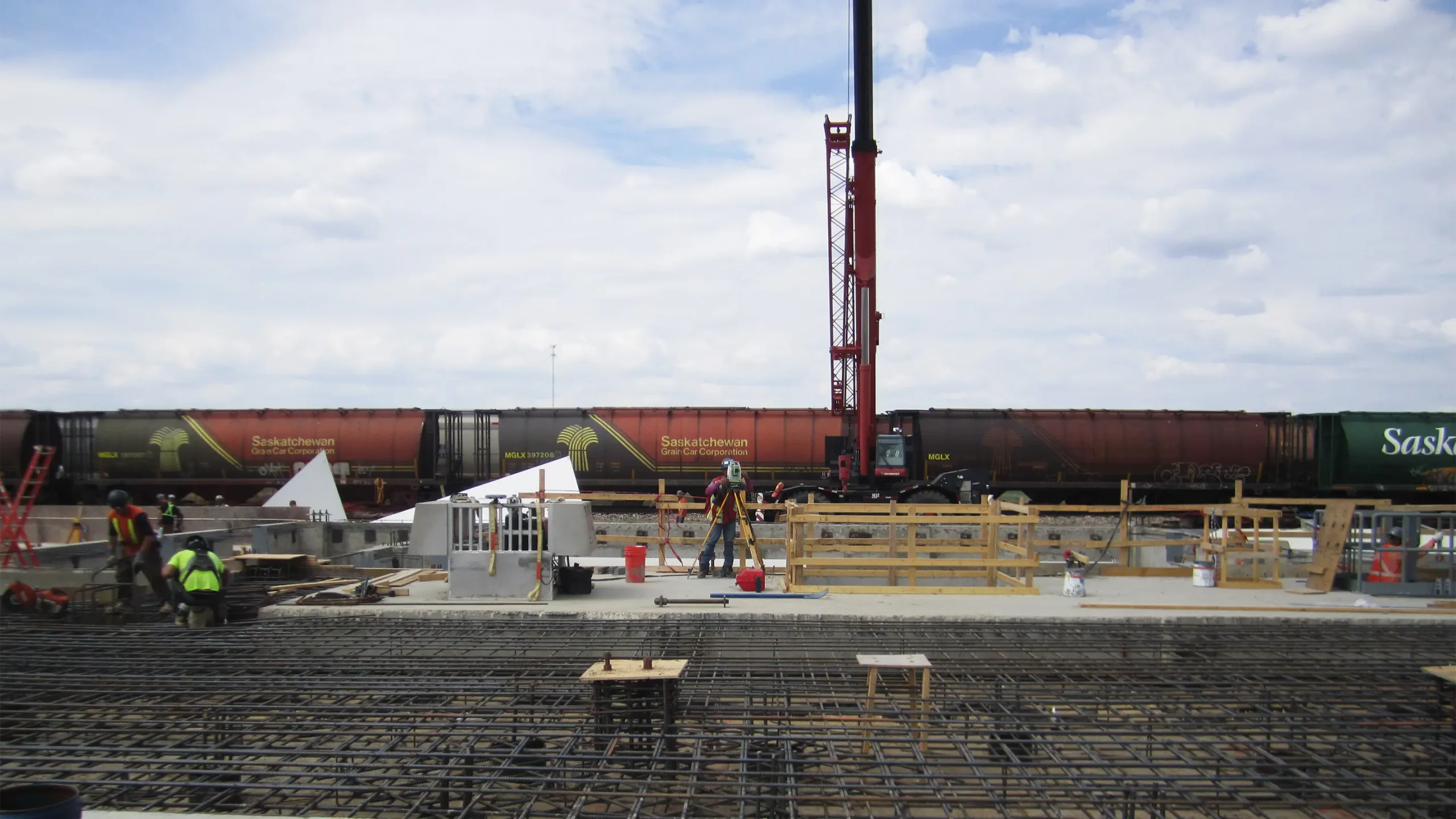
KGS Group provided detailed structural design for the foundation and superstructure of a new seed cleaning facility for MobilGrain. The 140-foot-tall terminal features a unique design that maximizes the use of gravity and minimizes the need for maintenance-intense conveyance equipment to handle grain. The facility also includes a railcar loadout station with underground storage bins, a large storage bin covering the entire main floor, vibrating screens and an explosion-proof bucket elevator.
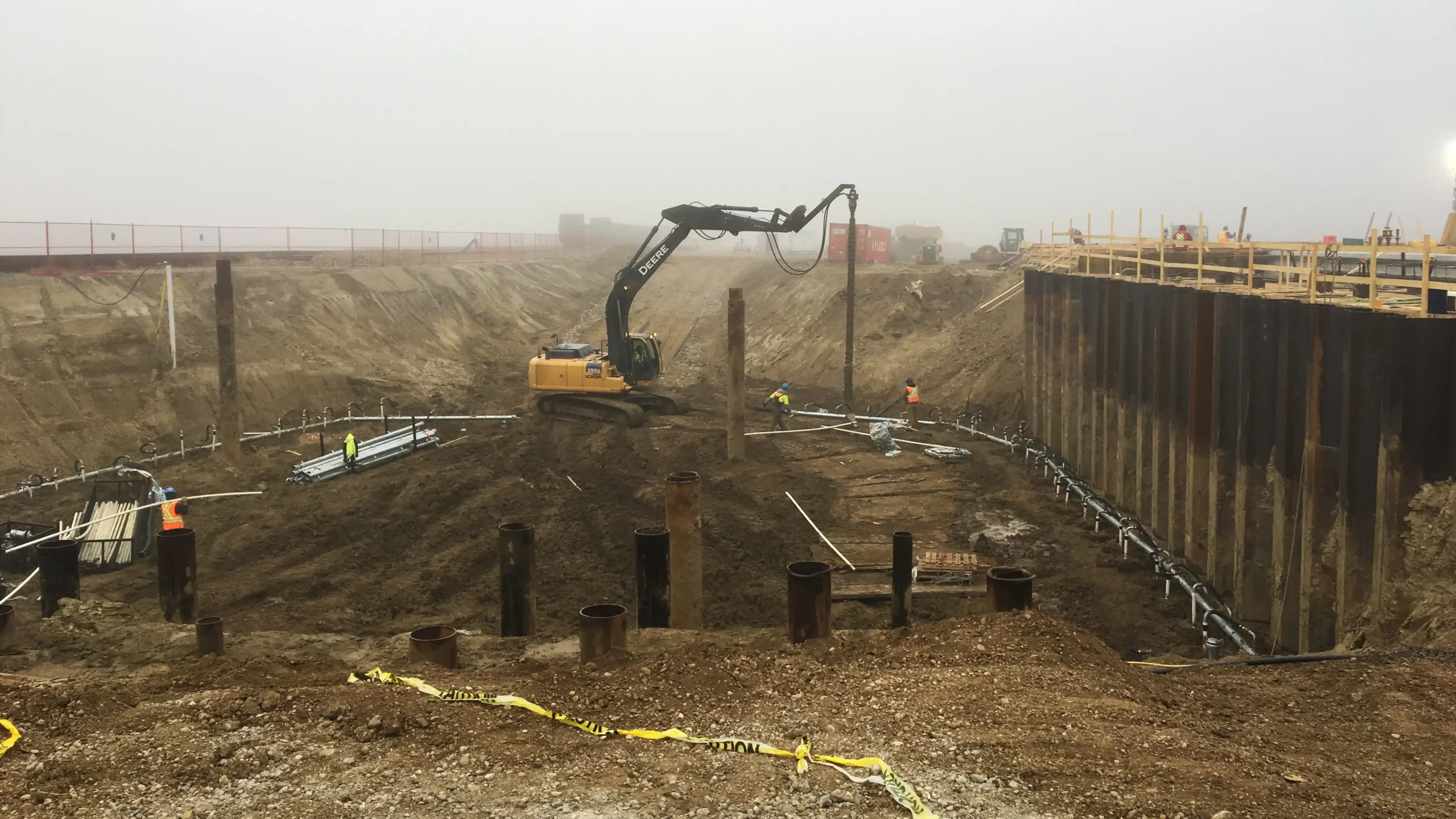
The proposed site was located within a geological zone that is challenging for foundation design and excavation works. In addition to a high-water table, neither piles or footings were found to be a clear choice of foundation. Through careful interpretation of geotechnical parameters and design simulations, the team determined concrete‑filled, steel‑driven piles as the appropriate foundation solution. A thick main‑floor concrete slab was designed to support the heavy bin loading and ensure the pile array acts uniformly as a group. Sheet piling was also installed between the main plant and loadout basement in order to speed up foundation construction. Draw wells were installed along the perimeter of the site in order to lower the water table during construction.
As a result of intense coordination efforts between the owner, engineering team and sub-contractors, the 3-year long project was successfully completed.
Project Highlights
- Detailed structural design for the foundation and superstructure of a new seed cleaning facility
- The 140-foot-tall terminal features a unique design that maximizes the use of gravity and minimizes the need for maintenance-intense conveyance equipment to handle grain
- Careful interpretation of geotechnical parameters and design simulations resulted in the chosen solution of concrete‑filled, steel‑driven piles