

Cockburn and Calrossie Sewer Relief Works
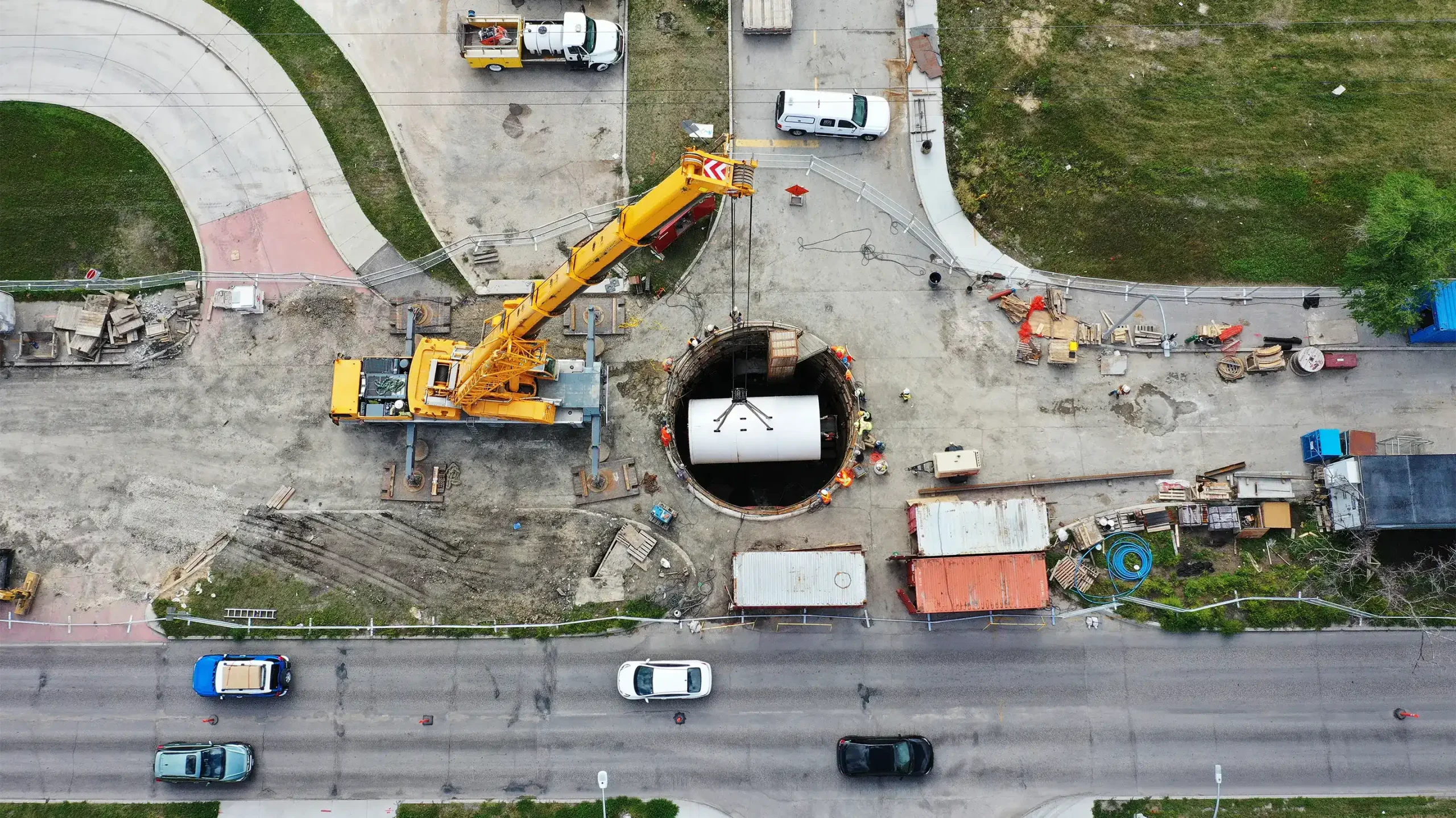
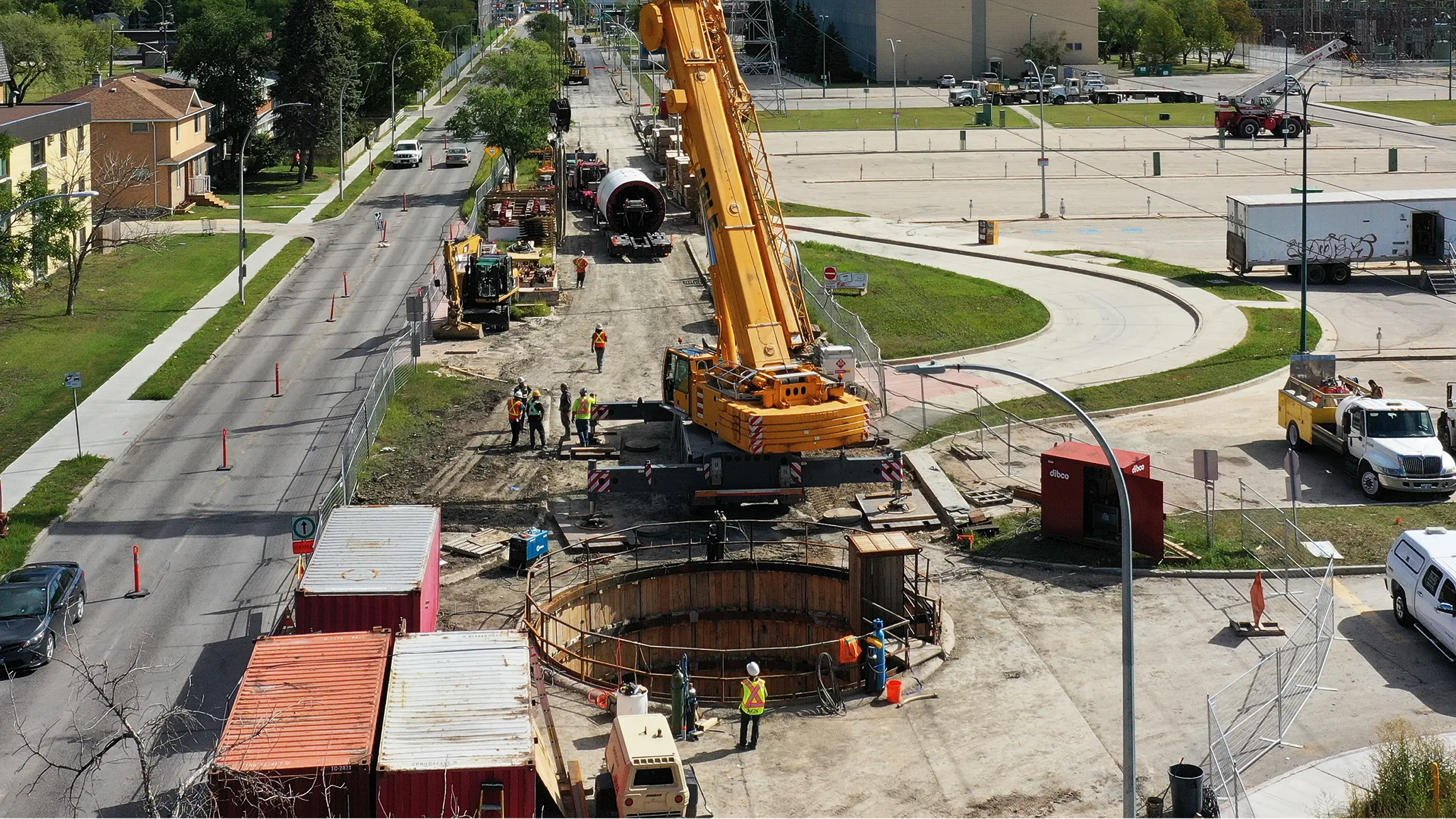
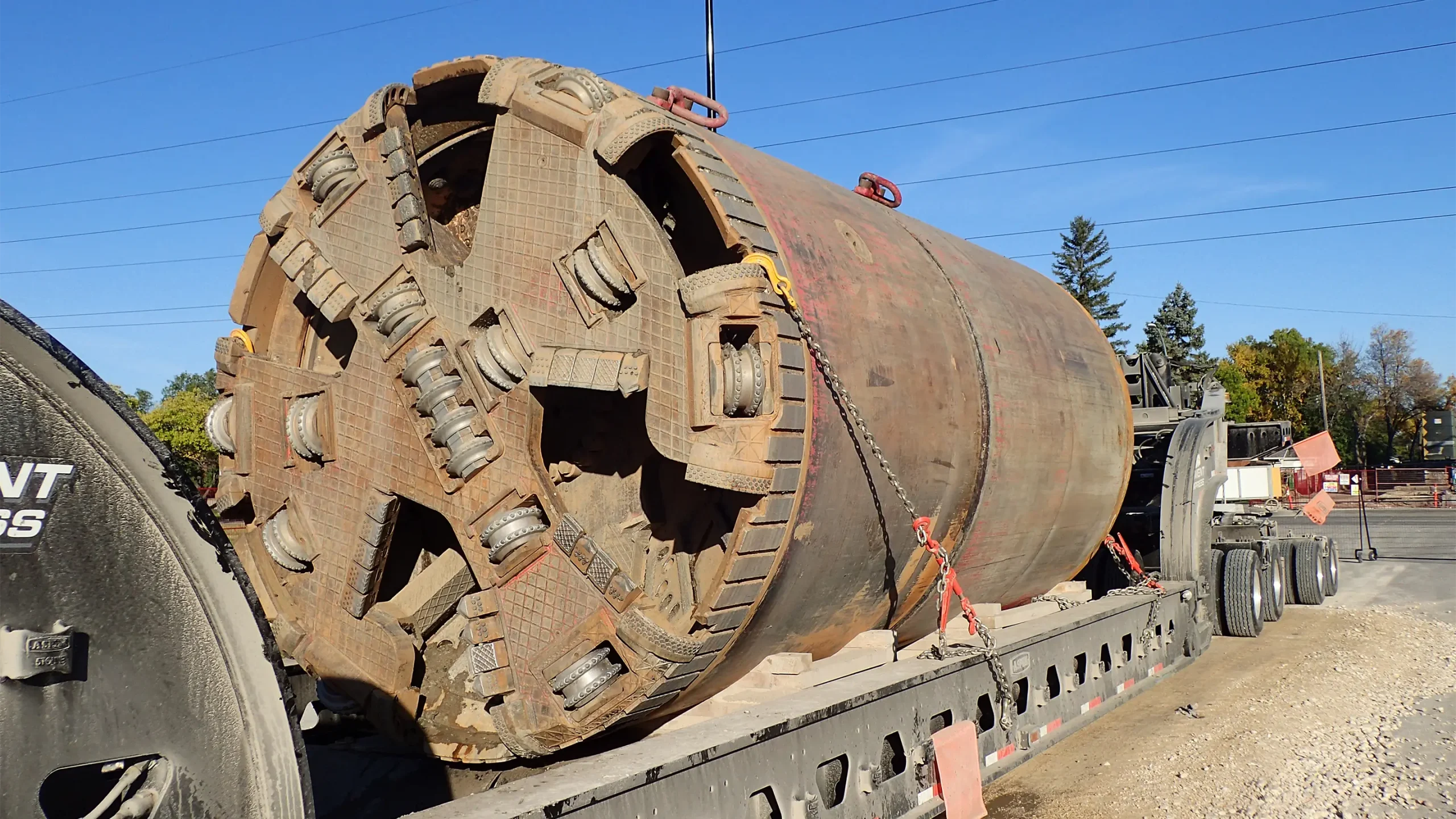

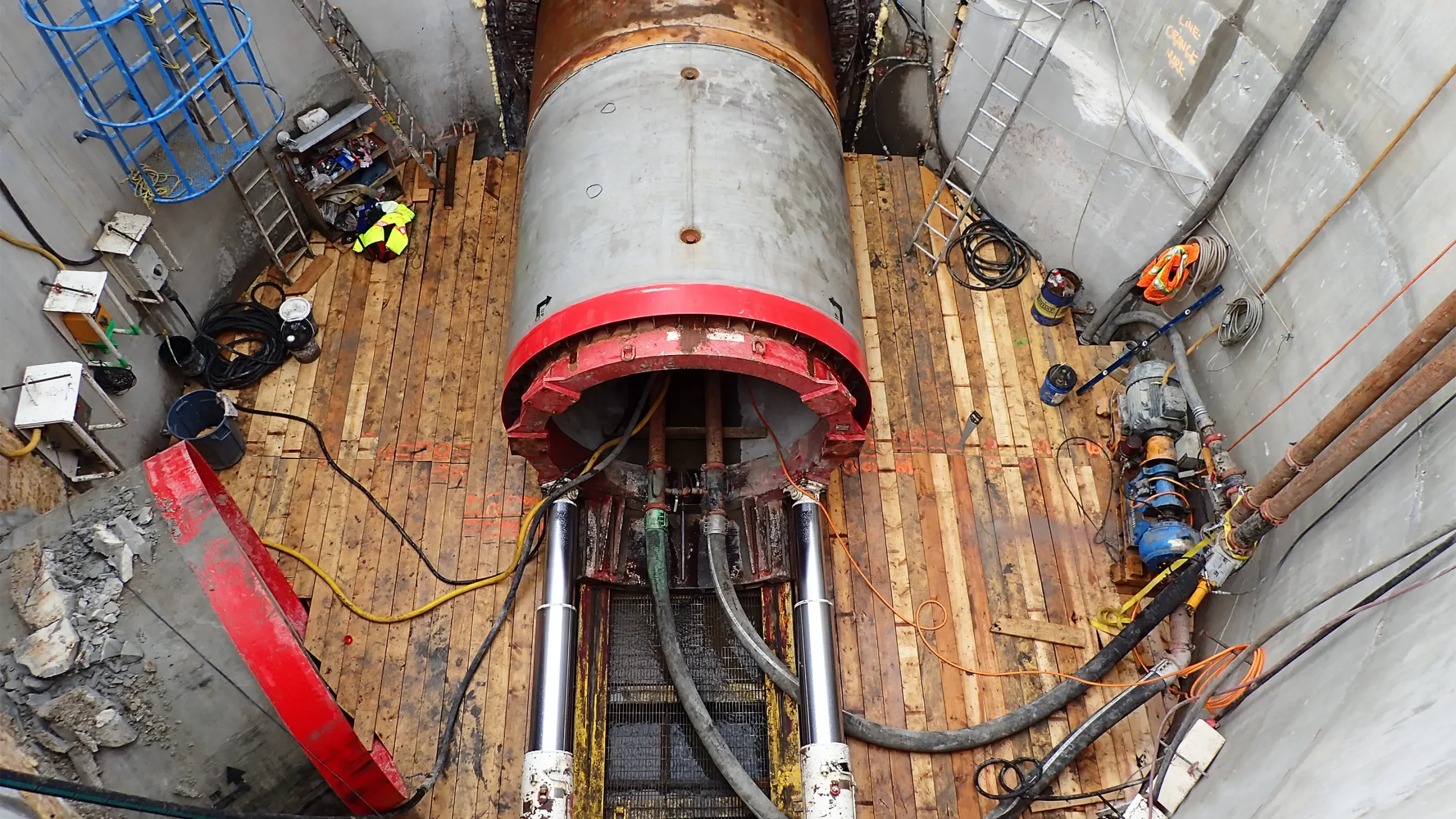
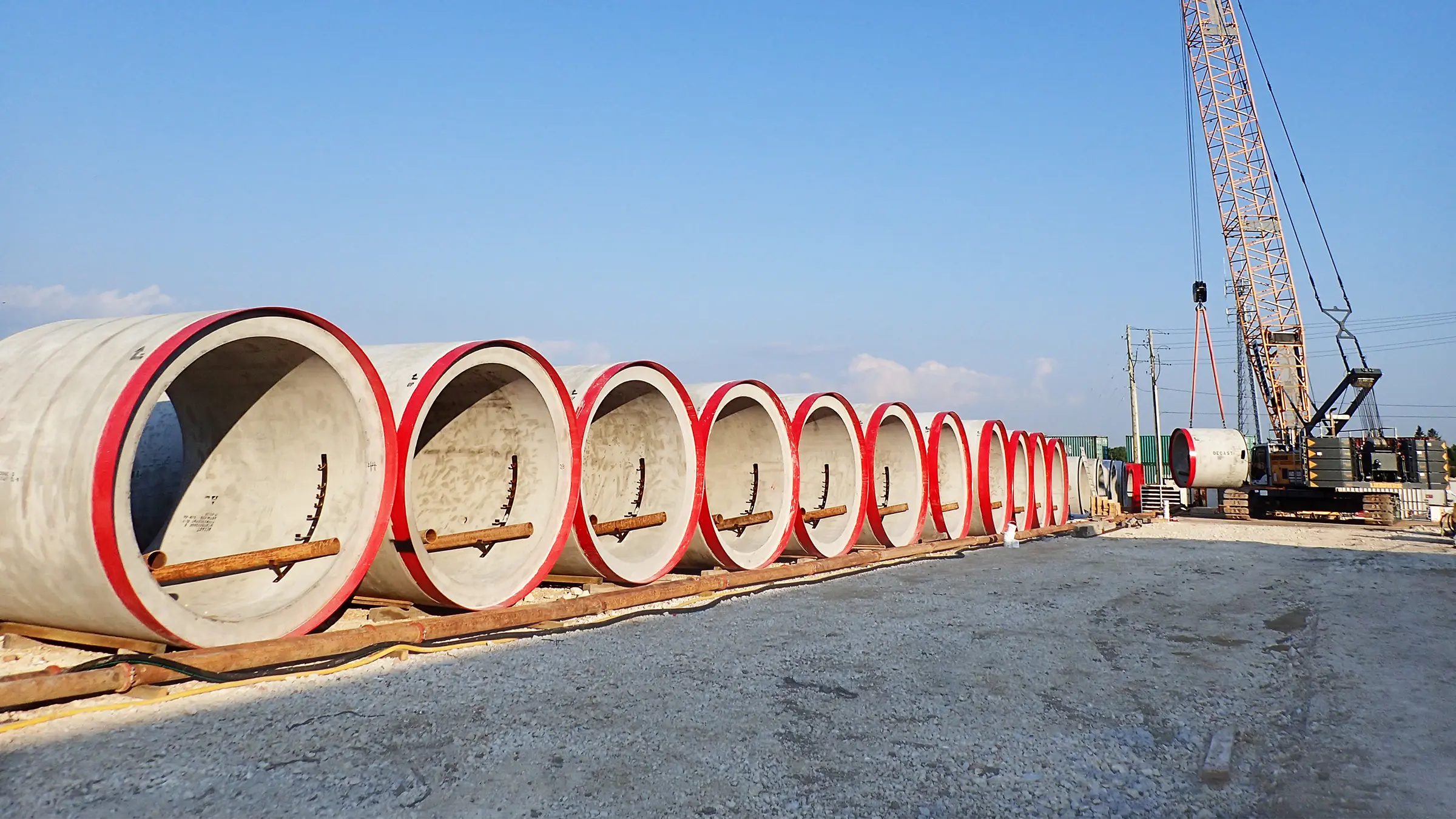
KGS Group partnered with the City of Winnipeg to study, design and implement district‑wide drainage improvements in neighbourhoods prone to annual flooding. This project was a complex, large-scale undertaking in a densely urbanized center that includes major businesses, residential homes, regional streets, and the primary rail line that bisects the City. KGS led a large team to take the project from initial concepts to practical implementation.
We developed a regional hydraulic/hydrologic model of three adjacent drainage areas and created an evaluation criterion to objectively select the drainage improvement option that considered stakeholder needs, constructability issues, future City projects and cost.
Due to the potential public impact of this project, public engagement was paramount. A public engagement strategy was developed and open houses were organized to gather public input. Once the preferred option was selected, KGS oversaw the construction of the drainage improvements. Tunneling and trenchless technologies were used to limit disruption within this dense urban community.
Project Highlights
- Development of a regional hydraulic/hydrologic model for three drainage areas
- Alternatives evaluation using stakeholder needs, constructability, future projects and costs
- First large diameter micro-tunnelling project in Manitoba (2,700 mm dia. tunnel)
- Tunneling and trenchless installations under regional streets and the primary rail line to minimize disruption
- Preparation of Geotechnical Baseline Report, a first-time application in Manitoba
- Risk sharing construction contract strategies to reduce capital costs
- Redevelopment of a historic rail yard into a storm retention basin and new public park space
RAS Piping Refurbishment at the North End Water Pollution Control Centre
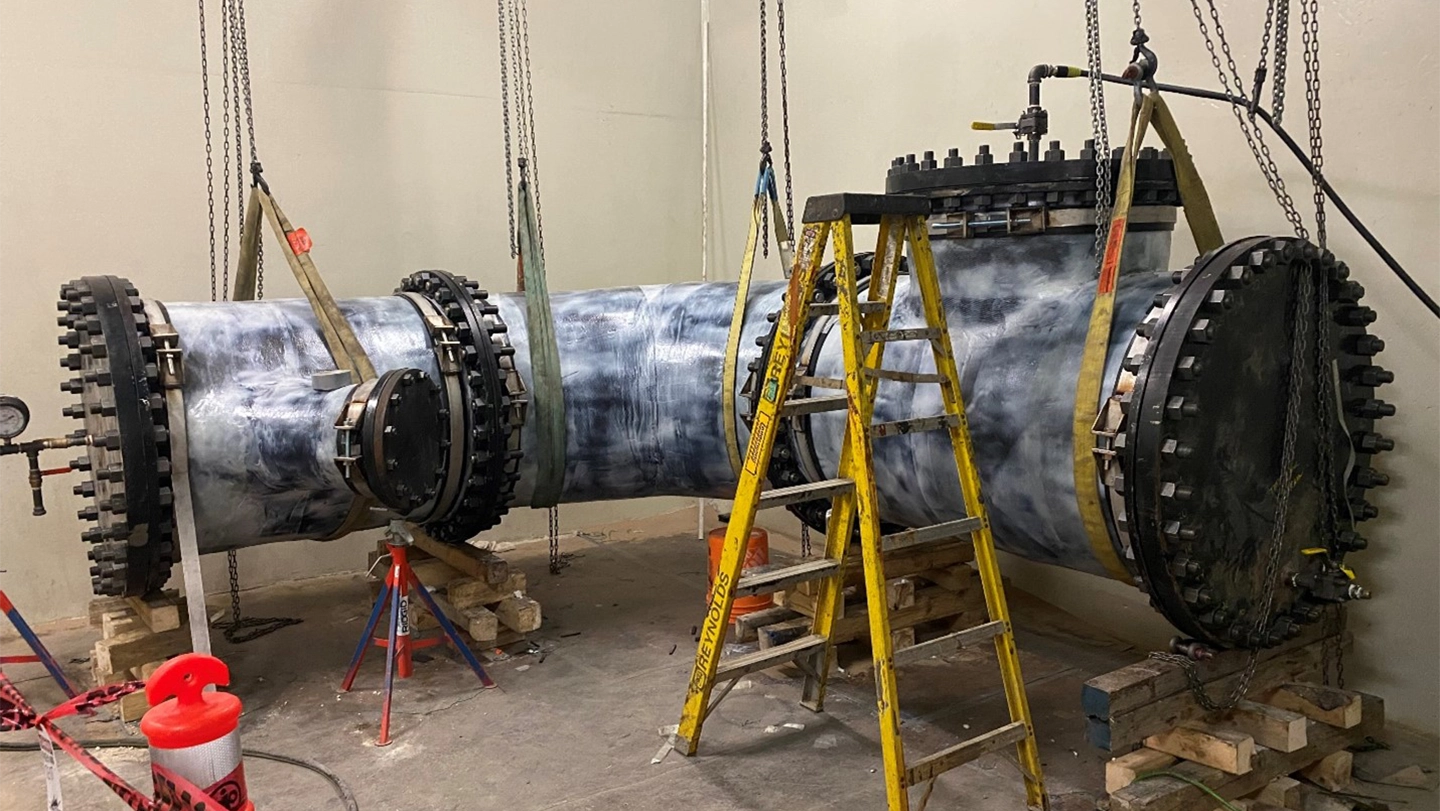
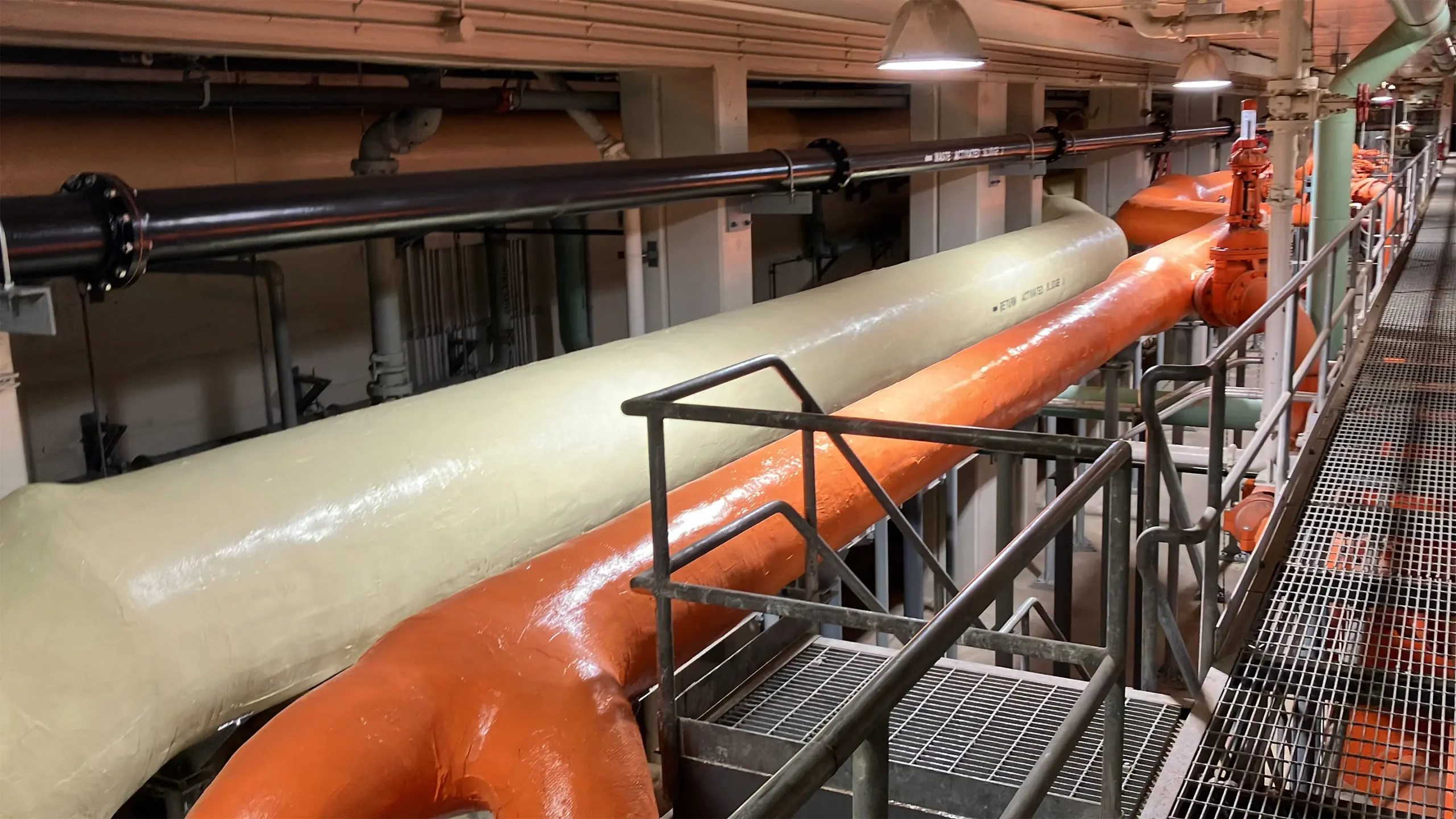

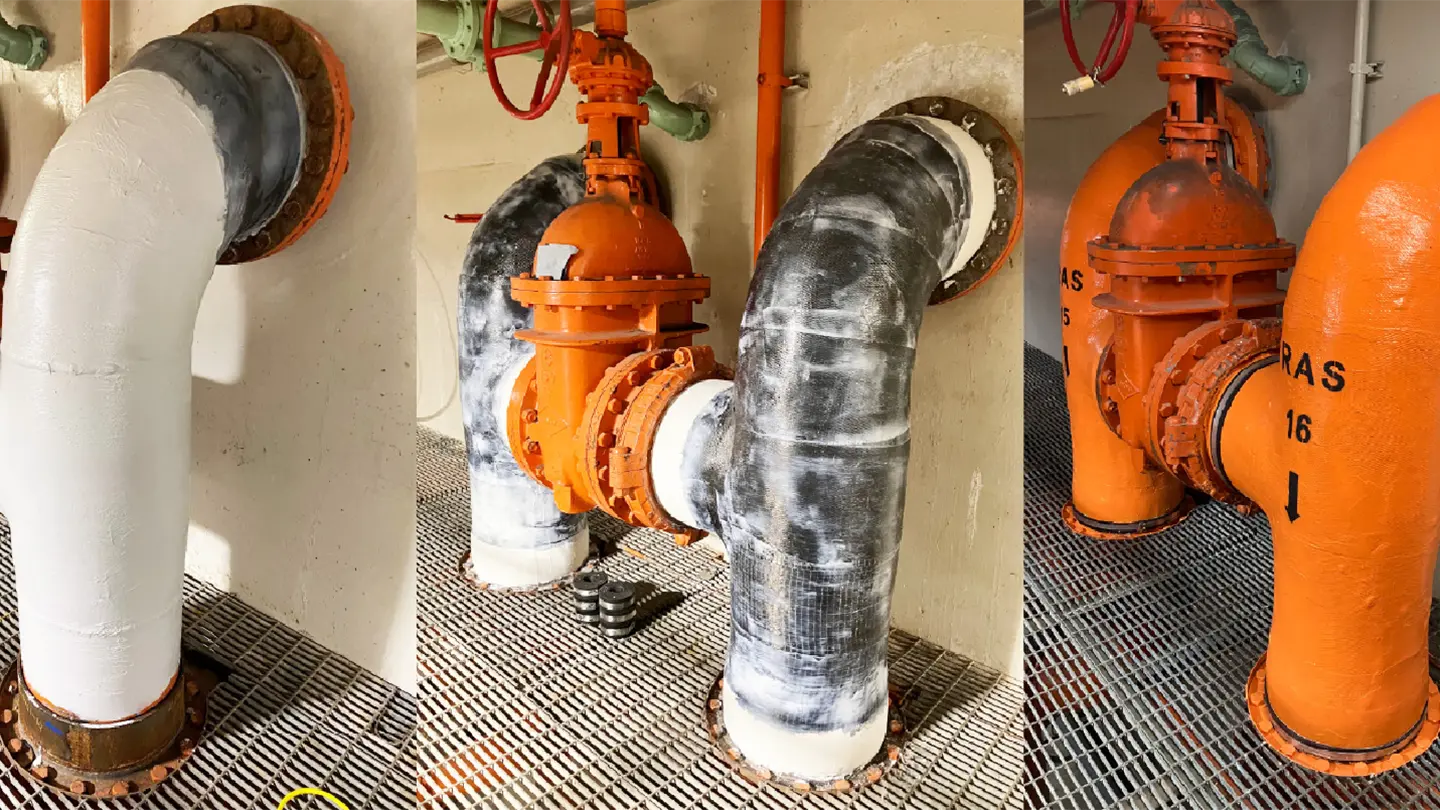
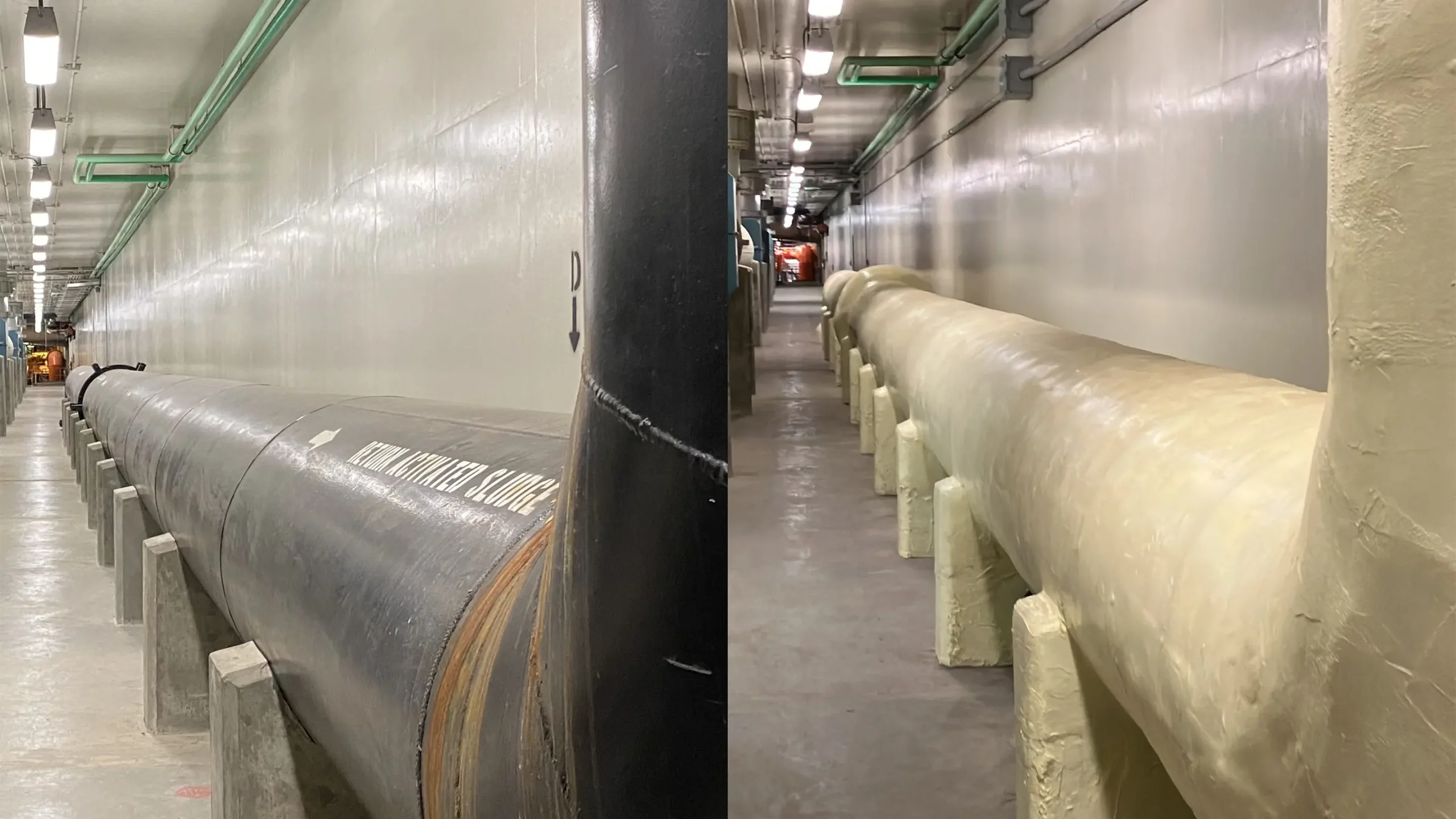
KGS Group led the renewal of almost 2,000 feet of aging Return Activated Sludge (RAS) piping at the City of Winnipeg’s North End Water Pollution Control Centre. This is the city’s oldest and largest wastewater facility, constructed in 1937. The work addressed leaks and structural risk in a critical system that supports treatment for 70% of Winnipeg’s wastewater.
The KGS team did a condition assessment and determined the best solution was a Carbon Fiber Reinforced Polymer external repair system. This solution had not been used on many large-scale, industrial/wastewater applications prior to this project.
After coordinating the design, KGS Group oversaw construction within one year, successfully refurbishing the RAS system for another 25+ years of operation. The plant remained in operation throughout construction to prevent wastewater overflow into the Red River.
Project Highlights
- Renewal of almost 2,000 feet of over 30-year-old, leaking Return Activated Sludge (RAS) piping using Carbon Fiber Reinforced Polymer external repair system
- Plant remained operational throughout construction
- More than 25 years of added service life to the North End Water Pollution Control Centre, which treats 70% of Winnipeg’s wastewater (approximately 187.5 million litres daily)
- Reduced the risk of wastewater overflow into the Red River
Seine Riverbank Stabilization at the Branch 1 Aqueduct
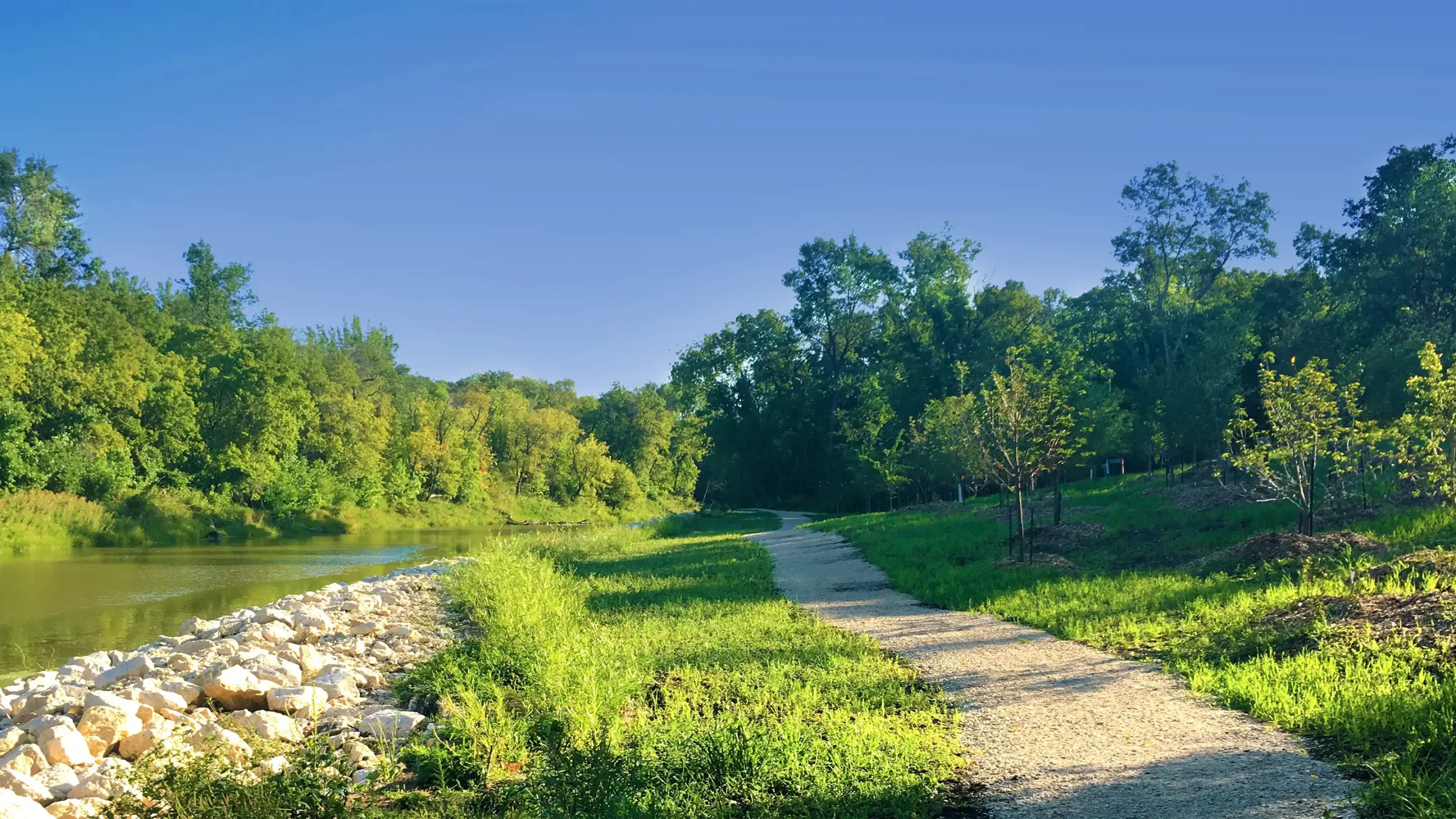
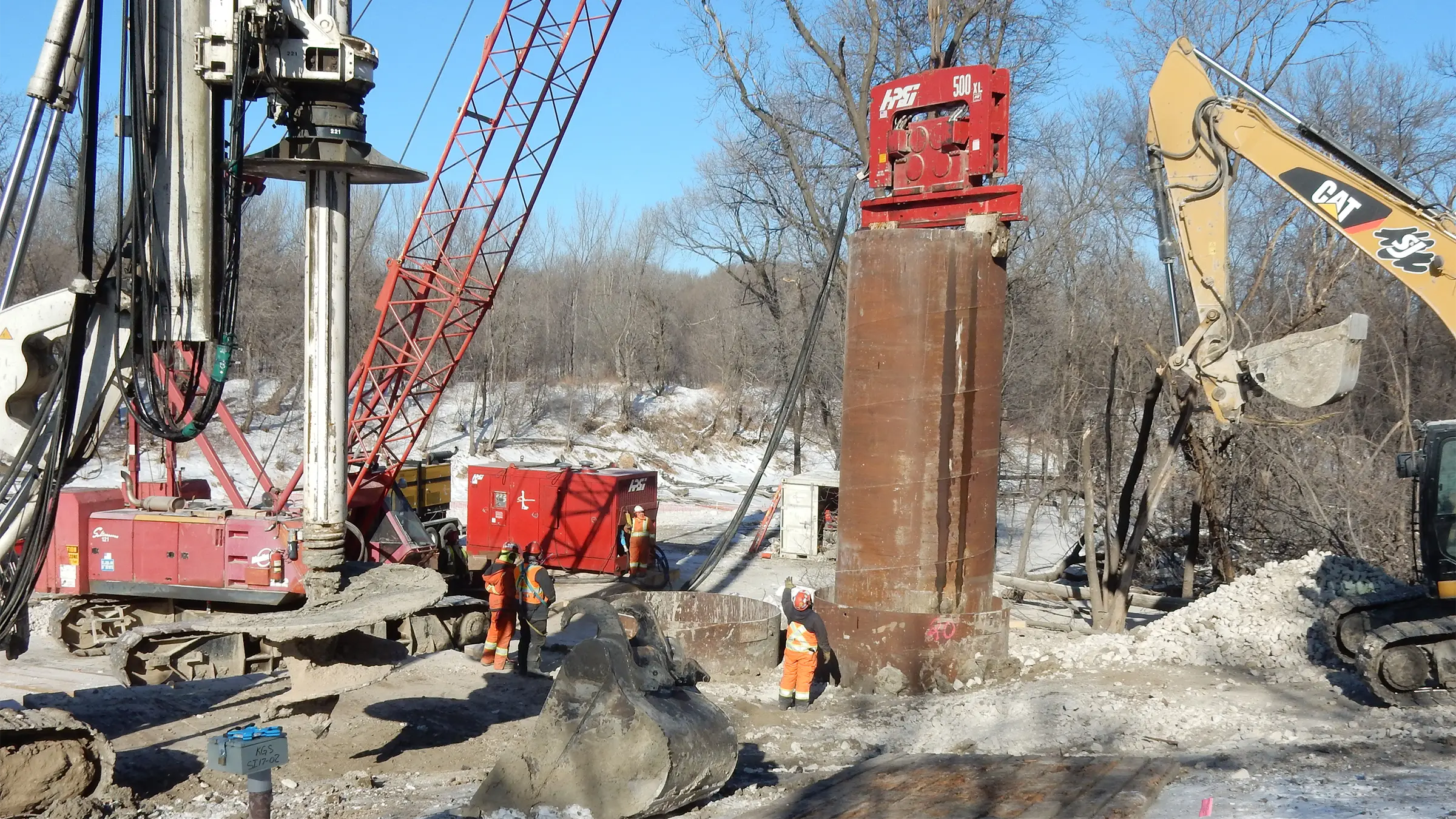
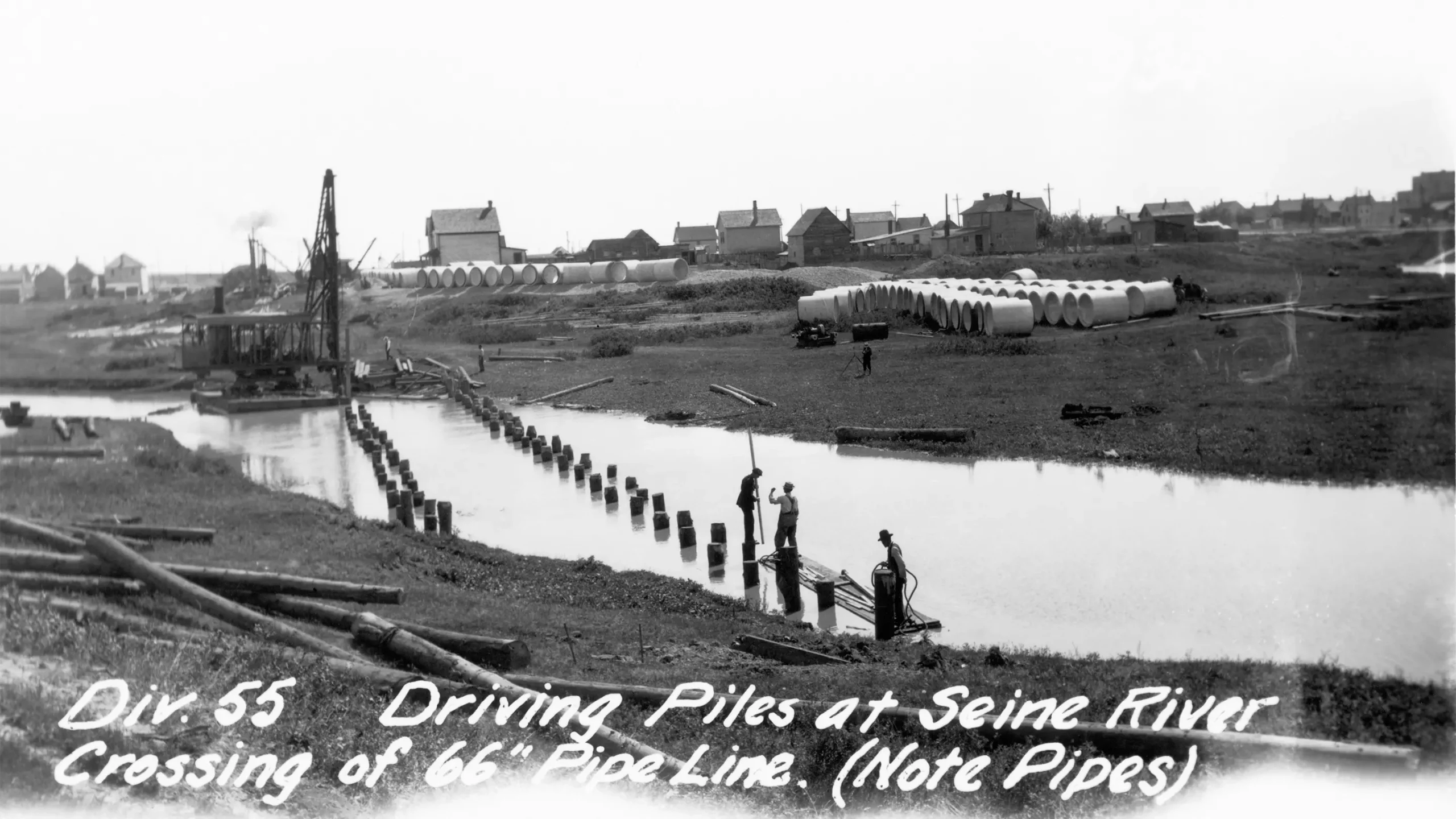
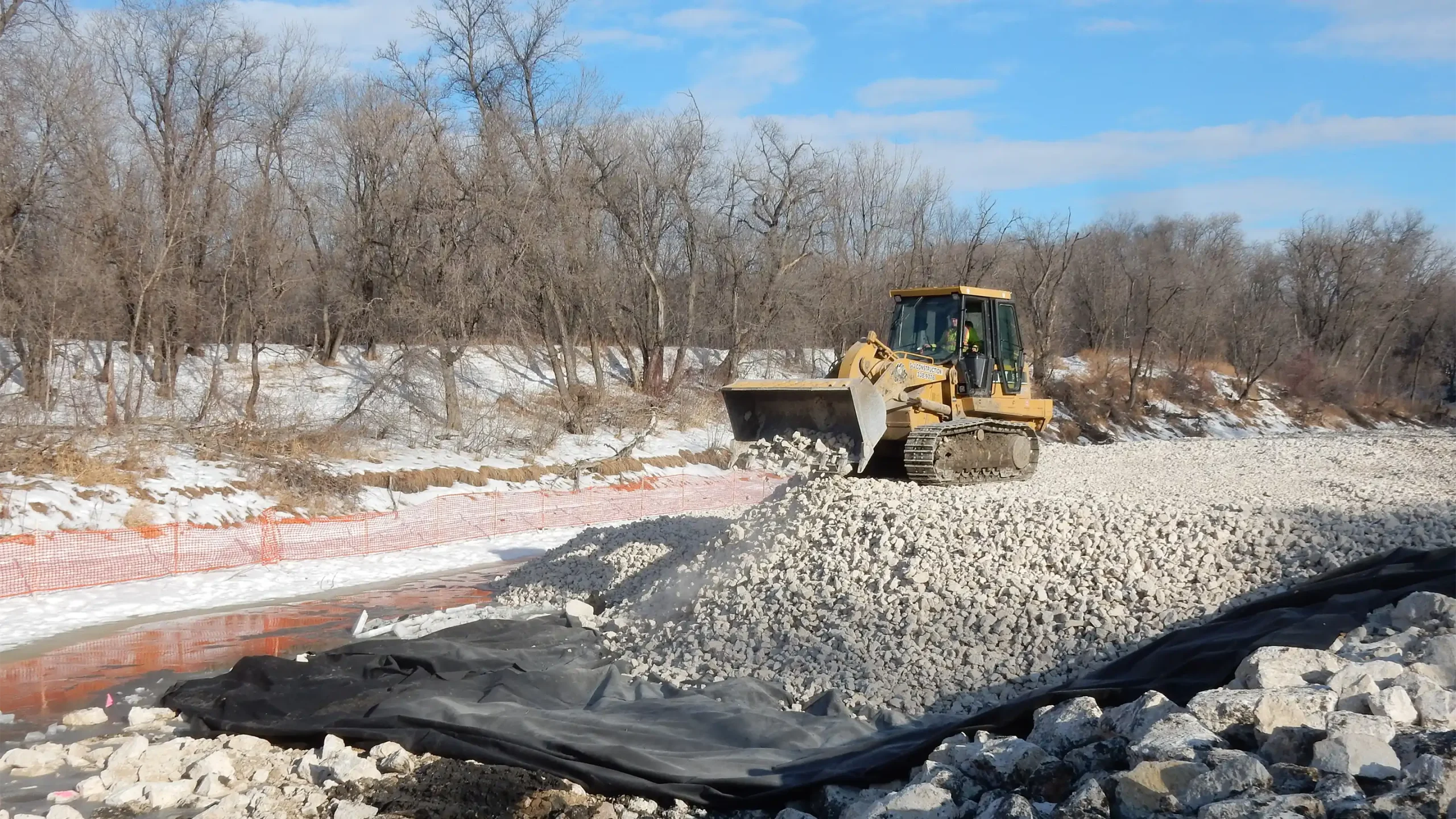
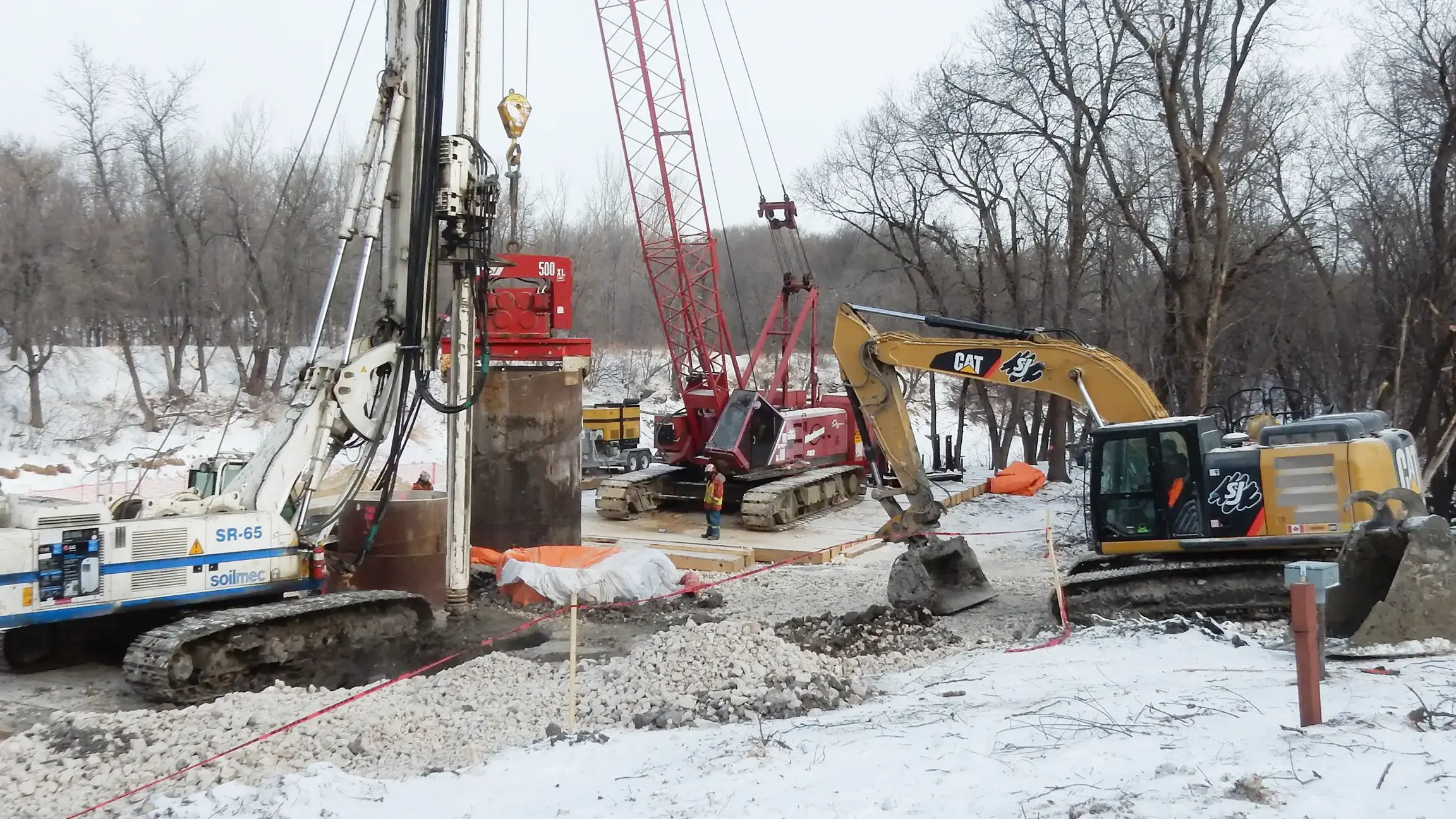
Riverbank movements near the Seine River crossing threatened the City of Winnipeg’s 100‑year‑old Branch 1 Aqueduct, which carries 40% of the city’s drinking water. KGS Group helped stabilize the riverbank while keeping the aqueduct in service throughout construction, protecting a critical supply and reducing risk to the community.
Our team applied an extensive design evaluation process, a full-scale field-testing program, a ground-breaking instrumentation monitoring program and a highly prescriptive construction methodology to manage risk at each stage of construction.
This approach required more intensive engineering but reduced the construction timeline by one full year and resulted in significant project cost savings. After the stabilization work was completed, a complete revegetation project ensued, ensuring the area was ready for community use for years to come.
Project Highlights
- Planning, design, geotechnical evaluation, construction oversight, monitoring and stakeholder coordination
- Advanced instrumentation program and prescriptive construction sequencing
- Project timeline was completed one year ahead of schedule, leading to significant cost savings
- The site was restored and revegetated, improving the public realm and long‑term resilience
Newton Force Main River Crossing
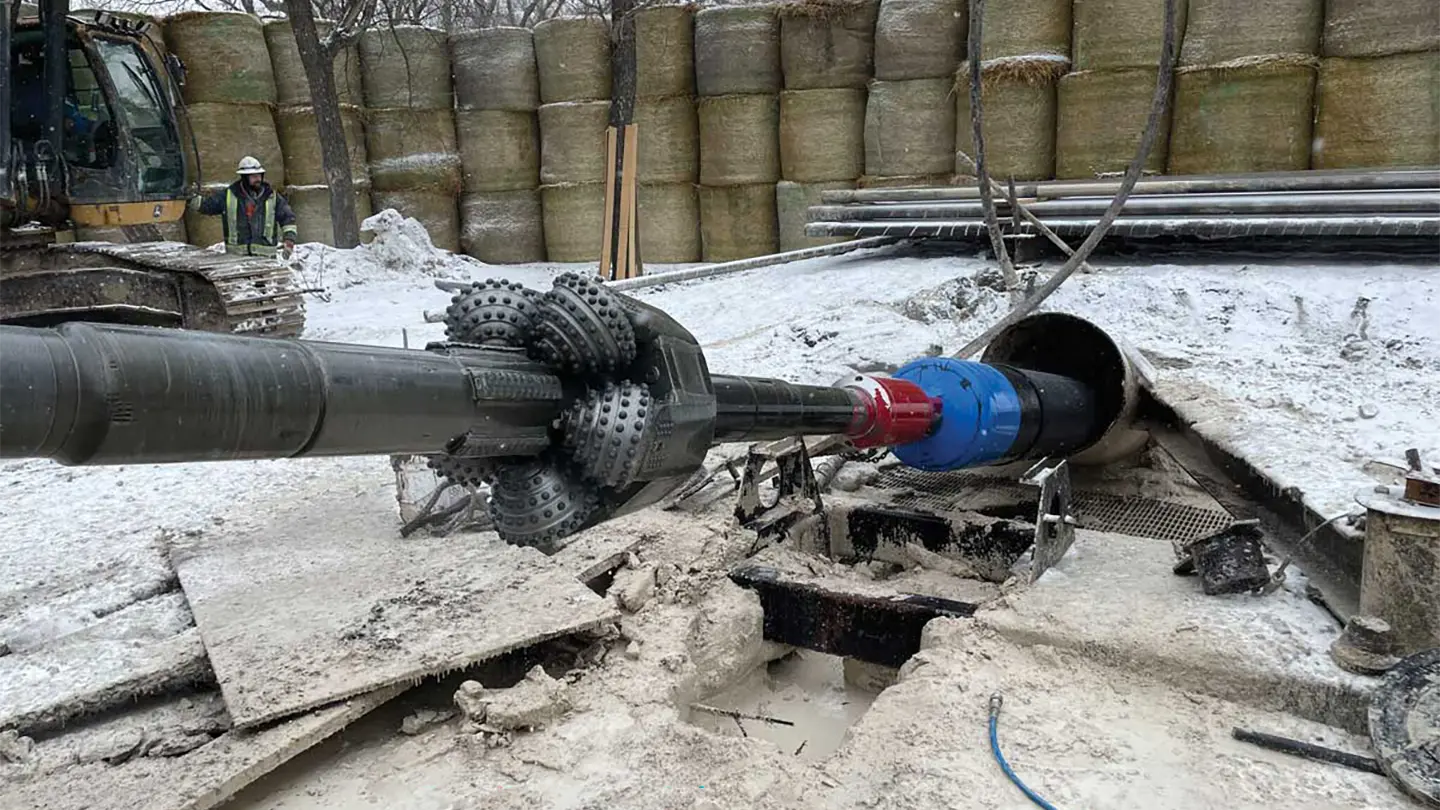
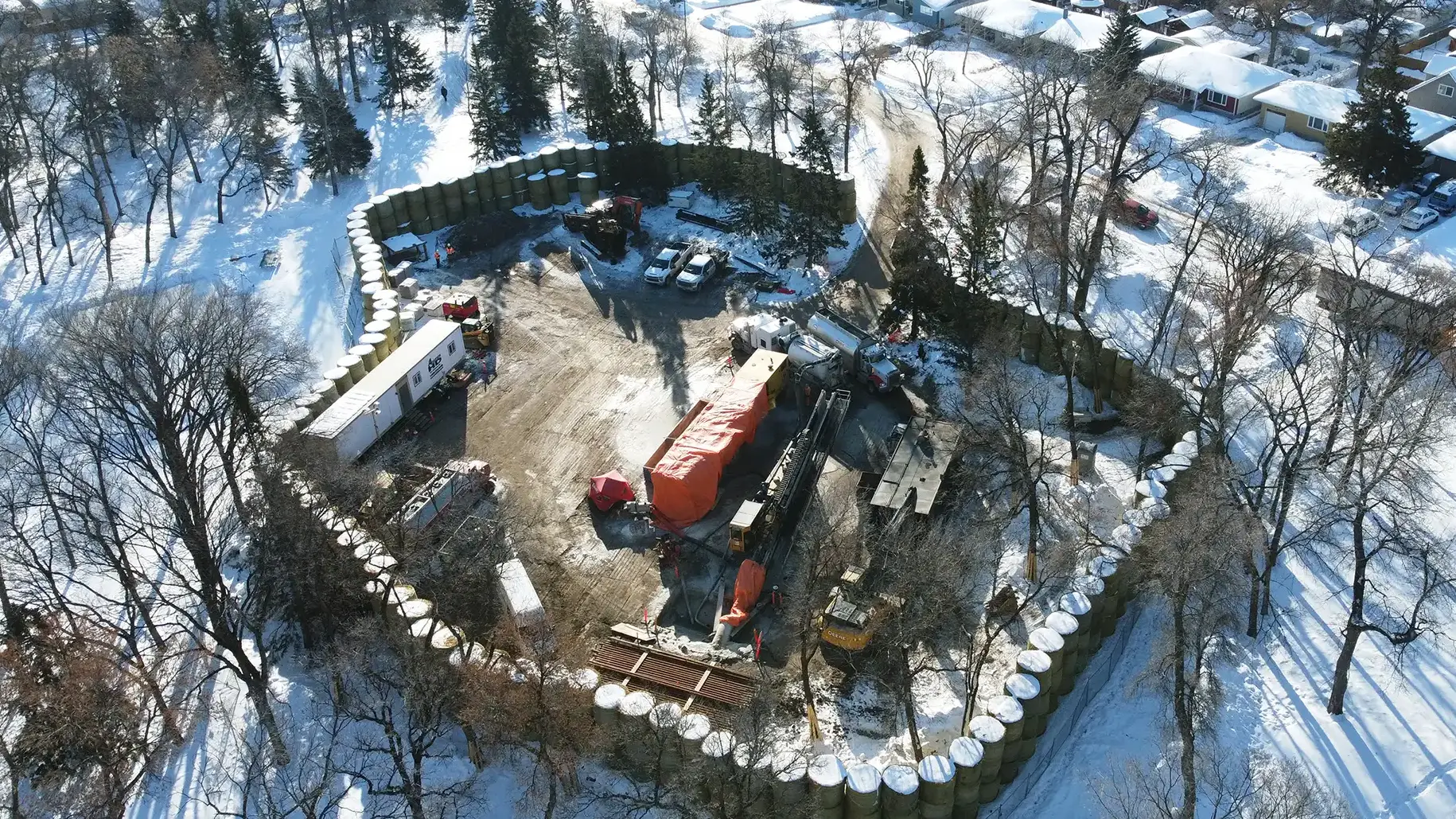
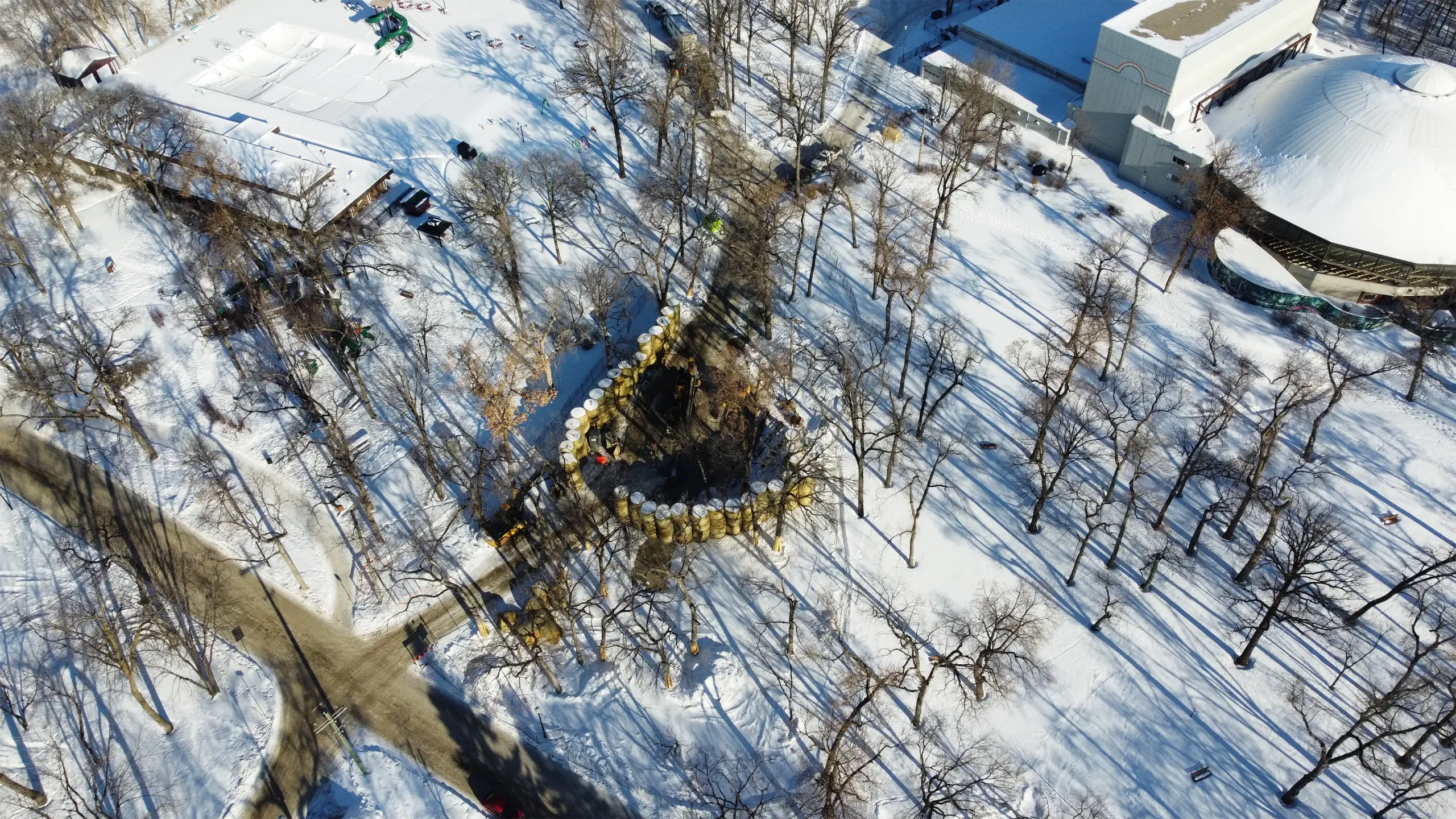
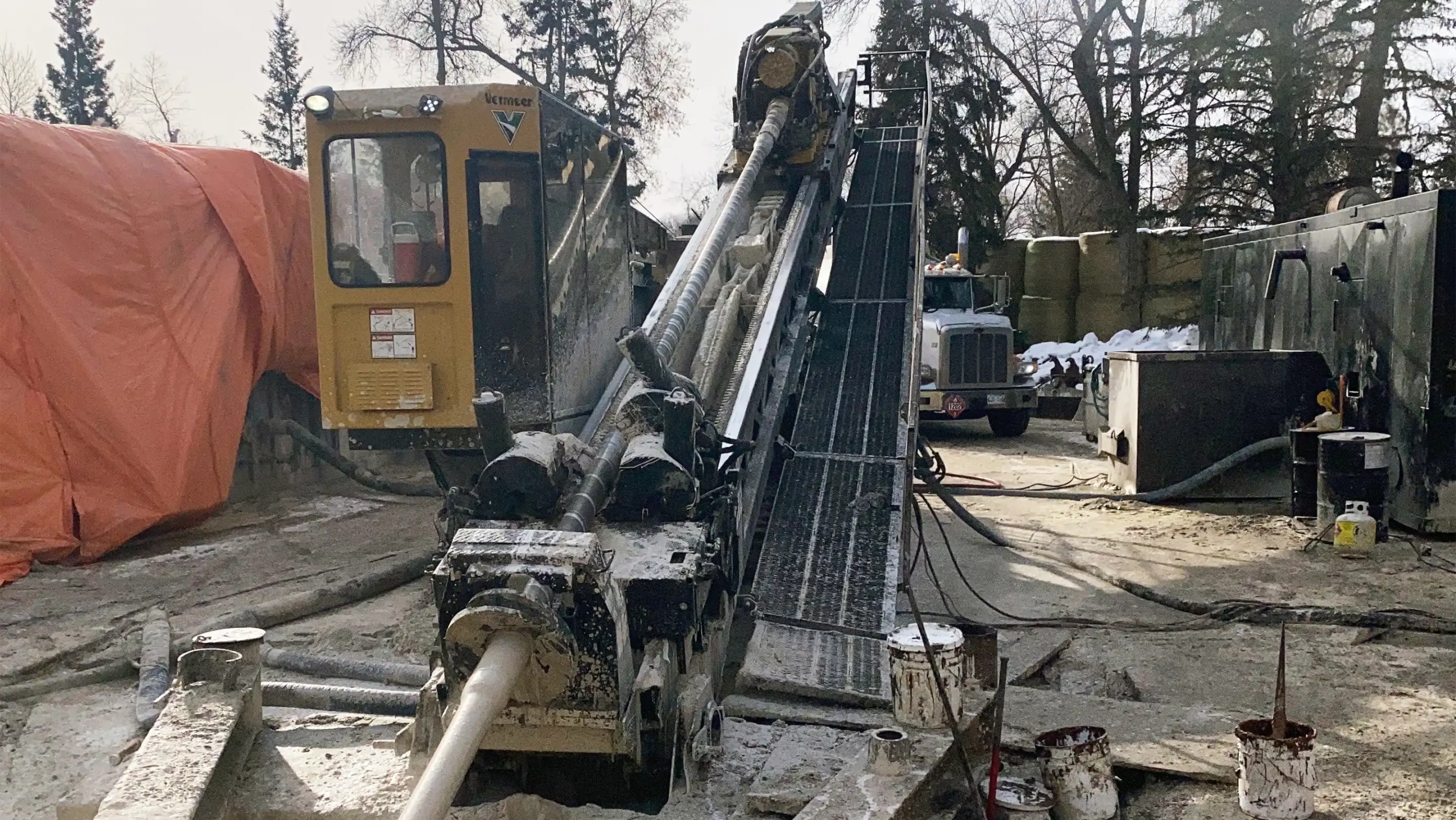
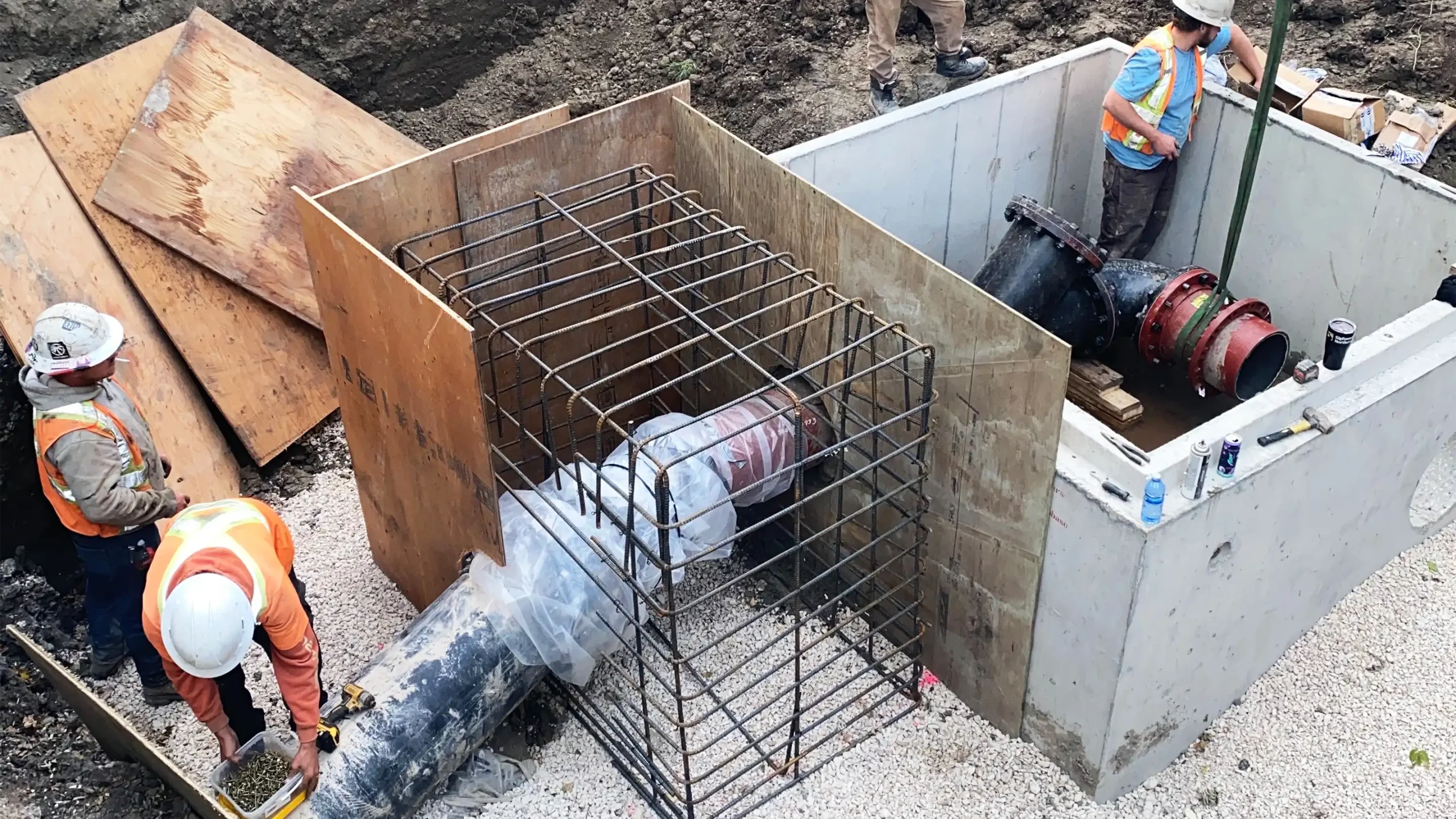
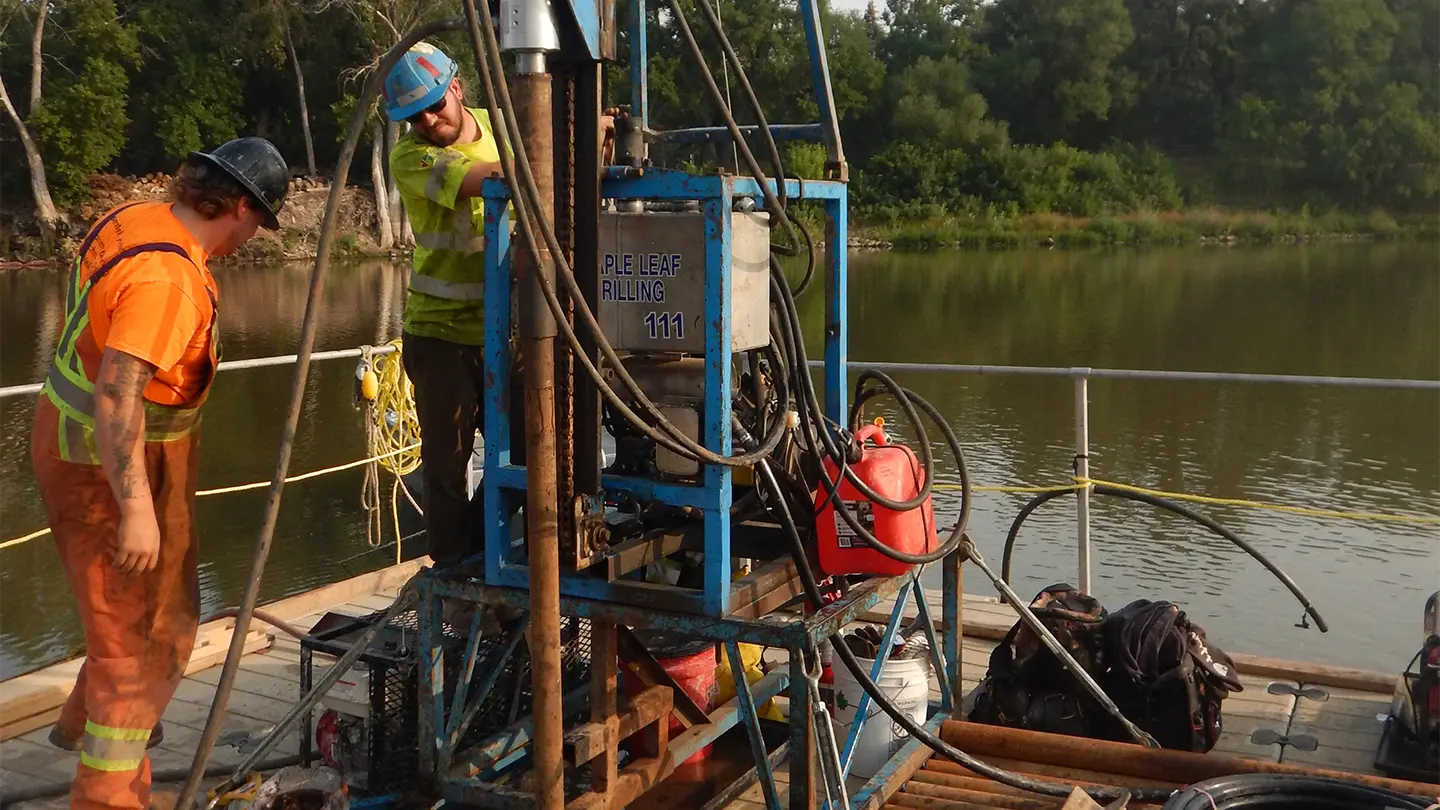
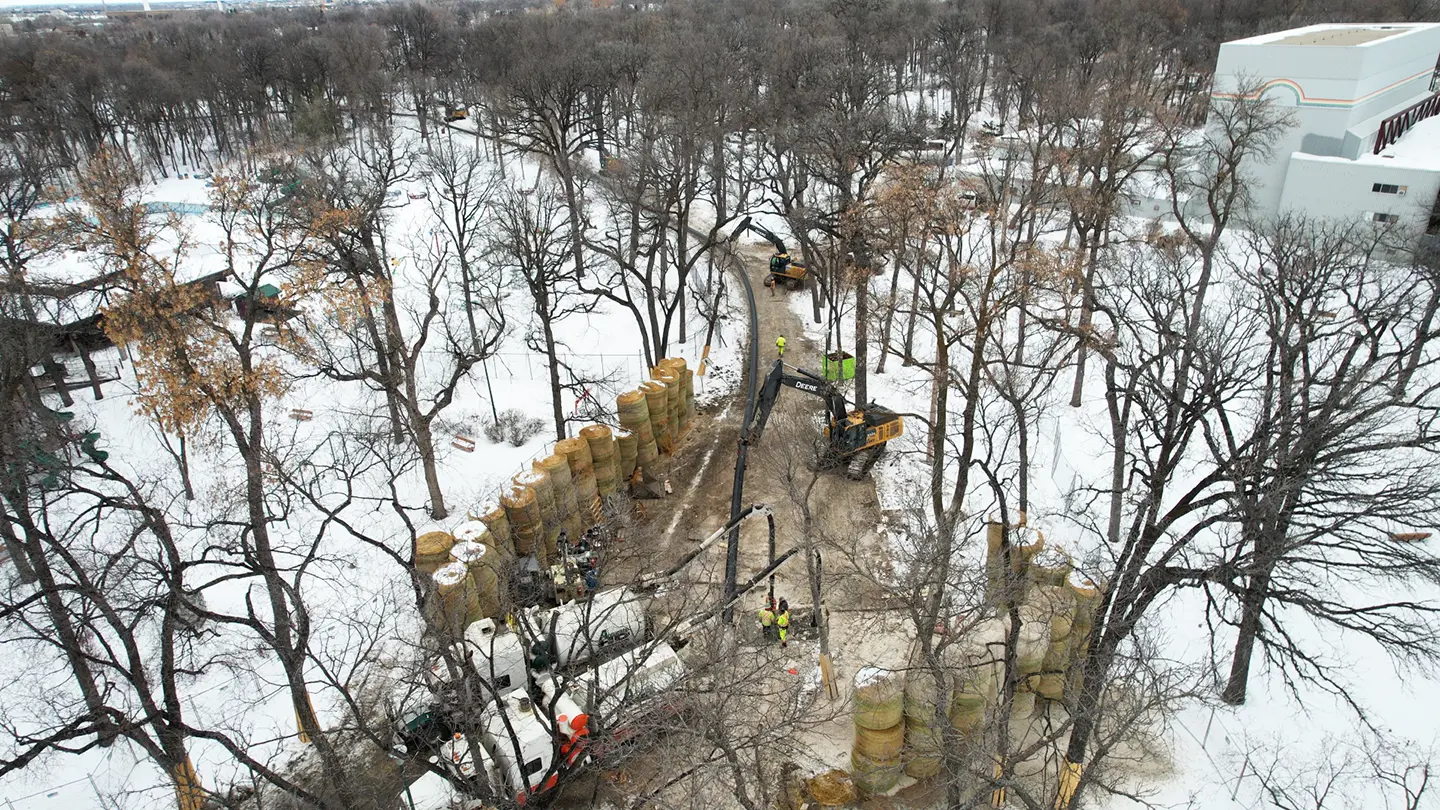
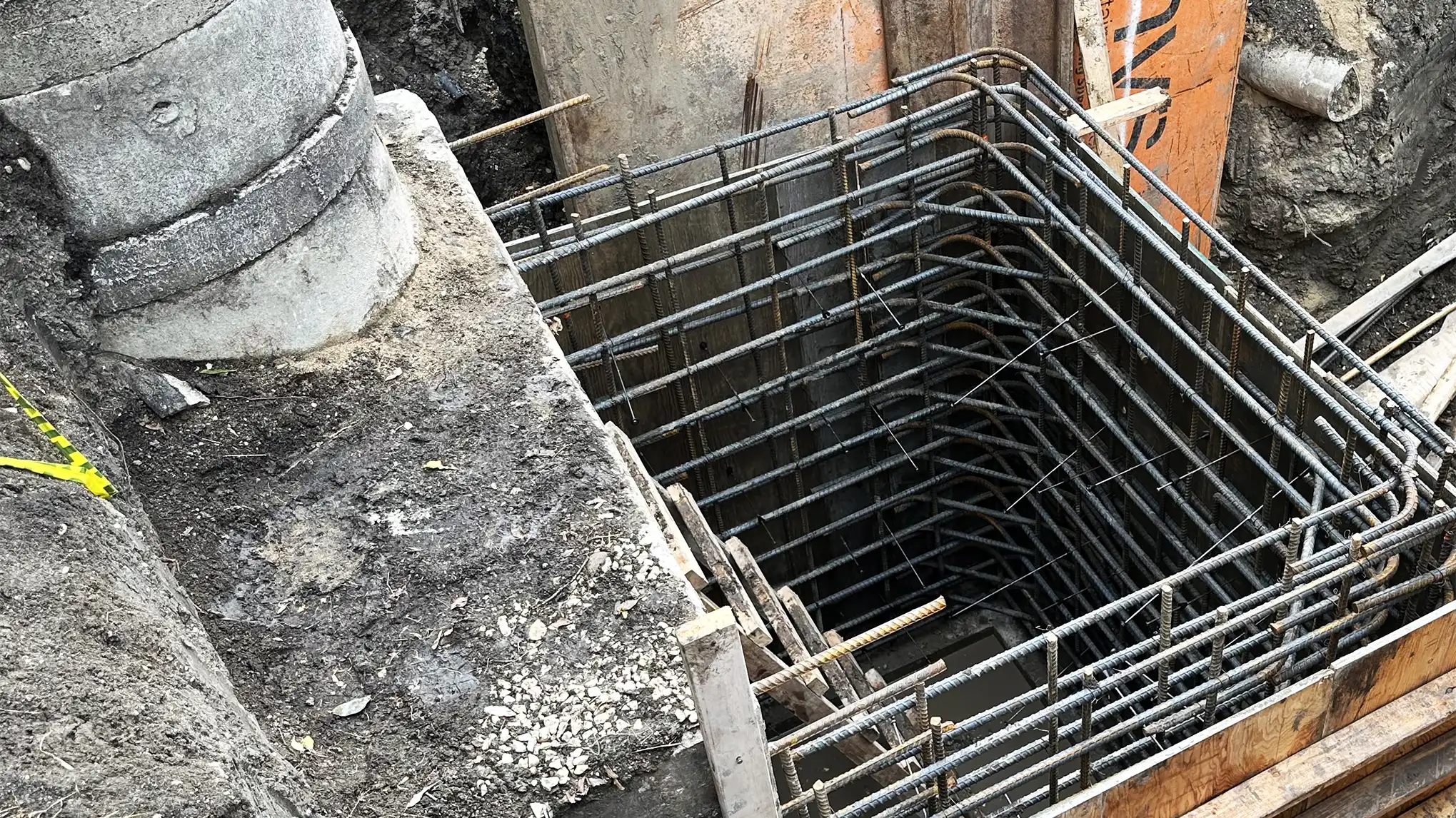
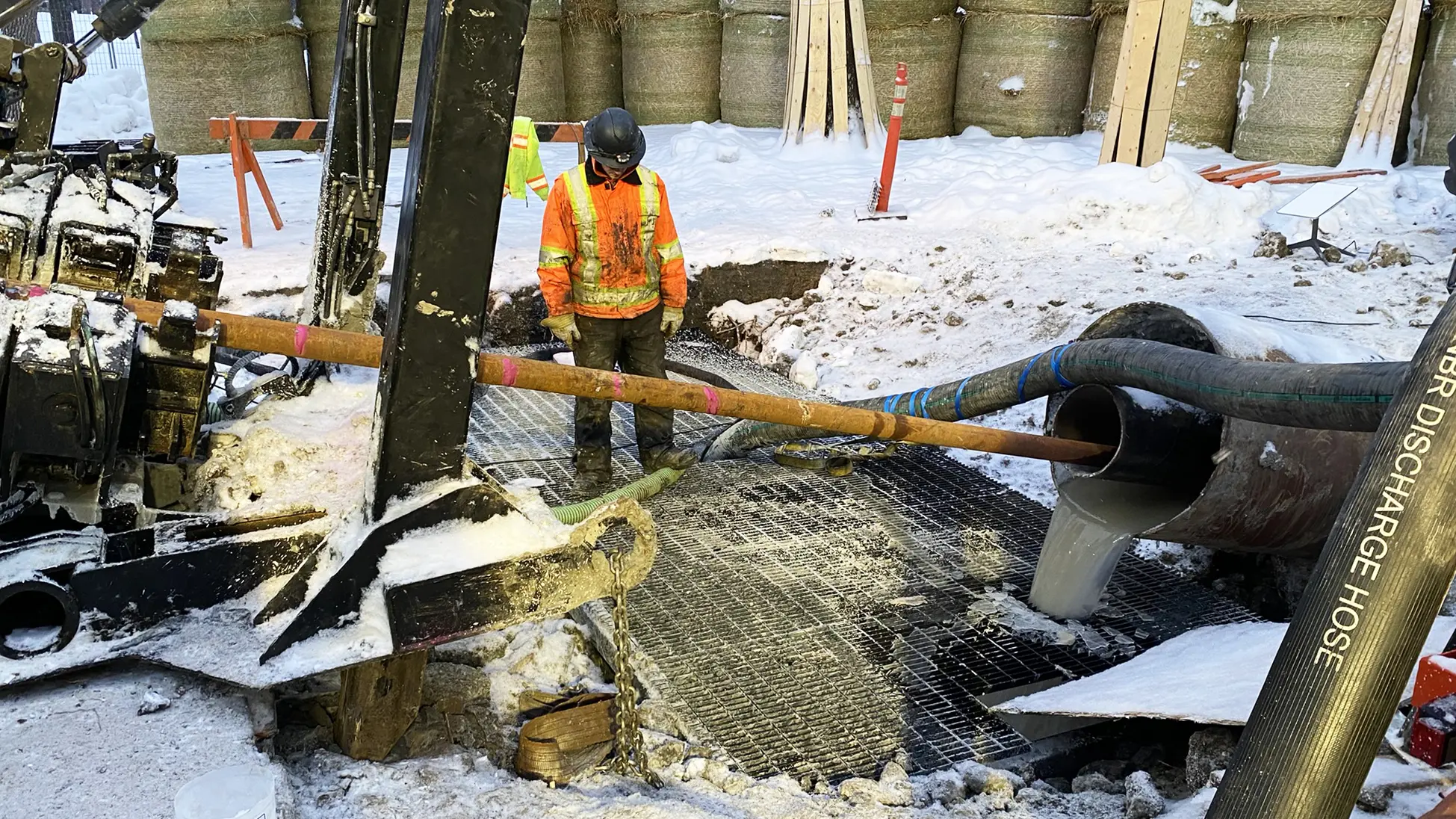
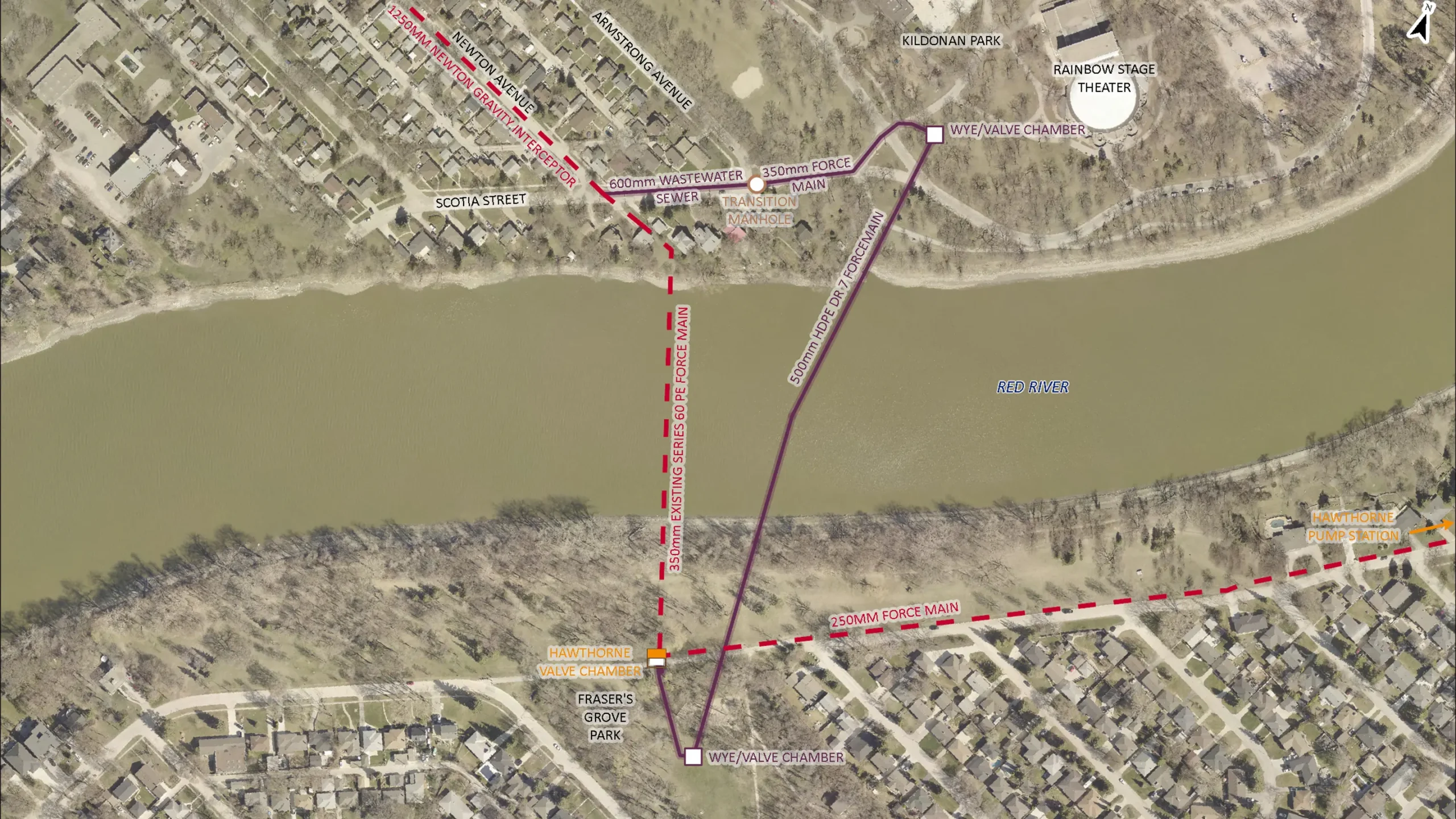
KGS Group and Associated Engineering designed and oversaw the construction of a new, 466 meter river crossing installed trenchlessly 40 meters below grade to replace the failing Newton Force Main River Crossing. This vital piece of infrastructure supports the wastewater flows from the entire Hawthorne sewer district in Winnipeg. Under dry weather conditions, the Newton Force Main River Crossing transports over 2.3 million litres of wastewater daily under the Red River.
The existing crossing was installed along the river bottom in 1978 and was connected to lands that have become densely urbanized, which limited solutions. An alternate alignment was developed to both reroute the force main and install it safely within the bedrock strata below the river.
The result is a durable, long‑term asset that improves system resilience and safeguards the environment and the community.
Project Highlights
- 466 meter river crossing installed trenchlessly, 40 meters below grade
- Horizontal directional drilling with horizontal and vertical curves – a first in Manitoba
- 780 meters of new force main on an alternate alignment in bedrock below the river
- Replaces 1978 river‑bottom crossing which lowers environmental risk and maintenance needs
Rainy River Water Treatment Study and Systems Upgrade
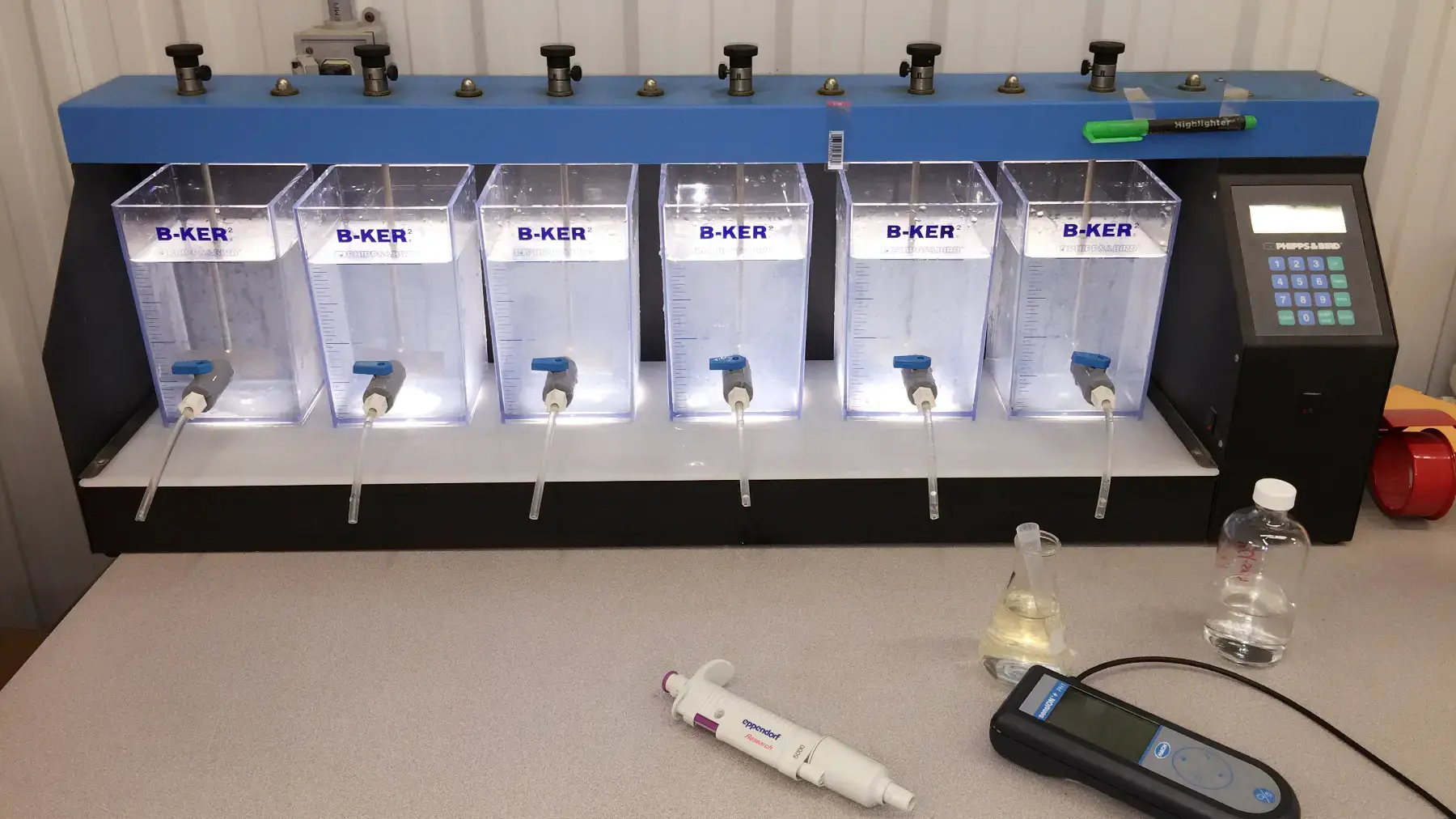
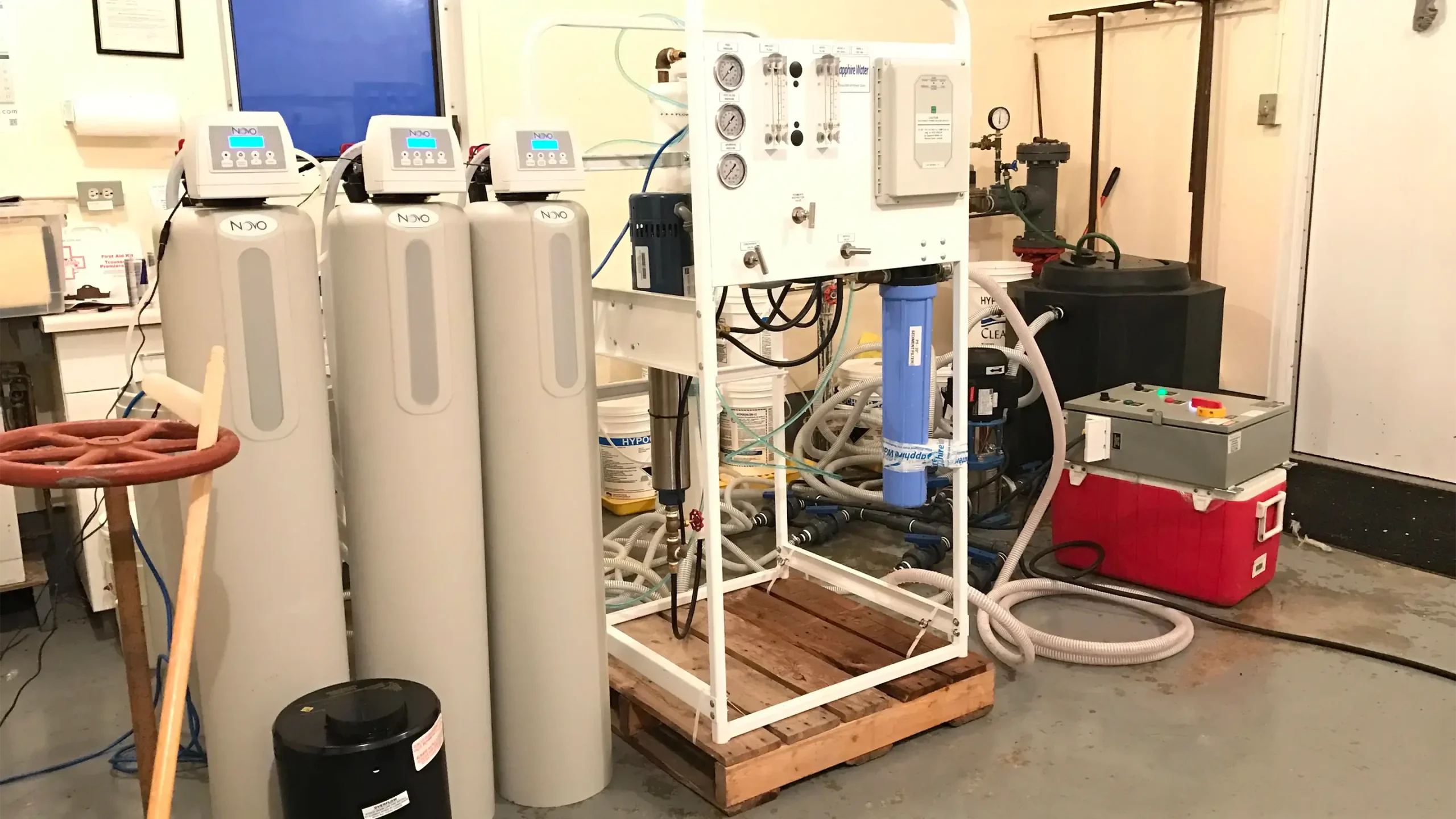
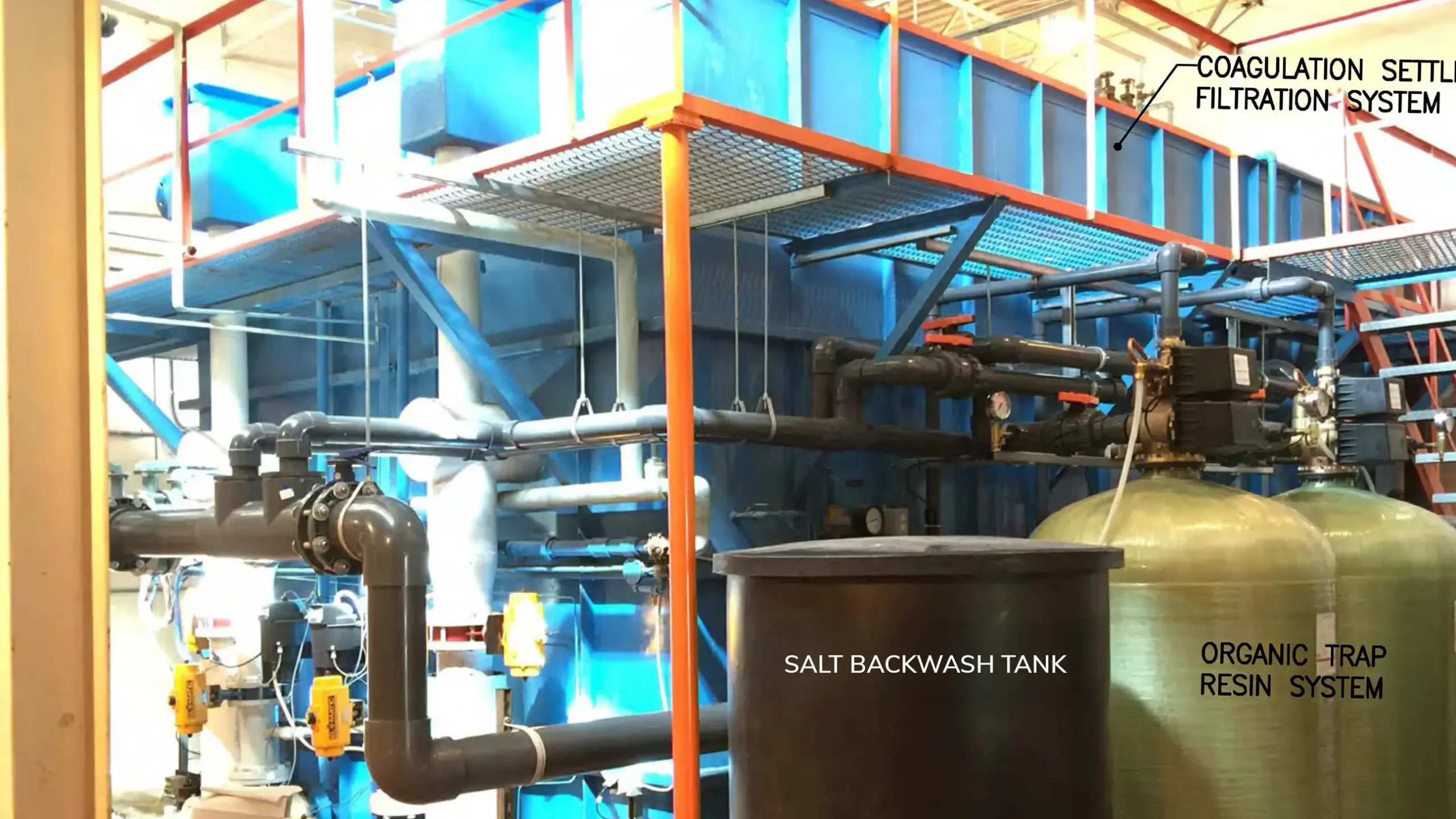
Facing a public health risk from elevated carcinogen levels in its drinking water, the Town of Rainy River needed a practical solution that fit within their existing plant footprint to remedy the situation. KGS Group, in collaboration with the University of Manitoba, conducted detailed pilot studies comparing ion exchange and nanofiltration to determine the most effective, operationally feasible way to reduce carcinogen levels in the drinking water.
Ion exchange was selected because it avoided costly building expansion and offered simpler operations and maintenance for the Town. We then provided engineering services for the design, construction and commissioning of the new ion exchange treatment system, integrating it with the plant’s existing processes and controls.
The upgraded system exceeded Health Canada’s Guideline for Canadian Drinking Water Quality for carcinogens and reduced chlorine consumption by 40%. The project addressed a serious health concern while optimizing use of Rainy River’s existing assets. The Town also received a commendation from the Ontario Ministry of the Environment and Climate Change in recognition of the project’s success.
Project Highlights
- Designed the new ion exchange system and integrated it with existing plant processes
- Reduced chlorine consumption levels by 40%
- New system exceeds Health Canada’s Guideline for Canadian Drinking Water Quality
Town of Ogema Water Treatment Plant
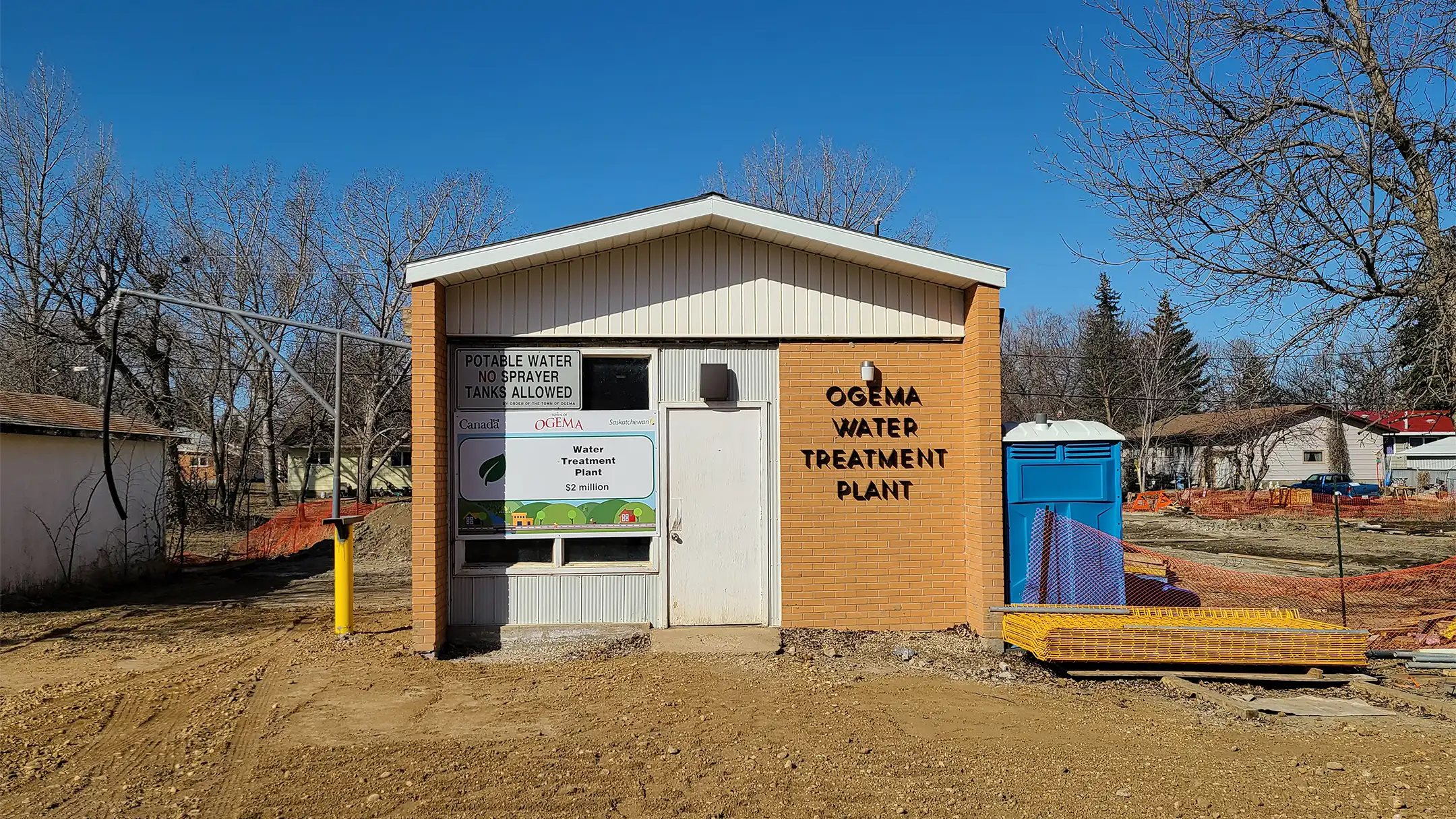

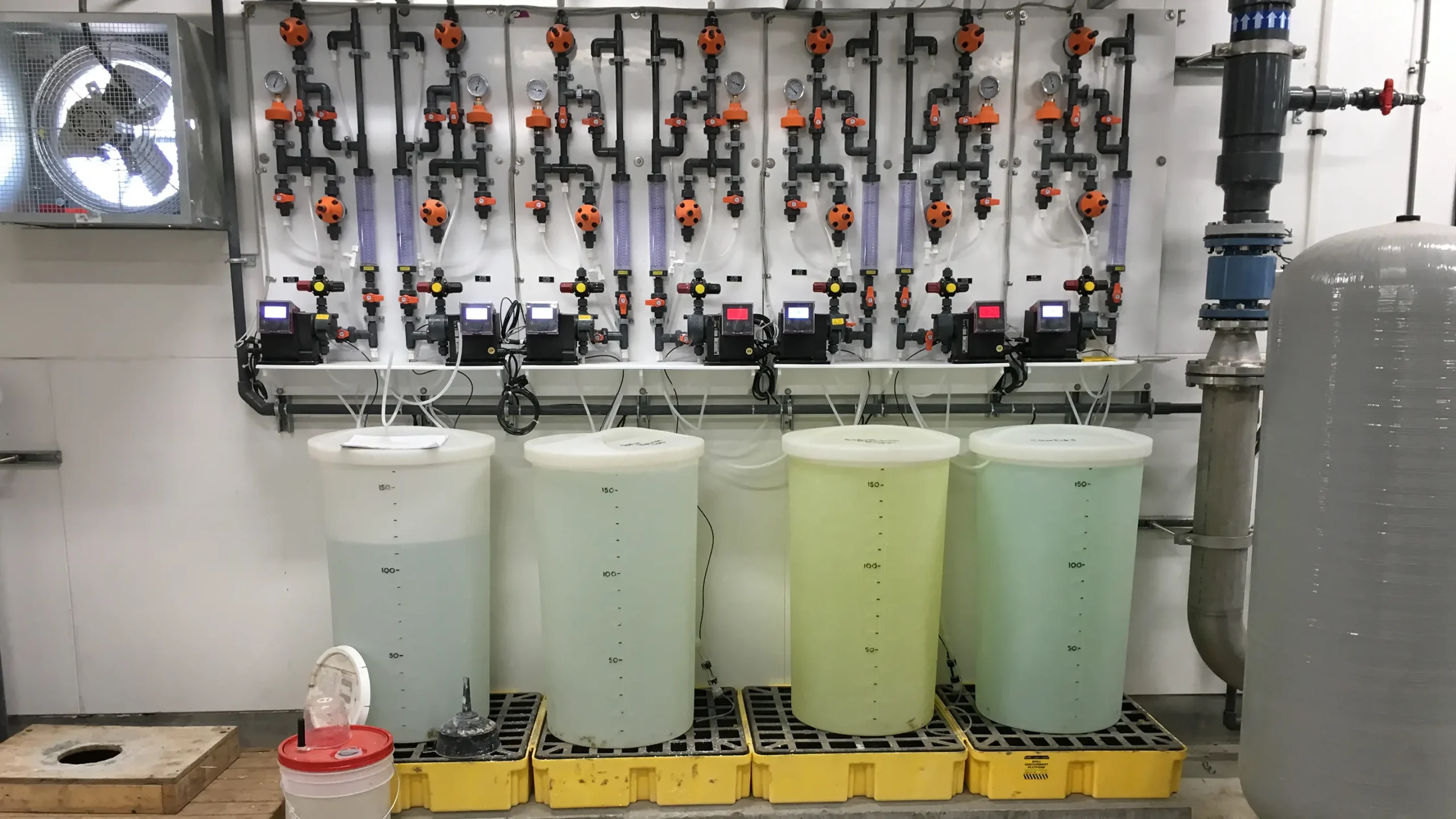
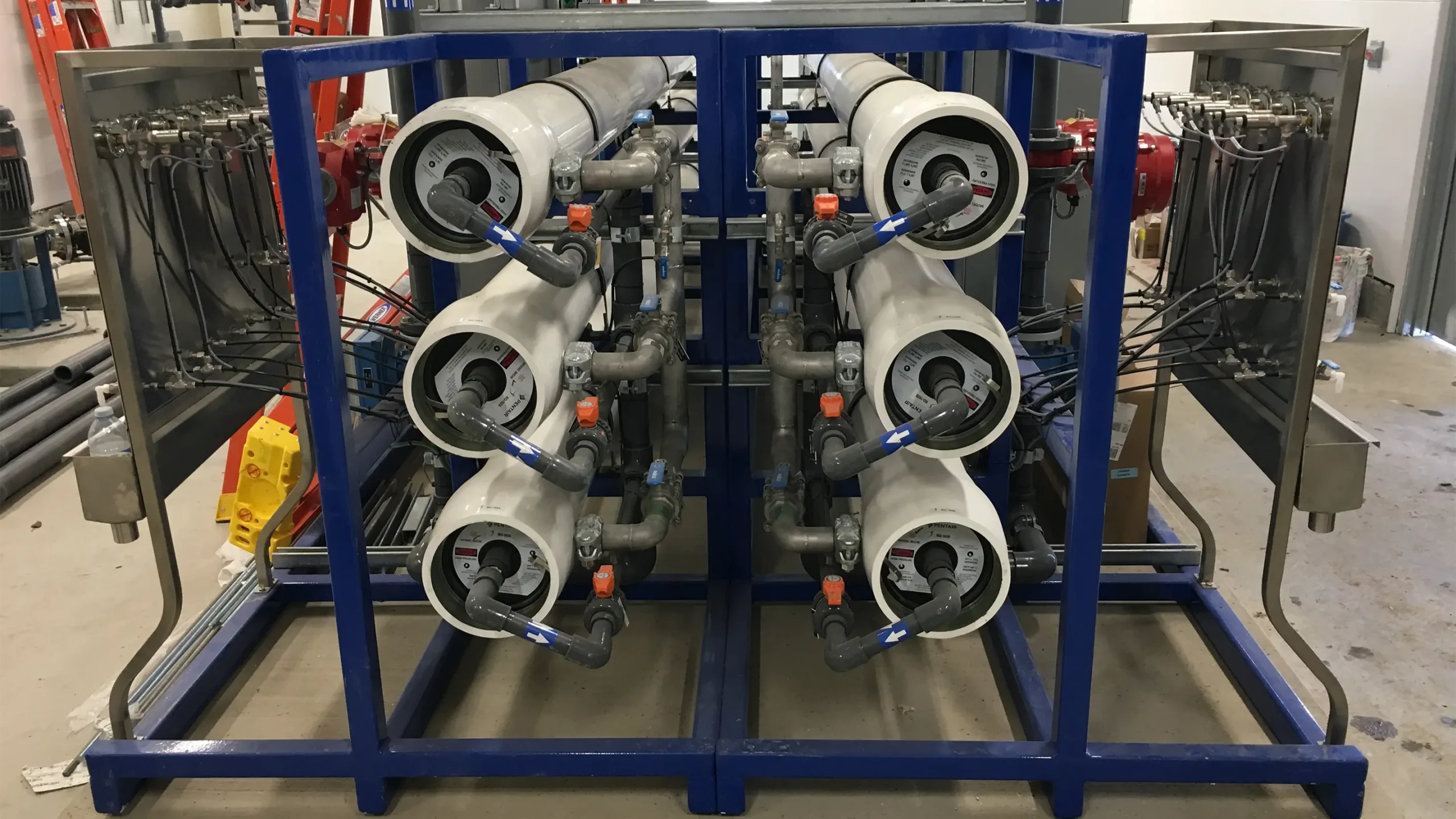
To address persistent water quality issues in the Town of Ogema, KGS Group designed a new treatment solution to improve taste and reduce dissolved minerals. The existing greensand filters had been relatively successful in removing high iron and manganese, but were not capable of removing elevated alkalinity, sulfates, hardness and total dissolved solids from the groundwater supply drawn from two nearby wells.
To increase the palatability of the finished water, KGS Group was retained to provide detailed design services for a brand-new water treatment plant using reverse osmosis membranes. A pilot study was first conducted to determine if direct feeding the reverse osmosis membranes from the wells would be an acceptable long-term solution. With great success from the study, the final design for direct feed membranes was completed in early 2019. The work also included design and construction of a new below-grade concrete reservoir, building and vertical turbine distribution pumps.
The new plant was commissioned in early 2020 and has received significant praise from the town for exceptional water quality.
Project Highlights
- Conducted a pilot study to determine the best long-term solution
- Provide detailed design services for a brand-new water treatment plant using reverse osmosis membranes
- Design and construction of a new below-grade concrete reservoir