

GE Aviation Engine Testing, Research and Development Centre
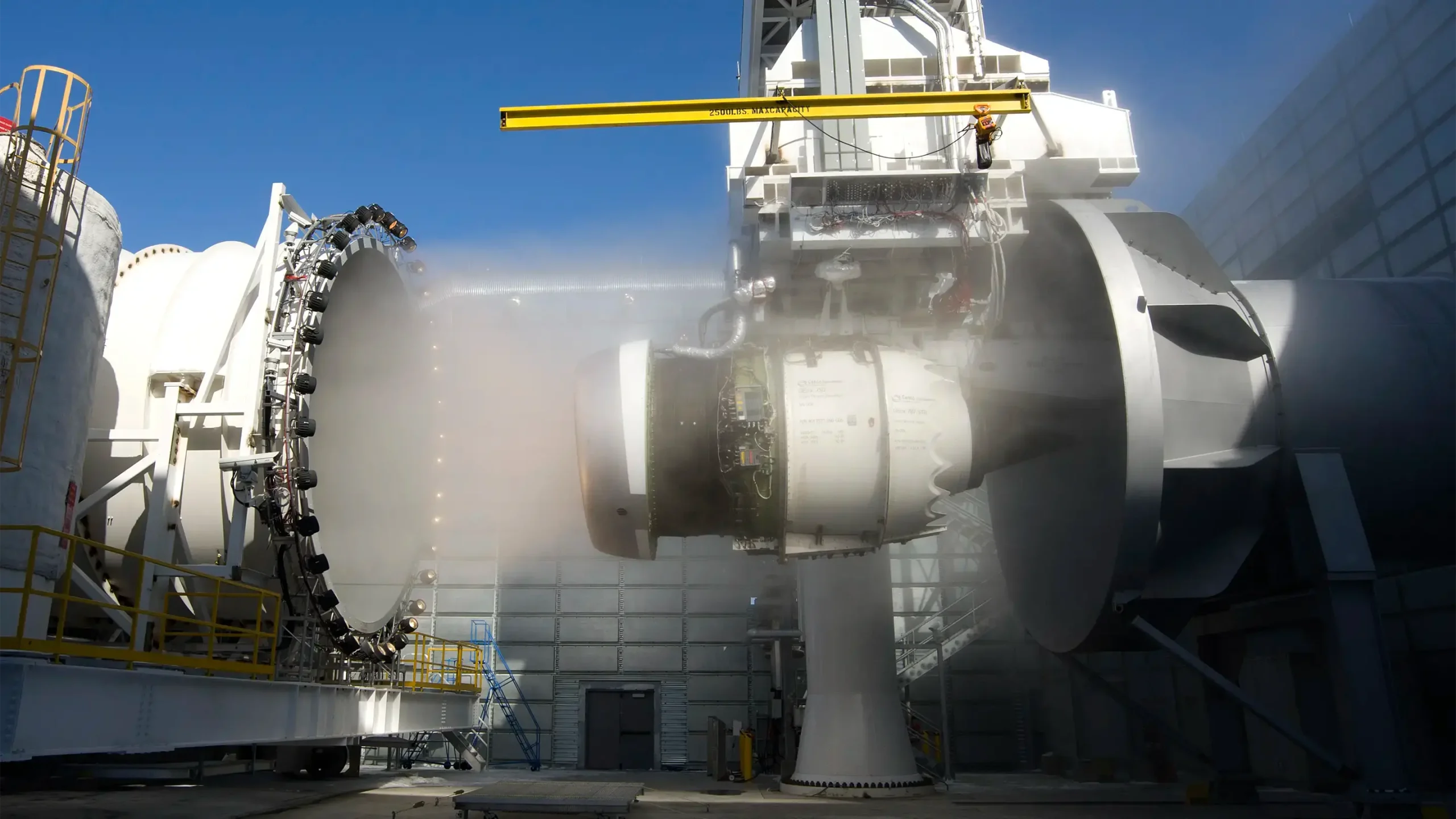
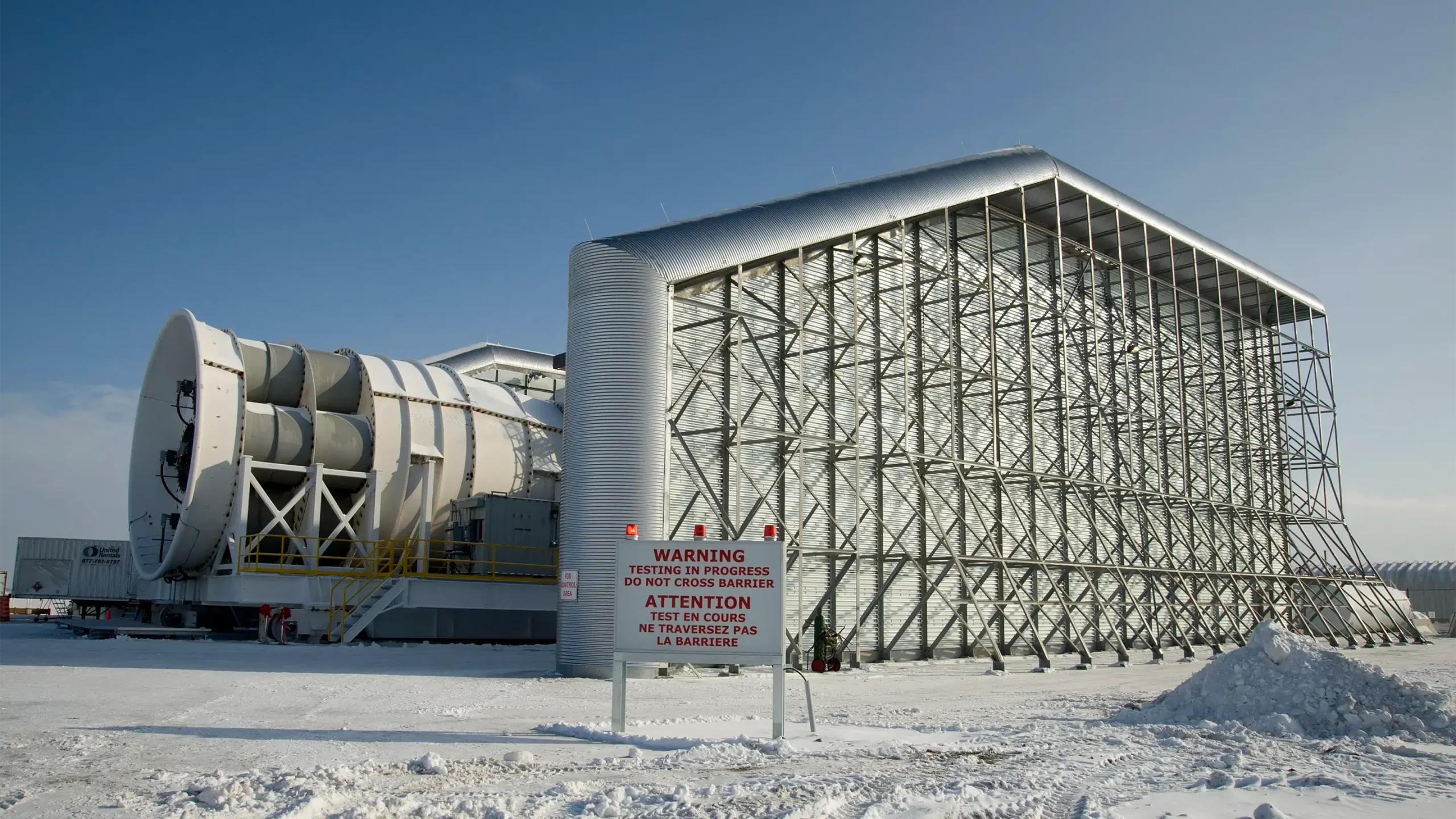
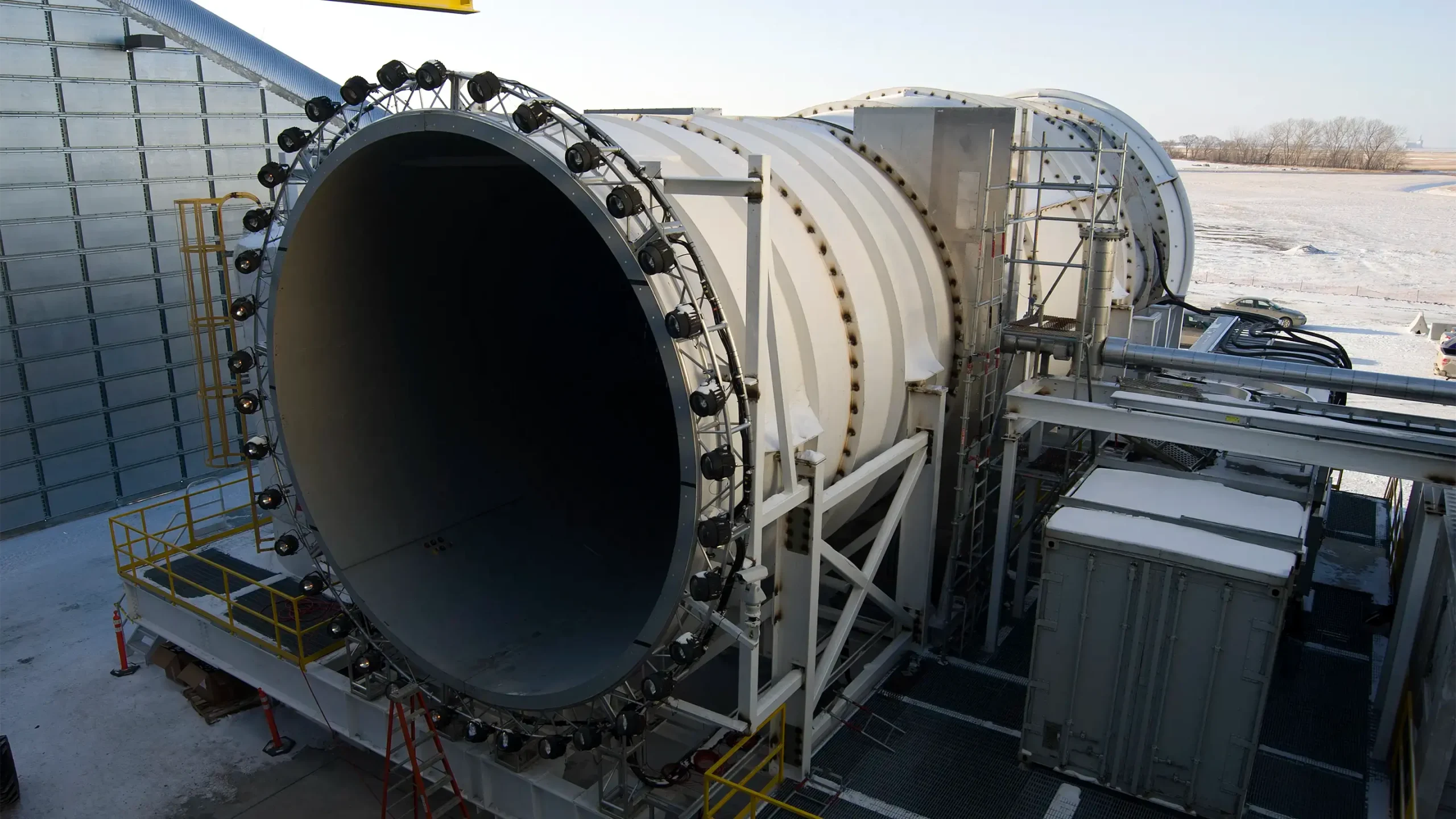
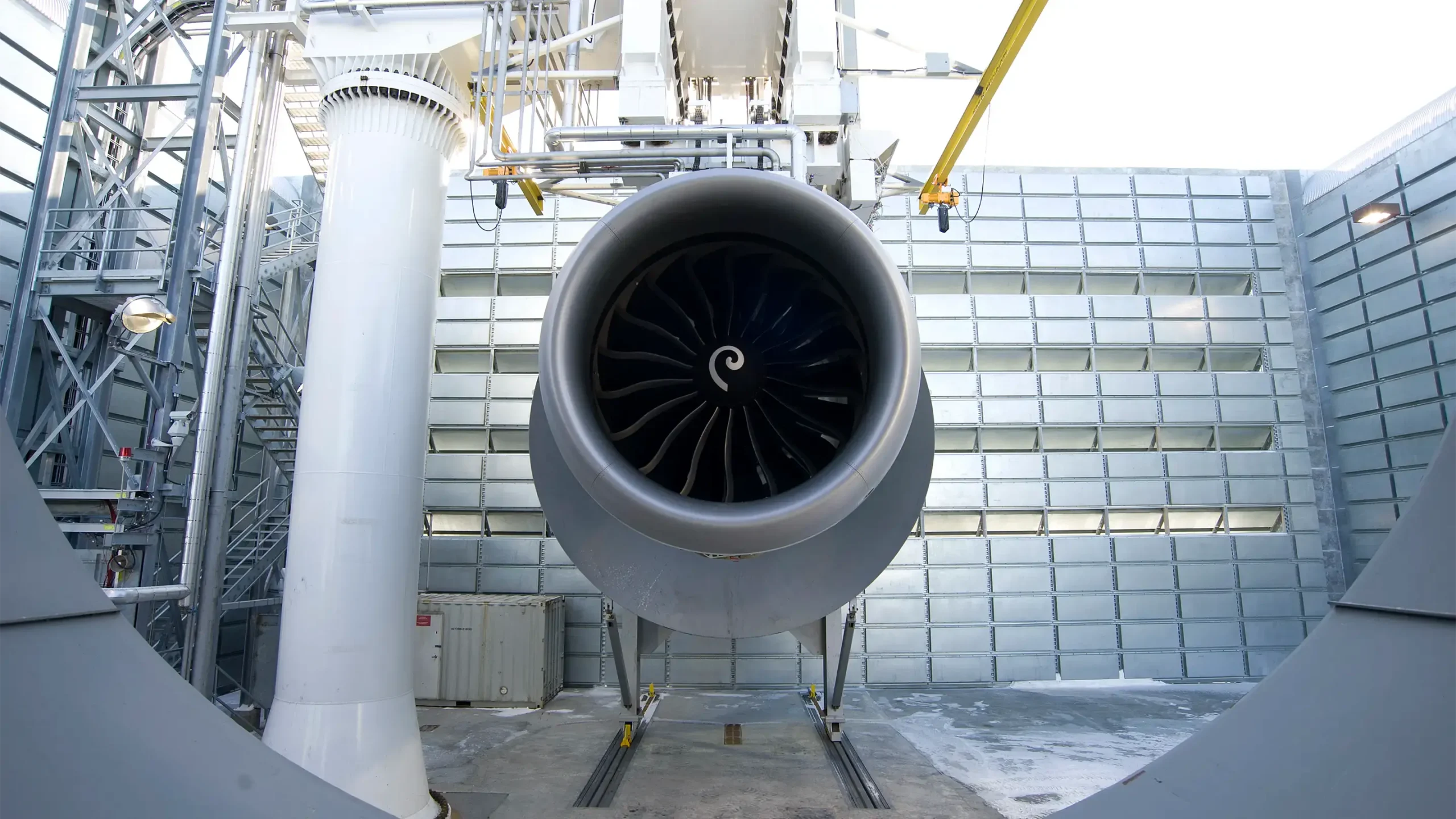
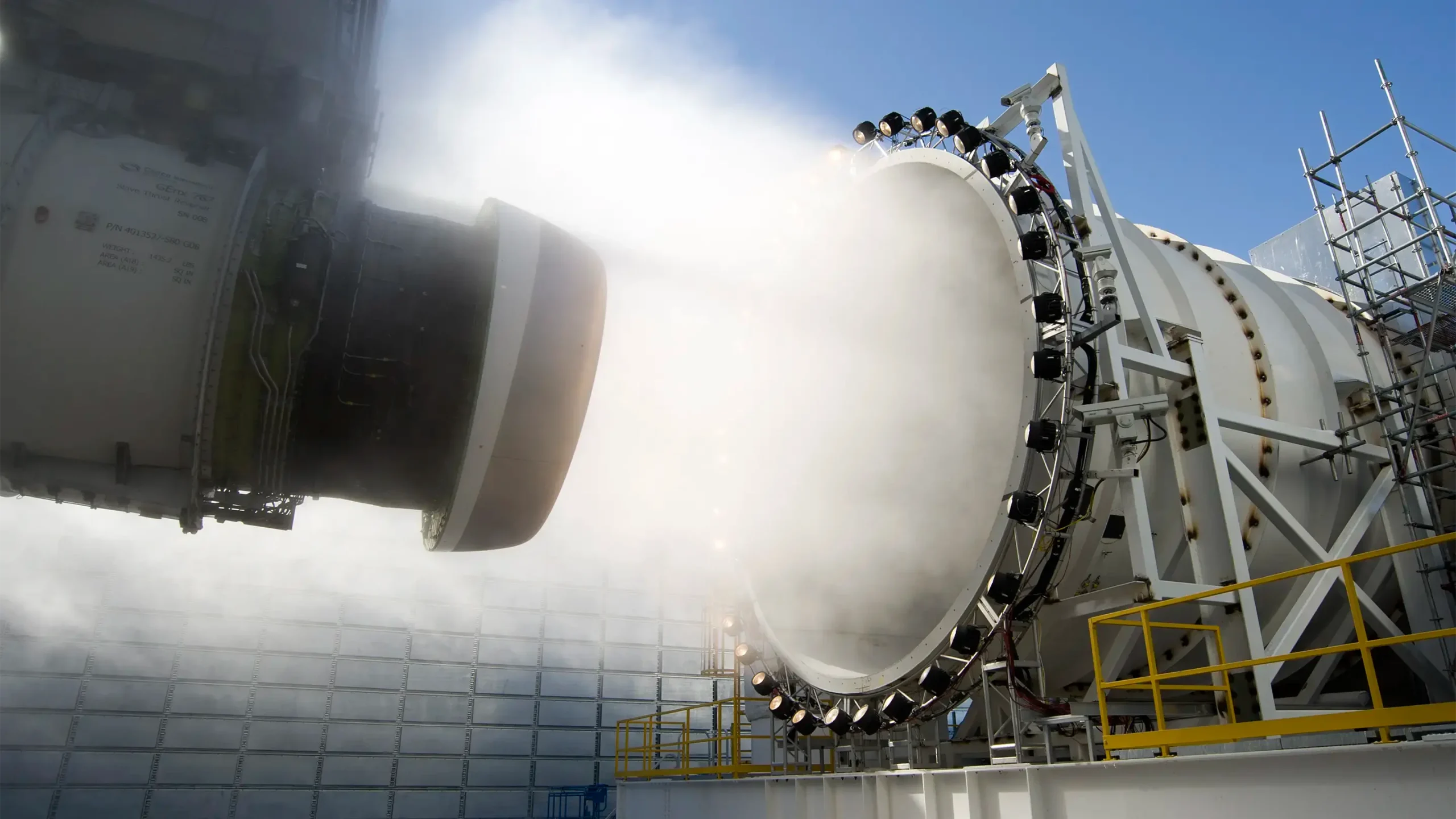
New aircraft engine designs must be tested to confirm they can survive real world hazards such as icing, bird ingestion and loss of an engine blade. To construct a state-of-the-art jet engine certification test centre in Winnipeg, General Electric Aviation formed a partnership with StandardAero, who engaged a diversified project team to provide engineering design services.
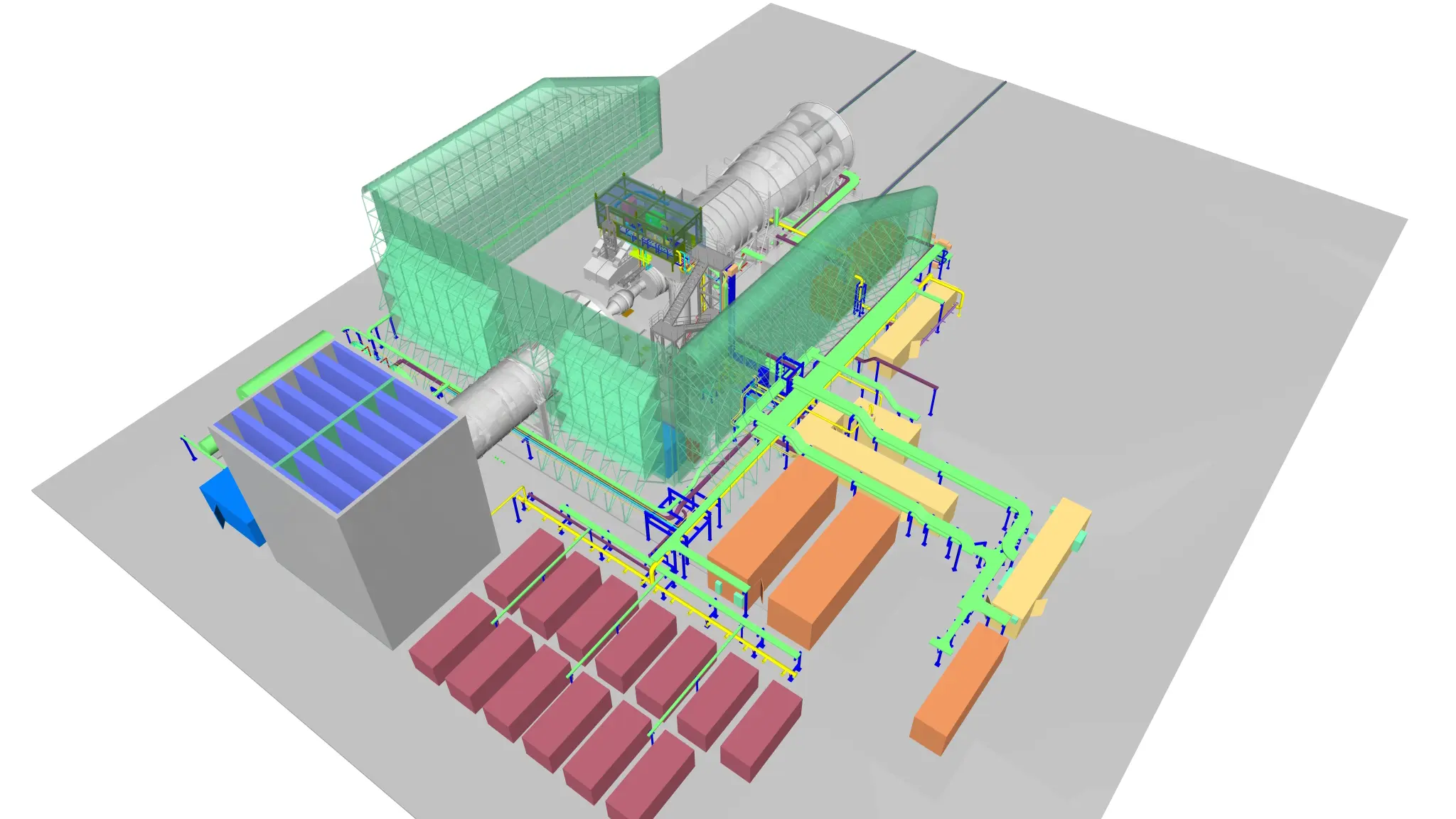
As part of the team, KGS Group coordinated and developed a 3D model of the facility in order to fast track the design and construction. The 3D model required collaborative coordination from our mechanical, electrical and structural groups, importing 3D components created by StandardAero and GE’s engine models, as well as generating 3D models based on 2D design drawings from other consultants. In addition, KGS Group provided design services for various mechanical, electrical and structural aspects of the project.
This project embodies engineering achievement through exemplary project coordination and collaboration to deliver a complex project on time and on budget. The use of innovative technology and a diverse range of engineering expertise were paramount to its success.
Project Highlights
- Developed a federated 3D facility model to fast‑track design and construction
- Imported GE engine models and StandardAero 3D components into the coordinated model
- Converted 2D consultant drawings into 3D models to create a fully integrated digital design set
Ottawa Road Safety Training
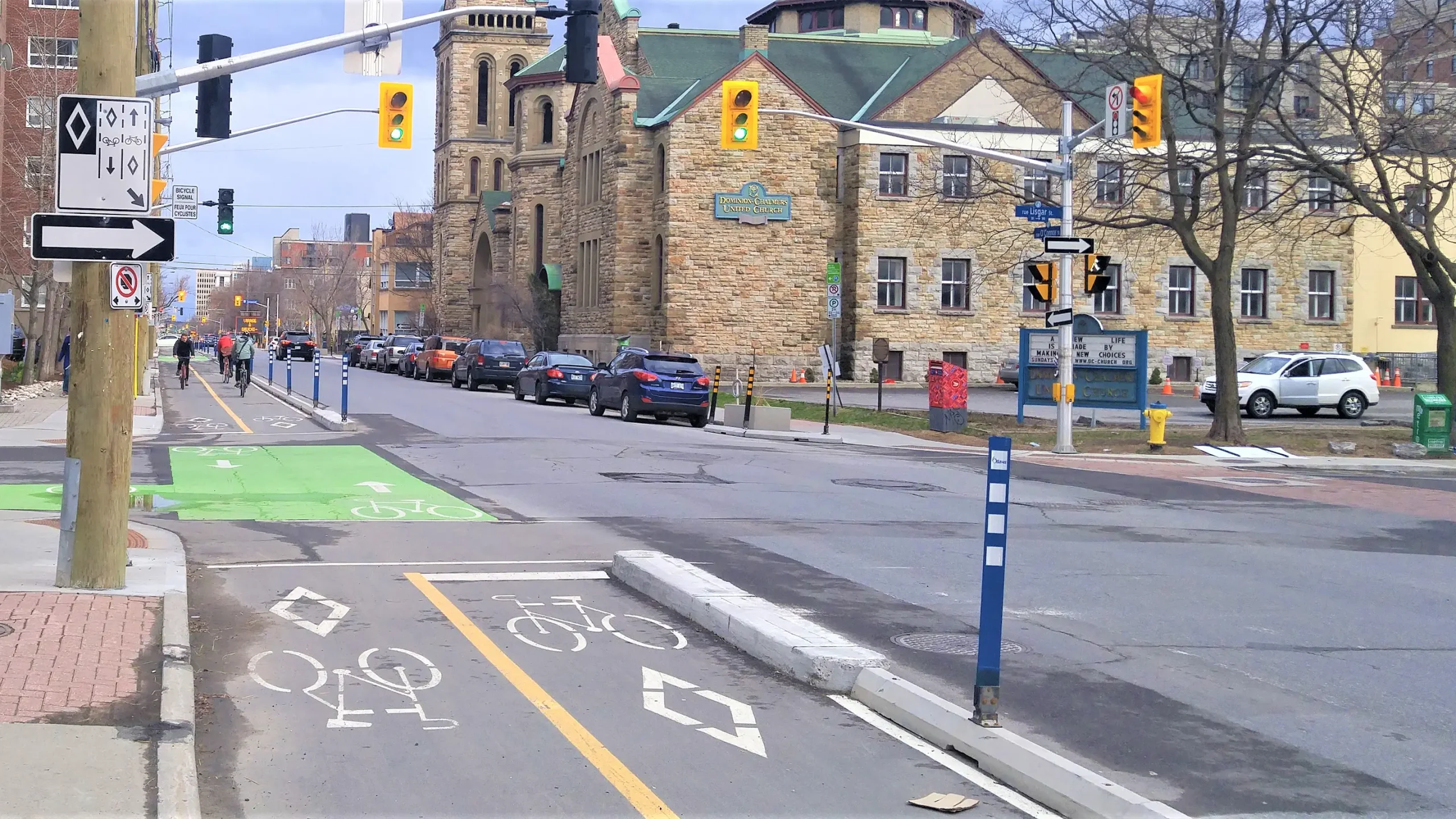
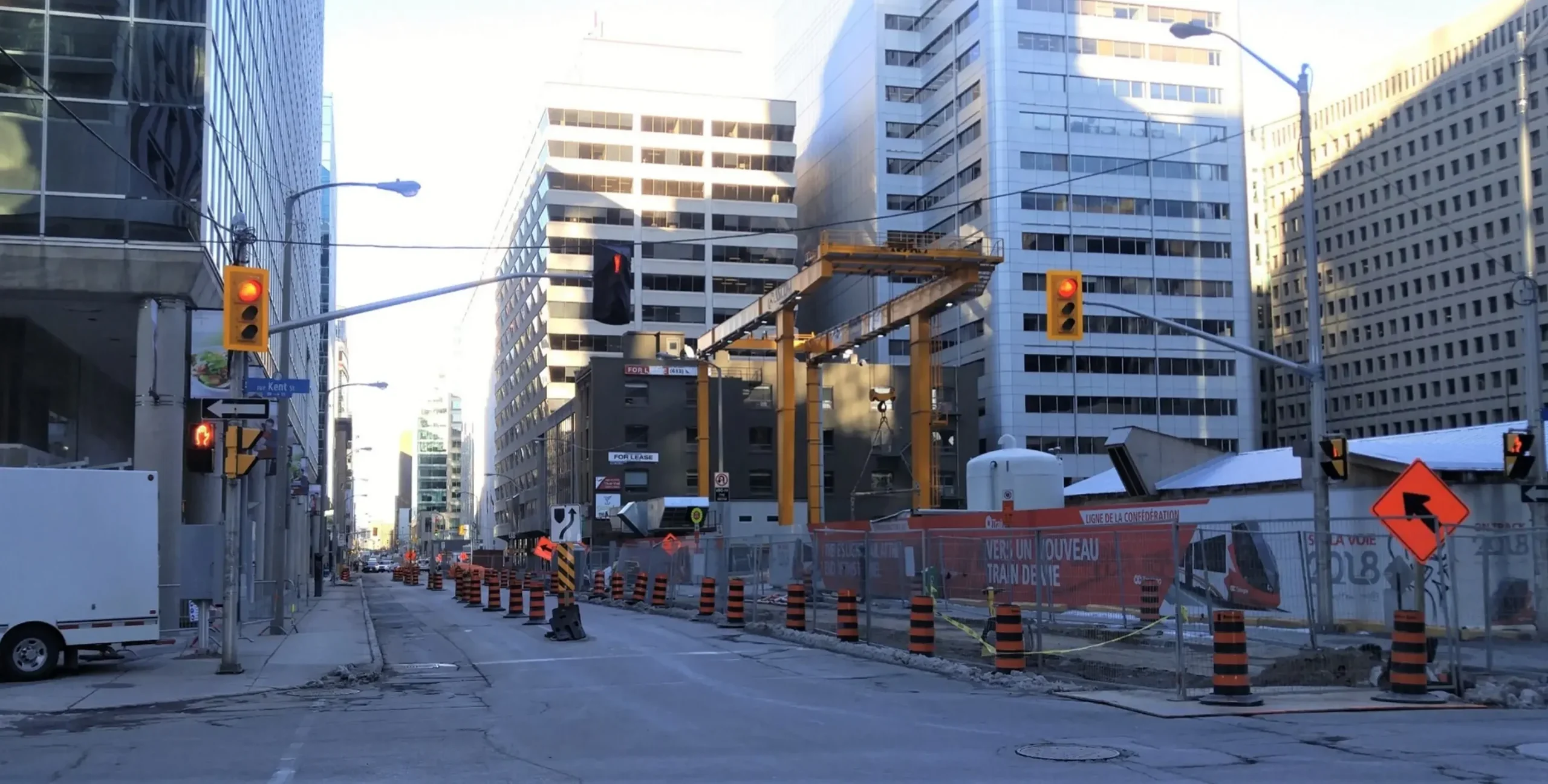
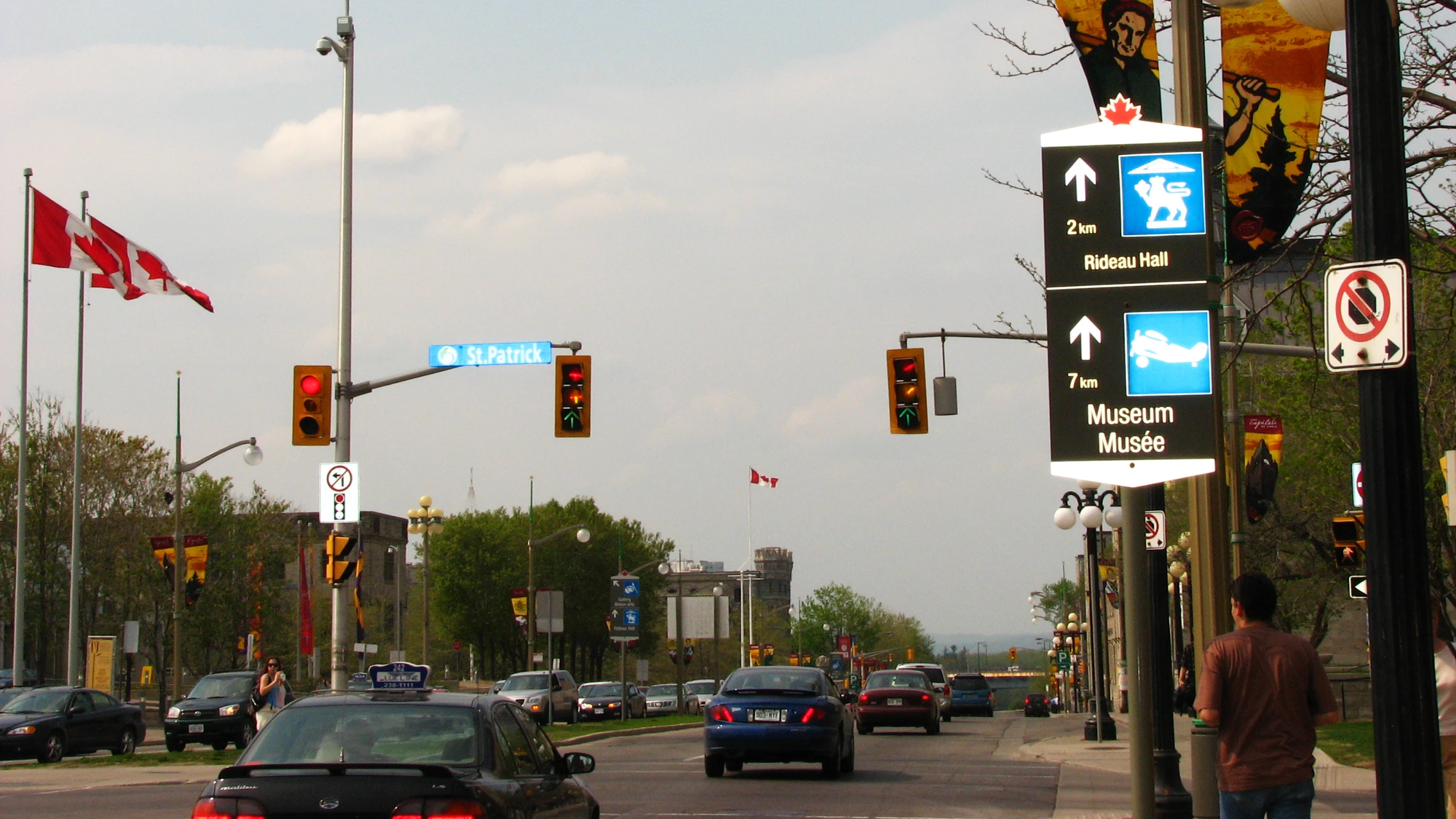
KGS Group created and delivered a 16-hour road safety training course to support one of the City of Ottawa’s Strategic Road Safety Action Plan goals of developing a road safety culture within the city. The course was delivered to staff over two days on 12 occasions between 2021 and 2025. A shortened version of the course was also prepared and presented to elected officials in 2023 and in 2024.
The course included training on road safety strategies, systems and data, drivers and age-related diminished capabilities, vulnerable road users (pedestrians, cyclists, motorcyclists), large trucks and road safety, network screening, diagnosis of safety problems and selection of countermeasures
This project was completed by MORR Transportation Consulting Ltd. prior to its acquisition by KGS Group.
Project Highlights
- Created and delivered a comprehensive road safety training course
- Delivered to staff on 12 occasions between 2021 and 2025
- Created a shortened version of the course and presented to elected officials
Geothermal Heating/Cooling System for IKEA Winnipeg
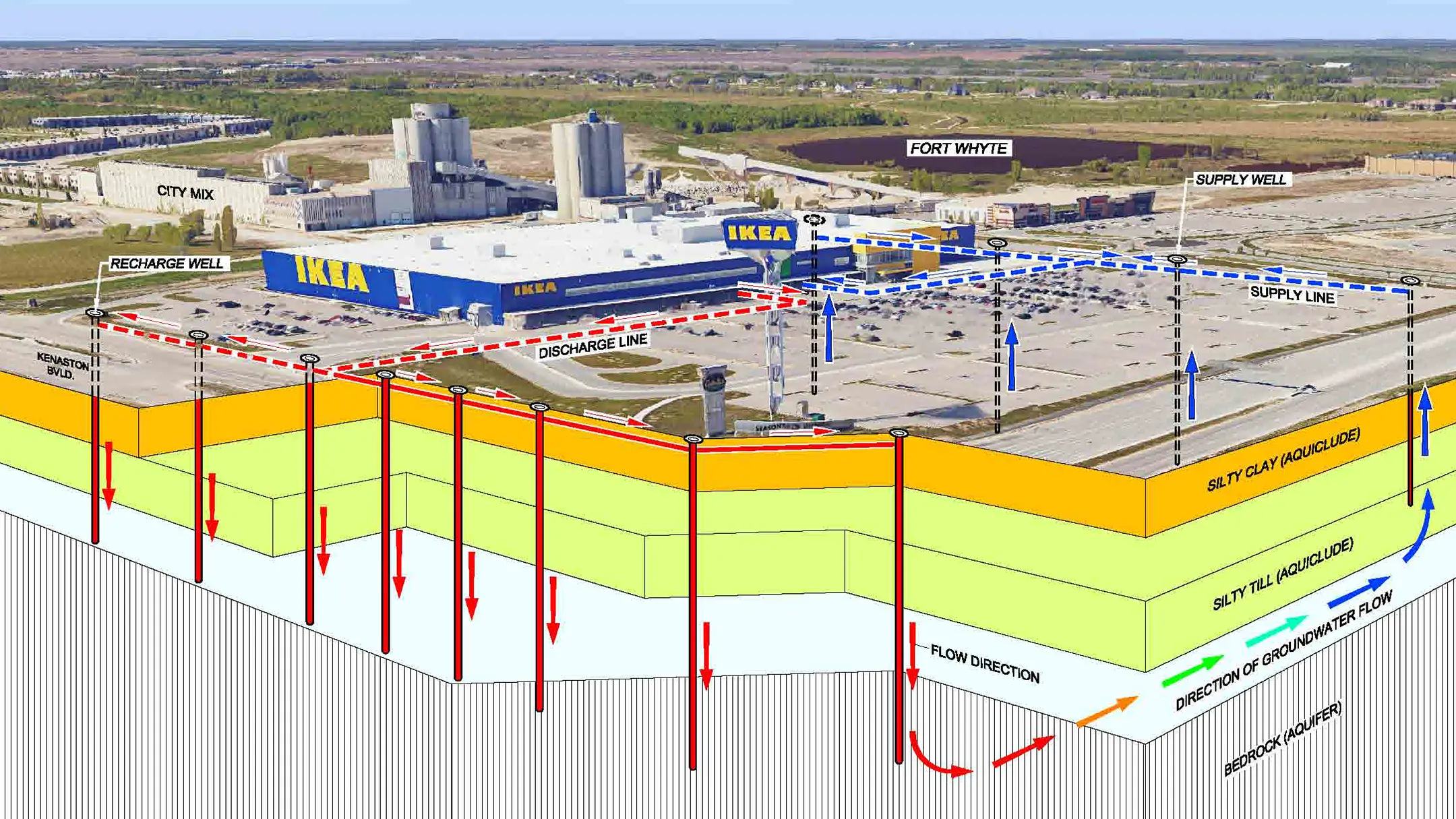
To advance IKEA’s global mandate to reduce its carbon footprint, the IKEA Winnipeg store adopted geothermal heating and cooling as a cornerstone of its energy strategy. KGS Group provided design, construction management and commissioning for a geothermal heat pump system that meets the heating and cooling requirements for the 400,000 square foot retail facility.
With four pumping wells and eight recharge wells, this system is the largest geothermal installation of its kind within Winnipeg. Since November 2012, the plant has delivered reliable, year‑round heating and cooling without using the backup gas boilers, significantly reducing greenhouse gas emissions for the building while showcasing pragmatic geothermal innovation.
Project Highlights
- Designed a geothermal heat pump system to serve the 400,000 square foot IKEA Winnipeg store
- Drilled and completed four pumping wells and eight recharge wells – the largest of it’s kind in Winnipeg
- Engineered wellfield layout and hydraulic balancing to optimize performance and facilitate maintenance redundancy
- Lowered carbon footprint for IKEA Winnipeg
University of Manitoba Fort Garry Campus Riverbank Management Study
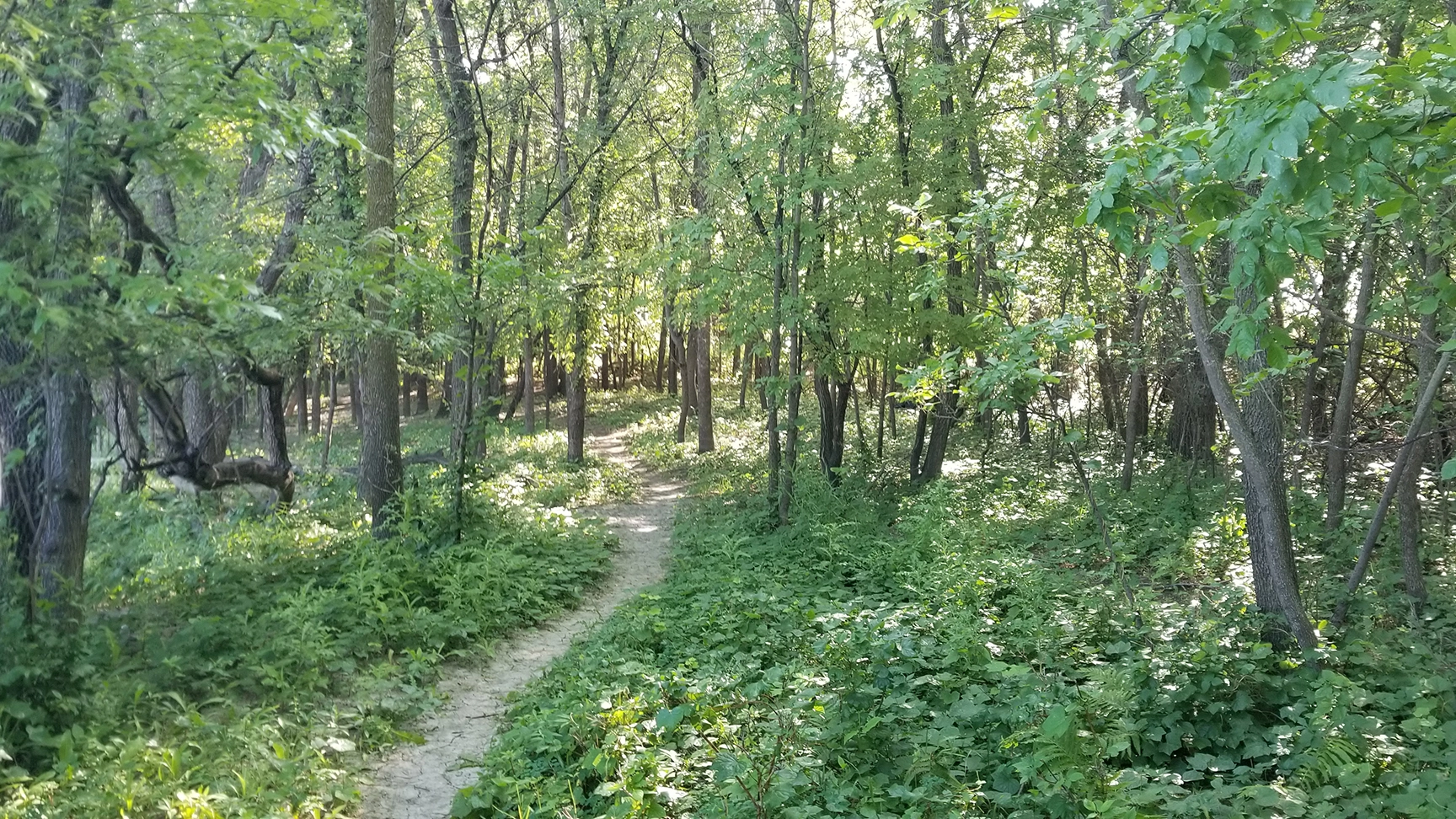
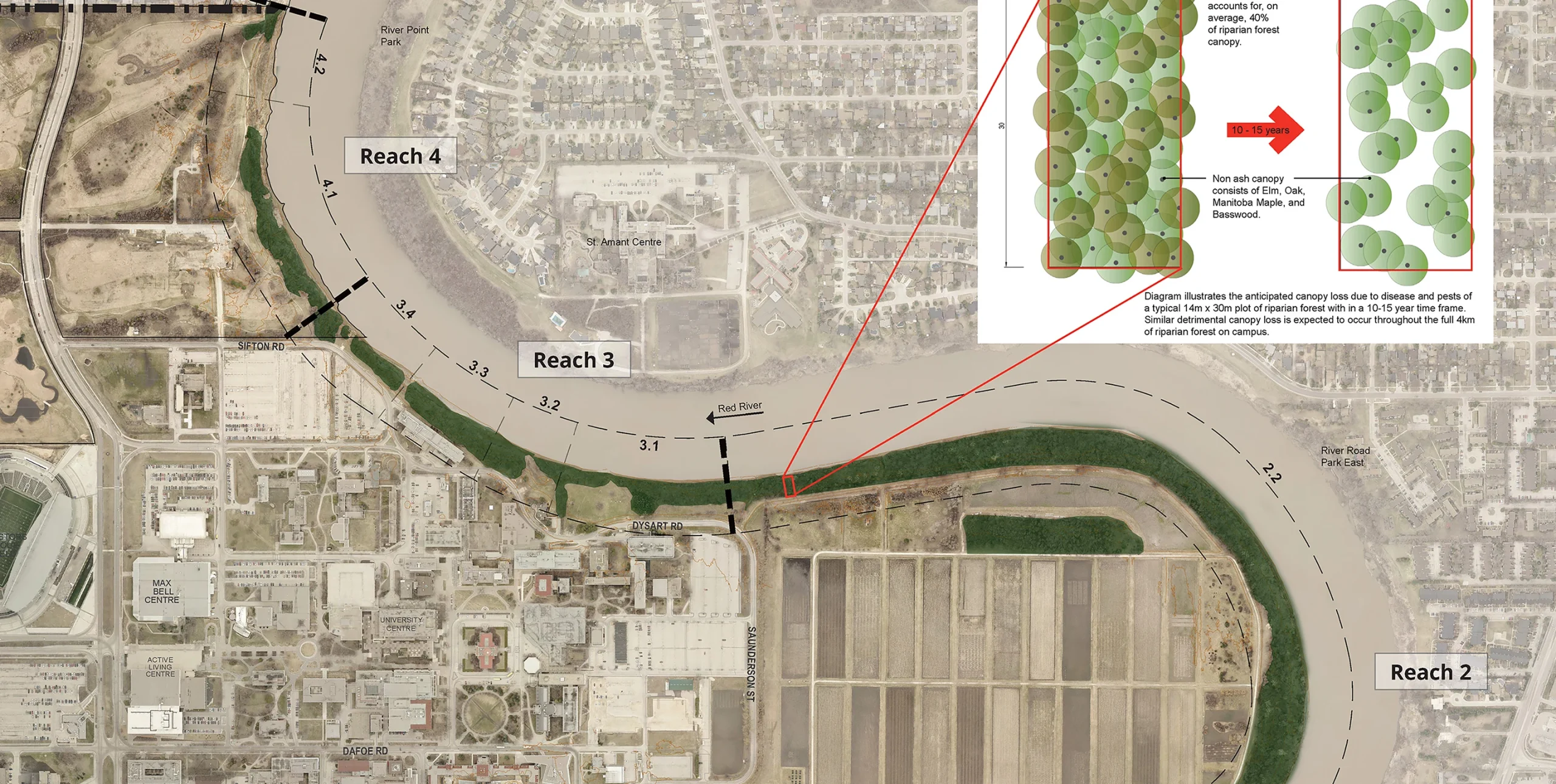
With nearly 4 km of shoreline, the University of Manitoba (UM) Fort Garry Campus is inherently linked to the Red River. The UM has adopted policies to become a leader in ecological, social and economic sustainability to promote a healthier, more active campus while reducing environmental impact.
Aligning with the UM’s sustainability principles, KGS Group provided the university with a 15-year, phased riverbank management strategy that favours restoration of the riparian corridor with naturalized solutions. Integrating geotechnical and ecological concepts, the riverbank management plan is a comprehensive tool to help the university manage risk, promote riverbank health and preserve critical infrastructure. The plan mirrors the dynamic nature of the river, allowing for updates over time to reflect changes to the riverbank and the campus itself.
Project Highlights
- Mapped and segmented 4 km of shoreline to create reach‑based inventories and prioritize restoration actions
- Completed integrated assessments of bank stability, erosion risk, riparian condition and habitat value
- Defined naturalized restoration treatments (e.g., riparian revegetation, bioengineering/soft stabilization, setback planting)
Gillam Subdivision Passive Groundwater Drainage Project
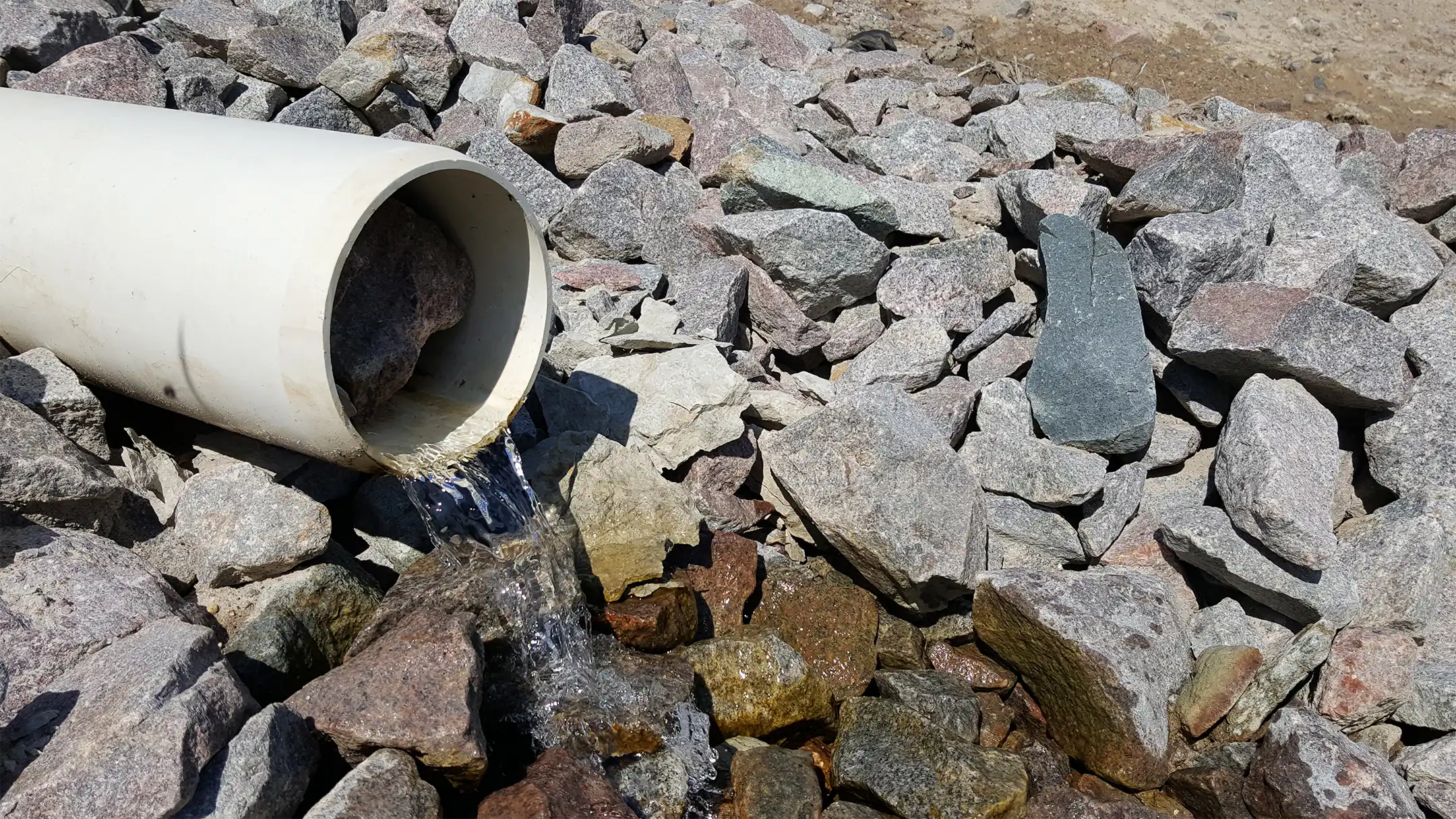
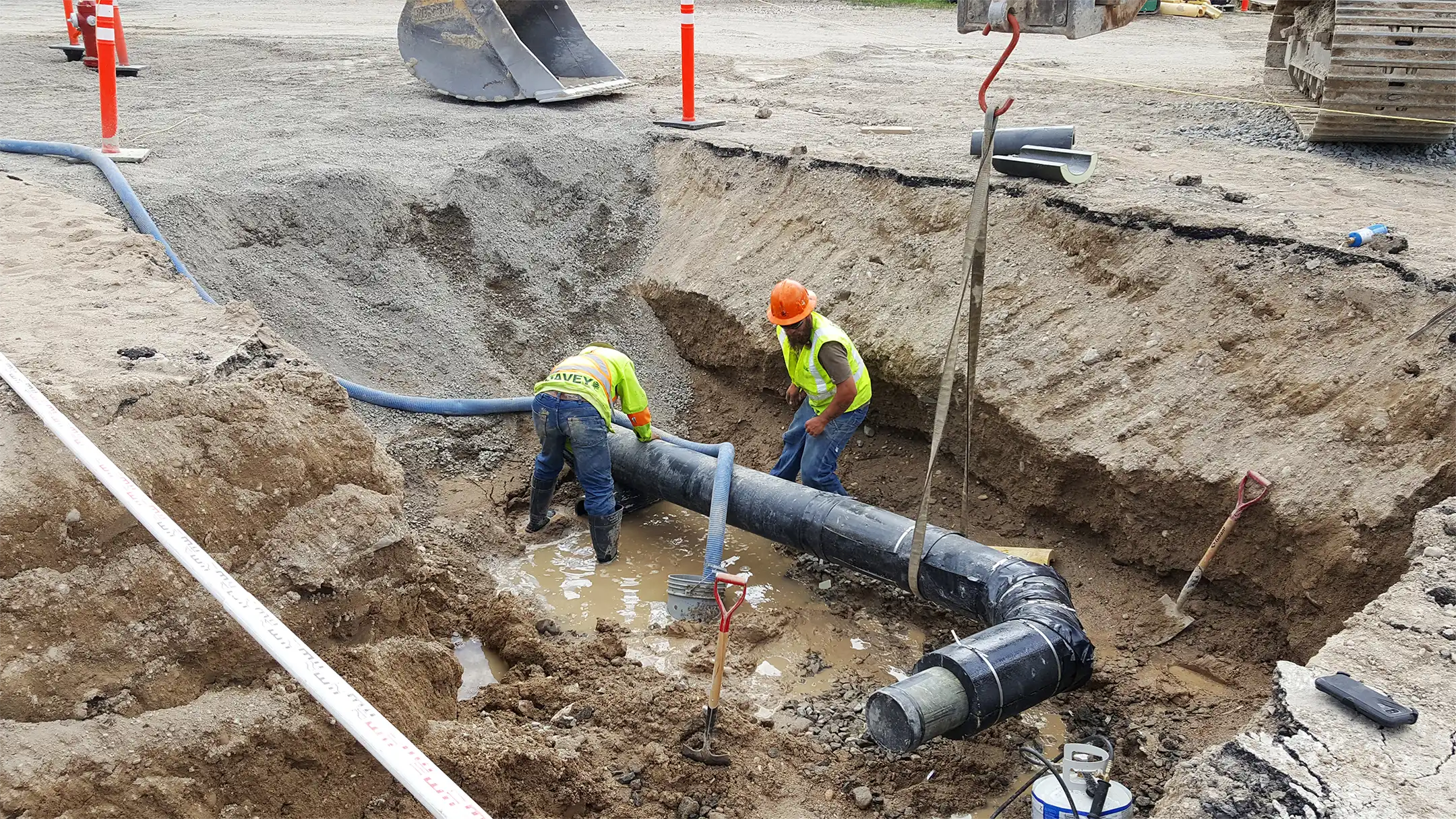
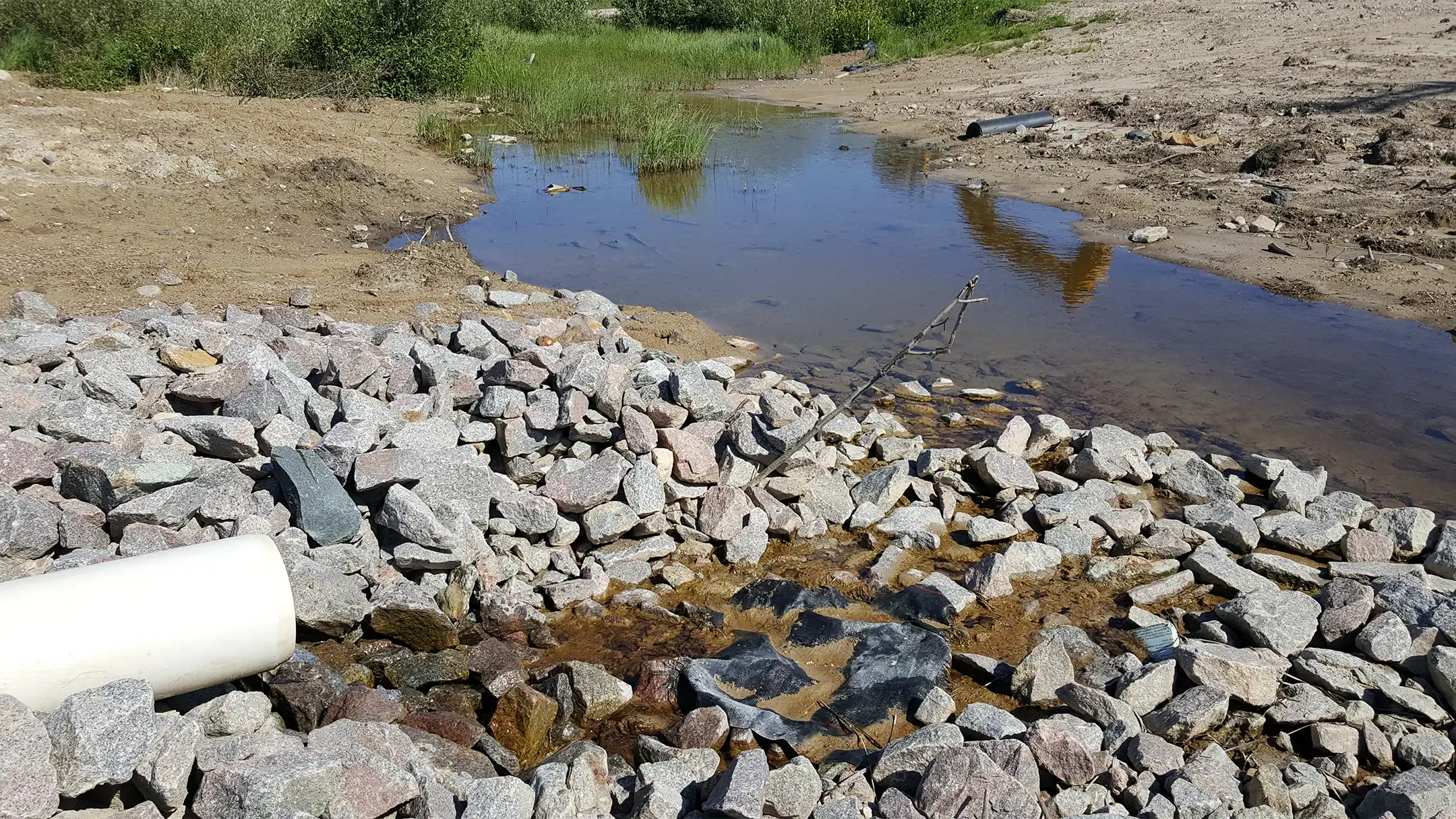
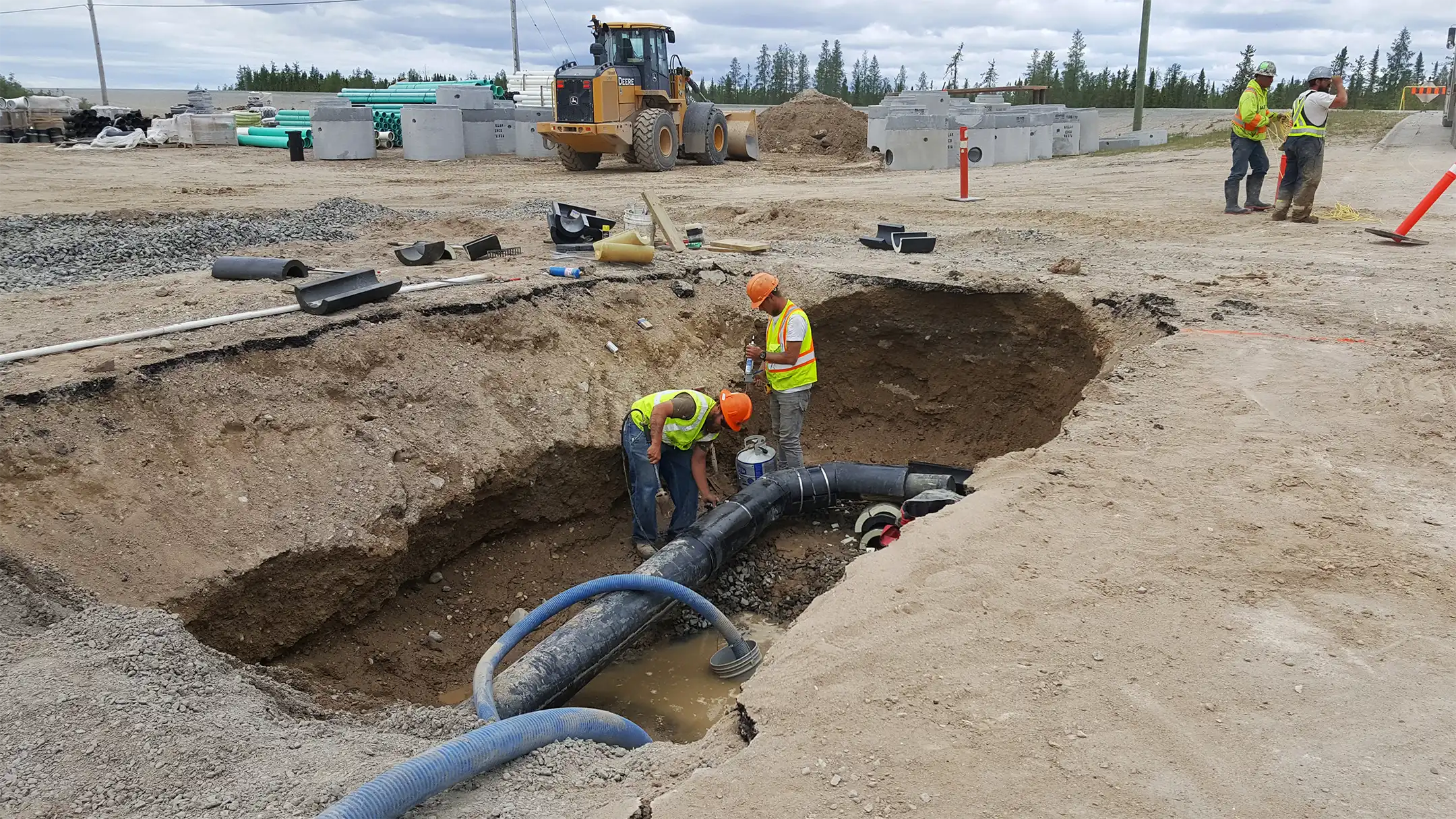
The “Crayola” subdivision in Gillam sits on soil that retains a high groundwater table. Over time, seasonal freezing and elevated groundwater led to disturbance of several structure foundations. To address this persistent issue, KGS Group leveraged the timing of a planned sewer and water infrastructure renewal to design and implement a simple, robust groundwater drainage system.
By using common trench excavation, engineered drainage piping and readily available backfill, the installation of the groundwater drainage system was simplified and optimized. Because there are no moving parts, continuous drainage of groundwater occurs passively by gravity.
Designed within the new sewer and water corridors, the system simplifies future maintenance and construction, while providing easy access points for the interconnection of foundation drainage systems throughout the subdivision.
Project Highlights
- Excavated common trenches within new sewer and water corridors to integrate groundwater drainage
- Installed engineered drainage piping to collect and convey groundwater
- Placed readily available backfill to promote free drainage and protect piping
- Eliminated mechanical components – no pumps or moving parts
- Established future tie‑in locations to enable interconnection of foundation drains across the subdivision
Advanced Satellite Integration Facility
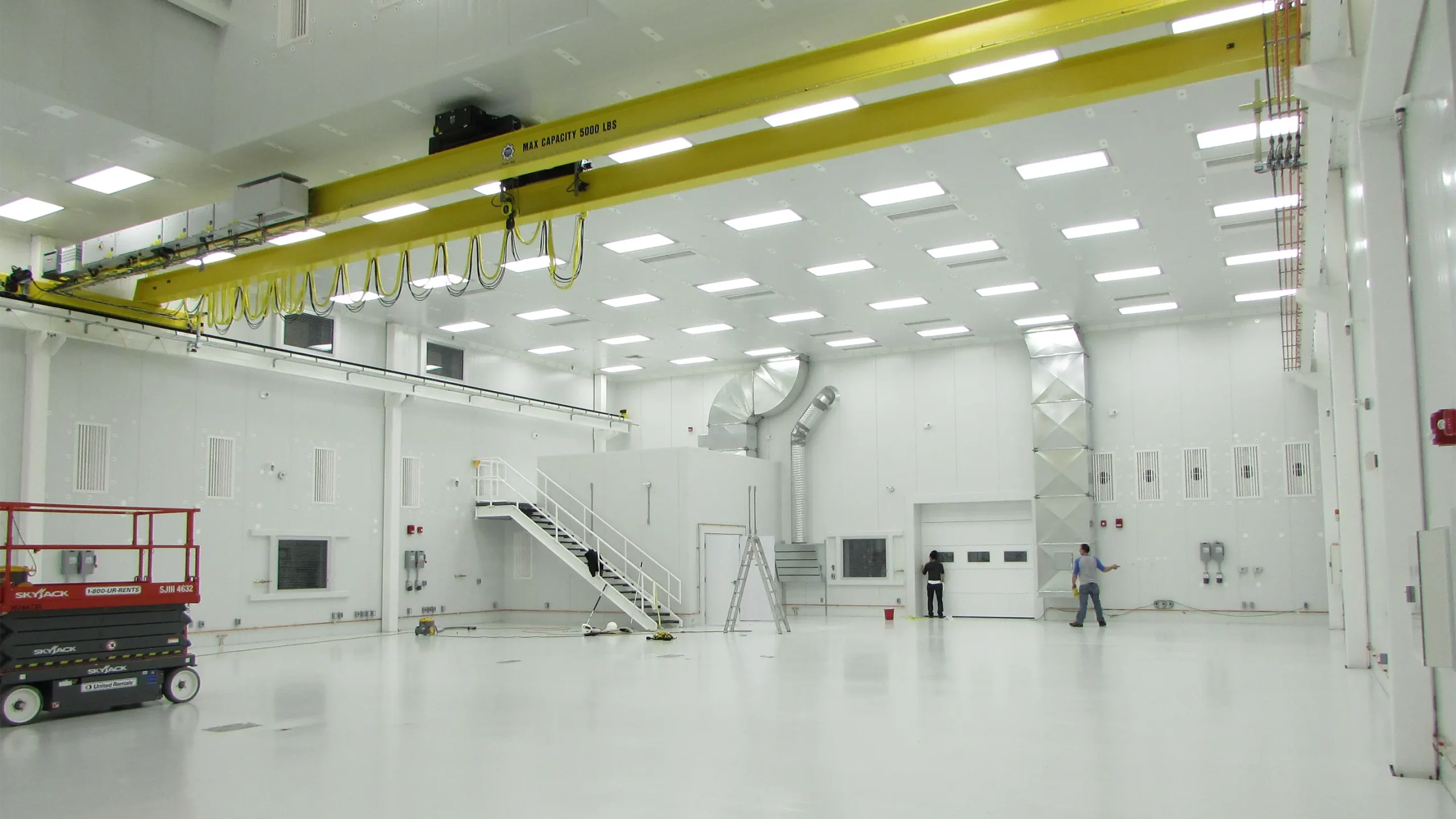
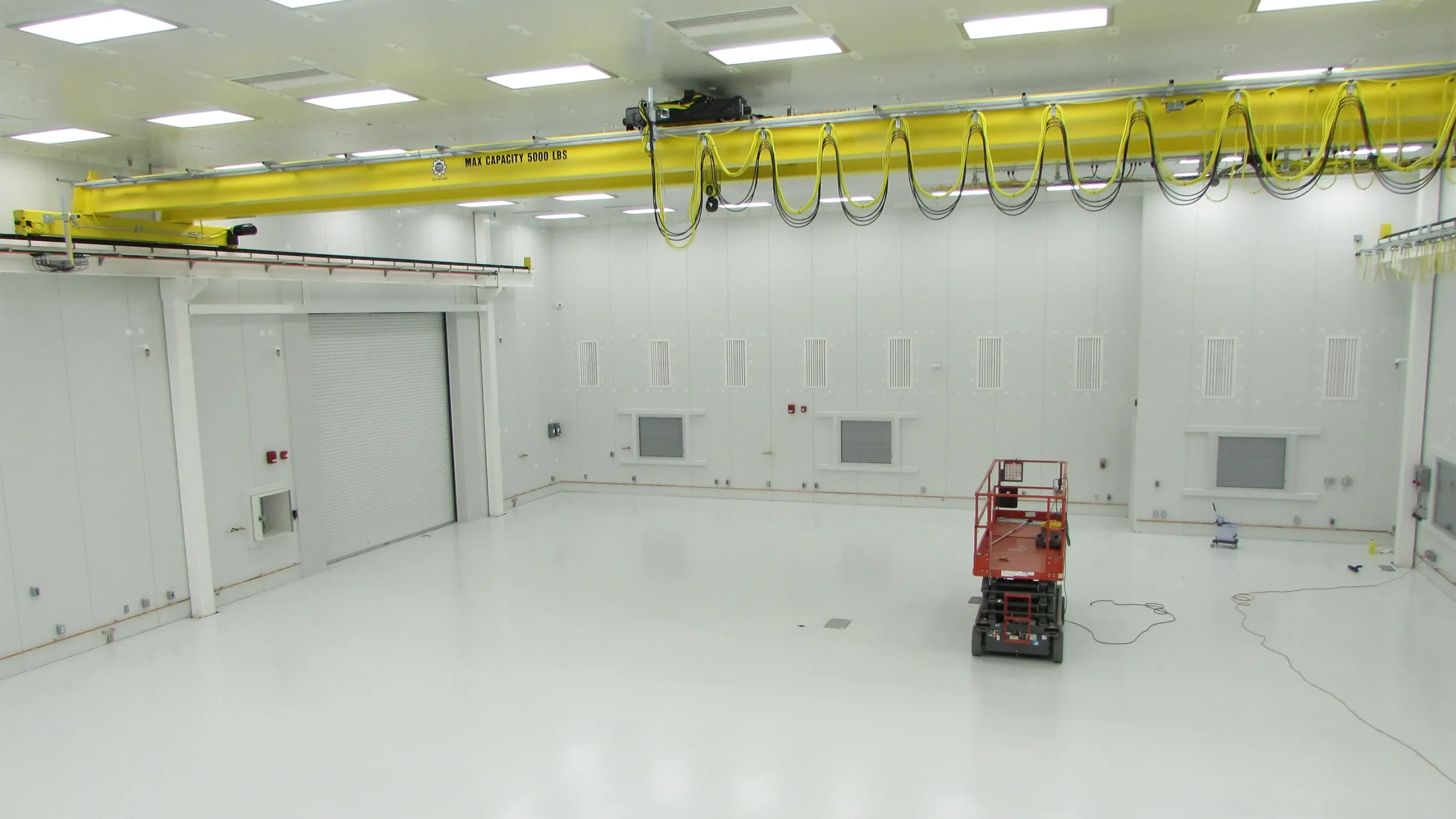
Magellan Aerospace was awarded a contract to manufacture three, low earth orbit satellite buses for the RADARSAT Constellation Mission, one of the largest space projects ever undertaken by Canada. Design and construction of an advance satellite integration facility (or clean room) where these and future satellites would be constructed required an intense multi-disciplined engineering effort between KGS and Magellan.
The new facility needed to be designed and constructed to stringent standards to meet unique spacecraft manufacturing requirements. Working closely with Magellan Aerospace, KGS Group provided structural, mechanical, electrical and construction supervision services for the design, construction and commissioning of the 5,800 sq. ft. building.
The completed facility went into operation in the spring of 2015, meeting tight budget and scheduling constraints.
Project Highlights
- We provided structural, mechanical, electrical and construction supervision services for the design, construction and commissioning of the 5,800 sq. ft. building.
- Met tight budget and scheduling constraints
- Intense collaborative multi-disciplined engineering effort between KGS and Magellan
Rainy River Water Treatment Study and Systems Upgrade
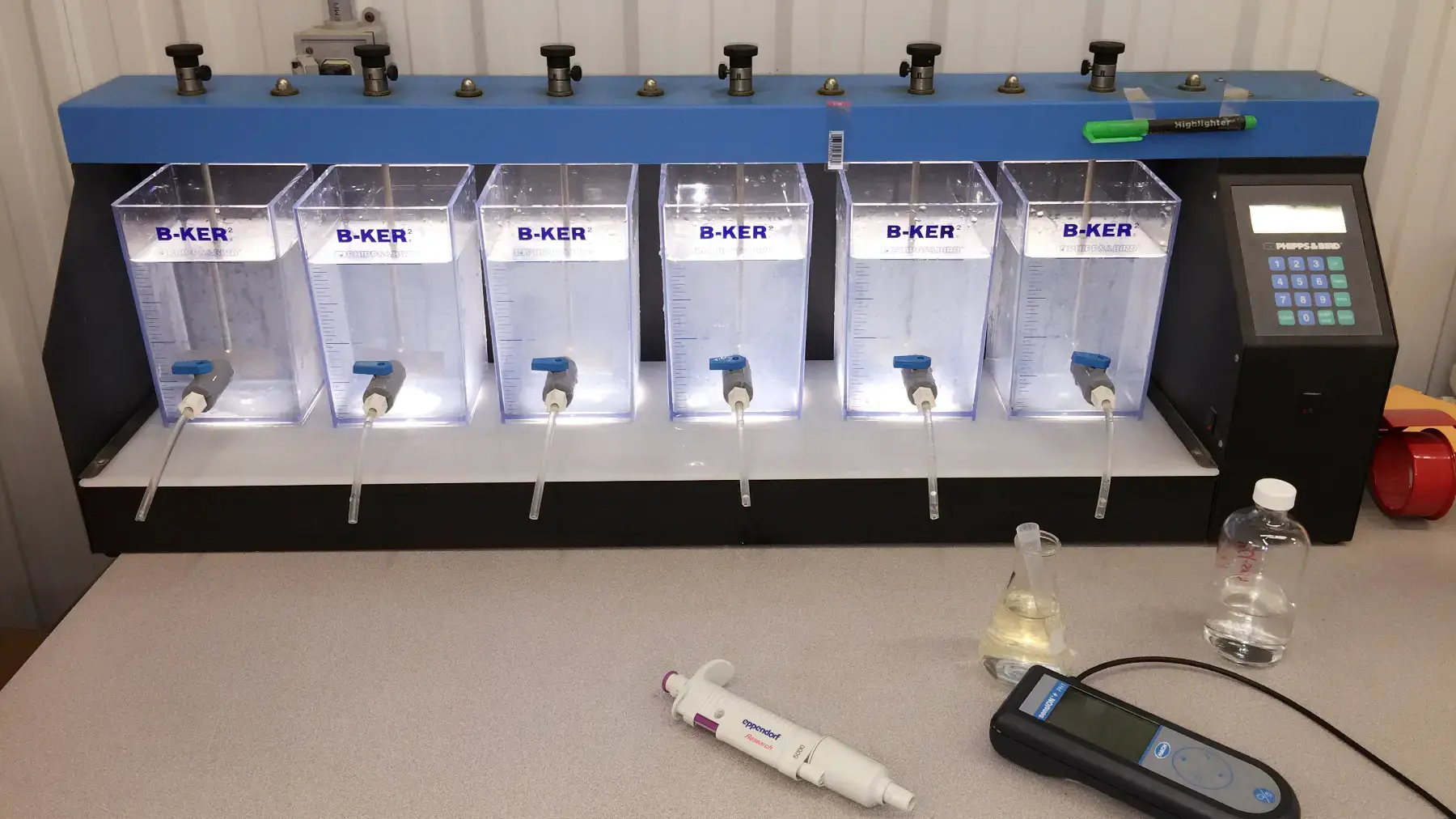
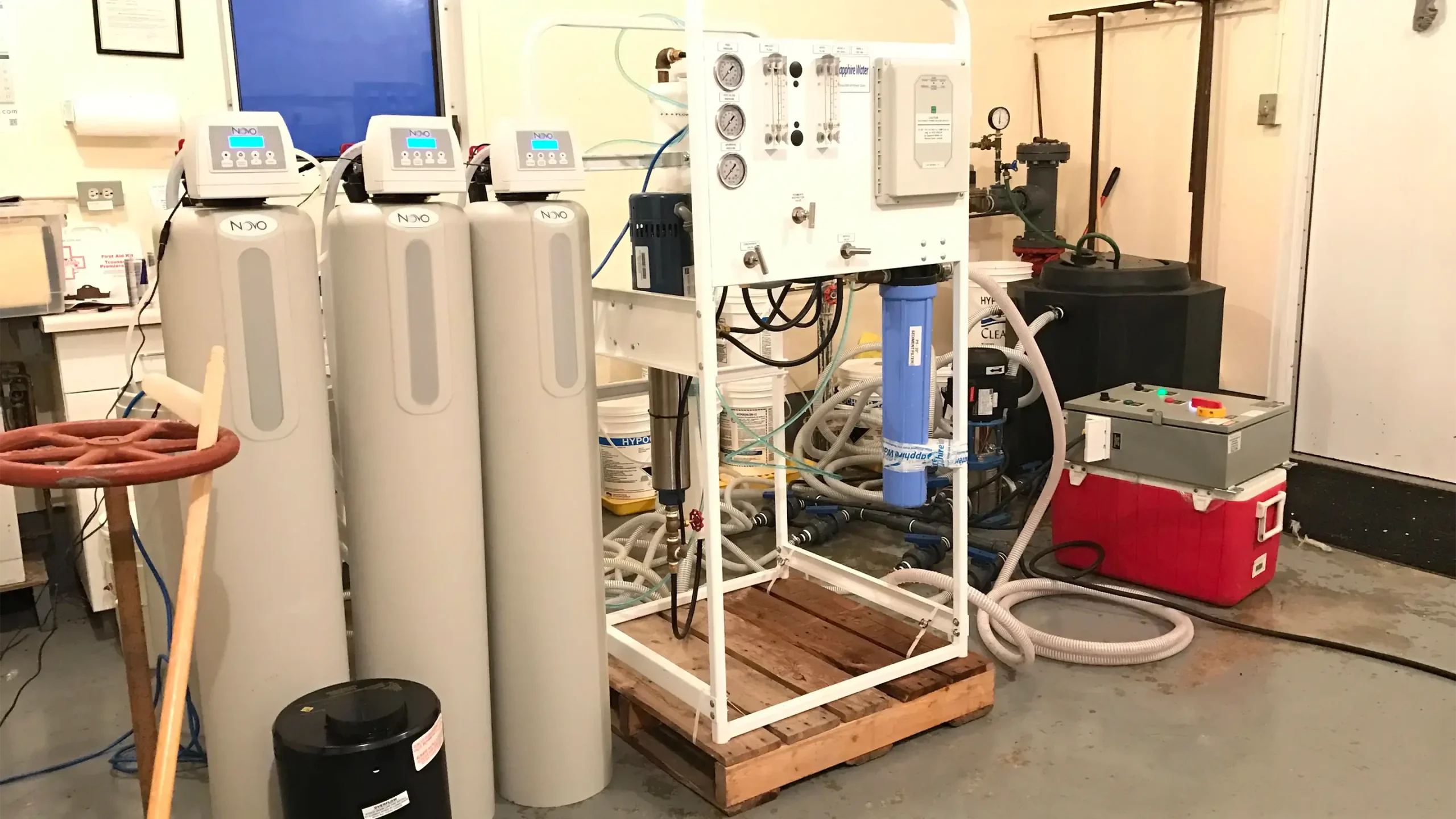
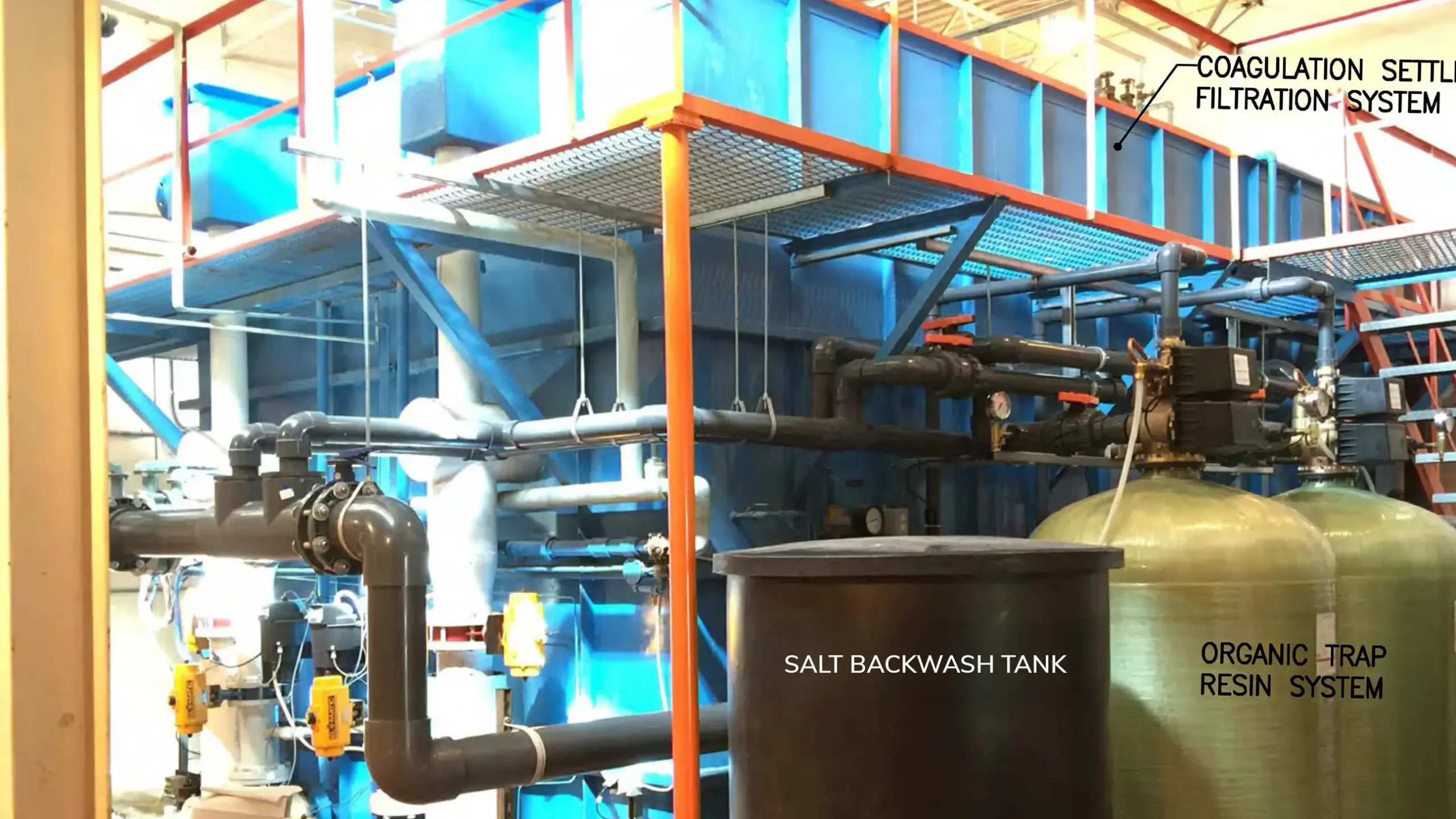
Facing a public health risk from elevated carcinogen levels in its drinking water, the Town of Rainy River needed a practical solution that fit within their existing plant footprint to remedy the situation. KGS Group, in collaboration with the University of Manitoba, conducted detailed pilot studies comparing ion exchange and nanofiltration to determine the most effective, operationally feasible way to reduce carcinogen levels in the drinking water.
Ion exchange was selected because it avoided costly building expansion and offered simpler operations and maintenance for the Town. We then provided engineering services for the design, construction and commissioning of the new ion exchange treatment system, integrating it with the plant’s existing processes and controls.
The upgraded system exceeded Health Canada’s Guideline for Canadian Drinking Water Quality for carcinogens and reduced chlorine consumption by 40%. The project addressed a serious health concern while optimizing use of Rainy River’s existing assets. The Town also received a commendation from the Ontario Ministry of the Environment and Climate Change in recognition of the project’s success.
Project Highlights
- Designed the new ion exchange system and integrated it with existing plant processes
- Reduced chlorine consumption levels by 40%
- New system exceeds Health Canada’s Guideline for Canadian Drinking Water Quality
Brandon Third Street Dam Replacement
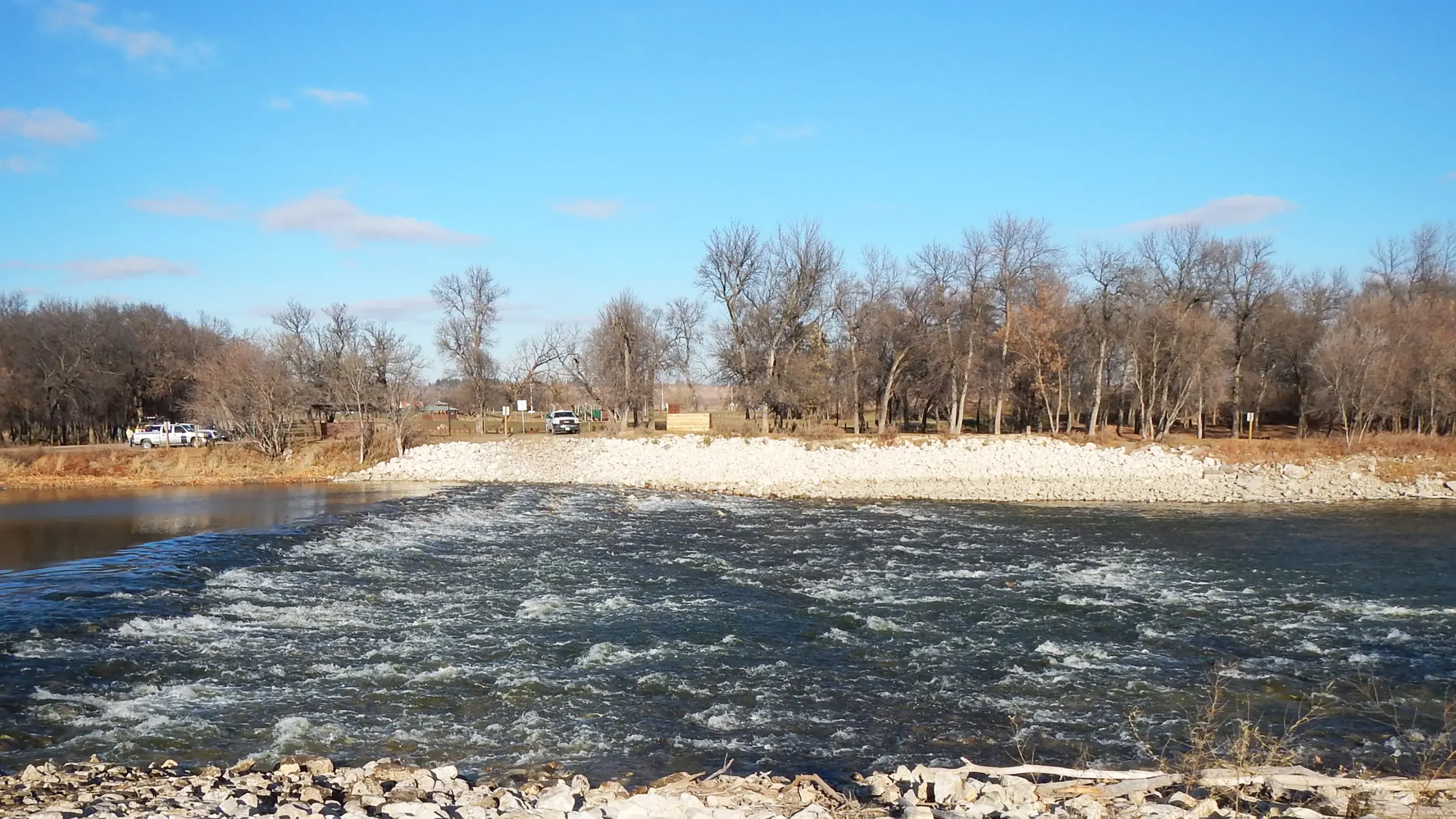
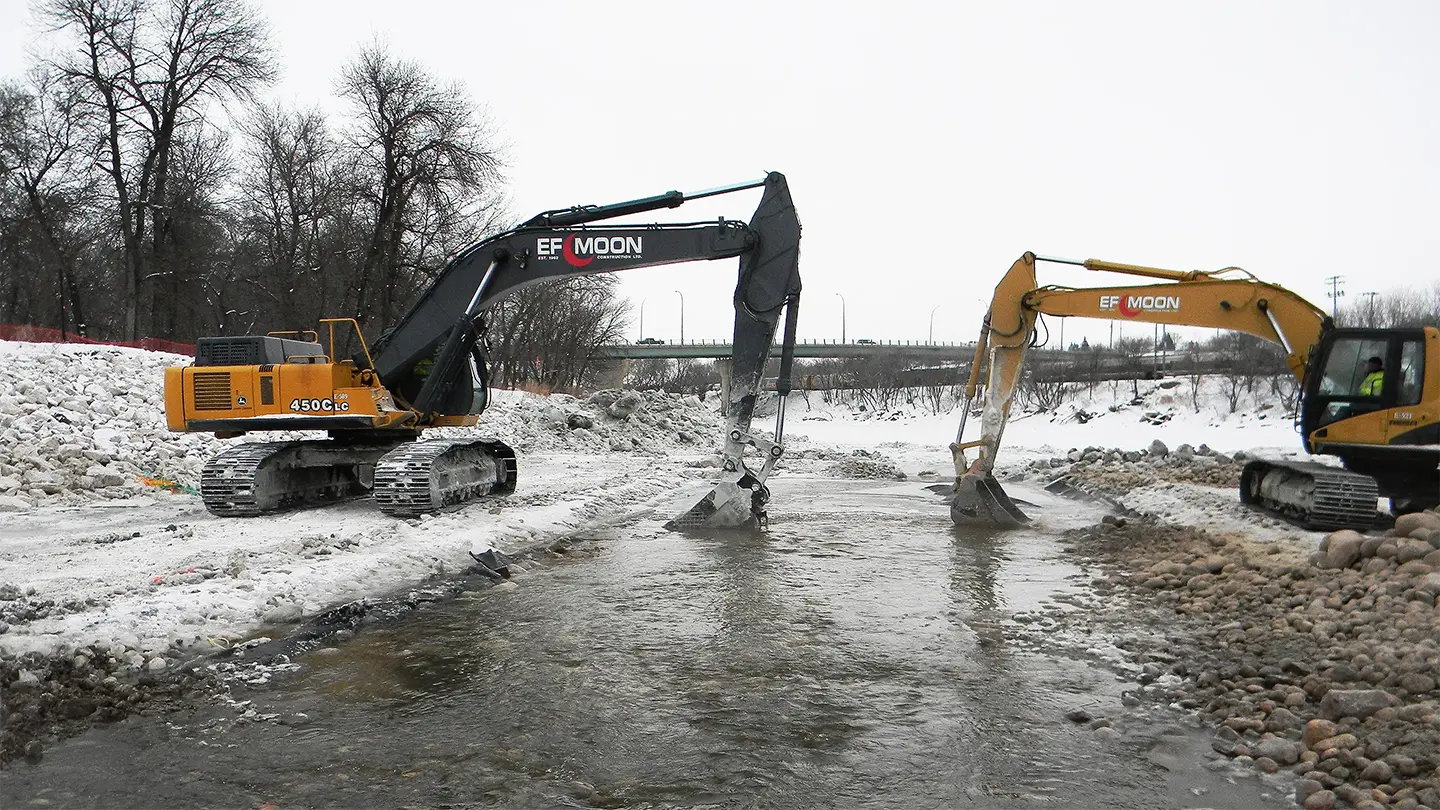
For more than 70 years, the Third Street Dam on the Assiniboine River supported the City of Brandon’s drinking water supply and provided social, environmental and commercial benefits. When the dam was irreparably damaged, KGS Group moved quickly to design temporary emergency measures that limited further habitat impacts and preserved Brandon’s water supply.
We then developed a functional, cost-effective, permanent solution that also removes a 70-year-old barrier to fish passage. The new overflow rockfill weir, with a low flow rock ramp fishway, preserves Brandon’s water supply, restores fish passage, adds spawning habitat, and improves the safety and aesthetics of the river adjacent to Dinsdale Park.
Working with the City of Brandon and regulators, the team demonstrated how preserving vital infrastructure can go hand‑in‑hand with prioritizing and enhancing the environment.
Project Highlights
- Designed and implemented temporary emergency measures to stabilize the river and maintain municipal water supply during dam failure
- Constructed an overflow rockfill weir to replace the damaged dam and secure long‑term water levels for intake reliability
- Constructed a low‑flow rock ramp fishway to restore year‑round fish passage and remove a 70‑year barrier
- Integrated spawning habitat through rock ramp geometry and material gradation, enhancing local fisheries
Town of Ogema Water Treatment Plant
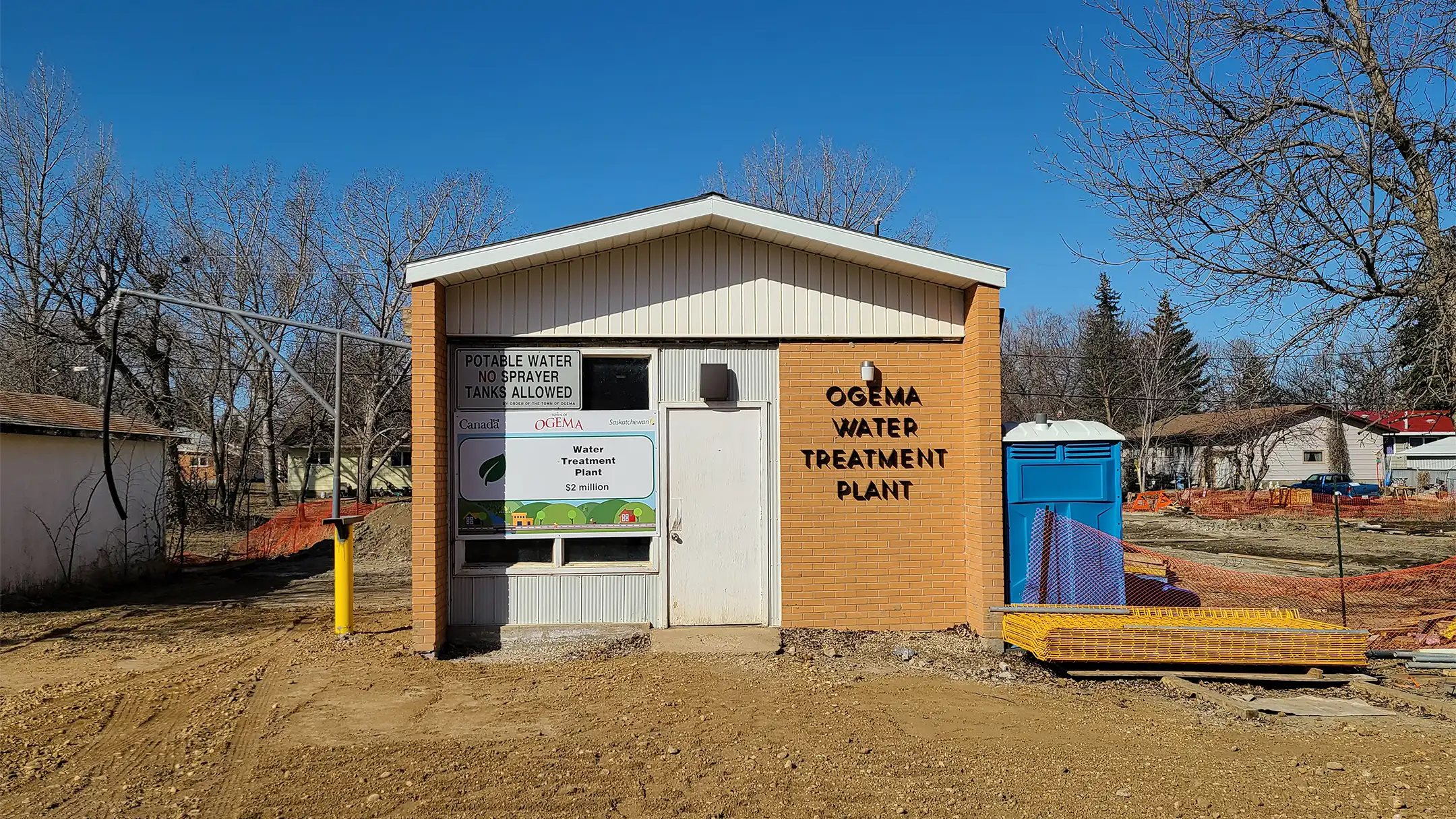

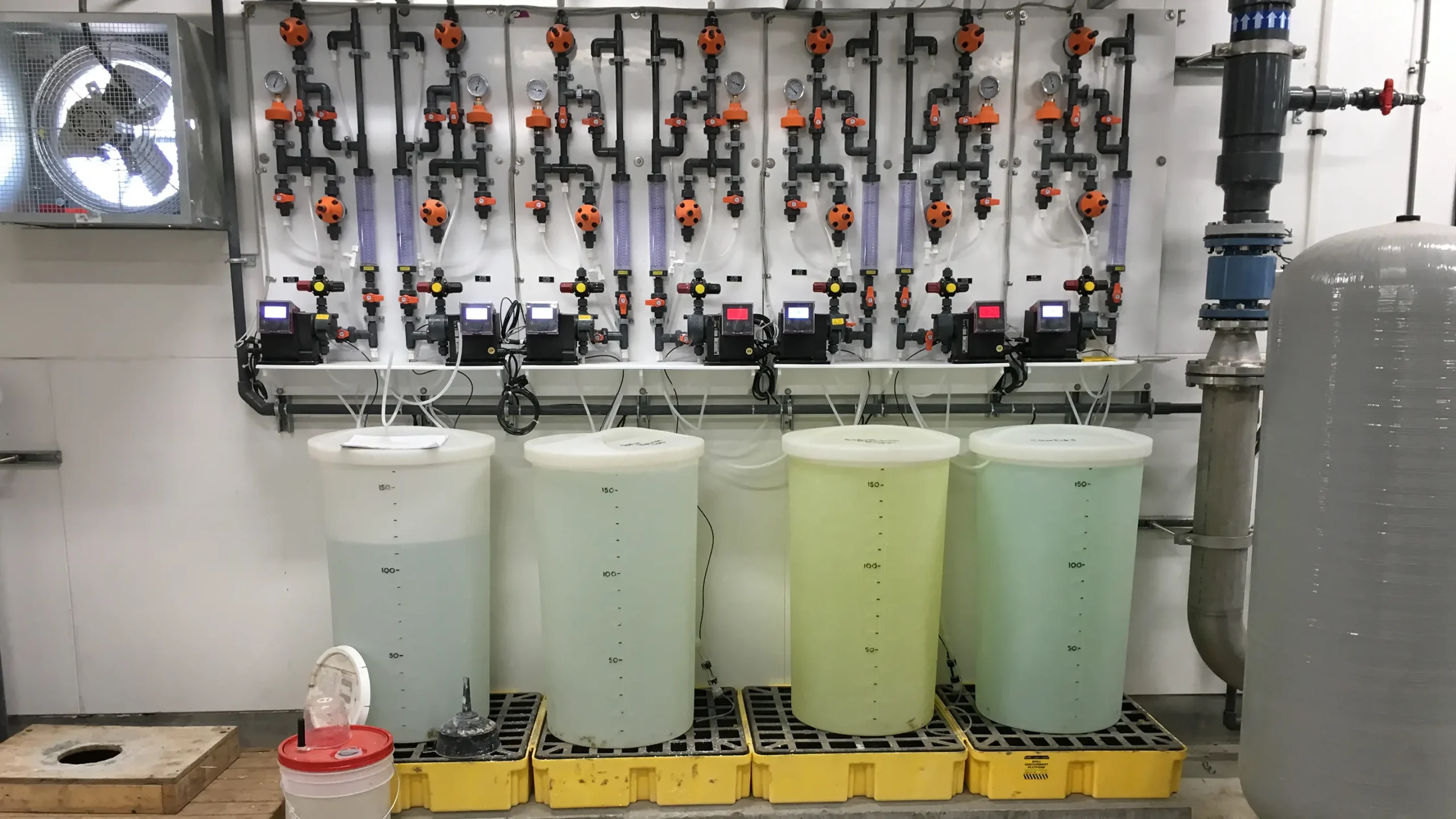
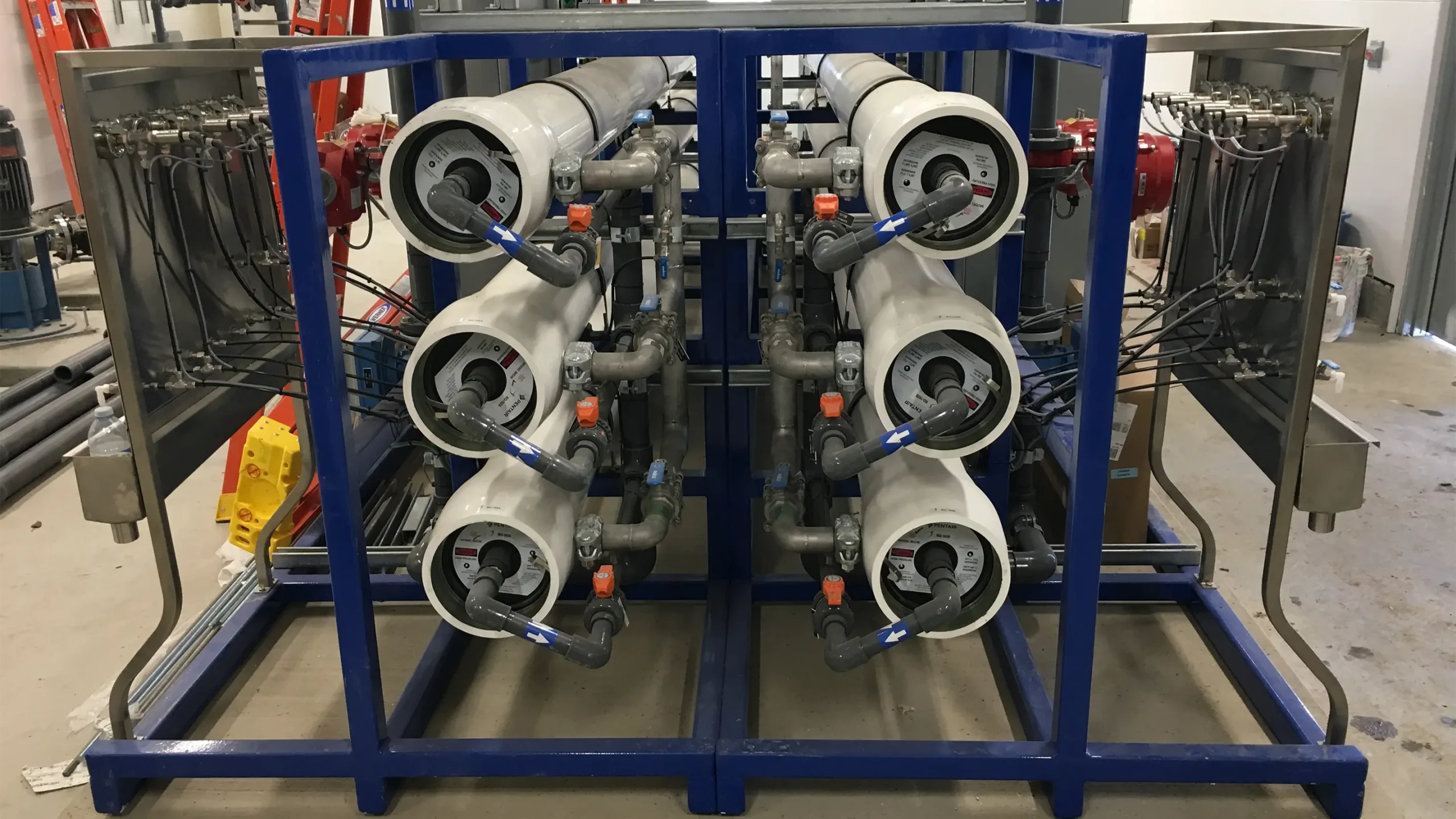
To address persistent water quality issues in the Town of Ogema, KGS Group designed a new treatment solution to improve taste and reduce dissolved minerals. The existing greensand filters had been relatively successful in removing high iron and manganese, but were not capable of removing elevated alkalinity, sulfates, hardness and total dissolved solids from the groundwater supply drawn from two nearby wells.
To increase the palatability of the finished water, KGS Group was retained to provide detailed design services for a brand-new water treatment plant using reverse osmosis membranes. A pilot study was first conducted to determine if direct feeding the reverse osmosis membranes from the wells would be an acceptable long-term solution. With great success from the study, the final design for direct feed membranes was completed in early 2019. The work also included design and construction of a new below-grade concrete reservoir, building and vertical turbine distribution pumps.
The new plant was commissioned in early 2020 and has received significant praise from the town for exceptional water quality.
Project Highlights
- Conducted a pilot study to determine the best long-term solution
- Provide detailed design services for a brand-new water treatment plant using reverse osmosis membranes
- Design and construction of a new below-grade concrete reservoir
Emerson Port-of-Entry
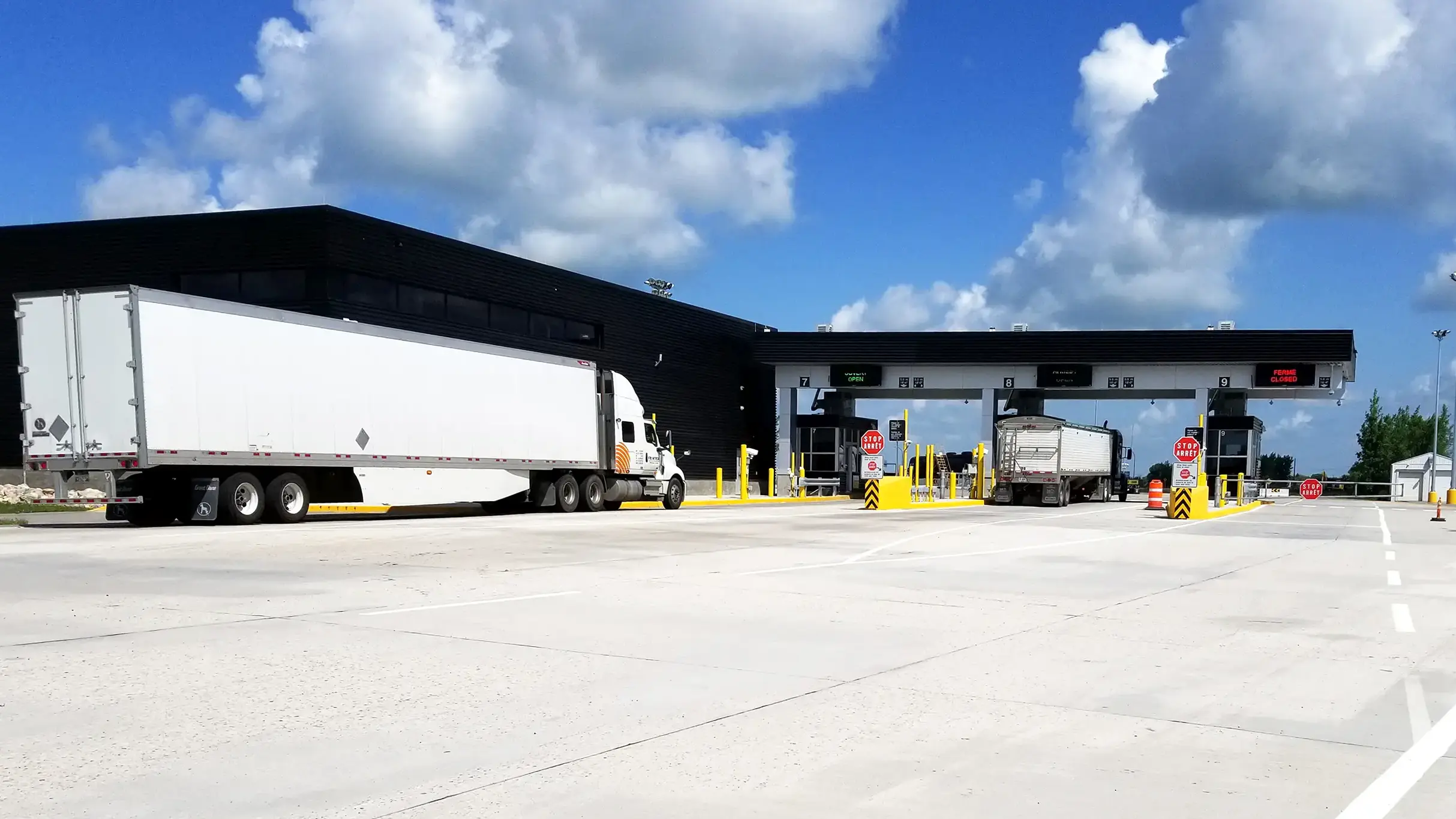
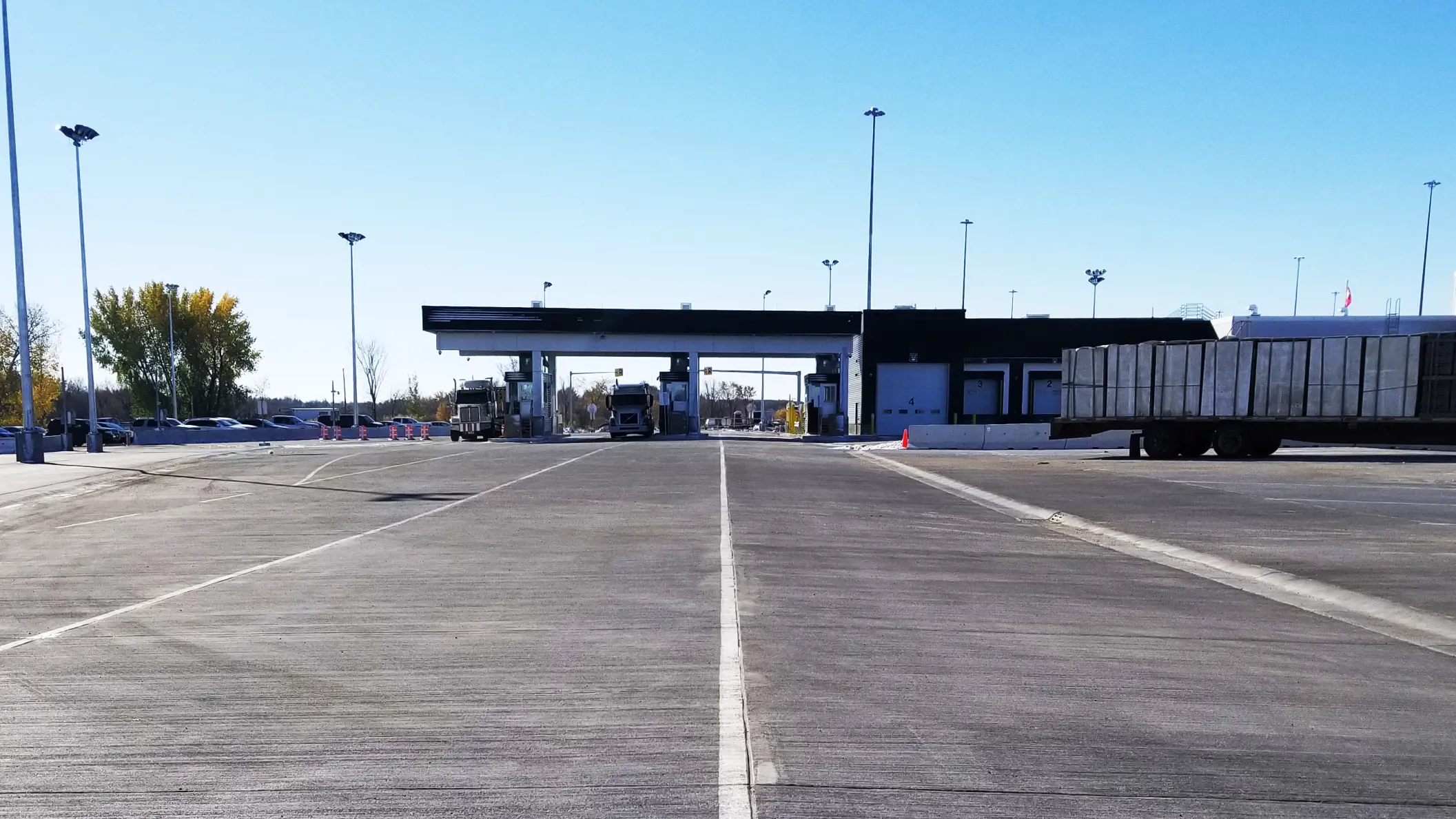
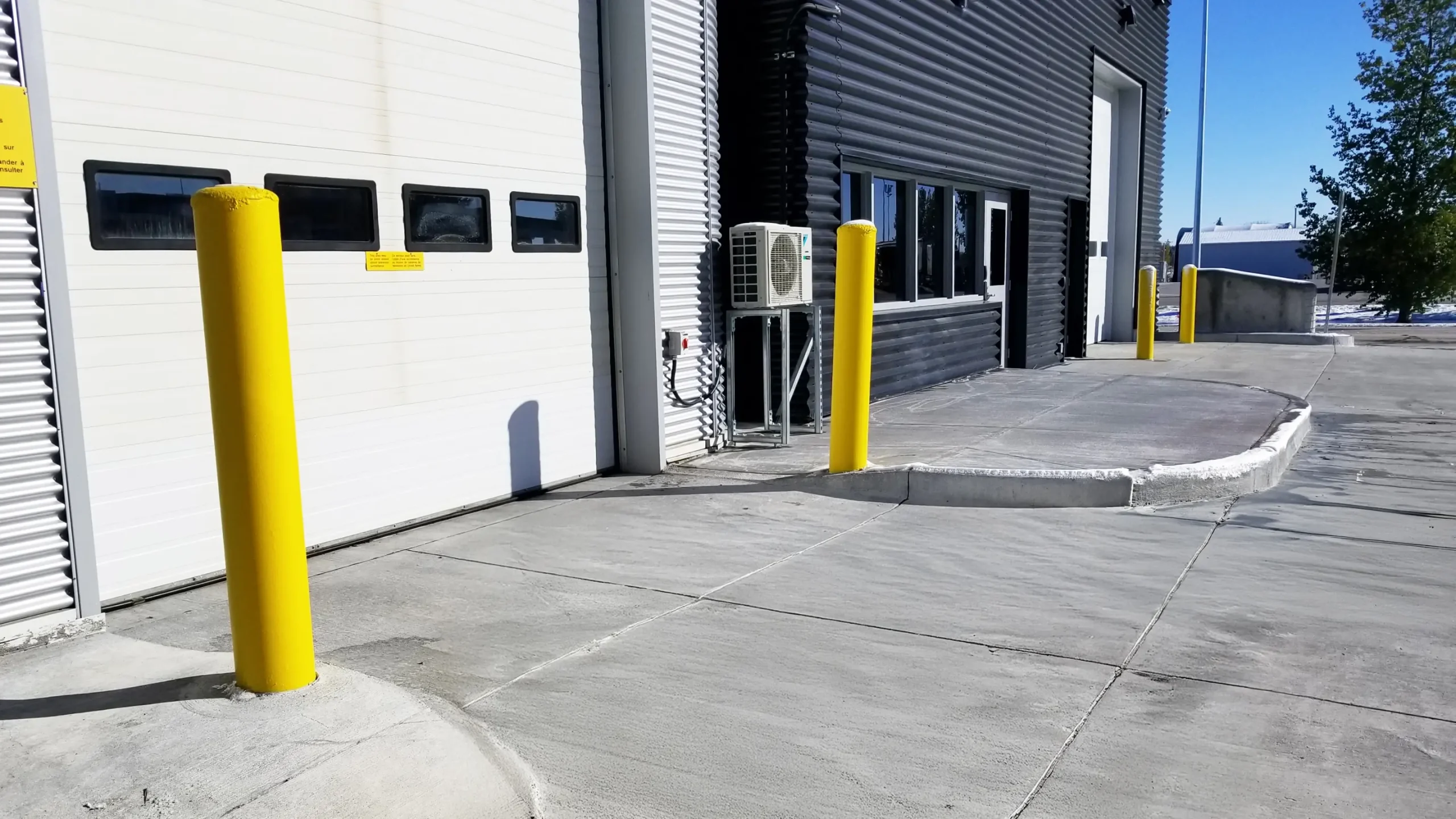
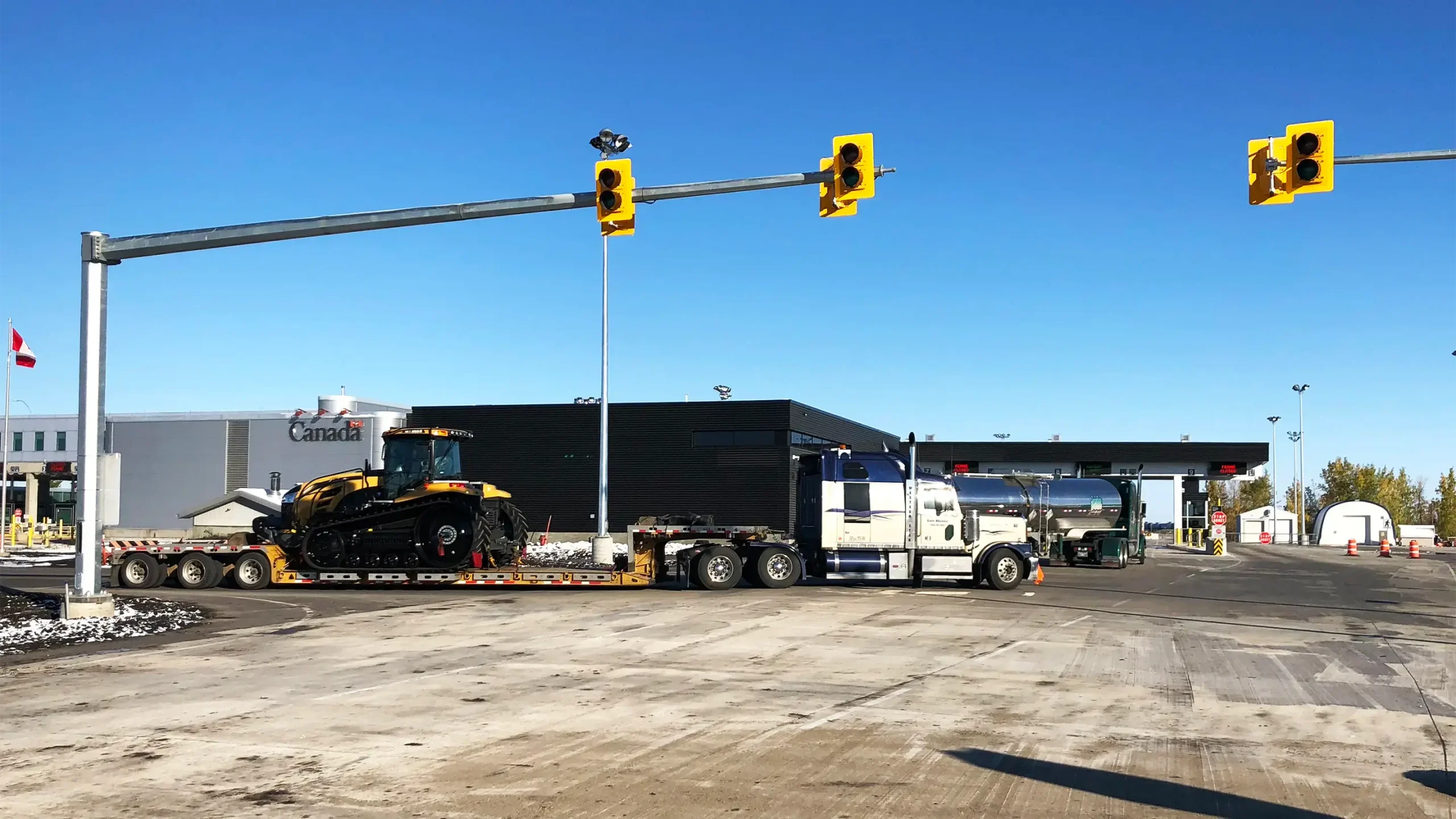
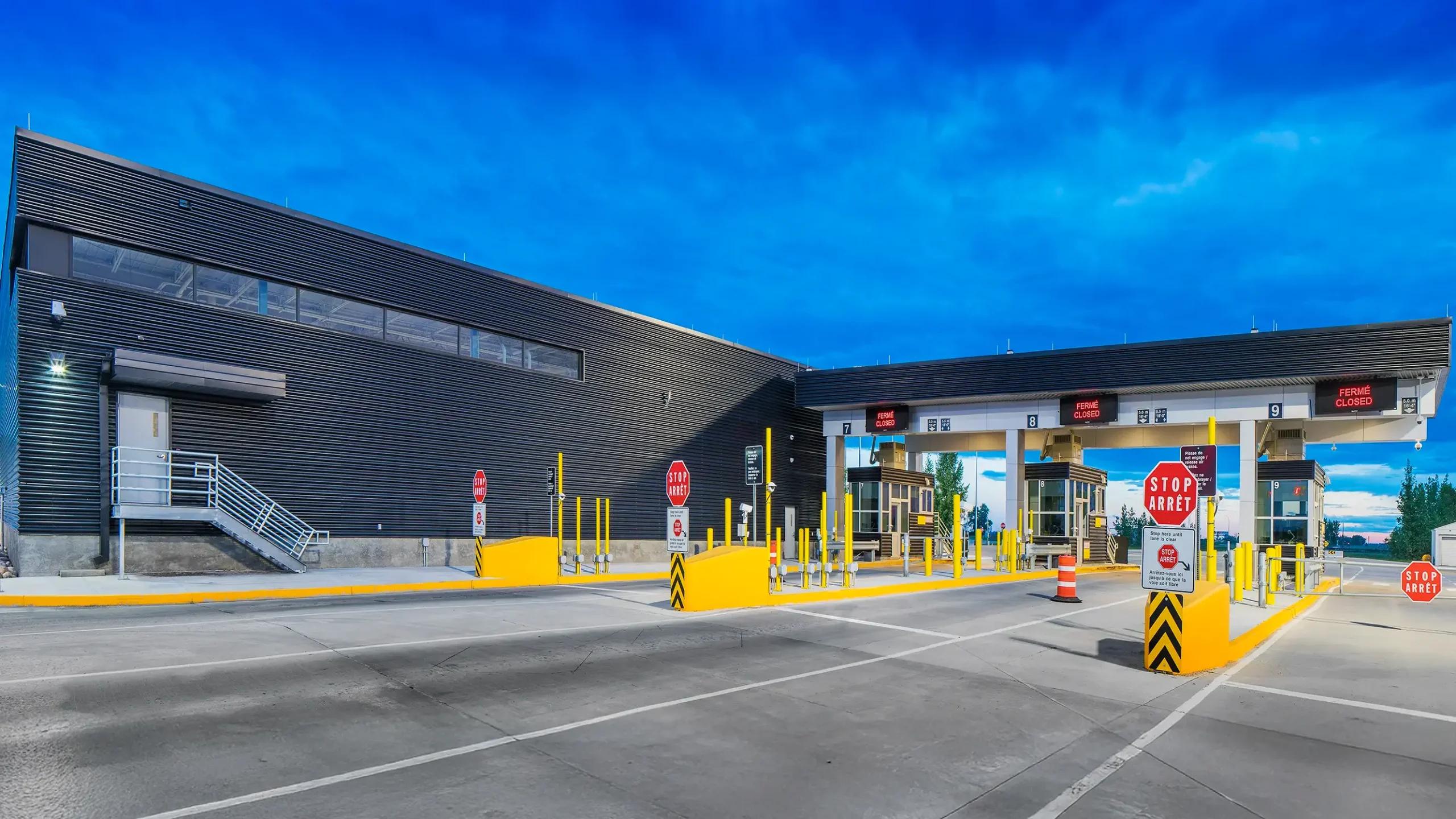
To improve security and efficiency at the Port of Emerson, the Canada Border Services Agency wanted to shift commercial inspections to a dedicated area separate from passenger traffic. In collaboration with Verne Reimer Architects, KGS Group delivered municipal and transportation design and construction support for $4.5 million in site works.
The project included design and construction support for three primary inspection lanes, a four-lane thoroughfare, staff parking lot, commercial parking lot, commercial loading bay, site grading, building services, land drainage system and highway signage.
Coordinated with Manitoba Infrastructure and the North Dakota Department of Transportation, the project improves traffic processing by diverting commercial vehicles from North Dakota Interstate 29 through CBSA‘s commercial facility, rejoining Manitoba Highway 75 north of the port. This project establishes the Port of Emerson as Manitoba’s first Free and Secure Trade (FAST) port, expediting border processing for participants registered to the program.
Project Highlights
- Designed three primary inspection lanes, four‑lane thoroughfare, parking lots and a loading bay
- Improved drainage with a new land drainage system
- Supported the establishment of Manitoba’s first Free and Secure Trade (FAST) port to expedite processing for registered participants
Moose Jaw Refinery Debottleneck Project
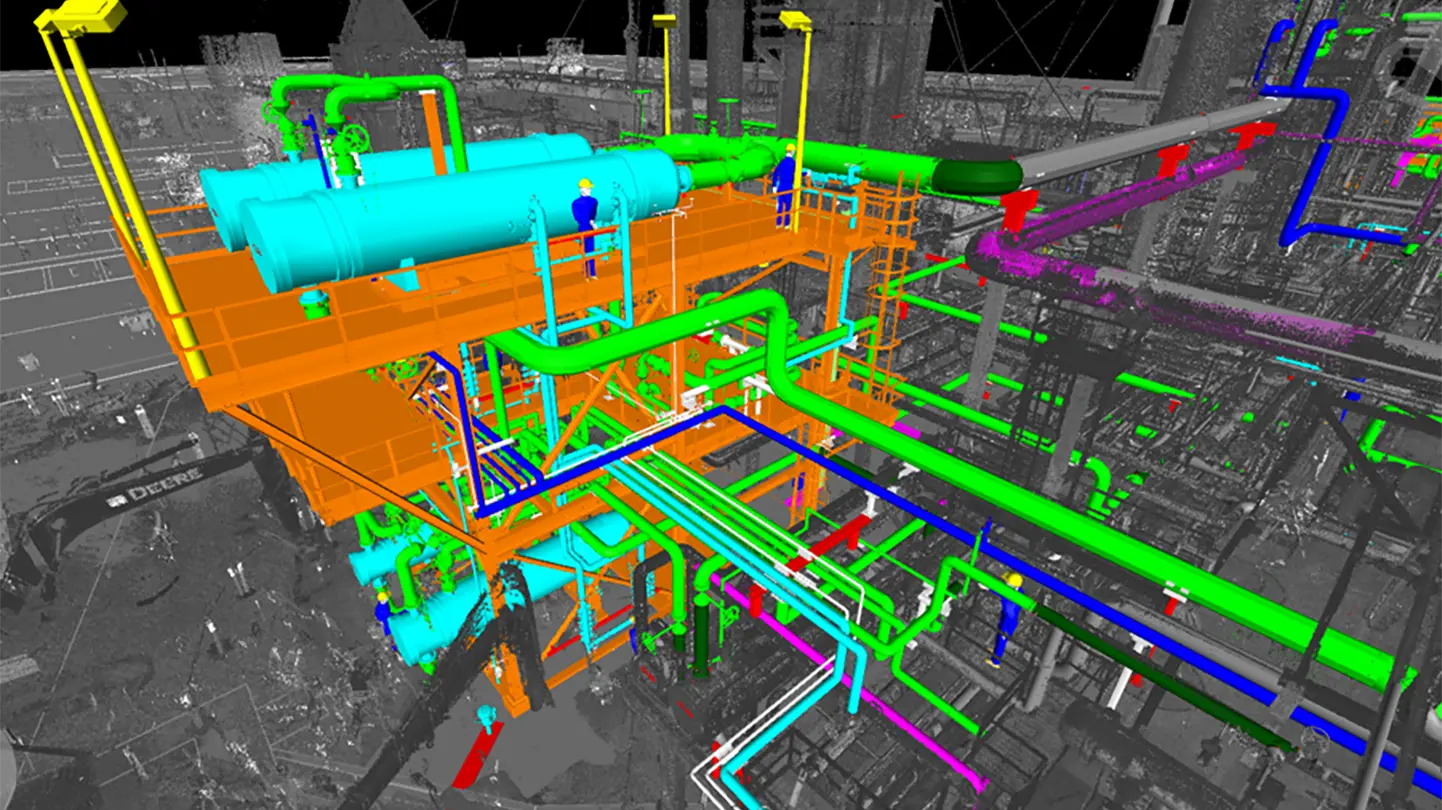
Gibson Energy’s heavy crude oil processing facility in Moose Jaw, Saskatchewan, refines products such as asphalt. KGS Group was tasked with front end engineering design (FEED), detailed design, procurement, contract administration and construction support to expand and increase the facility’s capacity. The work was executed while the plant remained in operation, requiring careful sequencing, safety planning and coordination.
KGS used simulation modelling and 3D models to visualize designs and anticipate potential conflicts, ensuring a smoother implementation. With construction taking place while the facility was in operation, the team overcame logistical challenges, complex safety considerations and an aging facility to complete the project in June 2019, on time and within budget.
Ultimately, the expansion increased throughput capacity by approximately 30% – from 17,000 barrels per day to 22,000 barrels per day – with no increase in GHG emissions. This reduces the facility’s emissions per barrel of oil processed by approximately 20-25%.
Project Highlights
- Performed the front end engineering design, detailed design, procurement, contract administration and construction support to increase the facility’s capacity
- Work was completed while the plant remained operational
- Simulation modelling was used to visual designs and anticipate conflicts to resolve them before implementation
MobilGrain Delisle Seed Cleaning Plant
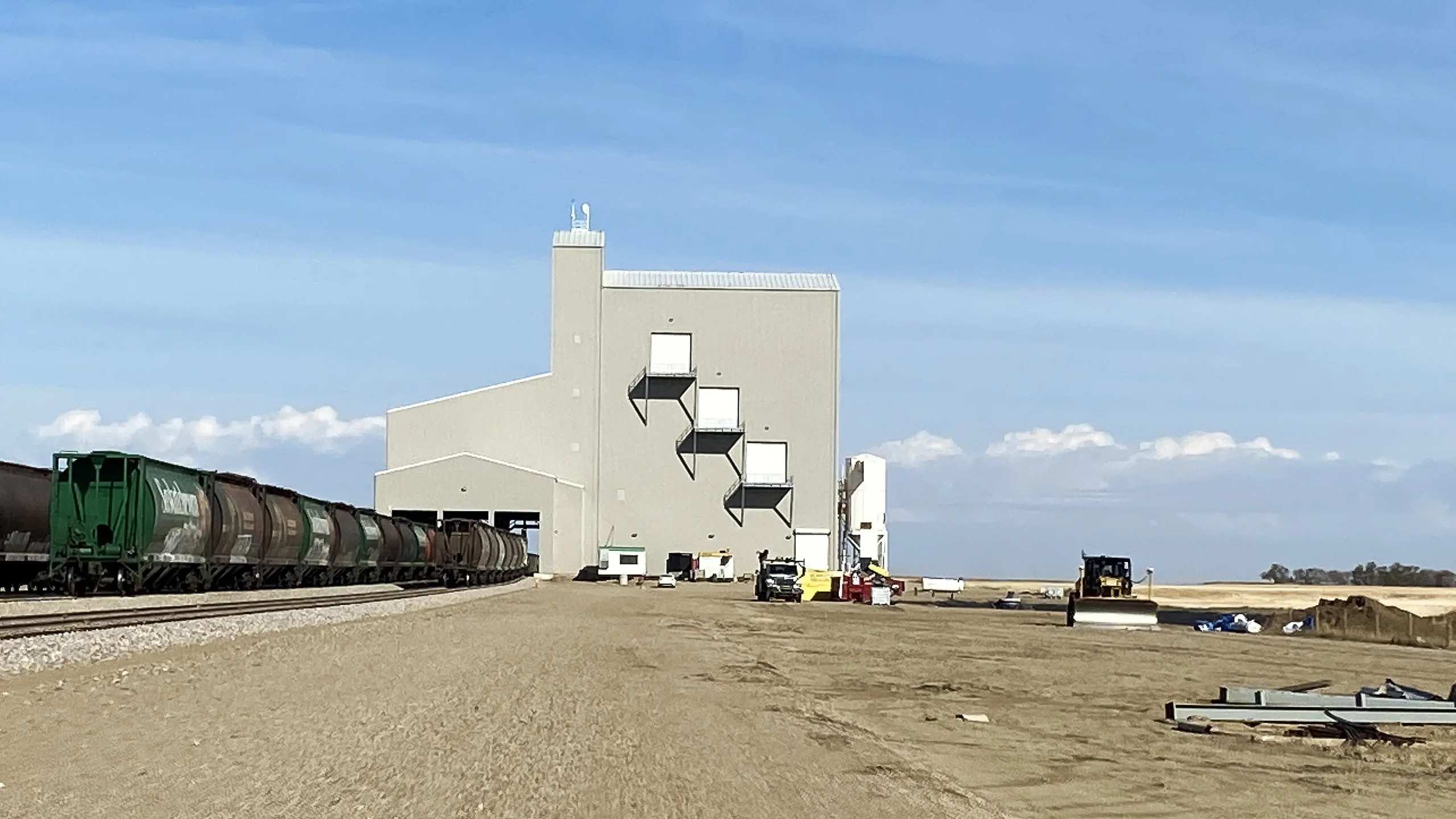

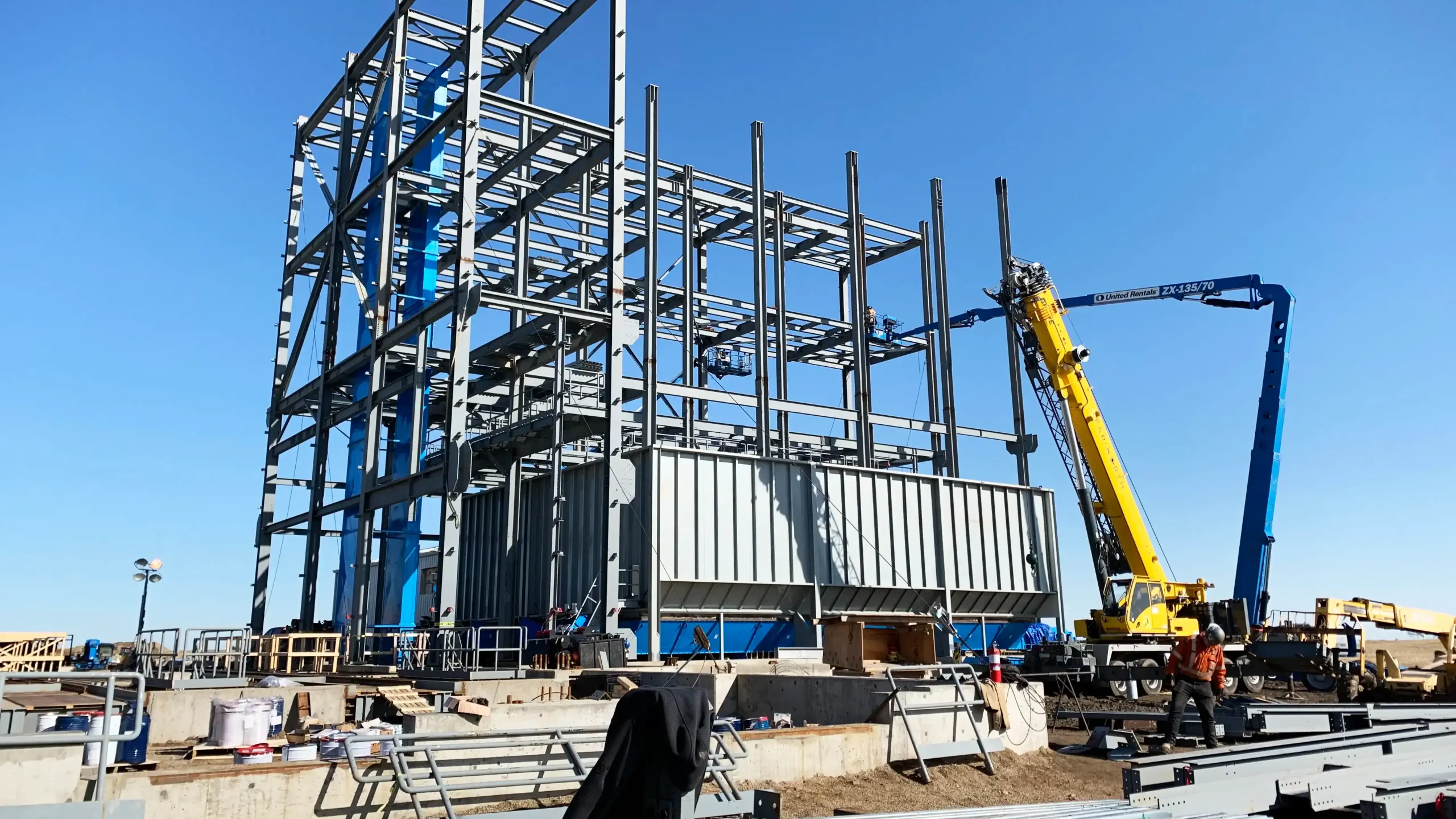
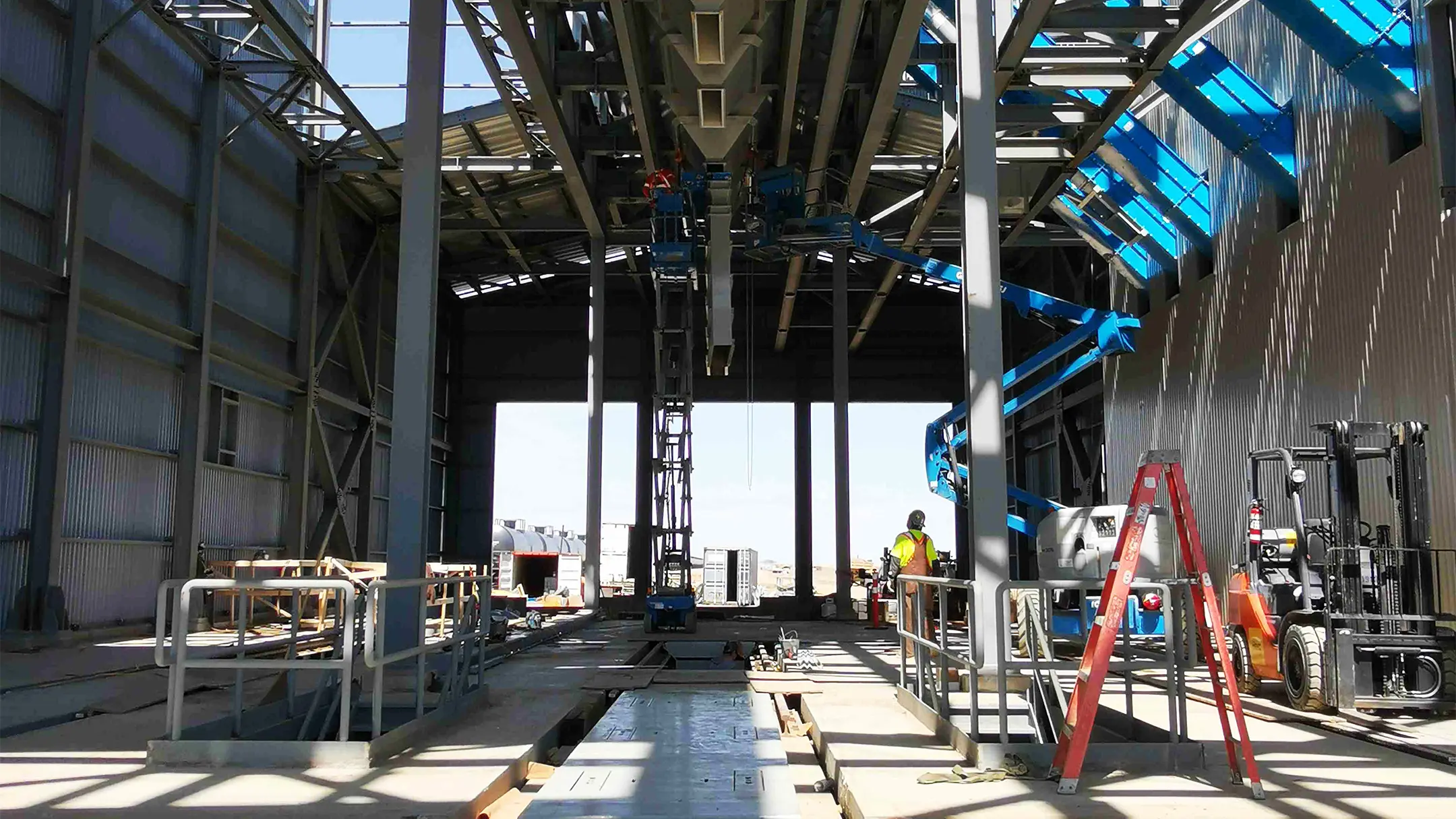
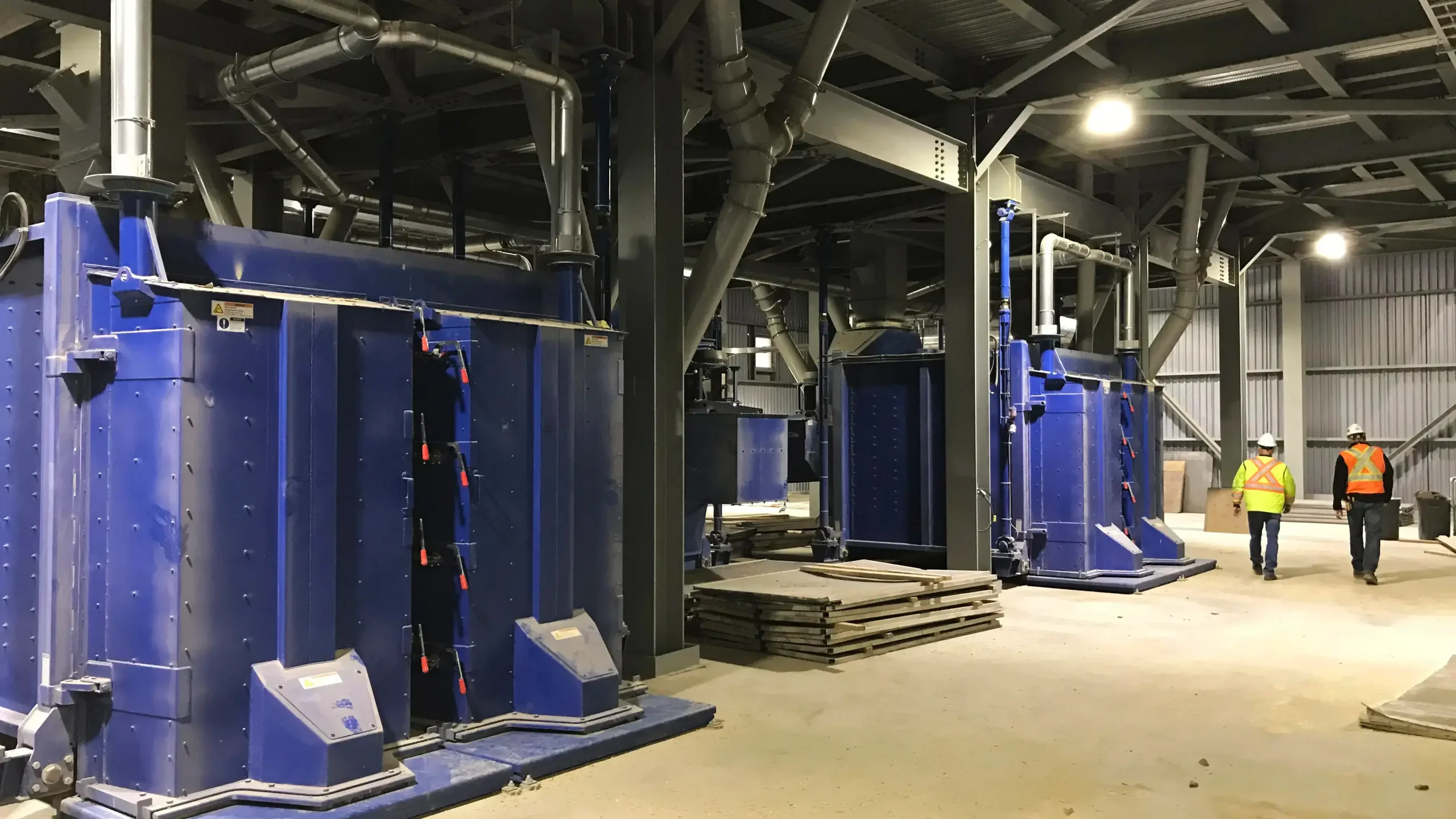
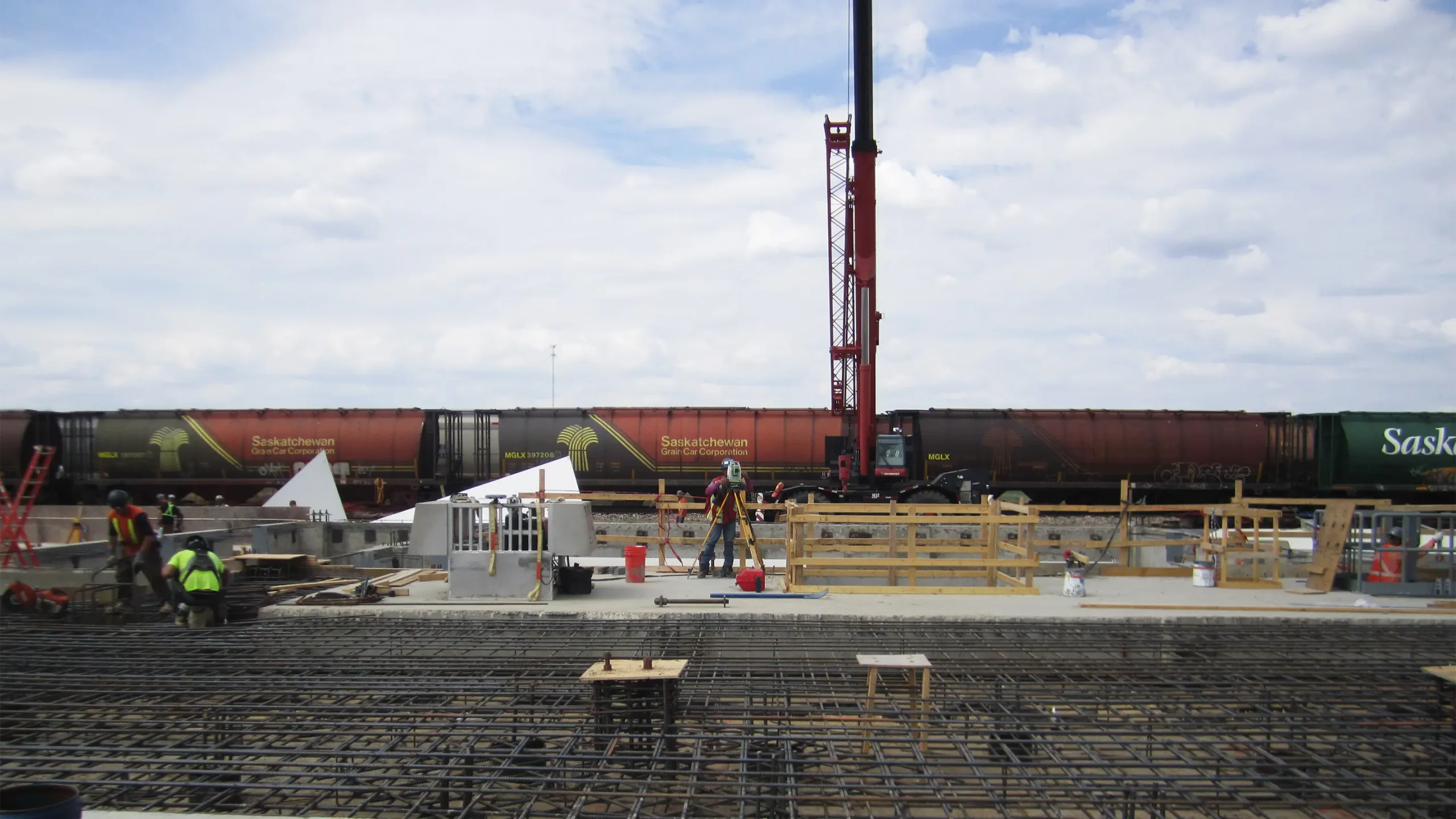
KGS Group provided detailed structural design for the foundation and superstructure of a new seed cleaning facility for MobilGrain. The 140-foot-tall terminal features a unique design that maximizes the use of gravity and minimizes the need for maintenance-intense conveyance equipment to handle grain. The facility also includes a railcar loadout station with underground storage bins, a large storage bin covering the entire main floor, vibrating screens and an explosion-proof bucket elevator.
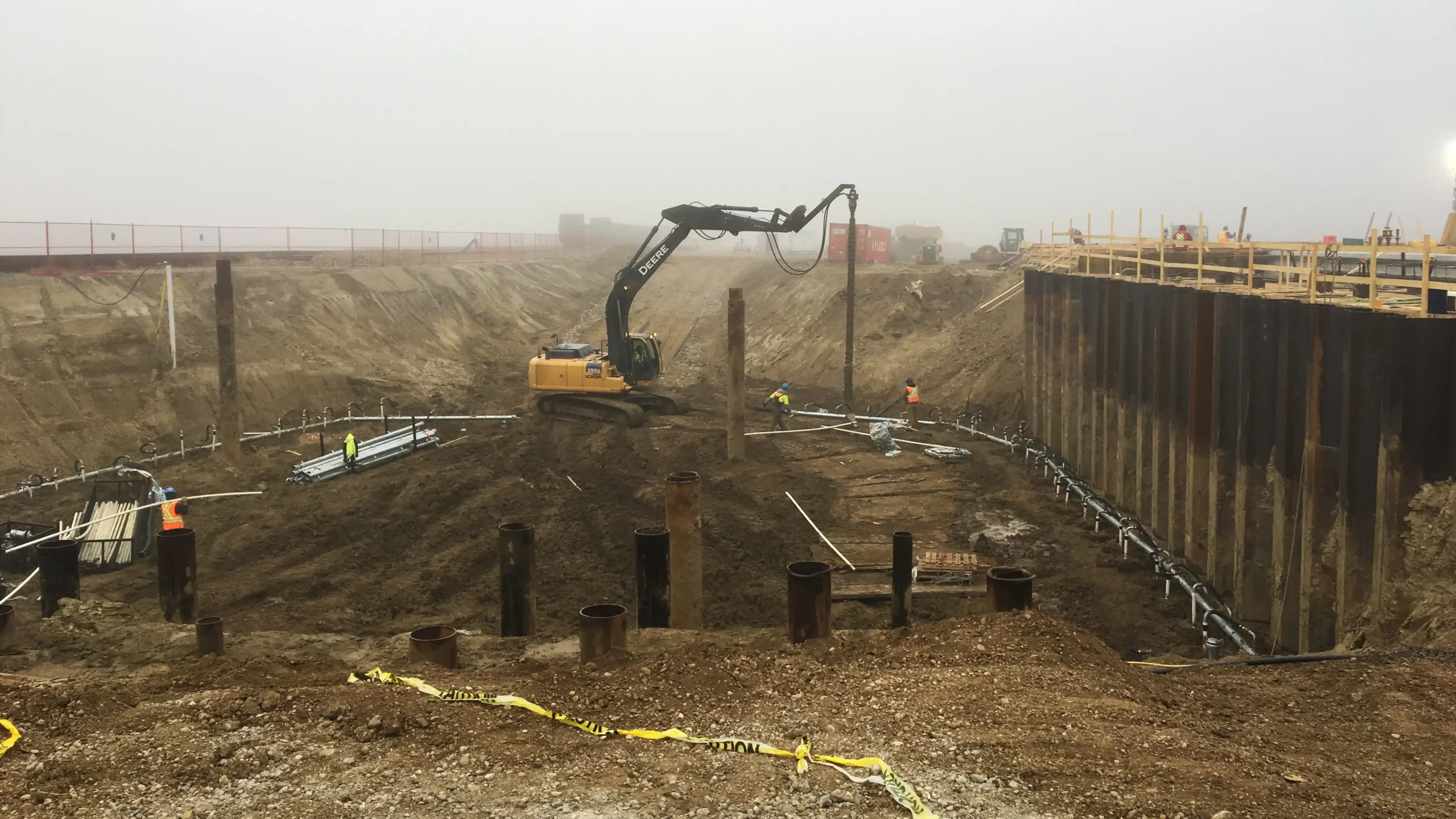
The proposed site was located within a geological zone that is challenging for foundation design and excavation works. In addition to a high-water table, neither piles or footings were found to be a clear choice of foundation. Through careful interpretation of geotechnical parameters and design simulations, the team determined concrete‑filled, steel‑driven piles as the appropriate foundation solution. A thick main‑floor concrete slab was designed to support the heavy bin loading and ensure the pile array acts uniformly as a group. Sheet piling was also installed between the main plant and loadout basement in order to speed up foundation construction. Draw wells were installed along the perimeter of the site in order to lower the water table during construction.
As a result of intense coordination efforts between the owner, engineering team and sub-contractors, the 3-year long project was successfully completed.
Project Highlights
- Detailed structural design for the foundation and superstructure of a new seed cleaning facility
- The 140-foot-tall terminal features a unique design that maximizes the use of gravity and minimizes the need for maintenance-intense conveyance equipment to handle grain
- Careful interpretation of geotechnical parameters and design simulations resulted in the chosen solution of concrete‑filled, steel‑driven piles