

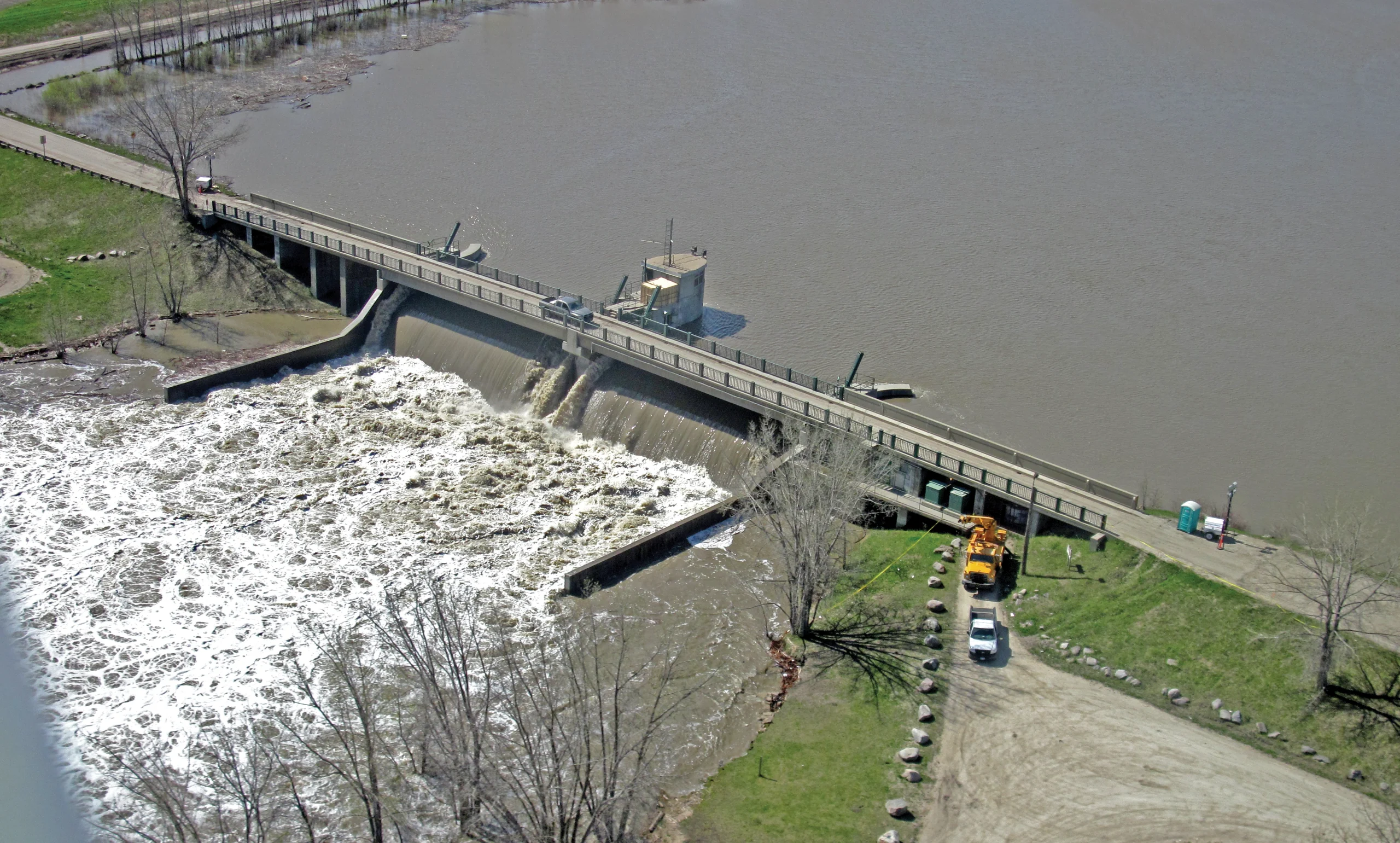
The Red River Floodway: Protecting a Province for a Lifetime
A winter of heavy snowfall, a late season storm and a rapid spring melt pushed Manitoba’s flood protection systems to their limits. Communities across southern Manitoba scrambled to prepare. Emergency response teams worked around the clock. Thousands of residents filled and placed sandbags in a race against the rising water.
For KGS Group, the flood was more than an engineering challenge. It was a defining moment in our history.
The Engineers and Geoscientists Manitoba’s Code of Ethics states engineers “hold paramount the safety, health, and welfare of the public and the protection of the environment.” In 1997, that responsibility became a reality.
KGS deployed staff throughout Winnipeg and southern Manitoba to support flood response efforts, assess infrastructure and help communities prepare for what was coming. The experience provided a firsthand look at both the strengths and limitations of Manitoba’s flood protection systems.
As the floodwaters receded, one conclusion became clear: the Red River Floodway needed to be expanded.
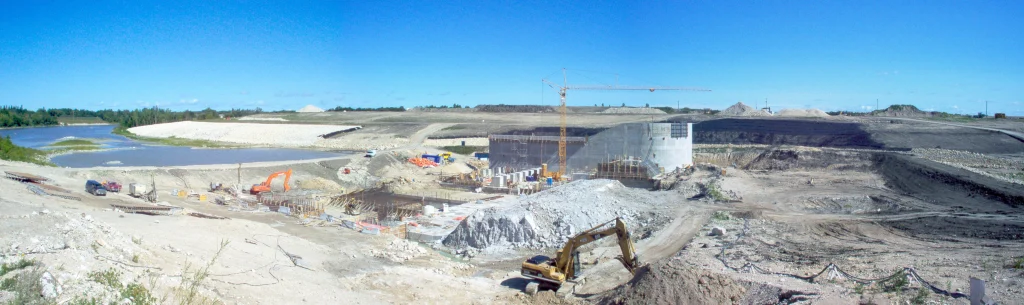
What followed was one of the largest and most complex infrastructure projects in Manitoba’s history.
“KGS was the lead consultant on the Floodway Expansion Project. This was the largest assignment we had undertaken until that point, but we knew we had a good team for it,” says Dave MacMillan, Founding Principal. “This assignment followed the preliminary and concept designs undertaken by KGS Group.”
The scale was immense. The challenge was not simply about making the floodway larger; the team needed to determine how to achieve the greatest level of flood protection within a fixed budget, while minimizing impacts on communities, infrastructure, groundwater systems and the environment.
One of the project’s most significant decisions centered on what might seem like a simple question: should the floodway be deepened or widened?
Finding the answer to that question required years of study, extensive investigation into Manitoba’s unique subsurface conditions and modelling groundwater movement, aquifer behavior and potential impacts to hundreds of private wells found along the floodway corridor.
“As engineers, our responsibility is to protect the public,” says Bert Smith, Founding Principal. “The expansion wasn’t just about moving more water. It was about protecting homes, communities, and livelihoods for generations to come. We are very proud of the work we did on it.”
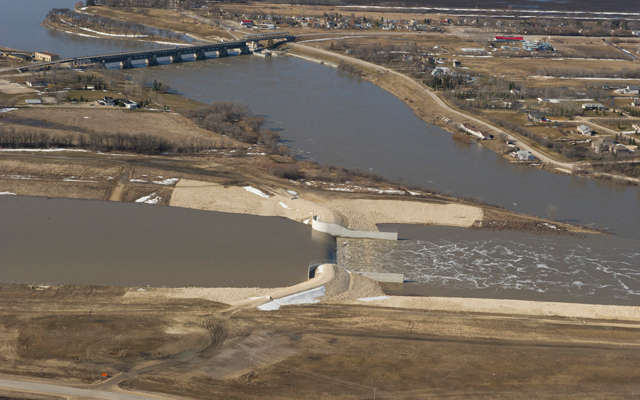
Widening the existing floodway channel to essentially double the flow capacity rather than deepening the base would reduce risks to regional groundwater systems while still delivering the desired flood protection benefits. The decision to widen the floodway influenced every aspect of the design.
More than 700 monitoring and pumping wells installed throughout the floodway corridor tracked groundwater levels and water quality before, during and after construction, while dedicated response plans ensured residents would continue to have access to safe water if issues arose. Monitoring programs continued for years after construction was complete, helping verify performance and build public confidence in the project.
“With the homes in the area having domestic well pumps at different levels, we had to be sure nobody was majorly affected,” adds Smith. “We had to raise the pump height on some installations, but overall we managed to keep everyone’s wells operating throughout the project.”
The project brought together expertise from every corner of KGS. Hydraulics specialists, geotechnical engineers, hydrogeologists, environmental scientists, municipal, transportation professionals and construction specialists all played a role. For many employees, it was a once-in-a-career opportunity to contribute to a project of such scale and significance.
Today, the expanded Red River Floodway offers much greater flood protection than it did in 1997. The project has helped safeguard homes, businesses, infrastructure and livelihoods against flood events, while reducing the economic and social consequences of major flooding.
It also transformed KGS into experts in emergency flood preparedness.
That expertise would be called upon during subsequent flood emergencies across Manitoba, Saskatchewan and beyond. It established KGS as a recognized leader in flood protection, emergency response and water resources engineering, opening doors to major projects across Canada.
“The Floodway Expansion project put KGS on the map,” says MacMillan. “It brought together expertise that other places didn’t have at the time and showed what we could accomplish when we tackled a project of this scope.”
Nearly three decades after the flood of the century, the lessons learned continue to influence how KGS approaches work. The project reinforced a core belief that has guided the company throughout its 40-year history: engineering is ultimately about the people.
And sometimes that means helping protect an entire region and countless communities from disaster.
The Floodway Expansion Project still stands as one of KGS Group’s proudest achievements. Not only because of its scale, but because of the lives and communities it continues to protect every day. Forty years after KGS was founded, the floodway stands as an example of what can happen when technical expertise, collaboration and commitment to public service come together in pursuit of a common goal.
Related Articles
40 Years of People, Passion and
Possibility

Mental Health at KGS: our Culture of
Caring