Proof of Possibility: The Husky Ethanol Story
You wouldn’t expect the story of building two ethanol plants in rural western Canada to begin in Spain, but you’d be surprised.
Back in 2004, one of the four KGS founders, Helmut Graumann, took a long look at the future of KGS Group’s industrial practice during his trip to the land of the setting sun.
KGS had recently landed a contract to conduct a feasibility study for a major ethanol plant project with Husky Energy. Helmut, and senior mechanical engineer Richard Wisniewski, travelled to the Spanish region of Galicia to tour a newly completed ethanol facility designed by process consultant Katzen International. This plant employed wheat as a feedstock rather than the more typical corn feedstock, similar to the plant that Husky had retained KGS to work on.
The point of the visit? Help the team better understand the type of project they were about to undertake.
As they approached the facility, Helmut remembers asking which portion of the sprawling complex was the ethanol plant.
The answer was simple.
“All of it.”
Suddenly, the scale of the challenge ahead of them became real.
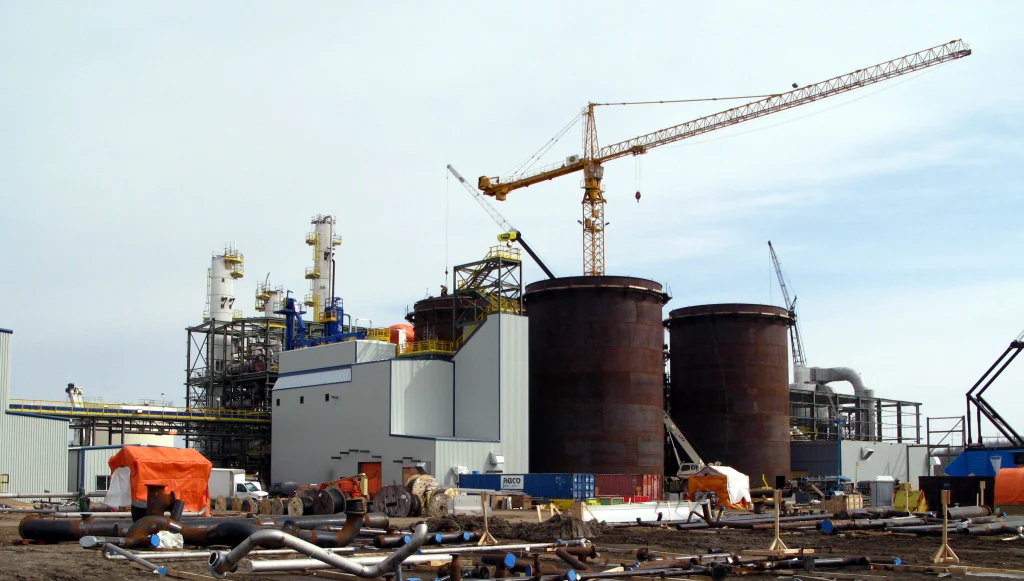
The original study focused on what was required to expand a small outdated existing ethanol facility in Minnedosa, Manitoba. The work was thorough and comprehensive. It showed Husky that KGS understood both the technical challenges and the broader business objectives. That trust proved to be invaluable.
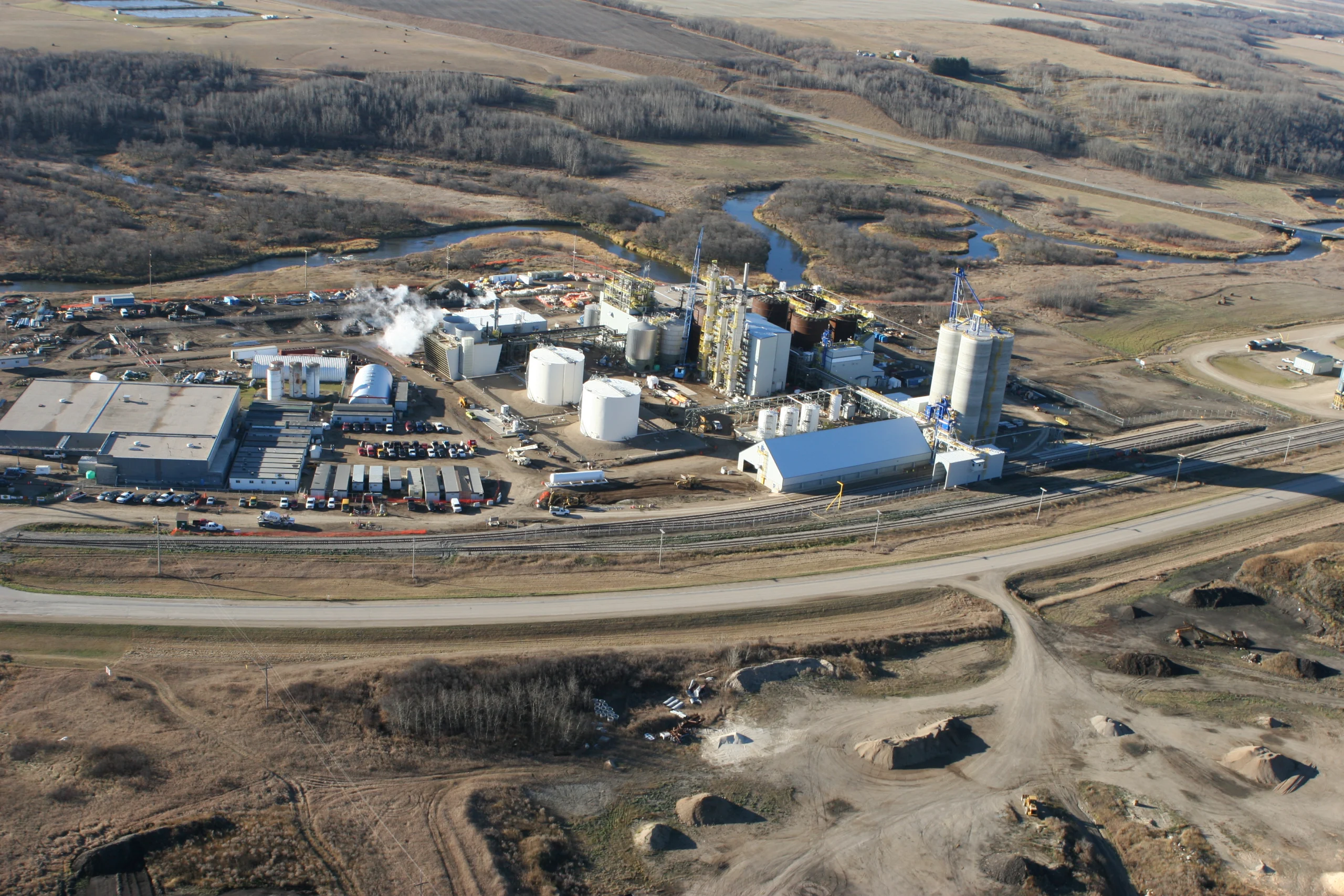
KGS now had to deliver a large-scale ethanol facility in Lloydminster, Alberta.
For many companies, a leap of this magnitude would have seemed impossible. But KGS had a history of facing the unknown and coming out stronger.
Most projects KGS was responsible for at the time were a fraction of the size of the ethanol plant in Lloydminster. It represented roughly $200 million in construction value.
“We knew this was going to be the biggest project that Industrial had ever worked on,” Hugh Williams, Vice President—Buildings & Spaces and Industrial recalls. “We knew we were up against something big, and it was a little scary.”
The challenge wasn’t a lack of capability. KGS had extensive experience designing structures, utilities, mechanical systems and industrial infrastructure. The challenge was twofold.
- Ethanol production required expertise and resources that KGS did not yet have
- The sheer scale and complexity of the project elements brought together in a major chemical processing facility.
KGS had to expand rapidly. Helmut assembled a team of specialists from around the world, mostly contract personnel, and partnered with process engineers who understood the intricacies of ethanol production. At the same time, KGS focused on what it did best: integrating complex facilities into real-world environments through multidisciplinary engineering, infrastructure design, utilities, structures, buildings and site development.
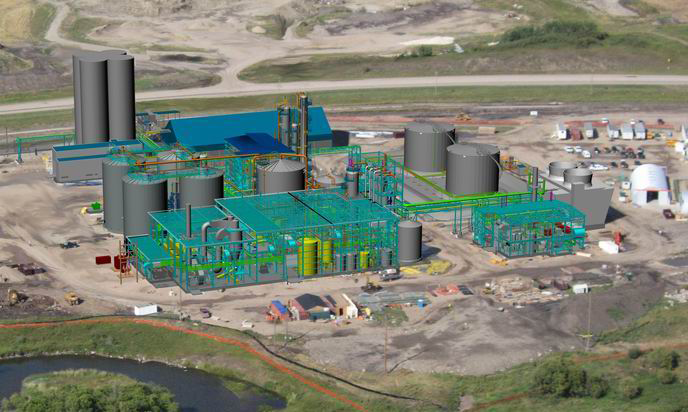
The project accelerated KGS’s adoption of technologies and workflows now commonplace throughout the engineering industry. Large-scale 3D modelling became essential for coordinating several thousands of metres of piping, structural and electrical components and process equipment.
Like any pioneering effort, the learning curve was steep.
The Lloydminster facility challenged everyone involved. Aggressive schedules, evolving client expectations and the realities of executing a project of unprecedented scale tested both the project team and the organization.
But perhaps the most defining moment was yet to come.
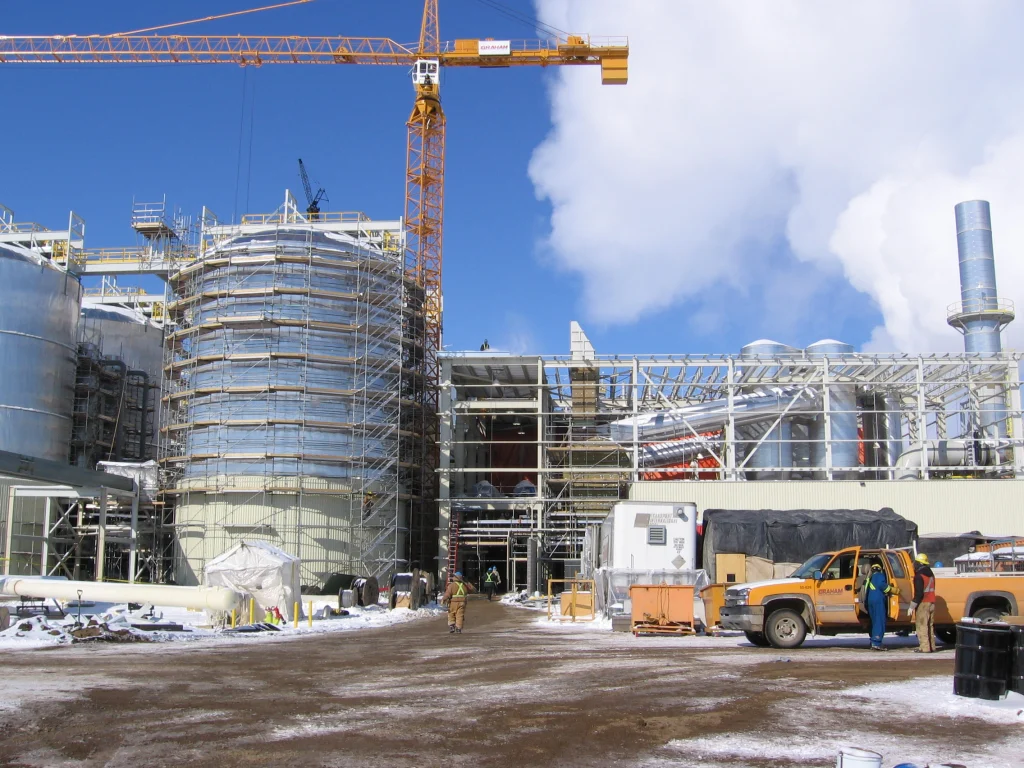
Despite good progress, KGS was temporarily removed from the project due to external pressures within Husky, favouring a local engineering presence. The project team thought their efforts were in vain. After months of time and investment, they were suddenly asked to put their pencils down.
But fate would be on KGS’s side once again.
Progress by KGS’s replacement did not meet the client’s expectation, and ultimately the project returned to KGS’s control. The client trusted the people who had already proven they could deliver, and KGS continued to prove why that was the right choice.
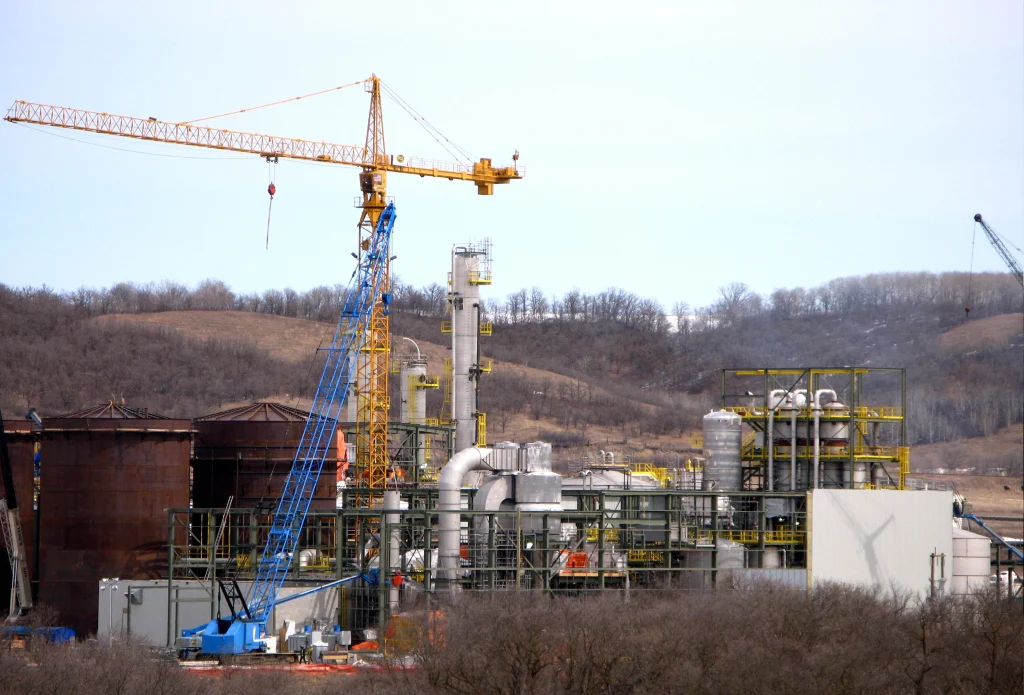
When the Lloydminster plant was complete two years later, KGS Group was asked to do it all again. An “almost exact” copy, but this time in Minnedosa, to replace the small (one tenth the size) outdated ethanol facility.
The Minnedosa project benefited from lessons learned on Lloydminster and was delivered with efficiency and effectiveness that showed how far the team had come in a short time. According to Helmut, “when the client flipped the switch after the equipment and systems were commissioned, the facility started up remarkably smoothly, reaching full operational capacity within weeks.”
Perhaps more important than the projects themselves were what they left behind.
The ethanol facilities fundamentally changed KGS’s industrial practice. The experience expanded technical capabilities, strengthened project delivery systems and provided the confidence needed to pursue even larger opportunities. Projects for clients such as Mosaic and HyLife followed, supported by the knowledge, processes and people developed during the ethanol plant years.
Many of the professionals who helped deliver those projects remain with KGS today, continuing to contribute to major industrial developments across Canada.
Looking back, Helmut sees the projects as an example of what KGS has done repeatedly throughout its history: embracing opportunities that push the company beyond its comfort zone.
“Every successful organization encounters moments when it must choose between staying within familiar territory or taking on a challenge that demands growth. For KGS, the Husky ethanol projects represented one of those moments. The work required new skills, new approaches and a willingness to learn along the way,” says Helmut
By the time the plants were complete, the company had gained far more than two successful projects.
It had gained the experience, confidence and capability to pursue opportunities that once seemed out of reach.
As Demetrios Kontzamanis remarked while touring the completed facility, “If we can do something like this, we can go to the moon.”
For KGS, those projects proved exactly that. They proved something that continues to define KGS today: when faced with a challenge larger than the company itself, the answer isn’t to step back.
It’s to grow into it.
Related Articles
Choosing Geothermal for KGS
Place